Beauty Contract Manufacturer M&A Lull Expected To Be Short Term
While select transactions have occurred, including Elevation Labs’ acquisition of Boomerang Labs and Fremman Capital’s purchase of Innovative Beauty Group in March, deal volume has been hindered by high interest rates, concern about consumer spending as beauty sales growth moderates, regulatory issues, and a disconnect between prices sellers are seeking and prices buyers are willing to pay. Still, optimism persists that beauty contract manufacturers will be compelling places for investors to park money over the next few years.
“There are a number of assets that are ripe for an exit in this space, and I think that a lot of the investors have been patient and trying to judge what is the best timing and maybe holding back,” says Luc-Henry Rousselle, managing director of investment bank DC Advisory’s consumer, leisure and retail team. “So, it is really a matter of patience, but I think the activity will pick up as soon as the general signs are positive.”
Jon Tenan, managing director of investment bank Baird’s global consumer group, agrees with Roussell’s assessment. “There’s a ton of interest in this sector, and in the private equity lane, there’s a lot of capital to be put to work,” he says. “The pent-up supply and demand are getting much closer to meeting in the middle in terms of buyers and sellers. We are going to see more sponsor-backed and independent CDMOs [contract development and manufacturing organizations] contemplate exit.”
Following a first half of 2024 with sluggishness in private equity deals, Meghan McLaughlin, executive director at investment bank Moelis & Co., describes the Federal Reserve’s half a percentage point interest rate cut in September as “the best development for sponsor deal flow.” Private equity sponsors are dominant players in beauty contract manufacturer M&A. She adds that transactions have historically jumped in the fourth and first quarters subsequent to a presidential election, a trend that could intensify this year due to election uncertainty and tailwinds from declining interest rates.
“Although recent interest rate cuts suggest that there’s some pressure on the consumer now, economic cycles are just that—cyclical. Even as consumer spending has slowed, beauty remains resilient,” says McLaughlin. “Beauty and personal care products are ingrained in consumer routines, and consumers are willing to continue to allocate dollars towards effective products. As the consumer bounces back, the industry’s ability to innovate will be a major growth driver. In the buy versus build equation, buying may be the most efficient way to do that.”
From an earnings before interest, taxes, depreciation and amortization (EBITDA) perspective, DC Advisory pegs beauty contract manufacturer multiples as in the mid-to-high single-digit range for smaller targets and the double-digit range for larger targets. Rousselle says, “Multiples were very high two years ago during the boom, some in the high double digits, close to the 20 zone, which was unusual for this type of asset, and I think that for assets that haven’t performed, it’s hard to grow into that price then exit.”
In the fragmented beauty contract manufacturing landscape, the amount of manufacturers in the United States is difficult to pin down, but Tenan shared an estimate with Beauty Independent last year that there are around 300, with 80 to 100 generating revenues greater than $10 million, and half of those generating revenues greater than $20 million. Fewer than a dozen exceeds $100 million in revenues. There are hundreds and hundreds of beauty contract manufacturers outside the U.S., and Rouselle underscores their role as beauty companies pursue sales worldwide. Tenan figures a best-in-class EBITDA for a mid-market asset is 20%.
Rousselle and Tenan declined to name beauty contract manufacturing assets ripe for an exit. Wind Point Partners-owned Voyant Capital, Cornell Capital-owned KDC/ONE, J.H. Whitney Capital Partners-owned Accupac and CORE Industrial-owned Cohere Beauty could be buyers or sellers—or both—of assets. Three years ago, KDC/ONE launched an initial public offering process. It later pulled back, but there’s speculation its IPO process could gear up again as IPOs heat up. Private equity giant KKR made a strategic investment in Canadian company KDC/ONE in 2022. San Francisco Equity Partners-owned SV Labs, placed on the market last year, hasn’t yet transacted.
Matt Unger, an independent beauty industry leader who’s held executive roles at beauty contract manufacturers, characterizes beauty contract manufacturing M&A as amid a temporary lull. He explains internal stability has been a priority in the wake of the Modernization of Cosmetics Regulation Act of 2022 that increases the U.S. Food and Drug Administration’s oversight of beauty contract manufacturers and subjects them to Good Manufacturing Practice (GMP) standards on the proper execution and monitoring of production processes.
He identifies a decrease in product launches due to a spike in product commercialization costs and a short-term lack of raw material innovation that underpins costly launches as other factors in the M&A lull. Unger says, “Many launches this year have not delivered on their original forecasts, leading to reduced growth at the manufacturers supporting the industrialization of these initiatives as well as the brands they serve. This has certainly impacted the CDMO sector in reduced volumes, canceled launches, inventory challenges and, ultimately, balance sheet disappointment.”
To reduce dependence on any single brand, revenue diversification is a key factor when potential buyers evaluate manufacturing targets. Tenan says the most attractive large targets have a maximum of 10% of their revenues coming from a brand client. Manufacturers on the smaller side tend to have a higher concentration of revenues coming from a few strong brand clients. In-house talent is a consideration for buyers, too.
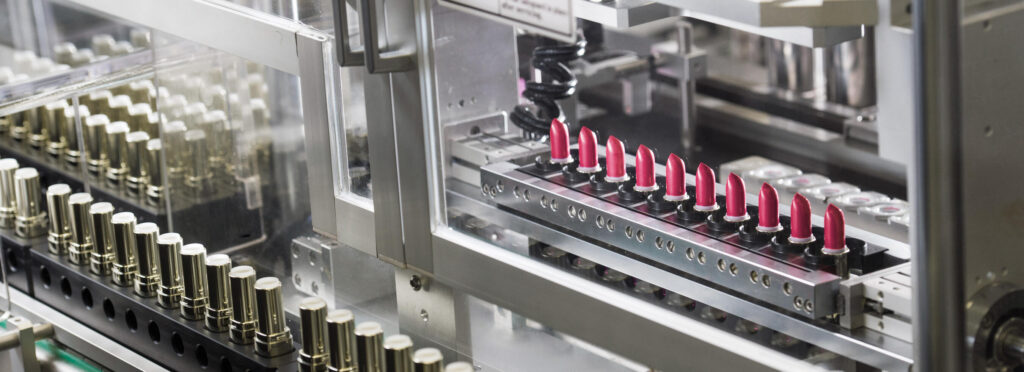
“Having a high-quality management team [is] very important as well as a very high-quality bench of and formula developers,” says Rousselle. “Really a lot of where the magic lies as you partner with brands is your ability to help them develop new products, formulate and ultimately execute.”
Talent paired with the delivery of technological advantages to brands is a winning formula, according to McLaughlin. She says, “Consumers will continue to seek products that are effective and that have a scientific moat around them, so manufacturers that can help brands with those objectives, whether it’s through proprietary ingredients or formulations, will be best positioned for 2025 and beyond.”
Tenan highlights a critical open question for beauty manufacturing M&A is, “What do you do at scale? The answer has got to be IPO. I don’t think any of the strategics are going to buy a billion-dollar [manufacturing] company. If and when it goes public, it [KDC/ONE] will give people confidence about the path to scale, and it will be acquisitive.” If it goes public, KDC/ONE will join Intercos Group, the Italian beauty manufacturing company, in the public markets. It listed on the Euronext Milan in 2021.
For beauty manufacturers to thrive in 2025 and beyond, they will have to adjust to a whole host of challenges. Management consultancy McKinsey & Co. outlines that the consumer goods industry is contending with a pause in the explosion of small brands, steep input expenses and dwindling global wealth expansion. In the beauty manufacturing sector, Unger acknowledges that regulatory complexity and elevated costs of scarce labor are challenges that aren’t disappearing. Despite them, he’s confident the sector’s outlook is bright.
He says, “Long term, the industry needs to continue to demonstrate its relevance to brands and brand owners, its ability to keep brands in compliance, to provide reliable service, and its ongoing capability to provide meaningful and relevant innovation to drive growth.”
The players
5 mentionedFormulate

AS Beauty
KDC/ONE
Elevation Labs
Target