
5 Things To Know Before Embarking On A Friends And Family Fundraise
Asking family and friends for money can add an extra element of exposure. After all, family and friends don’t go away whether a business succeeds or fails. Leading up to the launch of deodorant brand Type:A, Allison Moss was reluctant to pursue a friends and family round, but concluded it was worthwhile after researching funding routes and talking to fellow founders.
“It really is the lowest hanging fruit,” she says. “There are a lot of people around you who want to support you, who believe in you, so why not take advantage of having that capital base to work from as you get the brand off the ground?”
Not every entrepreneur has family and friends who can dole out money to startups, an issue that particularly affects entrepreneurs of color due to racial wealth gaps in the United States. Devin McGhee and Britt Kirkland, co-founders of adaptogenic beauty brand Deon Libra, got the idea to raise a family and friends round from their advisor, a white man.
“I understood he meant well, but I also knew that he’s coming from a different perspective,” says McGhee. “Whereas some founders can go and get $100,000 from mom and dad to start or $50,000 from grandma and $30,000 from an auntie, we couldn’t do that. I didn’t know how realistic friends and family would be for us being two Black females.”
Despite their concerns, McGhee and Kirkland raised $111,000 during the height of the pandemic for Deon Libra by collecting small checks and not making assumptions about people’s finances. Chatterjee recommends, “You have to make the decision that you’re going to go for it and, in that case, you have to plan for success.”
Ahead, we share more expert advice about what to know before fundraising from friends and family.
The founders we spoke to insisted engaging an attorney is a must. McGhee says, “If you don’t have people to help and educate you, then raising the money doesn’t even matter because, most likely, you’re going to blow it if you don’t know how to use it as a tool.”
Josh Beser, an attorney at the law firm Wilson Sonsini Goodrich & Rosati, has represented a number of early- and growth-stage consumer brands. He likes to be brought in when founders first start embarking on a round as opposed to when they already have a fleshed-out plan.
He says, “Our ideal involvement is strategic, it’s helping to think through what the different forms of financing can look like, what different investors goals may be for the business, the level of involvement and governance, and economic and investor rights that different investors may be looking for, and to help founders think through what’s in front of them today and then how that might develop over time.”
Beser kicks off conversations with brands by exploring the potential size of their round and valuation. His firm has developed Excel models to give founders an understanding of what a friends and family round could look like as well as a subsequent financing round.
Beser says he often tells clients, “It sounds cool in a vacuum to raise a bunch of money, it sounds cool in a vacuum to have a really high valuation, but I think there’s a lot of application to that where we have to figure out, what do we really need?”
He continues, “What’s the story we’re telling? What is the return that those investors are going to need on that valuation to make this a good investment for them? What are their expectations going to be? How much dilution are you willing to take? Trying to back into some of that stuff early on is, I think, pretty useful.”
Lawyers can aid brands in navigating various financial structures. Beser points out that SAFE agreements are an industry standard for early-stage financing. SAFE stands for simple agreement for future equity, and SAFE agreements are equity instruments that convert into preferred stock when the founder gets to another round.
“It can be done very quickly, it’s relatively inexpensive, and there are few strings attached,” ays Beser. “When it’s done that way, it tends to be a much more streamlined process, and I would say it has a much lower possibility of setting any challenging precedent or creating issues in the future.”
A convertible note, which is when an investor is buying debt in the company that converts into equity, is the second most common financial instrument, followed by preferred stock or stock that represents ownership in a company and pays regular dividends.
Prices for attorneys assisting with early-stage funding range. Moss paid just under $5,000 for the lawyer she tapped at Type:A. Generally, she says the initial conversations are free and can be beneficial in sorting out who to hire to get the necessary paperwork done. Moss counsels, “It’s not like all the lawyers are going to have the same advice, but talk to someone because talking to someone versus talking to no one is more informed.”
She urges founders to build the cost of an attorney into the total amount that they’re raising. She says, “If you’re raising money to be used for inventory and marketing, add the cost of the legal required to raise the money to that budget, and have a back-up plan for if you only raise say 50% or 75% of what you expected.”
Some law firms like Wilson Sonsini Goodrich & Rosati have downloadable templates or automation tools for agreements like SAFE agreements to speed up the process and diminish costs. Beser estimates that founders can complete a SAFE agreement for less than $10,000. He says that route tends to be the least expensive, followed by a convertible note and preferred stock.
The process can be slower if investors have to chase a large number of investors and a hefty portion of them desire individual rights such as becoming a board advisor or the ability to participate in later rounds. Beser says, “Then, you’re straying from one of the core benefits of using the SAFE, which is standardization and starting to have a bunch of side negotiations. They can start to snowball in ways that is probably not the goal at that stage.”
Founders changing their mind often can drive up expenses. “Of course, sometimes that happens, but people should be aware that, when there is a lot of back and forth or a lot of rounds of changes in documents, that will run up costs in ways that probably nobody wants, including the lawyer,” he says. “To the extent that you can either align together on what you’re planning to do—and that includes talking live as opposed to just shooting emails—to make sure you’re on the same page and trying to stick to that will definitely keep costs lower for early-stage founders.”

In the beginning of Deon Libra’s friends and family fundraise, McGhee was selective about the family members and friends she asked to participate, but she realized she was prejudging her loved ones. Once she opened up participation to more people, friends and family members she expected to hear a no from were among the fastest to write a check.
“That enabled us to raise more money because we were like we’re not going to go in counting anybody’s pockets,” she says. “It freed of us of the worry around whether I should ask this person because they have kids or this person who takes care of their mother. You never know what somebody has saved or who’s willing to invest in you.”
Kirkland figures about 80% of the participants in Deon Libra’s friends and family round had never invested before. She says, “We were very intentional about giving people that opportunity because we were also first-time founders and to have friends and family on board for a brand that you’re building for the family, for the culture was very important to us.”
McGhee adds, “We also wanted them to know that it wasn’t just beneficial for us, but it was beneficial for them because, if Deon Libra grows to thrive and be the brand that we are working for it to be, then everybody will benefit from that, and the first people that will make money off of that will be our literal friends and family.”
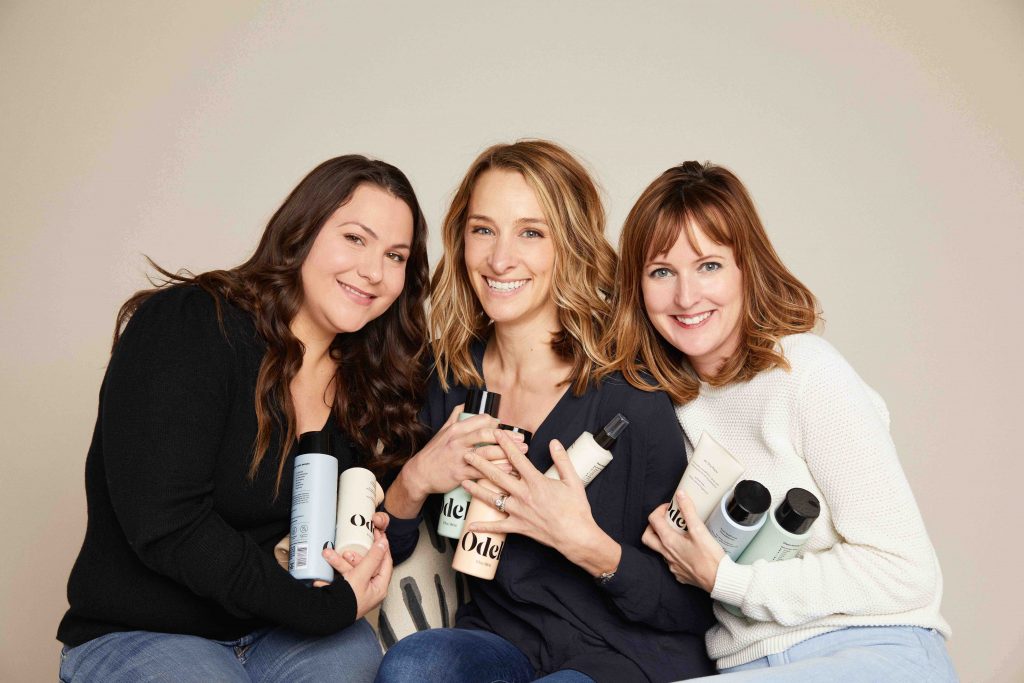
Chatterjee, who previously was VP of marketing at haircare brand Renpure and worked in business partnerships and negotiations at retail chain Target, reached out to people in her professional network at the outset before reaching out to friends and family. She explains, “We wanted to pressure-test the market and see how professional investors looked at it.”
Odele’s funding round featured a combination of friends and family, and corporate executive investors who understood the business, but agreed to be hands off. In her personal circle, Chatterjee only solicited money from those already actively investing. “They were familiar with what it felt like to be an investor and with what to expect,” she says. “We never wanted to be a big percentage of anyone’s investment portfolio.”
Odele could have chosen to exclude friends and family altogether. However, similar to McGhee and Kirkland, Chatterjee determined she wanted them to be a part of what she anticipated would be a fruitful journey.
Once Moss compiled a list of friends and family to approach, she wrote out a script. “It was a very condensed version of, ‘This is what I’m doing, this is why I’m doing it, and this is what it is,’ because a lot of them didn’t know what a family and friends round was,” she says. “I let them know, ‘This is a really risky investment, but it’s also going to help us get off the ground. I believe in this business, if you’re interested in considering, I’d love to send you more materials.’”
When Moss received a yes from the outreach, she would send over her pitch deck with more information on projections, the size of the opportunity and the competitive landscape. She conducted conversations in person. “It was important to me to be able to sit down face-to-face, answer all of their questions and try to be an open book,” says Moss. “It took a little bit more to make the ask of someone who I know personally, and I just wanted to make sure that they had all the information.”
Talking to Beauty Independent in 2020 about friends and family fundraising, she advised founders not to approach everyone right away. Instead, she counseled them to land an investor prior to reaching out more broadly. She says, “You can go to others and say, ‘We’re xx% subscribed,’ and speak to the number or percentage that show strong interest. People like to know someone who came before them feels it’s a good investment. There’s a certain amount of trust there.”
Chatterjee stresses the importance of communicating both the upsides and downsides of the deal. “You have to sell people on your idea, but then, particularly when it comes to protecting your personal relationships and people who might not be used to investing, be crystal clear with all of the expectations and the risks associated upfront,” she says. “Some things just don’t work out and anyone who comes on as an investor has to be willing to lose the money that they invest. While nobody wants to think about that, it is absolutely a reality of business.”
Chatterjee suggests brand founders shouldn’t lead with doom and gloom. Instead, they should open with the opportunity. Still, in advance of signing on the dotted line, investors should comprehend what they’re getting into. Chatterjee says, “Walking through that could save a lot of heartache later on.”
Along with focusing on people who were already active investors, Odele weeded out more risk-averse people by setting a high minimum contribution. By doing so, Chatterjee approximates she eliminated 95% of her friends and family. “That was a really clear qualifier,” she says. “You don’t want to leave people out and, at the same time, this is about your business. This isn’t about your friendship. You have to find ways to keep those objectively separate.”
Setting a high threshold also clued people in to the scale Odele aimed to achieve. The brand launched January 2020 in 1,000 Target stores. Its friends and family round ultimately drew $1 million. Chatterjee says, “This was not about a favor. This was about the business and the opportunity and believing in that opportunity and leaning in big on that opportunity.”
Deon Libra and Type:A set substantially lower minimums to cast a wider net. Deon Libra reduced its minimum amount for participation from $10,000 to $5,000 due to the pandemic. Type:A’s minimum was $25,000. McGhee and Kirkland approached their family members and friends as seriously as they would any investor and continue to provide updates as is typical of relationships between founders and investors.
“There will be questions, and you need to be able to answer every question about what you’ve done with their money and be able to provide that information,” says McGhee. “From the beginning, we’ve been very good about and very meticulous about documenting everything that we do with the money.”
Type:A raised $565,000 from friends and family, besting its $500,000 target. If doable, Moss encourages founders to raise more than they think they’re going to need. She says, “Take as much as you possible can, as much as is available.”
Don’t be afraid of an oversubscribed round. In fact, Moss emphasizes that should be the goal from the get-go. She says, “Always give yourself room to be able to go over. Having cash reserves has never hurt any company in the history of companies.” An attorney comes in handle for founders to avoid diluting their ownership in the process.
Chatterjee calculated how much money Odele would require for two years of being on the market and decided to double that amount for fundraising purposes. She says, “You want to make sure that you have the runway so that you can chase after the growth.”
Padding gives founders flexibility to go after strategies that are effective or pivot when they’re not. Moss says, “Even if you’re thinking about, ‘Oh, well, it’s my friends and family money, so I don’t want to take that much of it,’ you’re raising a round of capital, and you want the business to be successful so that everybody wins.”
Founders worry that friends and family rounds turn off future investors, but that’s not been the experience of Deon Libra, Type:A and Odele. Chatterjee says,“Institutional investors saw our inclusion of friends and family as an added endorsement of how much we really cared and how much thought we were putting into this, and that we would be protecting our investor base no matter what happened throughout the growth of the company because they were people that we personally cared about and loved.”
McGhee and Kirkland believe Deon Libra’s friends and family round demonstrated their ambition and tenacity. McGhee says, “We raised $111,000 through a pandemic when nobody’s financial futures or futures in general were certain, and I think it showed them the hustle around what we were able to do in that amount of time.”
Deon Libra’s friends and family round covered its custom packaging, which McGhee was intent on having rendered prior to approaching institutional investors. She says,“By the time we reached angel investors and VCs, it was like, ‘This is what we’ve done so far with the hundred grand. The brand voice is solidified, the brand aesthetic, the packaging, we just really need the money to go into production.’”
Following its friends and family round, Deon Libra garnered $800,000 from Dyrdek Machine, a venture creation studio from entrepreneur and television personality Rob Dyrdek, and is in the middle of a seed fundraise with the objective of securing between $2 million and $2.5 million.
The players
5 mentionedToo Faced

AS Beauty
Odele
Not Your Mother's
Target