10 Years Later, Where Indie Beauty Expo's First Brand Exhibitors Are Now
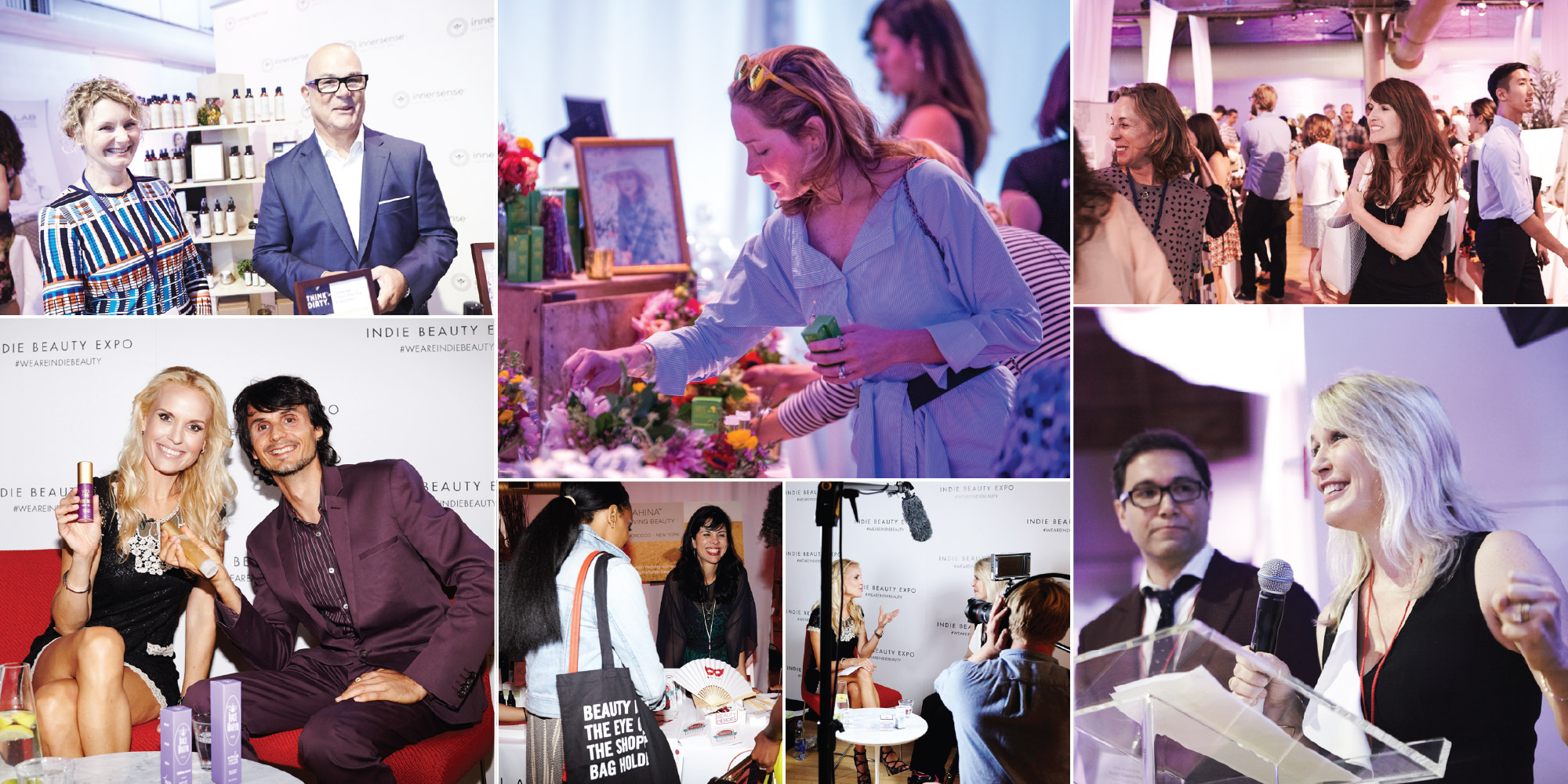
Indie Beauty Expo was the creation of New York City aesthetician and entrepreneur Jillian Wright. Wright had a fledgling skincare brand she sold at her Manhattan spa and was keen to get in front of a wider audience. Wright approached her then-client Nader Naeymi-Rad about the idea of creating a trade show specifically for brands like hers. When market research revealed there were over 400 brands that could be possible exhibitors, the pair launched the company Indie Beauty Media Group and decided to pull the trigger on an indie beauty trade show.
IBE made its debut at Manhattan’s Metropolitan Pavilion, with over half of the 83 brands in the skincare category, 12% in color cosmetics and 11% in wellness. After the initial show, IBE traveled to Los Angeles, Dallas, London and Berlin. The concept was sunsetted as a result of COVID pandemic precautions diminishing in-person events.
Today, BITE, the next generation of IBE, takes place in IBE’s birthplace, the Metropolitan Pavilion. The beauty industry has changed considerably over the past decade, and BITE is illustrative of the changes, forging deeper relationships across the beauty industry ecosystem, from ingredient suppliers to investors and manufacturers to merchants, to be the epicenter of beauty discovery.
“About five years ago, collectively we realized how much harder it was to successfully market a brand and capture that customer. Now, it’s affiliates, pay for play, testers, chargebacks, paying to have retailers market your brand. It’s the reality of the business now,” says Wright. “What we created back in 2015 stimulated an underserved sector of the beauty industry that got everyone excited and rightfully so. It was an incredible time for indie brands. It still is. However, the landscape is a rougher terrain.”
Three-quarters of the brands that originally exhibited at IBE continue to be in business. Some have exited (Briogeo, for example, scaled to $100 million in sales before Wella purchased it in 2022), some have soared independently, some are sticking with it despite blustery headwinds, and some have closed. Vapour, Pour le Monde and Svelta Beauty are among the closures.
Beauty Independent checked in with 12 of the OG IBE brands, including Tata Harper Skincare, Innersense Organic Beauty, Grande Cosmetics, Osmia Skincare and Tracie Martyn, embodying a variety of experiences in the indie beauty space to see where they are now and how the indie beauty and wellness landscape has shifted.
Tata Harper Skincare
Like IBE, Tata Harper Skincare is celebrating a big anniversary in 2025. The luxury clean beauty brand turns 15 this year. Back when it was five, IBE was one of the first trade shows Tata Harper participated in. Harper says it had “a personal impact for me, a chance to really hear firsthand from our clients and those choosing independent beauty brands at the time. It was also, I remember, so well organized and a great event.”
In 2022, Tata Harper was acquired by Amorepacific via a roughly $125 million special purpose acquisition company (SPAC). Two years later, Shay Bennaim, former GM of North American for Le Labo, was brought on as global brand president to realize the goal of making Tata Harper a $100 million brand. The brand isn’t straying from its ethos as it positions itself for growth.
“The increase in demands for natural solutions, which is set to fuel the skincare category growth for the next five to seven years, is an opportunity to reassert the uniqueness of the standards and approach that Tata Harper Skincare was founded on,” says Bennaim. “Tata Harper set out to create natural products not as a trend, but in response to a need for natural ingredients and transparency in formulas, all with a commitment to delivering the highest performing results.”
Deep research and development is central to Tata Harper’s development. “Our team’s unique formulation process, together with AmorePacific R&I, the first beauty lab in South Korea, and a leading expert in the world, has been working on new, multifunctional formulas and formats,” says Bennaim. “In the coming months the brand is prepared to go deeper with our Superkind line for sensitive and sensitized skin and have an exciting new innovation coming soon.”
Innersense Organic Beauty
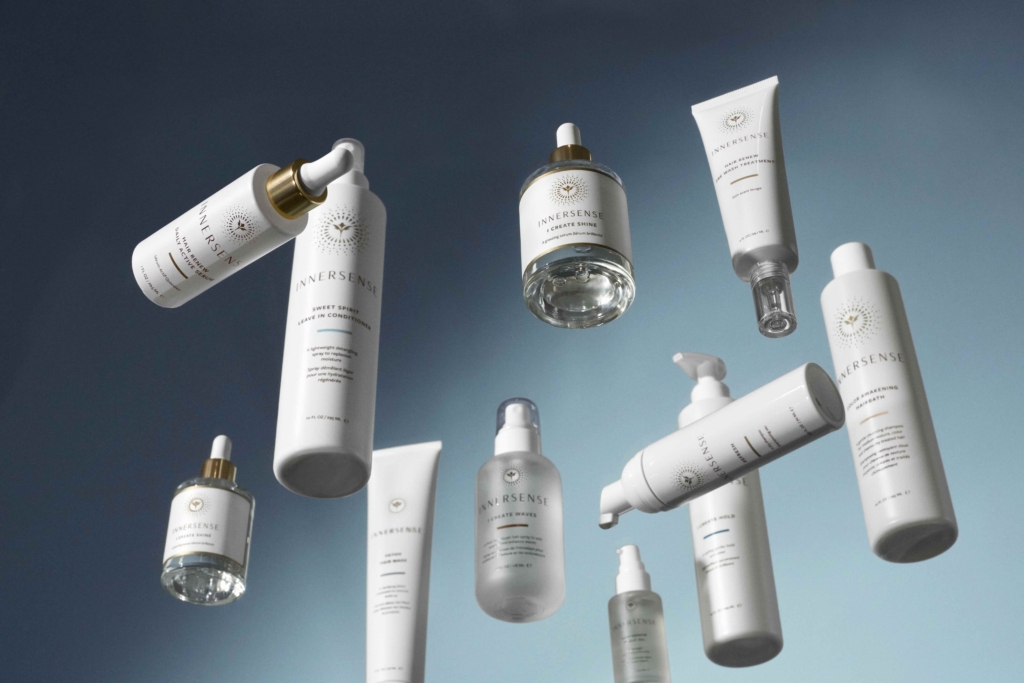
Predating IBE, Innersense Organic Beauty is marking its 20th year in business this year, but the pioneering clean haircare brand from husband-and-wife team Greg and Joanne Starkman is just getting started. Greg says, “We see Innersense becoming the global leader in clean, professional-grade haircare, expanding internationally, pushing boundaries in scalp health and wellness, and deepening our sustainability commitments.”
When IBE premiered a decade ago, Innersense had about a dozen haircare products priced from $18 to $22 and sold in fewer than 500 doors. Today, it’s in thousands of salons and recognizable retailers like Ulta Beauty, The Detox Market and Credo, with more on the way. It recently entered Liberty in the United Kingdom and has Harrods, also in the U.K., and Oh My Cream in France on deck for November. Innersense’s assortment spans 34-plus stockkeeping units priced from $26 to $38.
Last September, timed with the launch of body care, the brand told publication Women’s Wear Daily that it was generating nearly $100 million in global sales and projected its sales would advance 5% to 10% annually. Greg tells Beauty Independent that key strategies sparking its growth have been championing professional hairstylists as ambassadors, engaging enthusiastic influencers, diversifying distribution and staying true to its clean, sustainable positioning. Innersense is certified as a B Corp and uses packaging that’s at least 50% comprised of post-consumer recycled materials.
“We’ve adapted to dramatic shifts in the market. Where clean was once niche, it’s now an expectation, and we’ve leaned into our leadership in clean chemistry, transparency, eco-packaging and inclusivity while staying grounded in our purpose and authenticity as a founder-led brand,” says Greg, adding, “The challenge over the next decade will be continuing to differentiate as clean becomes table stakes, while seizing the opportunity to model how a certified B Corp brand can thrive in beauty’s next era.”
Osmia Skincare
Osmia is evolving with the times. With consumers prioritizing clinical skincare, thirteen years after its launch, the clean brand based in Carbondale, Colo., has unveiled renovated packaging that brings the expertise of founder Sarah Villafranco, who worked as an emergency room doctor before transitioning to beauty, to the fore.
The redesign was handled in-house and cost the brand about $150,000 for updated packaging. It’s moved Osmia’s main collection to bright blue boxes that allude to the color of the Colorado sky and indicates on their sides that the products are “doctor formulated.” The brand’s Craft Series of seasonal offerings will be redone in October with thick watercolor paper featuring a rose gold foil stamp and debossed botanical graphics.
“More people I’ve seen who don’t have expertise are coming into the space and acting like they do,” says Villafranco. “I realize I need to stand in my expertise a little more strongly. I earned it and really it does inform every single formula we make, and my willingness to grind through all of the ingredients and the information and really assess them for efficacy and safety is different than a random person.”
Osmia’s business has been steady in recent years, with revenues hovering in the range of $2 million to $5 million per year. DTC fuels approximately three-quarters of the brand’s sales. Outside of DTC, it’s in retailers like The Detox Market, Beauty Heroes and Aillea, and is on Amazon via a partnership with Carbon Beauty.
Bestsellers include $24 Black Clay Facial Soap, $62 Purely Simple Face Cream and $12 Lip Doctor. Encompassing the Craft Series, which contributes about a quarter of Osmia’s sales, prices go from $12 to $175. Villafranco identifies three types of consumers drawn to the brand: those with skin conditions such as perioral dermatitis, acne and eczema, those who are pregnant or have been through a health scare hunting for clean products, and those who are lovers of essential oil-scented products.
Osmia has a team of around 20 people, and one of Villafranco’s main passions is cultivating a no-drama company culture. The brand manufactures 70% of its products itself and occupies roughly 10,000 square feet across three facilities in Carbondale, a mountain town 30 miles from Aspen. Glancing ahead to Osmia’s next 13 years, Villafranco wonders about the possibility of securing a partner or executive to push Osmia to the next level, but she’s adamant she doesn’t want the brand’s essence to change.
SkinOwl
Reminiscing about the genesis of IBE, founder Annie Tevelin remembers a living room-like setup her brand SkinOwl created for IBE’s debut in Los Angeles. “One thing that hasn’t changed is we’ve always been a brand that wanted people to come into our living room,” she says. “Exactly how we showed up in the show is how we show up now.”
Where SkinOwl is showing up is somewhat different, though. Tevelin decamped from Los Angeles to Idaho at the height of the COVID pandemic in September 2020 and subsequently opened a store, where customers can receive free 45-minute makeup and skin pamper sessions and peruse a selection of about 30 brands, including Sweed Beauty, JamieMakeup and Ere Perez as well as SkinOwl.
A decade ago, SkinOwl had five SKUs, and its range has expanded to 15 priced from $38 to $88 such as Geranium Drops, Pomegranate Enzyme Cleanse, Lemongrass Dew and The Charcoal Bar. In 2023, it experienced its highest growth rate, skyrocketing 400% from $100,000 to $500,000 in sales. This year, it expects to register 250% sales growth.
SkinOwl’s online customers on average buy three or more products, and 60% of its customers are returning to the brand. At the outset of SkinOwl, its customers were largely in their 30s. They’re largely in their 40s now. The brand was previously in retailers like The Detox Market, Credo and Cult Beauty, and it recently entered Boise Co-op Market. However, Tevelin stresses massively scaling retail isn’t a goal.
“While I would like to say our involvement in IBE was to get into the Targets and the Nordstroms, I’d be lying,” she says. “That was never our goal. We are not an exit strategy brand.”
Tevelin, who launched SkinOwl’s products in 2013 after building a following in a Facebook Group where she shared her skincare journey and advice, is spreading her wings beyond SkinOwl. She’s working on a salad eatery concept tentatively called Little Gems and helping former “The Biggest Loser” trainer Dolvett Quince develop a skincare brand.
“SkinOwl is exactly where I want it to be right now,” says Tevelin. “The future is more consulting and helping other people build brands that mean something.”
Strange Invisible Perfumes
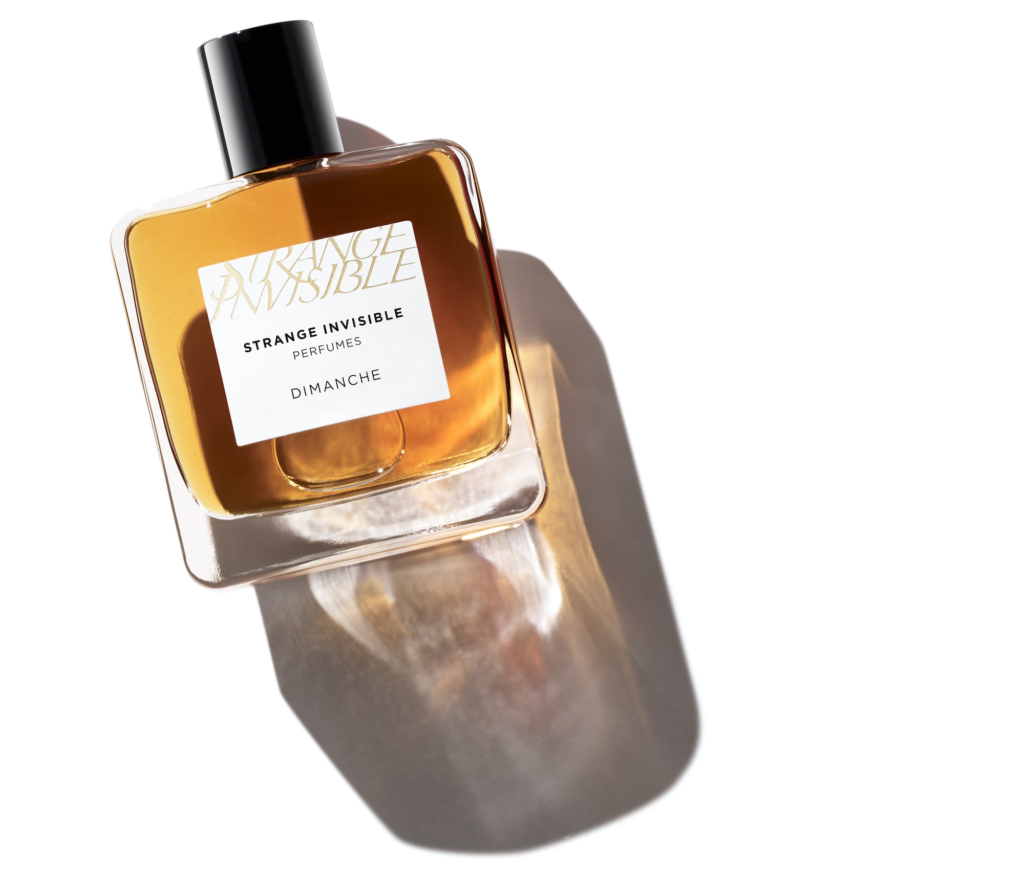
Strange Invisible Perfumes was one of only two fragrance brands on the floor at the first IBE. Alexandra Balahoutis launched the botanical fragrance brand in 2000 long before niche fragrances became the darling of the beauty industry. The founder and perfumer has had a front row seat to the transformation of the fragrance category and the beauty industry as a whole over the past 25 years.
“I won’t presume to define exactly what an independent brand was then or is now, but it’s clear there were far fewer of us 10 years ago,” she muses. “That made it both easier and harder—easier to stand out, yet harder to thrive in a marketplace still dominated by highly formulaic brands. Today, there are countless clean beauty brands, some of which truly deliver on their claims and others that are only marginally better than what we had years ago, but you won’t hear me complain. I’m much happier with where the market is now than I was back then.”
Strange Invisible’s collection spans more than 20 scents, including a unique creation for each of the 12 zodiac signs. In addition, it has a boutique on the storied Abbot Kinney Boulevard in the Los Angeles neighborhood Venice, where customers can shop its fragrances and Balahoutis’s hand-picked curation of products from clean beauty brands, including Le Prunier, Rahua and Vertly.
GrandE Cosmetics
At seven years old at the time of IBE in 2015, Grande Cosmetics was one of its most senior brands. Founder Alicia Grande relished the opportunity the show afforded to meet people IRL. She says, “That is very much my philosophy, and, in my opinion, the best way to make deals while getting to know people. This approach played a major part in our strategy in the beginning and how we grew Grande’s business the past 17 years.”
Grande Cosmetics has gone from launching its GrandeLash range in 2008 to selling a whopping 10 million tubes of its Lash Enhancing Serum by last year. The brand is currently in the portfolio of Performance Beauty Group, where it joins Lilly Lashes, Babe Original, Bondi Boost, Velour Lashes and FlutterHabit.
In tandem with Grande Cosmetics’ growth, the ecosystem it resides within has exploded. “[There’s] a lot more entrants into the marketplace,” says Grande. “Many focus on high quality ingredients and interesting formulations that address niche concerns for various types of beauty consumers. There are many more options for consumers interested in beauty, and you can generally find any solution to whatever your concern is. We believe the key to our growth and success is making our customers feel more confident about the way they look naturally.”
Fitglow Beauty
Clean makeup and skincare brand Fitglow Beauty was barely a year old when it exhibited at the first IBE. Over a decade later, the brand is still going strong, no mean feat for an indie brand. “The indie beauty space has undergone dramatic changes, with many brands selling or closing,” says founder Anna Buss. “It has become a significantly more competitive environment, and very few indie brands have managed to remain independent.”
Buss has taken the slow and steady approach to scaling bootstrapped Fitglow. “While this path presents its challenges, it truly allows us to be responsive to our customers’ needs and provides me with the flexibility required to navigate running a small business while managing my trigeminal neuralgia plus being there for my family.” She adds, “My personal experience with rosacea has led me to further focus on our redness rescue collection, aiming to help more customers facing similar issues.”
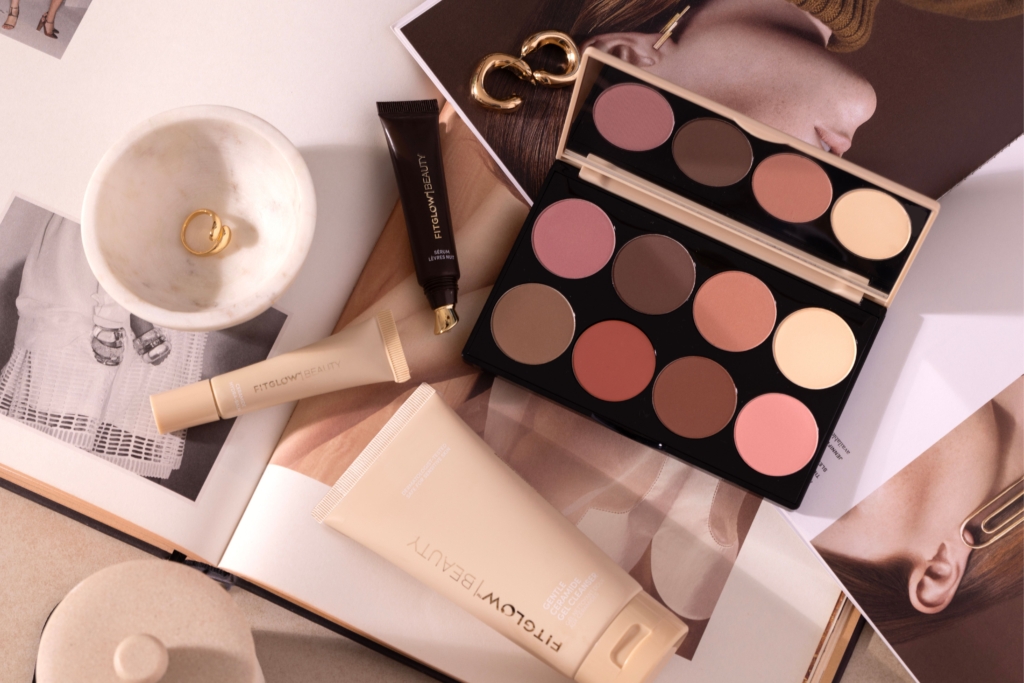
Fitglow Beauty started with six products and it’s extended to over 20. A recent product launch, Gentle Ceramide Gel Cleanser, sold out in six weeks, and the brand’s Lash Care Mascara, which launched in late July, is nearly sold out. The brand is carried by several retailers it initially met at IBE such as The Detox Market, Beauty Heroes and Clean Beauty Market. “We forged long-term relationships that remain strong even after a decade,” says Buss. “I truly feel that IBE served as the ultimate launch hub and community for startup brands.”
CIRCCELL
After working as a mechanical engineer in the energy business, Maya Crothers moved to Jackson Hole from Dallas about 15 years ago to focus on her family. She expected to be a PTA mom, not a brand founder, but the high-altitude air walloped her skin, and she investigated effective skincare ingredients for it as a hobby. The hobby turned into a business when she decided to invest about $15,000 from her personal savings to start the skincare brand Circcell.
“You could do that today, but you would have to put in $15,000 the next week. I’m not saying it’s impossible, it’s just a lot harder,” reflects Crothers. “Today, PR and eyeballs have gotten so expensive that you almost already have to have free eyeballs. Back then, if you were a mom on a mission, you could do it. Now, if you are an influencer with a million followers or if you are a celebrity derm and you already have a platform, then you can do it.”
Circcell came to IBE when it was only about a year old and had five products. Since then, its selection has risen to 12 products priced from $50 to $190, including bestsellers Geothermal Clay Cleanser, Abo +|- Eye Serum and Abo +|- Face Serum. Although Circcell has pursued retail and is available online at Neiman Marcus, it’s shifted its attention to spas, along with DTC, and is in about 100 spa locations.
“There are tens of thousands of owner-operated, women-run, entrepreneurial spas that I think are a bit underserved,” says Crothers. “We work with each spa individually, and we custom-tailor solutions for them. We don’t say you have to spend $20,000 or buy 20 SKUs at a time.”
From the very beginning of Circcell, Crothers has operated the brand to suit her lifestyle in Jackson Hole—and that’s not changing. “I was already in my 40s when I founded it. If I was in my 20s, it may have been different,” she says. “Circcell will always be a size where it’s manageable for me to where I can continue to operate the company in a profitable way that’s meaningful for me that still works with my lifestyle.”
True Moringa
MIT grad Kwami Williams and Harvard University alum Emily Cunningham met in Ghana, where Williams was born and raised, in 2013 through MIT’s D-Lab, a program exploring innovative solutions for global poverty, and seized upon the potential of moringa, a plant bursting with vitamins A, C and E, minerals like calcium, potassium and iron, and antioxidants. The next year, they launched the brand True Moringa, and they showcased it at IBE a year after that. The event helped it land an order with Birchbox and garner interest from indie retailers nationwide.
“Most importantly, the connections we made with founders and the friendships we formed through the Indie Beauty Expo helped us weather the storms of running a small business through the pandemic and through a devastating farm and factory fire,” says Cunningham. “We emerged from these challenges stronger because of the relationships we had formed with other indie brands.”
Today, True Moringa’s regenerative superfood skincare is sold at Whole Foods Market, Thrive Market, Macy’s and HSN. Cunningham views the mainstreaming of natural beauty as raising the bar for brands in it. “Price points have become more accessible to meet a wider range of customers on the shelves of big-box stores, mass retailers and grocery, and brands are less precious about where they are willing to sell,” she says. “With this widening customer base, natural and ‘free from’ claims are no longer enough. Customers are rightfully demanding efficacy on par with conventional skincare.”
Over the next few years, True Moringa plans to build its bulk ingredient and private-label business, supplying traceable regenerative and organic ingredients like moringa, hibiscus, lemongrass, cayenne and others from its organic farm and processing center in Ghana to indie beauty brands around the world. Cunningham says, “Customers are demanding more traceability and brands are looking for reliable, direct sources for their natural ingredients.”
Tracie Martyn
Bootstrapped skincare brand Tracie Martyn grew out of Martyn’s New York City spa catering to supermodels and A-list pop stars like Rihanna and Madonna. The brand was an extremely early adopter of the clean beauty movement, but its focus on plant-based actives never came at the expense of a luxurious customer experience. Tracie Martyn uses vitamins, botanicals, antioxidants, gentle exfoliating acids and enzymes in its products, and its hero product is the $122 Face Resculpting Cream.
Tracie Martyn currently concentrates on direct-to-consumer distribution over retail. Marius Morariu, co-founder of the brand, says, “The DTC funnel, when properly funded and efficiently managed, can yield more measurable and reliable results faster than the cost-intensive, lower margin and often prohibitive retail-only model.” He adds, “TikTok remains one of the few channels that can exceed expectations, but is also rarely an overnight success.”
Reflecting on IBE’s first edition a decade ago, Morariu says, “The exposure, including sharing my founder story on stage and joining panels, helped amplify our credibility in the beauty industry as a pioneering clean, clinical and sustainable indie brand and expand relationships beyond our own direct-to-consumer channels.” Back then, he continues, “Indie beauty was still seen as niche and sometimes experimental. Today, it’s the engine of innovation for the entire beauty industry. We’ve watched clean, conscious, founder-driven brands move from the periphery to the mainstream.”
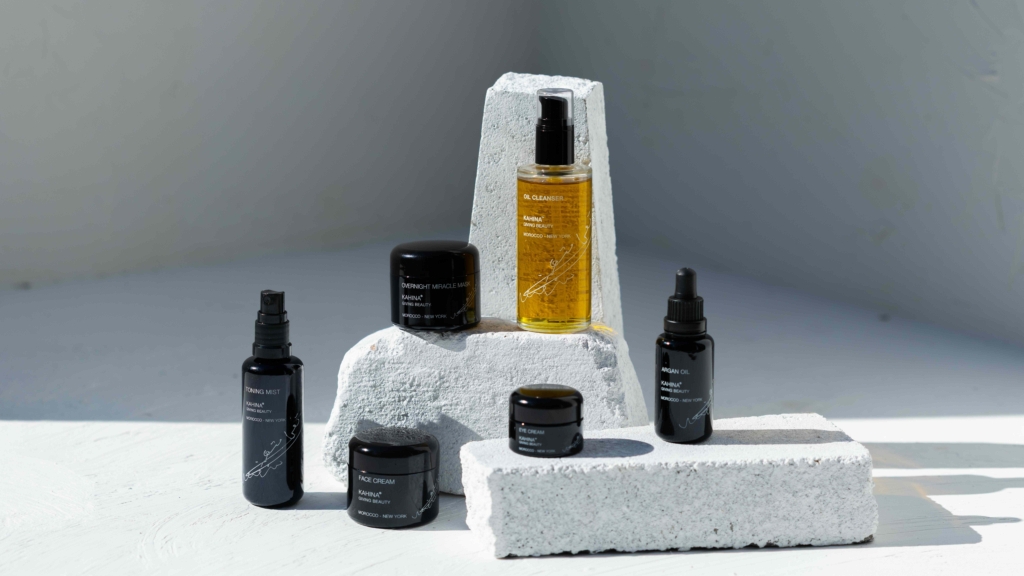
Kahina Giving Beauty
During a period when consumer businesses were increasingly thinking of the world rather than simply their wallets (remember the heyday of Toms), Katharine L’Heureux founded Kahina Giving Beauty in 2008 to provide fair wages for the Berber women of Morocco at the root of the argan oil industry. Since then, she acknowledges that the brand has at times stalled and at other times surged.
Discussing the centrality of brand mission to Kahina Giving Beauty, L’Heureux says, “It’s important to us and the people who buy from us. We have a really loyal customer base who have been buying from us for many years, and they value that. I don’t know how it resonates for a wider audience.”
In the United States, the brand’s customers are typically women dealing with perimenopausal and dry skin issues. Unexpectedly, however, China has become an engine for Kahina Giving Beauty’s sales and presently drives a majority of them. The brand’s popularity in the country was instigated by Teresa Cheung, a former actress and Chinese beauty influencer, who spotlighted its $150 Prickly Pear Seed Oil on social media. The product is its most popular in China and is incredibly popular with Chinese Americans, too.
This year, Kahina Giving Beauty’s sales have softened in China as tariffs imposed by President Donald Trump have disrupted global trade. Back in the U.S., the brand is carried by retailers like Beauty Heroes, Ayla and The Detox Market, but most of its sales come from DTC distribution, a channel that’s been a bigger focus for it than retail, although it’s on Faire to gain retail exposure.
Kahina Giving Beauty has pulled back from releasing products and is relying on its product powerhouses to power business. Along with Argan Oil, which is priced at $36 for a 30-ml. size and $82 for a 100-ml. size, its bestsellers include $78 Eye Serum, $65 Eye Cream and $72 Brightening Serum.
As the brand moves into the future, L’Heureux’s daughter Grace is taking a bigger role shaping its business. “I feel like we have nine lives,” says L’Heureux. “There is always someone who discovers us and falls in love with the brand and the products and promotes us. I have just come to go with the flow and hope for the best without expecting anything.”
Hynt Beauty
A gemologist by trade, Meryl Marshall, who spent 20 years in the jewelry business, became interested in clean beauty after being diagnosed with breast cancer in 2004. Three years later, she and her husband Craig began backing a cosmetics brand before transforming it to Hynt Beauty in 2013 with upscale packaging after a former partner departed. Early to be conscious for people and the planet, the makeup and skincare brand launched in The Detox Market in 2017 and Ulta Beauty in 2020 as part of the beauty specialty chain’s Sparked program for emerging brands.
Hynt’s Ulta timing couldn’t have been worse. The pandemic hit hard as it was rolling out to Ulta stores, and makeup sales cratered with precautionary mask wearing. Skincare has sustained the brand’s business. Its bestsellers are $65 mineral sunscreen and primer Sun Prep Broad Spectrum SPF 25 and $34 Duet Perfecting Concealer. Marshall has been trimming the assortment—mascara is gone, for example—to help Hynt play to its strengths.
Although it’s no longer sold at Ulta, the brand remains available at The Detox Market and several other clean beauty retail destinations, and it has distributors in Denmark and Norway. Marshall says a typical Hynt customer is a 45-year-old woman who, like her, may have had a health crisis and is looking for beauty products that avoid synthetic ingredients. Hynt maintains a commitment to natural ingredients.
These days, Marshall describes herself as semi-retired, and she’s decreased the number of hours she dedicates to Hynt from about 60 hours per week to roughly 20. While the brand is too small for most potential acquirers, Marshall would consider buyers if she felt they would be good stewards of the brand.
“We are in the black, which is pretty amazing. We run it really frugally,” she says. “At one time, we were ordering 5,000 to 6,000 [units for manufacturing] at a time for our SPF. Now, it’s more like 2,000, but, believe me, we go through them fast, and we make fresh batches, and I like that.”
The players
5 mentionedBriogeo

Deeper
Carbon Beauty
Better Being
Essence