“Unprofitable Brands,” Burnout And Consumer Caution: Why Small Beauty Retailers Are Still Struggling
Faced with growing consumer caution, increased competition from brands, sliding sales, steep costs and burnout, small retailers are doubling down on community and assortment differentiation to stand out to customers. However, many shops are closing their doors permanently. In recent months, beauty retailers in the United States like Clean(er) Beauty Shop, Ware, Poppy Avenue Clean Beauty Bar and Selenite Beauty have all shuttered. North of the border, in Canada, MisMack Clean Cosmetics and Bare Market are gone now, too.
“Small and medium-sized entrepreneurs are the backbone of the economy, and particularly so in small towns,” says Erika Kirkland, publisher and editor of InStore Magazine and Giftbeat, which serve the independent gift store market in Canada and the U.S., respectively. “These are the retailers that are supporting local charities and local sports clubs. It’s not the Amazons or the Walmarts. If we start to lose these independents, then our main streets are going to look so different.”
Similar to last year, the issues facing small retailers aren’t happening in a vacuum. According to retail data provider Coresight Research, almost 3,200 brick-and-mortar stores closed as of May this year as large retailers struggle with bankruptcies and shutter underperforming stores. Driven by closures at Family Dollar, Rue21, 99 Cents Only Stores and CVS, store closures jumped 24% from a year ago.
Six years after opening its doors in Asheville, N.C., refill shop Ware closed its business on July 8. Founder and owner Gillie Roberts announced the closure in a June 26 Instagram post on the retailer’s account, which garnered over 300 comments and 1,300 likes. In it, she stated, “The last 6 years and the slew of ‘unprecedented times’ that accompanied it have made for a harrowing entrepreneurial journey, but I’m immensely grateful to each of you who has been along for the ride.” She ended the post by saying, “Please shop small & local. Small businesses are dropping like flies. Ware is neither the first nor will it be the last.”
Declining sales ultimately sank Ware over the past year, with Roberts pointing to depressed discretionary spending as the root cause. The refill shop, which carried over 300 stockkeeping units across home, body care, skincare, haircare and personal care, notched a roughly 30% dip in sales in the first quarter of this year from the same year-ago period. Holiday sales were also bleak, registering flat growth compared to the year prior.
“After the typical household has paid their rent/mortgage, put gas in the car, and gone to the grocery, there isn’t a whole lot of money left these days,” says Roberts. “Additionally, election years are historically bad for retail. There is a growing sense of uncertainty, and that plays out financially in the form of more conservative spending.”
According to global management consulting firm McKinsey & Co, consumer optimism declined between the first and second quarters of the year as shoppers pulled back their spending on non-essential goods such as skincare, makeup, personal care, household products, fitness services and vehicles. 33% of consumers surveyed in the second quarter of the year said they were optimistic about the state of economic conditions in the U.S. Thirty-eight percent said they were optimistic during the first quarter of the year.
Ware attempted to ease some of its financial burden before it closed its doors. It sublet part of its space to a sustainable fashion retailer called Clad for a shop-in-shop installation to rev up foot traffic and decrease rent costs. Roberts also started looking for a second job to cover her salary, but ultimately decided to pull the plug on Ware.
“I’ve tried so many things but didn’t find any silver bullets. Everything seemed to move the needle a bit, and it all seemed to take a ton of time, energy, and/or capital,” she notes.
Solid haircare brand Dip has seen 40 of its small retail partners close their doors since the beginning of the year. Over 20 of the brand’s stockists had closed as of July last year. While store closures have sent more traffic to the brand’s website, Kate Assaraf, CEO of Dip, says that the closures have affected her personally. She posits that brands’ online promotional strategies have adversely affected small retailers that can’t keep up with heavy discounting.
“Retailers today face the additional strain of competing with struggling, unprofitable brands that heavily discount online to capture any remaining margins,” she explains. “This practice makes it nearly impossible for retailers, regardless of size, to compete effectively. As CAC [customer acquisition costs] continues to rise, I foresee more brands resorting to heavy discounting to drive sales, further hindering sell-through in physical stores.”
While beauty remains largely immune to the heavy discounting practices that generally affect apparel, grocery, toys and electronics, the frequency of promotional activity in the category is on the rise. As of November last year, the number of weeks that mass beauty products were available on promotion had been steadily increasing since 2020, according to consumer insight firm NIQ. However, it found that 2019 still exhibited a greater discounting frequency for beauty.
Anastasia Bezrukova, founder and CEO of makeup brand Minori Beauty, believes undifferentiated assortments and the high cost of working with larger brands like RMS, Kosas, ILIA Beauty and Westman Atelier are adding to small beauty retailers’ troubles. “We heard from some of our partners, like Veer & Wander in San Francisco, that bringing in a brand like Westman Atelier would have cost them a $18,000 opening order buy-in, which is a very hard cost to swallow.” Minori is carried across a wide indie retail network of about 300-plus stockists. Six of them have closed over the past year.
Galvanized by the growing number of social media posts she saw about store closures, Ariane Scholl, co-founder and CEO of general store Hearth & Hammer, posted a message on her company’s Instagram account on April 25 that implored customers to shop small. The post quickly gained steam with other entrepreneurs and small businesses on the platform. It was shared over 800 times and received about 10,000 impressions.
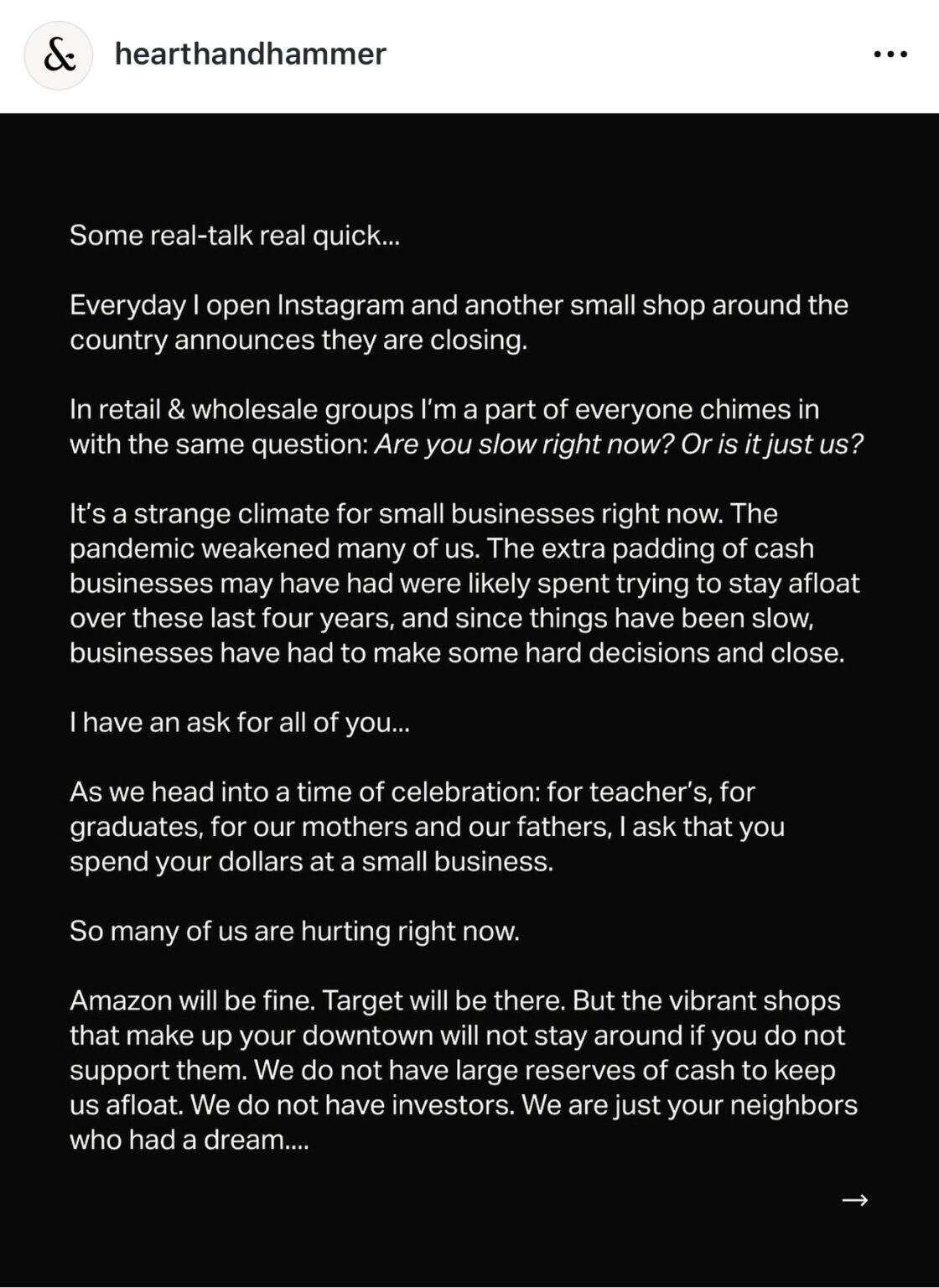
“I felt this kinship and solidarity, like it was nice to know other people were feeling the same way and it wasn’t just us,” says Scholl. “But it was also terrifying to know that it wasn’t just us because then it points to a larger systemic issue, which is the inflation that we’re all dealing with as consumers.”
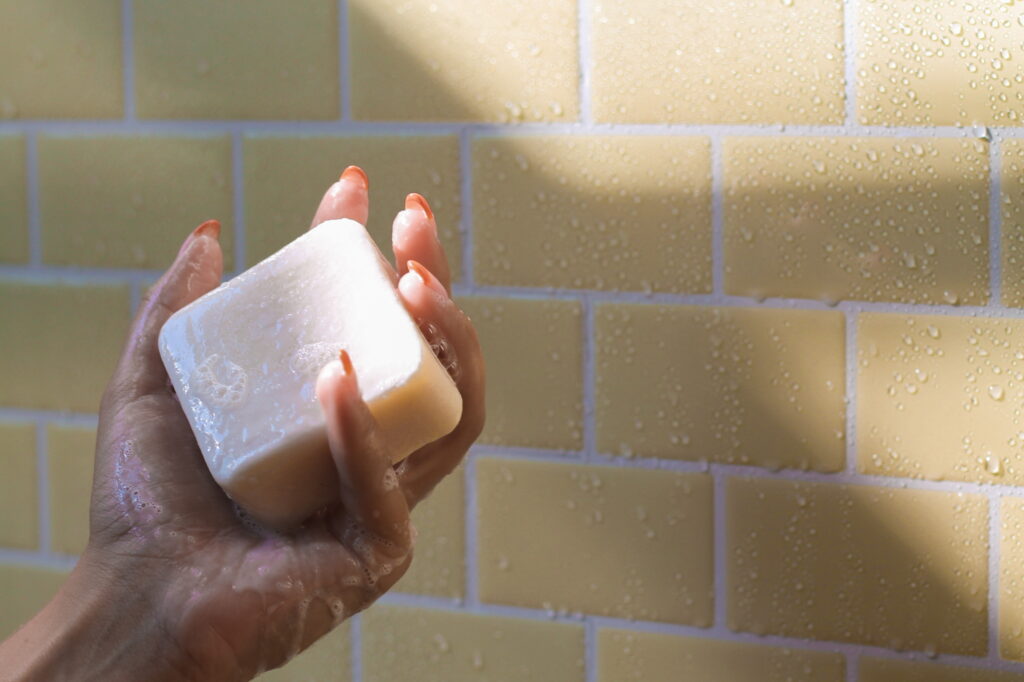
Launched in 2019 in the Chicago suburb of Batavia, Ill., Hearth & Hammer stocks over 2,000 products across several categories that span home goods, pantry staples, accessories, stationery and apothecary as well as an in-house candle line that it manufactures and sells on-site. The retailer’s apothecary section includes skincare, makeup, hair care, body care, fragrance and nail care products, and accounts for about 2% of its total sales. It recently decreased its skincare offering to focus more on personal care items like soap bars. Soap and fragrance are Hearth & Hammer’s top-selling beauty categories.
To differentiate it from large retailers and specialty boutiques, Hearth & Hammer’s product assortment is made up exclusively from small brands and local artisans. Retail constitutes about 70% of its total business, while its wholesale candle business accounts for the balance.
Last July, Hearth & Hammer moved to a 4,900 square-foot historical location about three times the size of its previous store. Formerly the site of the U.S. Wind and Engine Pump Company, a company that created windmills, Hearth & Hammer’s new store gives it greater visibility in the community compared to its off-the-beaten-path previous location. Sales were steady through the holiday season, however, they’ve ebbed and flowed since the beginning of this year. Following a slow first quarter it saw a surge in April; sales decreased again in May and June became the second slowest month of the year for the retailer so far. Sales picked up again in July, and Scholl is anticipating another lift in the fall.
Steeper costs have been a challenge for Hearth & Hammer across its business this year. The retailer cut about 5% of its assortment in response to brand partners raising their prices. Meanwhile, margins on its candle line have eroded as the cost of wax and other components have nearly doubled in the past five years. Consumers are also trading down at Hearth & Hammer, the average order value on select items in the store slipped from $30 to $40 down to $20 to $25 this year.
Scholl underlines burnout as a key reason why many small retailers are closing their doors, especially as owners are forced to pivot their businesses in response to frequent challenges. “Sometimes struggle breeds innovation and it actually helps support the business in a way that you wouldn’t have thought otherwise,” she explains. “But then sometimes you try things and it’s a flop and you’re like, oh no, money feels so precious. Everything has to be a success. If I mess this up, I’m not sure what’s going to happen. Will we need to lessen hours or pull back on this lever or that lever? That’s not a joyful place to run a business from.”
Hearth & Hammer is focused on community outreach as it looks to the future, and it often partners with other local businesses to boost awareness and foot traffic. For example, it joins forces with a neighboring record store and art gallery on the second Friday of every month for an event featuring live music, art and shopping. It also leans into corporate gifting opportunities, including tapping local realty groups.
“Where we’ve always succeeded is in our creativity,” says Scholl. “So, I feel hopeful since we’ve weathered and course-corrected all the other times and got through it. History is on our side that we will figure out the next struggles to come.”
Small retailers that curate brands that are not readily available on Amazon will have a leg up over their competition, theorizes Assaraf. “Brands themselves need to maintain fair pricing and refrain from deeply discounting their DTC orders. It’s a risky strategy to prioritize independent stores, but so far, it has proven successful for Dip. I hope other brands will follow our lead.”
Bezrukova notes that Minori’s strongest-performing indie retailers keep their assortments tightly edited and offer a service component like personalized skincare treatments to build loyalty. She points to Beauties Lab in Montreal as an example of such a retailer. “We’re one of their few makeup brands alongside more niche brands like NOTO, 19/99 and Rituel de Fille,” says Bezrukova. “We’ve seen very steady and strong sell-through there over the years.”
The players
5 mentionedAS Beauty

Kinship
Rituel de Fille
Too Faced
Kosas