Focused On Bigger Issues, Ulta Beauty And Target Step Back From Shop-In-Shop Expansion
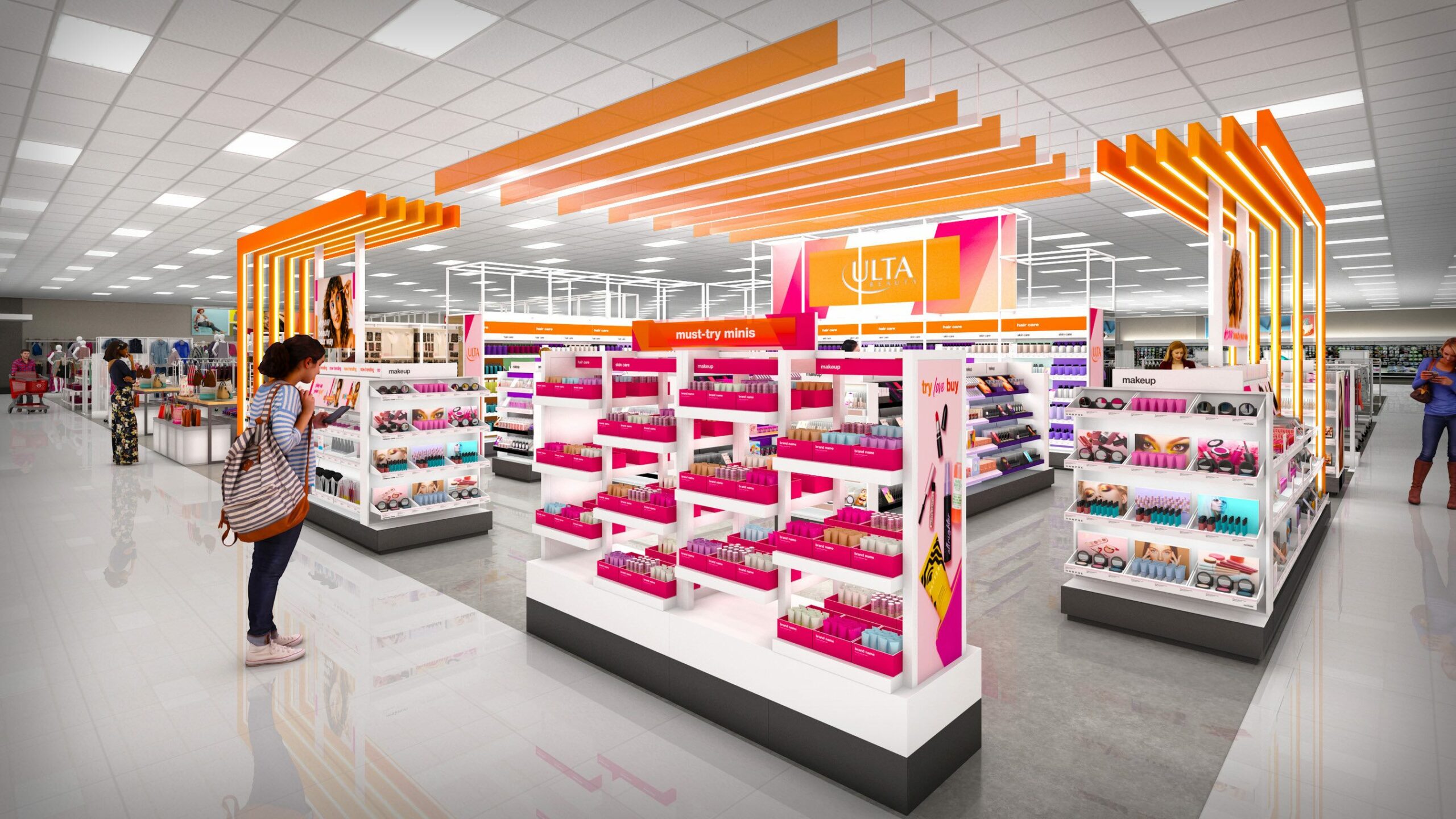
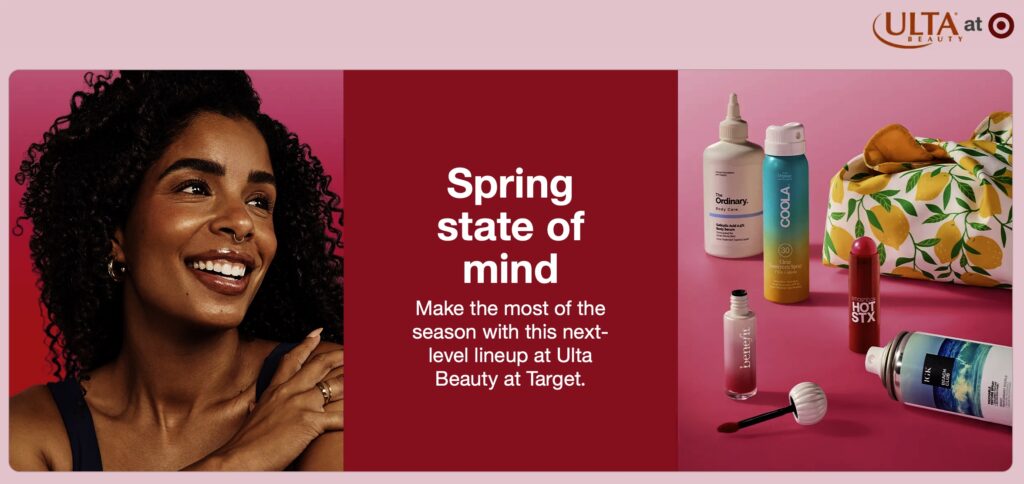
Ulta and Target previously had expected to grow the number of shop-in-shop locations to 800, up from 610 currently. Introduced in 2021 with 100 locations and expanded by about 100 yearly since then, the Ulta Beauty at Target assortment features over 50 largely prestige beauty brands, including Anastasia Beverly Hills, Clinique, Buxom, Stila, Tarte, Smashbox, Benefit Cosmetics, Urban Decay and Fenty Beauty.
First covered by the publication Retail Brew on Friday, Kecia Steelman, who was installed as president and CEO of Ulta after Dave Kimbell stepped down as CEO in January, informed analysts at J.P. Morgan’s 11th Annual Retail Round Up Conference that the pause will allow the beauty specialty chain and Target to “drive efficiencies and leverage the learnings that we’ve had to really unlock value for both of us collectively together.”
Brands were filled in on the expansion pause in December last year in a letter from chief merchandising officer Monica Arnaudo. Obtained by Beauty Independent, the letter reads, “We sincerely appreciate your understanding as we prioritize operational excellence and long-term growth. Our Ulta Beauty at Target partnership remains a priority. All existing UB@T stores will continue to receive dedicated focus and support, and we are here to work alongside you to ensure our continued success.”
A Target spokesperson says the big-box chain’s Ulta shop-in-shops have been a “guest favorite” and “helped solidify our position as a beauty destination and driven growth. Our plans for stores and remodels evolve over time, and we’re working in close partnership with Ulta Beauty on future plans.”

Ulta commenced its Target relationship as the beauty industry was waking up to high-low shopping behavior crashing its traditional retail silos, and it gave Target entrée to the prestige beauty world that historically hasn’t commingled with mass-retail environments. But, even early on, there were questions about the meaningfulness of the relationship to both companies’ bottom line, the ability or willingness of Target customers to pay for prestige beauty products and operational cohesion.
At a moment when Ulta was on fire with gen Z consumers, Target’s tie-in with Ulta offered it an opportunity to appeal to young beauty enthusiasts. However, Ulta’s reputation with young consumers has slid. After holding the top spot as the preferred beauty destination for teens in investment bank Piper Sandler’s semiannual survey of teen consumers, Ulta slipped to the second spot in 2023 trailing Sephora and has remained No. 2.
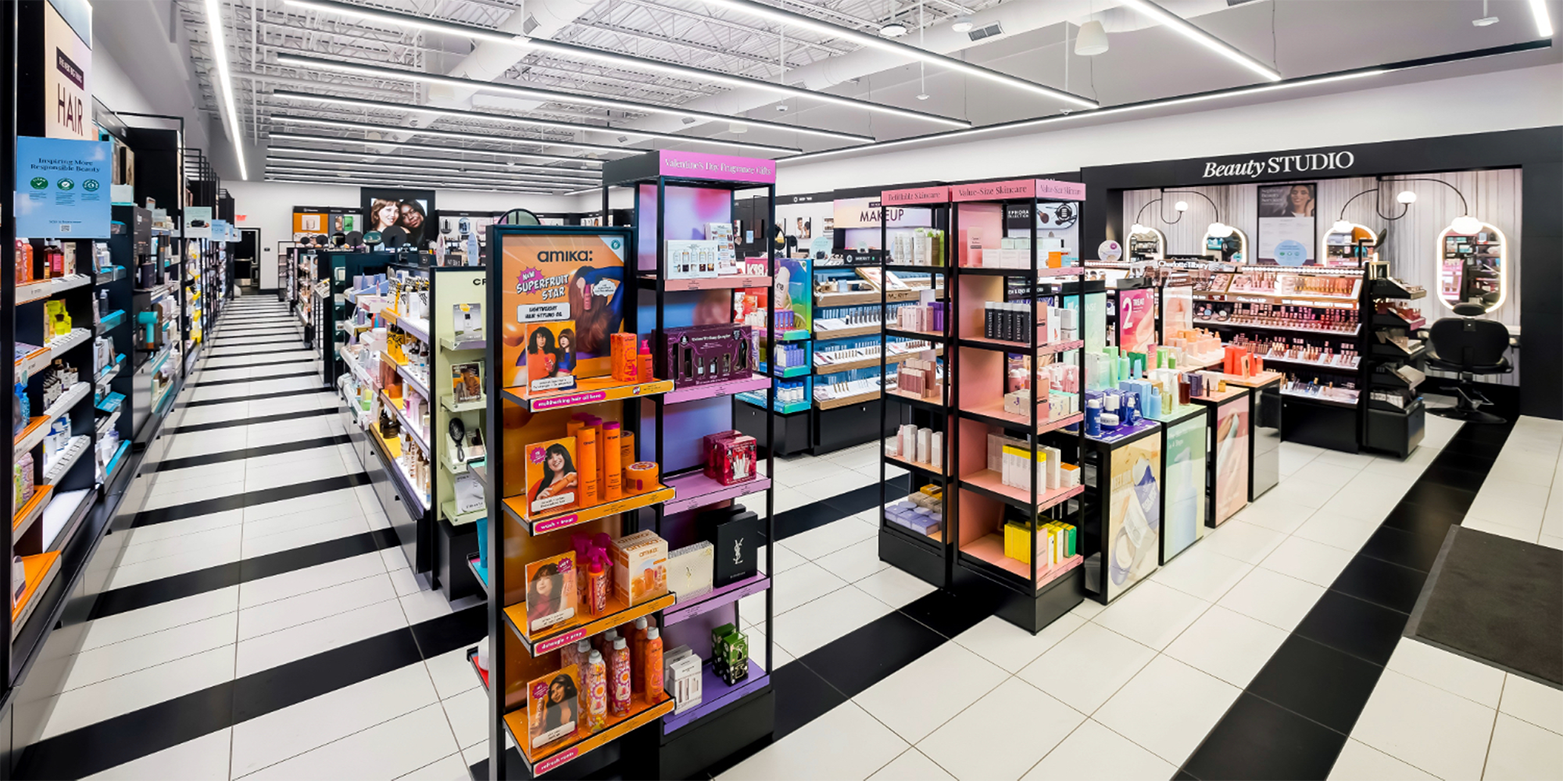
Importantly for Ulta, its installations at Target provided a counterpoint to Sephora, which struck a deal to place units inside Kohl’s stores in 2020 and ended a 15-year shop-in-shop partnership with J.C. Penney in 2022. Sephora is on pace to have shop-in-shops in 1,100 Kohl’s locations this year. Last quarter, Sephora powered a 13% increase in same-store beauty sales at the department store retailer. In March 2024, Kohl’s revealed the partnership generated $1.4 billion in sales throughout its tenure and projected sales will exceed $2 billion this year.
According to reporting by Retail Brew, Ulta and Target’s financial agreement is based on royalties, and royalties from its shop-in-shops at Target were cited by Ulta as a driver of revenue growth from the third quarter 2022 until the past two quarters. Ulta and Target worked out an arrangement where shoppers can connect their Ulta Beauty Rewards and Target Circle loyalty accounts for loyalty points on shop-in-shop purchases. Retail Brew mentions that Steelman disclosed last August that 4 million shoppers had connected their accounts.
Given the results of Ulta’s shop-in-shops at Target, Jane Hali, CEO of retail and investment consulting firm Jane Hali & Associates, believes it makes sense for Ulta and Target not to accelerate them. She says, “Being connected to Target is not going to help Ulta’s prestige business. This is the right move for Ulta.”
Tina Bou-Saba, a beauty investor, identifies sales cannabalization as a possible reason for the Ulta at Target shop-in-shop expansion pause—and it has indeed been a concern to Ulta. In January, Puck scooped that the contract between Ulta and Target has a clause stipulating a distance between Ulta’s stores and its Target shop-in-shops. The publication explains the clause has hamstrung shop-in-shop expansion. Data from retail traffic analytics firm Placer.ai shows the percentage of overlap between Ulta and Target shoppers increased from 86.9% in 2022 to 90.1% in 2024.
“Unlike the Sephora at Kohl’s partnership, Ulta and Target’s seems less incremental to me since there is likely a lot more real estate overlap,” says Bou-Saba. “Perhaps Ulta concluded that it is better off driving its prestige customer to shop in its own stores, especially given Target’s recent traffic decline.
Neil Saunders, managing director of retail at data analytics firm GlobalData, suggests Target’s and Ulta’s attention is pulled elsewhere. “The music has now changed and things have slowed down. Target is struggling, and beauty is sluggish,” he says. “It is not surprising that both chains want to take a pause to assess things. Ulta is not seeing the gains from Target that it wants. On top of that, the Target consumer is less financially free than they were, so that will harm prestige beauty sales.”
The Ulta at Target shop-in-shops suffered from operational issues, too. A beauty brand consultant says, “The team [Target merchants] seems disconnected from Ulta mainline and not as organized as Ulta mainline is with timelines and getting you details and materials in time. It has been a struggle pulling everything together.”
Target’s issues, though, extend far beyond its tie-in with Ulta. The retailer is contending with a backlash to its retreat from diversity, equity and inclusion initiatives and falling foot traffic. Per Placer.ai, foot traffic dipped 9% in February and 6.5% in March after climbing 3.6% in January. As of February, Target operates slightly under 2,000 stores in the United States.
Target registered a better-than-anticipated holiday season, and its same-store sales advanced 1.5% during the fourth quarter last year. However, revenues declined 3% in the same period and net income dropped over 20%. Target has forecast net sales for the year to be up around 1% and comparable sales growth to be flat.
The cessation of Ulta at Target expansion isn’t anticipated to harm Target’s beauty enterprise. Speaking to the publication Women’s Wear Daily in October, Rick Gomez, EVP and CCO at Target, said beauty is a “booming business,” with category sales doubling since 2019. In February, Target announced that it was adding more than 2,000 products and 50 brands to its beauty assortment, with an emphasis on affordability. Approximately 90% of new beauty arrivals at Target are priced under $20 to appeal to cash-strapped consumers.
Ulta has lost prestige beauty market share, and to recapture it, Saunders argues it has to focus on bolstering its stores and digital properties. There are about 1,400 Ulta stores in the U.S., and the retailer is heading to Mexico and the Middle East later this year.
“There are some opportunities for physical expansion, perhaps with new store formats for different locations, but most of this needs to come through expanding the audience, being more innovative with ranges and pushing more into luxury,” says Saunders. “There are also international opportunities but these are embryonic.”
Last month, Ulta unveiled a turnaround plan called “Ulta Unleashed” involving it doubling down on store operations, shopkeeping, brand building, personalization, retail media, a new digital app, website features, wellness merchandise and international expansion. Steelman has been putting her footprint on Ulta’s workforce by integrating its digital and marketing teams and appointing executives, notably Ulta veteran Aimee Bayer-Thomas to the newly created role of chief retail officer.
After a challenging 2024, Ulta’s fortunes have yet to reverse. Same-store sales increased 1.5% during the fourth quarter last year, but net sales for the period declined 1.9% to $3.5 billion. For the full year, net sales and same-store sales climbed .8% to $11.3 billion and .7%, respectively. Bracing for uncertainty this year, Ulta forecasts net sales for the year to land between $11.5 billion and $11.6 billion, with flat to 1% same-store sales growth.
The players
5 mentionedUrban Decay

Better Being
Tarte
AS Beauty
Smashbox