The Beauty Retail Race For Newness
Last year, around 70 new brands filtered into Walmart’s beauty department spanning indie (e.g., Luna Magic, Bubble and Uoma by Sharon C) and corporate (e.g., Nou from Procter & Gamble) players. This year, Target fired the opening salvo by publicly broadcasting the injection of 40 new brands into its beauty repertoire. The rush of newness is a boon for nascent brands. Mainstream retailers have perhaps never before been as smitten with them as they are today. However, it’s also a supreme test for the indie crop. Succeeding at a huge retail venue amid feverish competition is incredibly hard and could be even harder now that the indie beauty field is brimming.
“What’s it going to look like next year when we walk through stores? Who is going to be out?” wonders Sonia Summers, founder of sales management company Beauty Barrage and brand Shielded Beauty. “It worries me because most of these brands don’t have their marketing figured out, and they don’t have communities to bring to those retailers.”
Despite the challenges, she suggests indie beauty brands can draw consumers to try products they may be unfamiliar with due to persistent out-of-stocks and consumers possibly trading down to mass or masstige alternatives from premium products as they cope with inflationary pressures on their wallets.
“We saw customers starting to experiment with different brands more, and I think that will continue to happen as long as the supply chain is the way it is,” says Summers. “If you go into a store, and you don’t see a mascara that you’re looking for, you are going to buy something new. So, it’s a good opportunity for brands that don’t have that problem.”
The Indie Perspective
While budding beauty brands may have previously been satisfied sticking with online communities and direct-to-consumer distribution, lofty digital customer acquisition costs and DTC crowding have persuaded them to consider wholesaling to the likes of Target, Ulta Beauty, Sephora and Walmart for visibility and sales.
To give them a fighting chance, big chains are softening onerous terms that have long hobbled small beauty companies (chargebacks have been ditched for some at Target, for example), taking a measured approach to their store presence (e-commerce alone or limited door counts at the outset are key strategies) and fostering assistance programs. Target has a program called Building Blocks for Better Products to ready young brands for meeting its clean standards. Another Target program is Takeoff, a mentorship effort instructing brand founders about the requirements of retail.
The handholding is necessary because indie beauty brands aren’t generally set up to prosper at large-scale retail. There’s the money issue or rather the lack of money issue, of course. Sally Mueller, a former Target marketing executive co-founder of Womaness, a menopausal products brand that entered Target about a year ago, told Beauty Independent that a fruitful launch at the retailer can easily cost a brand $1 million. Then, there are retail pricing and packaging issues.
Typically sitting at relatively high price points, indie beauty brands frequently have to lower prices to make sense for chains, a transition that can be difficult if their margin structure isn’t suited to it. Rolling out to 1,800 Target doors this month, acne patch brand ZitSticka fashioned mini sizes for the retailer to reduce prices. An eight pack of the brand’s regular-sized Killa Kit sells for $29 on its website. At Target, a four pack is $16.
BeautyStat premiered a travel size version of its bestselling Universal C Skin Refiner at Ulta, which has scooped up the skincare brand’s complete range of five products for 260 stores and e-commerce. The travel size retails for $25 and is .3 ounces compared to the full-size 1-oz. and 1.7-oz. versions priced at $80 and $125. Founder Ron Robinson says, “The decision there was to offer consumers the ability to buy into the brand at a lower price point where they can really try and really see the benefits before moving up to a full-size $80 product.”
Frederick Benjamin, a grooming brand rolling out to 500 Target doors this month with five products, is swelling its sizes as it decreases product prices from $12 to $10. The brand has altered its aesthetics along with its prices and sizes. Founder Michael James, a 2021 Takeoff participant, was intent on making his brand stand out on the shelf. To do so, he swapped out a gray label for a blue label and bolded Frederick Benjamin’s logo to ensure it’s legible for most people passing by six to three feet away from it. The packaging features a product description on the front and a brief brand history and statement on the back.
James says, “I’ve heard that upwards of 80% of the purchases made at retail are people coming in looking to solve for an issue, not really having a brand in mind, and reading the packaging to figure out if it’s a good fit.”
Smaller beauty brands worry about store and e-commerce platform placement a ton. They don’t want to get lost in a sea of heftier brands. So far, BeautyStat, World of Chris Collins and ph Plex haven’t experienced that problem. Kicking off online at Sephora, fragrance brand World of Chris Collins has been promoted on the retailer’s website and in emails. A German hair damage repair brand landing at Walmart, its first major retail partnership, ph Plex will be presented in sidekick displays adjacent to the at-home hair coloring section in over 2,500 stores. The brand’s $4.95 sachets are cheaper than most hair color products.
“It’s meant to be a spontaneous purchase because people will see it just beside the hair color area,” says pH Plex co-founder Antonio Amaral.
Ulta has included BeautyStat in booklets for VIP guests, VIP bag samples and emails. More importantly, it’s placed a custom BeautyStat fixture in the locations where the brand is sold to showcase its background and the clinical results of its products. “It’s displayed in the front of the store as a consumer walks in, so it’s a great placement for us,” says Robinson. “It just shows the fact that [they] also really wanted to closely partner with us and really help our brand to succeed and win.”
Select brands hitting mass-market retailers have made a pivot from prestige retail. Frederick Benjamin’s partnership with Target comes on the heels of the brand dissolving a relationship with Ulta. Frederick Benjamin launched at Ulta in 2018. James describes Ulta as a “tremendous” partner, but he discovered it was tough to lure customers to Frederick Benjamin at the retailer. James is confident the brand will thrive at Target because of the guidance he’s received from the retailer and his belief that Frederick Benjamin’s core consumers are Target regulars.
“You can really see that they still support existing brands that have been in there for at least a year, if not longer, in the press today, and so I’m just hoping that we’ll be able to participate in their promotion of Black-owned founders in the months and the years to come,” says James. “We’re going to do our part to ring that bell and let folks know that we’re there and I’m sure, while working with Target, we’ll hopefully be able to tap into their marketing power.”
The Retail Battle
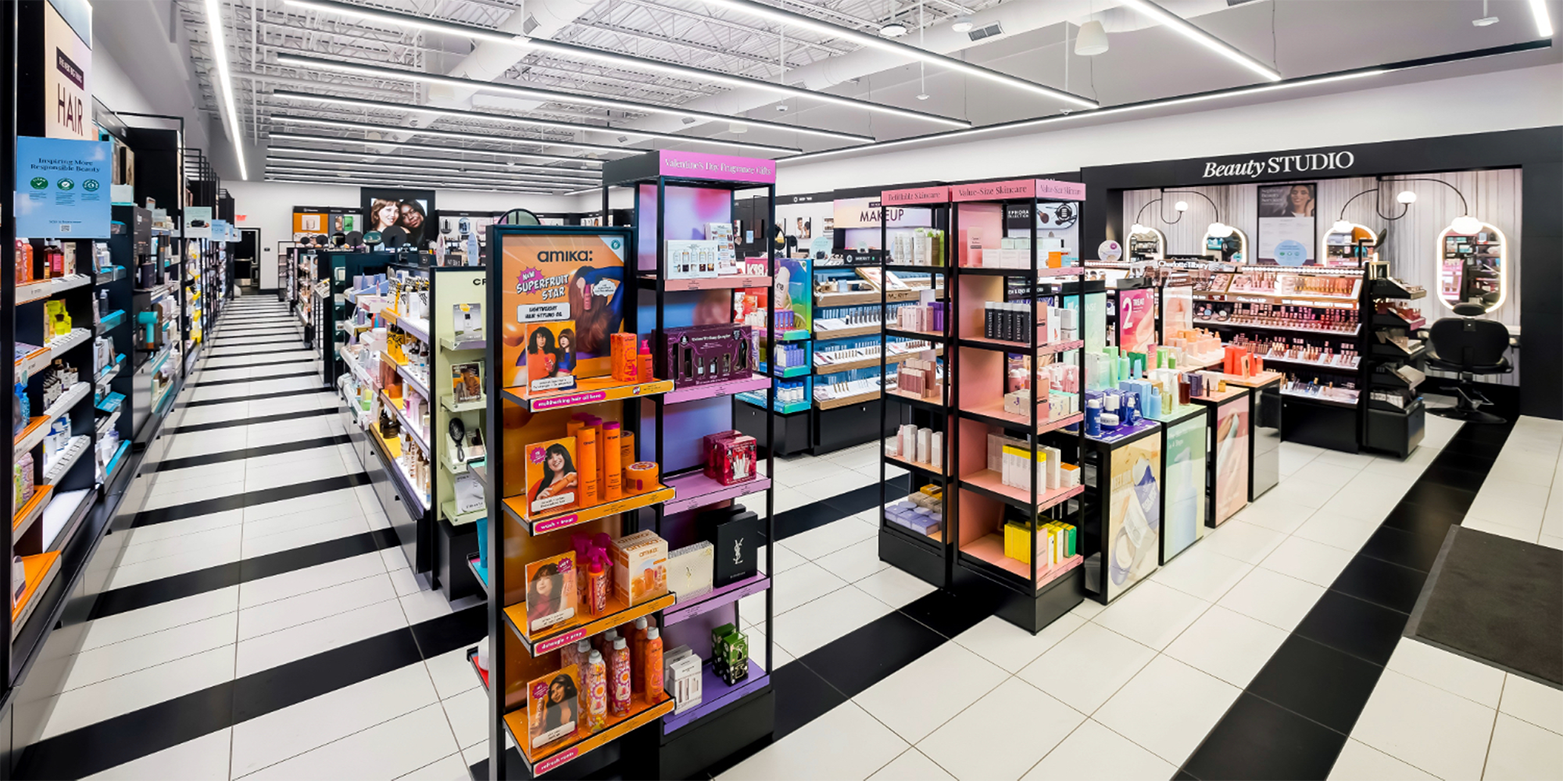
Sephora and Ulta are in a pitched battle for beauty specialty retail supremacy. In North America, Ulta’s girth and market share has surpassed Sephora. Sephora operates over 500 standalone locations across the Americas. Inside Kohl’s, Sephora is expected to have 600 shop-in-shops by the end of the year. Ulta’s store network encompasses 1,264 stores in the United States—and that doesn’t include the 100-plus Ulta at Target installations that were slated to open last year. Ulta is eventually supposed to have assortments at 800 Target doors. Target has a total of 1,909 doors, and Walmart has a whopping 5,342 U.S. locations.
Ulta’s 2021 sales are projected to ring in at $8.1 billion to $8.3 billion. Sephora’s has fewer sales than Ulta, but it’s a bit tricky to pin down how much smaller the retailer is than its rival. LVMH Moët Hennessy Louis Vuitton’s retail division comprising Sephora and duty-free retailer DFS generated 11.75 billion euros or roughly $13.37 billion in 2021. In 2019, the National Retail Federation estimated Sephora’s U.S. sales at almost $6 billion.
In 2020, the last year for which there’s complete financial information for Target, beauty and household essentials accounted for 26% of its sales or about $24 billion, but household essentials are responsible for a bigger chunk of that amount than beauty, approximated by Jefferies managing director Stephanie Wissink in Women’s Wear Daily to be 5% to 10% of overall sales or about $4.7 billion to $9.4 billion. WWD approximates the beauty portion of Walmart’s turnover at 2% or about $11 billion on 2021 fiscal year sales of $559 billion.
Ulta has become a favorite destination for gen Z shoppers. Sephora’s luxury bent inclines it toward slightly older shoppers, but it’s endeavoring to attract younger shoppers with celebrity makeup brands like Item Beauty by Addison Rae and affordable skincare brands like The Inkey List and The Ordinary, which is carried by Ulta, too. “They are straddling the fence by wanting the luxury consumer out of department stores, but also wanting gen Z,” says Louise Caldwell, president and founder of beauty brand consultancy Ignite Beauty Strategy. “It can be a little chaotic in terms of their positioning.”
In a study for Insider, consumer data firm Numerator found that Walmart’s typical shopper is a married white woman between 55 and 64 years old living in the suburbs of the Southeastern U.S. She’s usually college educated and makes about $80,000 per year. Target’s average shopper is a white suburban mother between 35 and 44 years old with a similar household income. The Target shopper is more likely than her Walmart counterpart to purchase beauty items during her store trip. Heads of the household, mothers shopping at Target and Walmart are buying goods for their gen Z children.
“Target turned an errand into an outing which is pretty amazing,” says Amy Zunzunegui, founder of WLDKAT, a clean beauty brand that launched at 655 Target doors last month. “Ask anyone in your household if they want to go to Target and most likely everyone will raise their hand. They are creating a moment of discovery for their customer while she/he shops for replenishment items as well. I love that they are focused on creating a more expansive beauty department.”
WLDKAT’s retail path started with clean beauty retailer Credo before it launched at Ulta via the chain’s tie-in with Credo. At Target, it’s not part of the Ulta at Target assortment. “We still have that direct connection between all three retailers. Each one speaks to a slightly different customer though there is definitely a crossover,” says Zunzunegui. “Customers tend to be more brand and retailer agnostic these days.” Kate Festa, senior director of retail marketing at ZitSticka, which is carried at Ulta and just launched at 1,800 Target locations, agrees about the consumer crossover. She says, “I can’t even tell you exactly who was a Target shopper because I think it’s everyone.”
Ulta is angling for a balanced beauty category portfolio—and it’s latest brand launches lurch in that direction. As it nabs splashy color cosmetics brands Fenty Beauty and Charlotte Tilbury, it’s paying attention to skin care and sun care with powerhouses like Supergoop. From 2018 to 2021, makeup sales decreased as a percentage of Ulta’s revenues from 53% to 44% and skincare increased from 12% to 18%.
The imminent launch of Fenty Beauty, a brand developed at LVMH brand incubator Kendo as a Sephora exclusive, at Ulta demonstrates how potent Ulta’s gravitational pull is in the beauty industry. The retailer has nabbed LVMH-owned brands and former Sephora exclusives such as Supergoop, Drunk Elephant, KVD Beauty and Fresh to coax Sephora customers to skip their Sephora visits in favor of Ulta patronage. The notable brand launches have skyrocketed Ulta into the prestige beauty stratosphere as department stores struggle and demonstrated that mixing prestige and mass is a captivating recipe.
Ulta has yet to overtake Sephora’s beauty kingmaker status, though. Brands like Tatcha, Supergoop, Youth To The People and Drunk Elephant went on to impressive deals after opting for it as their preferred retailer early on—and it’s leaning on its curation and trend-spotting skills with its latest round of brand launches. With an online debut at Sephora, Ayurveda-inspired skincare and haircare brand Ranavat is one of the most expensive indie Clean at Sephora brands. Its prices run from $45 to $135. Haircare entrant Crown Affair joins Ranavat as a premium addition to the Clean at Sephora collection. Its products are mainly in the $40 to $60 range.
Sephora launched a sexual wellness edit in January with category commanders Dame and Maude as marquee brands. Broadening its view on wellness, Canopy this week became the first humidifier brand at Sephora. In a statement, Cindy Deily, Sephora’s VP of skincare merchandising, says, “Canopy’s innovative devices—including the Humidifier—help clients optimize their at-home wellness routines, as well as achieve healthy skin, body and mind.”
There are exceptions, but, as a rule, full store rollouts at major retailers aren’t in the cards for indie beauty brands. The retailers have sorted through various store count and digital scenarios that are appropriate for them. Launches at 300 to 600 stores are normal at Target. Musab Balbale, who stepped down recently as president and GM of beauty at Walmart to take a position at CVS Health, told Beauty Independent that the retailer is willing to launch an independent brand in as few as 50 doors.
“We’re agnostic as to the starting point and the end end point,” he said in a July 2021 interview. “It is catered to reflect where the brand is and where the business is, so the ability to expand towards stores or start with the constrained number of stores depends on the working capital availability and the reach of the brand.”
Identifying the potential of emerging brands, Ulta launched Sparked at Ulta Beauty in 2019, a program with a dedicated buying team to unearth, onboard and nurture newer brands. Around the same time, Sephora unveiled The Next Big Thing store displays with nascent brands and highlighted them on its site. It’s common for Ulta, Sephora, Target and Walmart to introduce brands on their sites initially to minimize the burden on them, enliven online selections and collect data on customer response.
At Sephora, brands may be online for six months or so prior to rolling out to stores. Case in point: Ranavat is scheduled to sell at stores in the fall. World of Chris Collins founder Chris Collins surmises it’s a smart tactic for his brand to begin online at Sephora. “One of the mistakes is thinking that going into the store is the most prestigious way to announce that you’ve arrived with this partner, but being in store is expensive,” he says. “Online is a little less expensive.”
They might be less expensive, but Caldwell underscores that online retail launches aren’t carefree. Brands have to push their marketing to Sephora to propel online sales to achieve volume goals. Caldwell says, “If you are in a position to do it, it is a game changer for some of these indie brands to go from doing hundreds of thousands of dollars to doing millions within a short period of time because you are getting your brand in front of 30 million beauty consumers.”
The Category Shuffle
As Margarita Arriagada, founder of the beauty brand Valdé and former chief merchant at Sephora, assesses the brands Target and Walmart have brought in, she reasons, “Both are attempting to fill their assortment with relevant trending categories and prestige [while] looking to indie brands to drive discovery.” She lists clean beauty, haircare, sun protection, inclusivity and social media buzz as areas they’re covering.
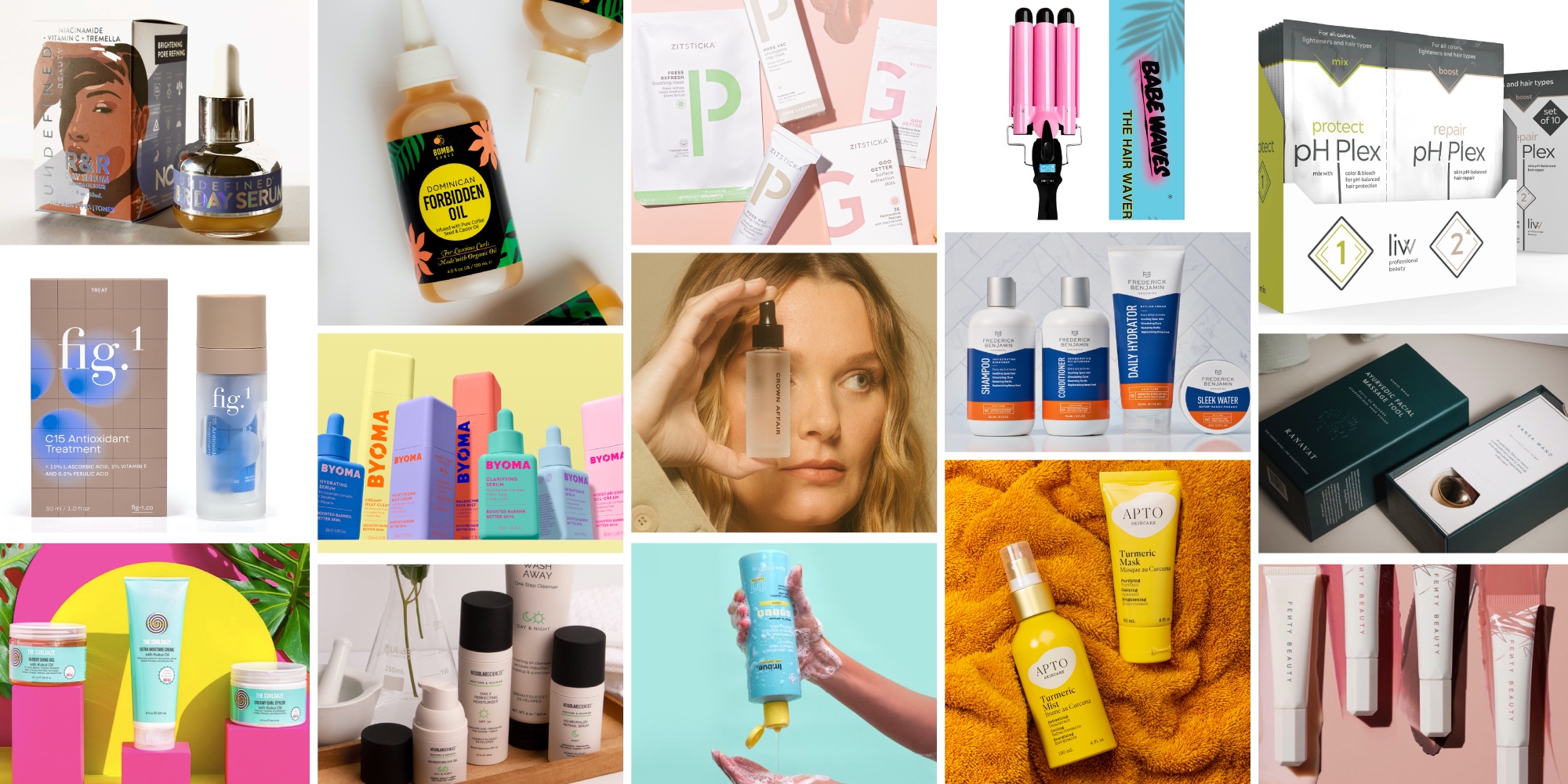
Target’s new brand roster is almost like a greatest hits of beauty trends. There’s microbiome skincare (Byoma), fermented skincare (Ferver), cleanical skincare (MDSolarSciences), bond-building haircare (Climaplex), souped-up body care (Bodylab Science), customization (Pure Culture Beauty), fake eyelashes (LoveSeen), mineral sunscreen (Solara) and sustainability (MakeUp Eraser), to name just a few of the trends the chain is addressing.
Target has been diversifying its brand arsenal. Cassandra Jones, VP and GM of beauty at the retailer, told WWD that half of Target’s new brands are Black-owned or –founded, bumping up the total number of Black-owned beauty businesses represented in its selection to about 70, a 65% jump since 2020. Among the Black-owned or –founded brands new to the retailer are Undefined, Kyutee, Luna Magic, CurlDaze, Kazmaleje, Bomba Curls and Sassy Hair Cap.
Haircare has been a particular focus. The success of Olaplex and scalp care has been a significant story in the beauty industry, and retailers are angling to keep the momentum going with their own takes on the segment. The NPD Group estimates prestige haircare sales climbed 47% in 2021 to reach $2.6 billion. NielsenIQ’s pegs haircare sales hike in the mass market at 17% last year.
As Olaplex expands from Sephora to Ulta, Sephora is doubling down on the science end of the category with K18 and amplifying its clean, ritual-oriented haircare profile with Crown Affair and Ceremonia. Walmart and Target are offering Olaplex-esque products at accessible prices. Walmart has the aforementioned pH Plex and Target has seven Climaplex products promising to repair broken bonds priced at $9.99 each. Olaplex starts at $28, and K18’s Leave-in Molecular Repair Hair Mask is $75 for the brand’s standard 1.7-oz. size. A mini .5-oz. size is $29.
Across the retailers, all of which have established clean beauty initiatives in recent years, clean beauty and wellness remain prominent themes. Although there’s a vociferous backlash to it online and increasingly offline (see The Ordinary’s pro-sulfate haircare as exhibit A), consumer interest in clean beauty is strong. Late last year, Nielsen IQ released data revealing clean beauty sales in the mass market rose 8%, besting 2% growth of the category in its entirety.
Kline doesn’t anticipate clean beauty slowing down. In a recent report, the market research firm predicted, “Retailers and brands alike will continue to establish stricter ingredient standards, resulting in cleaner, more natural new brand entrants and product reformulations. Clean beauty claims will continue to penetrate categories, such as makeup and fragrances, dominated by conventional players.”
In a post-pandemic environment, Caldwell emphasizes, “Healthy is the new beautiful, and I think we have to keep thinking about that. The nutrition and wellness aspect is here to stay.” She says sustainability is here to stay as well, and she expects retailers to dive deeper into sustainable beauty with brands specializing in eco-minded packaging and formulas, including waterless formats and refillable containers.
Caldwell is closely watching fragrance. It’s been a blazing category, and designer and big beauty brands like Gucci, Michael Kors, Dior, Chanel and Estée Lauder have gained in the prestige fragrance sales arena. NPD figures show prestige fragrance sales in 2021 soared 49% to $6.3 billion, and niche fragrance sales doubled. The publication Business of Fashion cited data from consultancy Bain that sales of niche fragrances advanced 5% to 10% from 2019 to $1.7 billion last year.
Retailers have been slightly upping their niche fragrance offerings (e.g., Sephora with World of Chris Collins this month, and Walmart with Sparti Scents for the 2021 holiday season). Still, the role of niche fragrance appears to be muted compared to a few years ago when the niche fragrance craze led to Lauder scooping up Le Labo, Frédéric Malle and By Killian. That could change if consumers further explore their fascination with fragrance.
“I think niche fragrance, innovative concepts are going to be really interesting in the next couple years. The fact is that we are really looking at fragrance differently,” says Caldwell. “The U.S. market was trending down for a long time in terms of usage, and now it’s back up, and I think it’s because we are not in our cubicles worrying about how fragrance is offending other people. We are wearing it for ourselves.”
Especially in prestige, Arriagada stresses there’s room for greater inclusivity. NPD estimates Black-owned haircare brands constituted a mere 4% of prestige haircare in 2021, when they registered 70% growth. Caldwell and Summers pinpoint body care is an opportunity that hasn’t been fully realized. “Years ago, we used to say that people aren’t going to spend more than $5.99 on a body lotion, but now people want to put healthier, more effective products on their body,” says Caldwell. “There’s definitely a shift toward better ingredients and better textures, and I think we are moving away from the commodity-type products.”
In skincare, Summers foresees microbiome skincare being much bigger than it is currently. “I think it’s just starting. I think that the industry is seeing is that you don’t have to rip your skin off to have great, healthy looking skin. Your skin already does a lot for you, so it’s about finding the right products that will allow it to do what you need it to do.”
Exactly how beauty purchases will be affected from the evolution of the pandemic to possibly an endemic is uncertain, but retailers are prepping for it by stocking up on makeup brands and hair products that facilitate looks intended to be shown off at parties. Target’s pickup of Trademark Beauty’s hair tools, for instance, is bet on event-worthy hairstyles being in demand again.
“Everybody wants to start wearing makeup again, and they’re doing their hair now,” says Summers. “I think fragrance is a major mood lifter, and I think all this DIY or at-home stuff is going to fade because we are going to have less time at home. Although people are having a hard time going back to offices, they’re going out more.”
The players
5 mentionedRitual

AS Beauty
Fenty Beauty
Not Your Mother's
BeautyStat