Textured Haircare Brands Return To Tried-And-True Distribution At Beauty Supply Stores As Challenges Increase In Other Channels
About a decade ago, Bolds-Leftridge noticed a distribution shift. Boosted by the natural haircare movement, brands such as SheaMoisture and Mixed Chicks launched directly at major retail chains, sometimes bypassing beauty supply stores. Now, with the textured haircare more crowded than ever and retailers stingy about bringing in new brands, the pendulum seems to be swinging back to beauty supply stores.
“I have a brand I’m working with, they’re in Walmart, they’re not doing well, and now we’re trying to get them in some OTCs [or beauty supply stores] just based on the lower cost of doing business,” says Bolds-Leftridge. “A lot of these retailers, their sales are down, and they’re trying to figure out what their next strategy is going to be, so they are being very selective as to what brands can come on the shelves.”
In the tough current retail environment, Bolds-Leftridge explains she’s advises haircare brands to begin retail in barbershops and beauty supply stores “because it takes the pressure off of them.” She elaborates, “Retail’s failing more and more brands, so I think this is going to be where a lot of them land or start. History sometimes tells the story of what you need to be doing.”
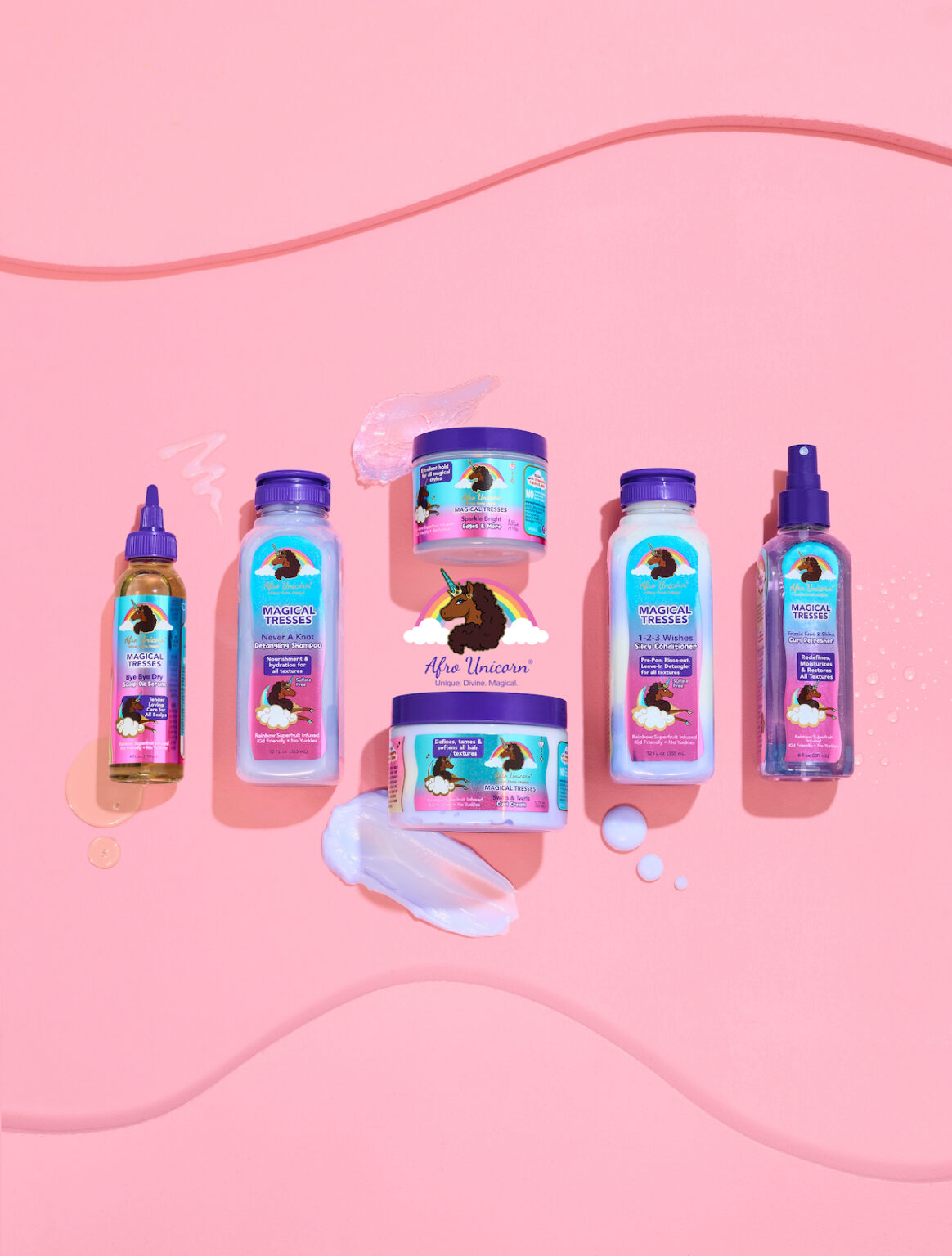
Afro Unicorn is rolling out to Walmart, Target and CVS with Magical Tresses haircare products—combined, it will be in over 5,000 retail doors in the coming weeks—and is now eyeing expansion in beauty supply stores to heighten its presence across the country. “Being from Los Angeles, sometimes I can live in this bubble thinking, oh, well, there’s always a Walmart, there’s always a Target, but then in these rural areas, no, there’s not,” says founder April Showers. “Sometimes, it’s 30 minutes out, but you have a local beauty supply shop within walking distance.”
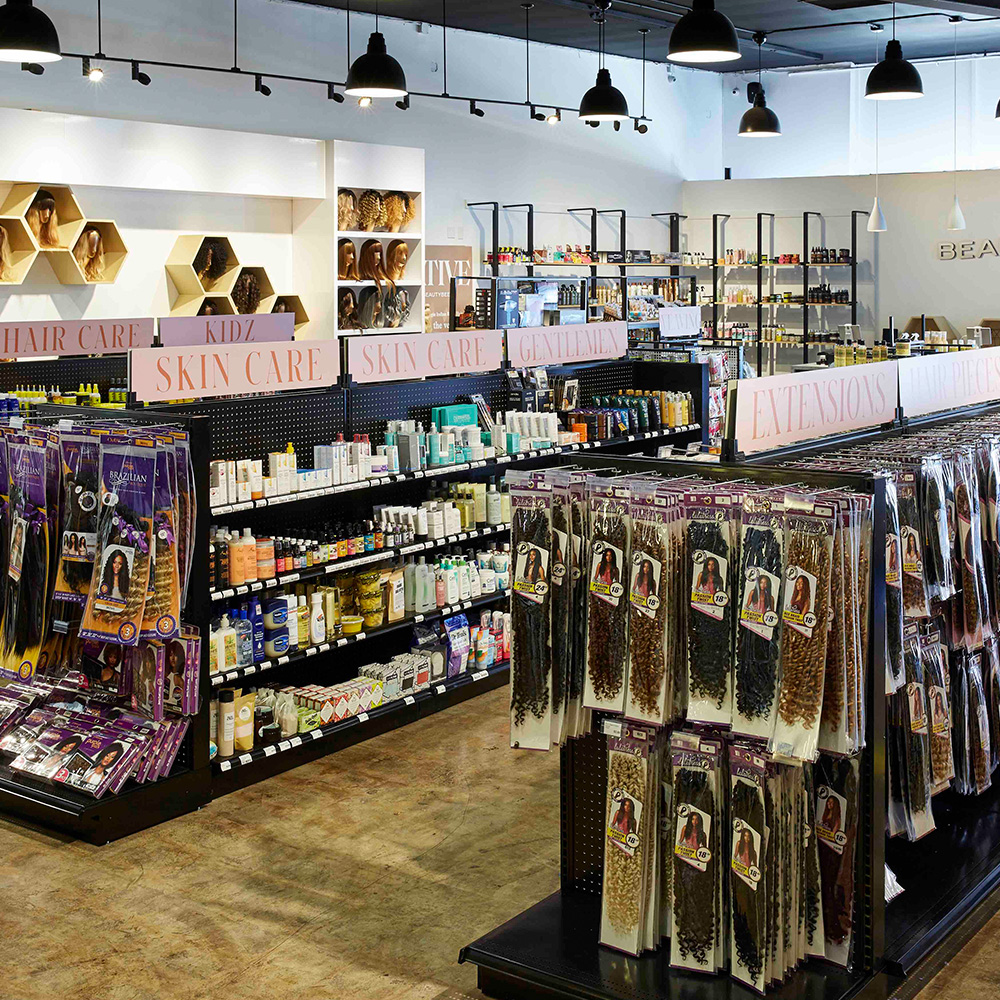
The Black Owned Beauty Supply Association figures there are 20,000-plus beauty supply stores in the United States, a door count greater than the number of Target, Ulta Beauty and Walmart doors put together. Romina Brown, CEO and president of category management firm Strategic Solutions International, estimates the textured haircare category generates $1.3 billion in sales at retail chains. Factoring in beauty supply stores, the category reaches around $2.8 billion.
Brown suggests the beauty supply channel is often a blind spot, but it shouldn’t be ignored. “When you look for growth, when you look for assortment selection, retail chains just can’t compete because of the real estate,” she says, adding, “This channel is almost exclusively shopped by Black women, and these are specialty stores that are dedicated to this consumer only.”
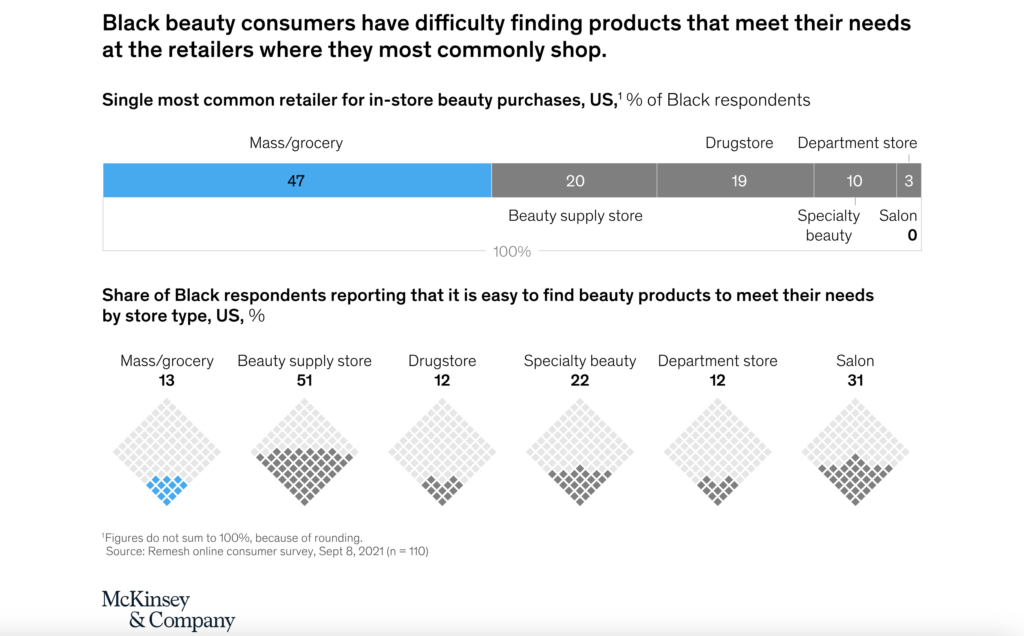
Big-box retailers have increased their selections of beauty products directed at Black consumers, but many feel they’re still not being catered to by big-box retailers as well as they’re being catered to by beauty supply stores. According to a survey by management consultancy McKinsey & Co., 47% of Black beauty consumers shop at mass or grocery stores for products compared to 20% who shop at beauty supply stores. In terms of where it’s easiest for them to find beauty products to meet their needs, beauty supply stores beat out all other forms of retail, including mass/grocery locations, drugstores, specialty beauty retailers, department stores and salons. Fifty-one percent listed beauty supply stores compared to 31% for salons, 22% for beauty specialty retailers and 13% for mass/grocery.
The wide network of beauty supply stores helped Blaq Luxury Hair founder Cherie Williams grow her brand into a $10 million company since its inception in 2019. Blaq’s haircare products are in over 4,000 beauty supply stores domestically and internationally. The brand will premiere on Target and Walmart’s websites soon, but Williams is glad the brand laid the groundwork for its retail distribution in smaller stores, where it could sort through problems without them being catastrophic to its business.
When it broke into retail, Blaq’s shampoos and conditioners both had the same barcode by mistake. Over 3,000 units were returned, and Williams had to manually fix the issue. “If it was a Walmart, we’re looking at over 40,000 units, so I’m glad that we decided to start small and then work our way up,” she says. “It’s always good to start low, so if you should head into those [larger] spaces, you already know what to expect.”
Bolds-Leftridge agrees with Williams that partnering with beauty supply stores can give brands leeway to course-correct and insights into how products perform in stores. “It gives them the ability to see the ranking of their products,” she says. “It gives them the opportunity to see how their product will sell against other brands, without costing them so much money.”
Another advantage of beauty supply stores is brands can often place their entire collection on their shelves rather than a highly edited collection of bestsellers. “These stores can carry a deeper assortment and don’t have set planogram dates,” says Brown. “Hence, along with online direct-to-consumer sales, it becomes a more efficient proposition for market entry.”
New scalp and haircare brand Trusse Beauty aims to enter beauty supply stores to connect with its customers. “The hands-on nature of these stores allows customers to experience our products firsthand, fostering a deeper connection with the brand,” says founder Christian Maxwell. “Moreover, beauty supply stores often serve as community hubs, creating opportunities for us to engage directly with our audience, understand their needs and build lasting relationships.”
Showers plans on partnering with local radio stations and throwing in-store and parking lot events once Afro Unicorn is available at beauty supply stores. She says activations “prove challenging at larger retailers as there can be a lot of red tape.” Brown shares that, according to beauty supply store owners, in-store merchandising programs are “the No. 1 lever that can be pulled to generate trial and awareness.”
Maxwell is reaching out to beauty supply store owners on Instagram to forge relationships directly. While beauty supply stores have historically been operated by South Korean immigrants who’ve created an ecosystem in the segment, a growing group of Black entrepreneurs are jumping into the space and stocking Black-owned brands. BOBSA approximates that there are 5,000 Black-owned beauty supply stores in the country.
“The number of Korean-owned beauty supply stores has decreased due to the original owners aging and their children not wanting to take over the businesses. Many of these stores have either closed or been sold to black beauty supply store owners,” says Sam Ennon, president and founder of BOBSA. “This shift presents a great opportunity for black entrepreneurs looking to enter the market.”
Bolds-Leftridge recommends brands interested in going the beauty supply store route consider beauty supply stores in their backyards initially to have “the ability to frequently visit and so that they can nurture their brand on a regular basis.” Partnering with a broker that can facilitate meetings with leading beauty supply distributors is an option, though brokers and distributors eat into brands’ margins. Bolds-Leftridge advises brands kick off on a 40% consignment basis, sell four or five products per store and grow from there based on results.
“Once they sell it, they pay you, you give them more, and you build it like that,” says Bolds-Leftridge. “It’s that echo effect.”
Demar Roberts, SVP at First Choice Sales, a sales and marketing firm that works with clients like Afro Unicorn on retail strategy, points out a downside of the beauty supply store channel is a lack of sales and customer data. “Unlike larger retailers, where sales data and performance metrics are readily available, beauty supply stores often provide limited visibility into day-to-day or week-to-week sales figures,” he says. “This can pose challenges for brands seeking to track and analyze their performance accurately.”
Despite the data issue, Roberts emphasizes the “extensive reach and access to a niche customer base” of the channel make it valuable for haircare brands trying to establish credibility and drive sales. He says, “By leveraging the unique opportunities offered by beauty supply stores while addressing the associated challenges, brands can position themselves for success in this dynamic and evolving industry landscape.”
Beyond being vital for textured haircare and the wig, weave and extension category, Brown underscores the beauty supply channel is essential to Black beauty as a whole. “Women go there and they buy cosmetics, haircare tools, lashes, accessories, socks, shoes,” she says. “It really is becoming a destination, it’s a different world in there.”
The players
5 mentionedAS Beauty

Deeper
Bubble
Cost Of Doing Business
Walmart