The Rational State Of Indie Beauty In 2024
This year, they’re coming to terms with the new reality. It’s not an easy reality. Input costs are elevated, the consumer is difficult to pin down, the speed of trends is fierce, external funding is next to impossible, retailers are stingy, and pockets of beauty are overcrowded with products containing greater points of similarity than distinction.
However, founders and brands have been adjusting. They’ve shifted distribution strategies, searched for funding alternatives, tweaked advertising and revised their goals. The modifications have modified their outlook. Indie beauty brands largely predict high double-digit or triple-digit growth could be in the rearview mirror, but that doesn’t mean the sights out the front windshield are completely bleak.
In a survey Beauty Independent conducted in July of 110 brands, over 80% of respondents projected their sales will be up in 2024. Market research firm NIQ estimates indie beauty’s compound annual growth rate from 2023 to 2028 will be around 19%. In contrast, it anticipates the CAGR from 2023 to 2027 of the beauty industry as a whole to be around 5%.
In line with NIQ’s forecast, a survey respondent wrote, “I am optimistic about this year and the long term and for independent brands. The landscape is certainly challenging, more so than it has been previously, but the desire that people have to discover and experience something new and different is a fundamental aspect of human behavior.”
Another survey respondent, Olivia Bae, founder and CEO at haircare brand Perseve, wrote, “Being transparent, I felt discouraged at the start of this year. All the closures of brands happening and some retailers claiming their Q1 wasn’t performing felt super discouraging. But now mid-year, I feel a bit more optimistic. With so many changes happening in the beauty industry, pivoting and redirection as a small indie brand is a must. We’ve redirected all of our marketing efforts into TikTok and gained a lot of traction, which has helped scale our DTC reach. Our small, but mighty team turned a not-so-great year into a great one.”
Chrissy Cabrera, founder of foot care brand Naturally London, has altered expectations for her business. “When I first started my business, I was like Naturally London is going to be an internationally known No. 1 household brand. I want to go on ‘Shark Tank,’ and I want to be in Nordstrom and the big names. I wouldn’t say no to Nordstrom now, but I had to recalibrate. I have changed my idea of what success is and that is just me being able to do this amazing job that I love and also be present for my family.”
In 2020, Naturally London’s sales were almost $300,000. This year, Cabrera figures the brand’s sales will land under the 2020 turnover, but be flat from last year, when she pivoted Naturally London to selling into spas and salons and streamlined its assortment.
“Does someone go to Nordstrom to buy their foot soaks or do they go and get their feet done and, as they are checking out, they say, what is that foot thing?” she explains. While spas and salons make sense for Naturally London’s products, she says, “They are just as tough as retailers to be honest. Everyone is very cautious and very slow moving when it comes to decisions about bringing on a new brand.”
Lindsey McCoy, CEO and co-founder of Plaine Products, is upbeat about the state of business. The refillable haircare, skincare and body care brand is on track this year to match 2021 retail sales after its sales fell in 2022 and 2023 from 2020 and 2021 levels. Digitally native Plaine Products has made an effort to expand its wholesale presence, and wholesale today contributes 30% of its revenue.
“There is still a strong customer response to having a story and offering a solution, it just continues to be a challenge to being heard above all of the other voices,” says McCoy. “For customer behavior, the main change I’ve noticed is people are not subscribing to products the way they were in 2021. I’m not sure if people feel too burnt by cancelation complications or it’s just uncertain times, but everyone is less likely to commit, even if there are savings involved.”
Indie beauty brands that stay standing as the headwinds blow will undoubtedly end up in a better position. Weaker brands are winding down; the barriers to entry in the beauty industry, which had been lowered, letting in a flood of new brands, are climbing; and stiffer retailer and funding requirements are separating the indie beauty haves from the indie beauty have-nots. Based on anecdotal evidence, Lorne Lucree, founder of consultancy Quiet Coyote, feels the pace of new beauty brand creation has dipped, leaving existing brands with more space to find their footing.
“I see a lot less niche category excitement. Three or four years ago, there was a lot of indie brands coming out that were an entire brand for feet or for sweat, and I see a pullback from that and more brands that are design-driven and ingredient story-driven,” he says. “Taking a page out of the Bubble playbook, they are using packaging design to drive interest, and there’s less innovation from a storytelling perspective and product format perspective. I see brands focusing their innovation efforts on meeting retailer and sustainability requirements and optimizing in other places like sourcing.”
SUPPLY CHAIN
Last year, supply chain issues impacting indie brands mostly centered on manufacturers upping minimum order quantities. The previous year, fallout from the pandemic along with the war in Ukraine and China’s coronavirus lockdowns engendered supply chain delays. Those issues persist.
AJ Addae, cosmetic chemist and founder of product formulation company Sula Labs, is seeing both manufacturers and packaging suppliers increasing MOQs. She posits the increases stem from “minimum tank sizes, equipment and tooling restrictions and landing a reasonable margin off of production orders.”
Mary Berry, founder of Cosmos Labs, points out manufacturers are confronting steep expenses across the board. Her manufacturer’s labor, rent and ingredients costs have jumped. She says, “Our margins are way slimmer than they’ve ever been.”
The slim margins have led Berry to rethink how and with what brands Cosmos Labs does business with. “We need to get more volume through in order to make the same amount of money that we make before,” she says, adding, “It really becomes a business decision based on, do we think this company is worth putting our resources into?”
As manufacturers rethink their clients, Lucree senses their enthusiasm for indie beauty brands has dropped. “They want to know that there is more in it for them,” he says. “This middle strata of manufacturers that used to be trying to go after indies is shying away from them. I don’t know if it’s because of ROI or it’s too much work. Even if a brand is going into Sephora, they say I need at least three products to make it worth it for me.”
The work manufacturers have to dedicate to a product seems to have multiplied. Cosmos Labs is currently handling a formula that’s dealing with a 22-week lead time per ingredient. The protracted lead times have prompted the brand to push back retail expansions.
Commodity and premium specialty ingredients stockouts have been another killer. Berry mentions a high-grade shea butter Cosmos Labs uses is out of stock at five suppliers. “That sucks,” she exclaims.
Cosmetic chemist Jane Tsui has been encountering longer lead times for sunscreen filters and niche ingredients that might only be supplied by one company. As a result, she attempts to avoid niche ingredients and packaging components.
Addae tacks on that manufacturers tend not to purchase specialty ingredients such as encapsulated retinol for a single formula because there’s little guarantee the brand is going to sell through its inventory of the formula and repurchase it. Addae says, “What’s interesting is the impact that this supply chain pain point has on innovation and differentiation.”
Looking toward the remainder of this year, the election is a cause for concern for some. Regardless of the outcome, Berry anticipates purse strings tightening due to uncertainty over how the economy will shake out, and that uncertainty will have a trickle-down effect on the supply chain.
Madhu Natarajan, CEO of Merit Manufacturing, notes that economic uncertainty and worries about the state of consumer spending has brands wondering about the amount of holiday inventory they should have. He says, “It’s just hard, today, to forecast what you think you need.”
Looking even further ahead, the impacts of climate change on the supply chain is a huge concern. In an article published this month, The New York Times reports extreme heat and flooding could destroy bridges, which are envisioned to “fall apart like tinker toys.” Feeble bridges have already started to affect supply chains and cost of goods.
Though not connected to climate change, the collapse of the Francis Scott Key Bridge in Baltimore in March forced Richualist founder Dawn Myers to pause manufacturing on her brand’s hair tool. It ended up being a blessing in disguise for Myers, who turned her attention to fundraising. By the time she closed Richualist’s round, her manufacturer was up and running. Still, she says brands should be prepared for similar disruptions down the line and have workarounds like backup suppliers in place.
“We’ve got a Mexican supplier that we’ve teed things up with who we’re not using right now, but, with the global climate being what it is, you need to have a plan A, plan B, plan C,” says Myers. “You need to have priced out what it’s going to be to move your production to a different manufacturer or have it redone completely with another manufacturer where you’re not going to have as many political issues. Having a backup plan in multiple countries that fit different scenarios is a really strong decision.”
The New York Times identified Mexico as a solid short-term option for American companies exploring foreign countries for production. Relative to the U.S., it has low labor costs, and it has rail connections to the U.S. Vietnam and India are additional alternatives.
With climate change issues expected to worsen, Myers advises brand founders to educate themselves on the ins and outs of how their manufacturer operates. “You want to make sure that you’re staying on top of and involved in every step of the manufacturing process, even when it’s complicated, even when it feels above your head, take the time to learn those things,” she says. “If you don’t, you’re making yourself vulnerable.”
Addae and Berry suggest that strong relationships with manufacturers and additional suppliers are helpful for brands when challenges inevitable emerge. “People often underestimate how much puzzle pieces go into managing a supply chain, and it’s time to start diligently building these supply chain hiccups into unit margins,” says Addae. “Have it in mind that it’s not a matter of if the supply chain will influence your product plans, it’s a matter of when and how prepared you and your vendors are to pivot and adjust.”
DISTRIBUTION
Stressed by liquidity constraints, heightened costs and choppy consumer spending, retailers that brands depend on to build scale are shuttering underperforming stores in bigger numbers, falling behind on paying bills and whittling down emerging brands in favor of established brands.
Store closures are outpacing openings in the United States for the first time this year, with 31.4% more closures year-over-year, according to retail data provider Coresight Research. Small beauty shops continue to contend with declining sales, increased competition and burnout, triggering many to close.
In the tough retail environment, Kelly St. John, founder and CEO of beauty brand consultancy KSJ Collective, has noticed retailers’ average opening orders for indie beauty brands contracting, and retailers are slower to roll them out to stores. Pressed to improve profits, she says, “Productivity metrics have been established by [retail] leadership, and buyers are faced with the difficult task of exiting brands who are below the productivity line.”
She elaborates, “Since the pandemic years, most merchant teams have shrunk, so they have less resources and less attention to devote to emerging brands…Open-to-buy budgets, marketing dollars, space and location are being allocated to the brands who are hitting those productivity thresholds and who are demonstrating the ability to scale. The reality is that new brands are often not in the black with a retail partner until year three.”
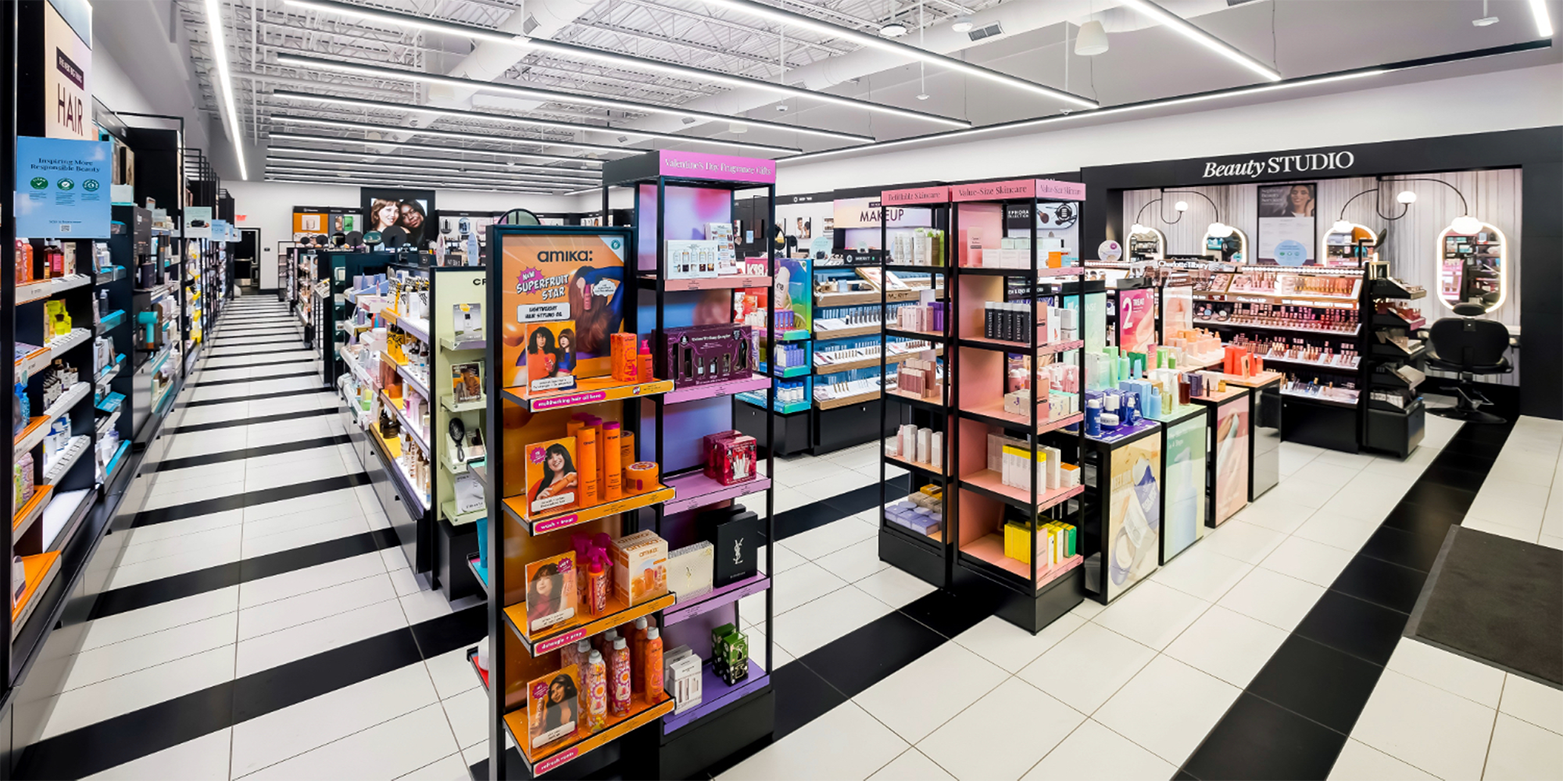
Retailers are right-sizing assortments following a pandemic-era brand pileup. Sephora has informed beauty companies, for example, that it’s not picking up new body care and skincare brand to concentrate on fueling the performance of the brands it has in those categories.
Laura Burget, co-founder of skincare brand Three Ships, says, “The expectation of the velocities that you have to run through these retailers are very different than what might’ve been two or three years ago when they brought on a lot of these brands. Retailers are having to look at their balance sheet and ask themselves, ‘How much inventory are we floating?’”
In the past year, Three Ships has observed slower traffic patterns in some of its retail accounts in Canada and the U.S. such as Credo and The Detox Market. Other accounts like Holt Renfrew and Whole Foods, where the brand is stocked across all North American doors, have ramped up promotional activity to appeal to price-conscious customers, a strategy that can put them at odds with brand partners. Burget remarks that Holt Renfrew ran a summer beauty sale this year, a rarity for the luxury department store retailer.
“Brands are competing against retailers for customer dollars and people are becoming more price conscious. Therefore, retailers and brands are having to run more promotions in order to attract those clients,” she says. “Our brand can’t be on promotion every other month at grocery. It just degrades brand value too much and competes too much with our DTC. We’ve been very strict on our DTC about sales.”
The retail landscape isn’t completely devoid of opportunities for indie beauty brands. Amazon has become a go-to beauty shopping destination, and 37% of U.S. consumers starting their beauty product searches on the platform last year. To capture demand on Amazon, prestige beauty brands like Clinique, Kiehl’s, Too Faced and Evolvetogether opened storefronts on the platform this year. By 2025, Amazon is forecast to become the largest beauty retailer in the U.S., accounting for over 14% of beauty market share versus Walmart’s 13%.
“Success on Amazon requires finding the right team to manage distribution, compliance with guidelines and expertise in PPC [pay-per-click] and SEO,” says Aliett Buttelman, co-founder of skincare and makeup patch brand Fazit Beauty. “We’ve observed that lower-priced items tend to perform better on both Amazon and TikTok due to quicker purchase decisions, whereas higher-priced items take longer to gain traction because they require more brand recognition and credibility.”
TikTok Shop has become a haven for indie beauty brands looking to cash in on the platform’s virality-inducing algorithm. Launched in the U.S. last fall, TikTok Shop is the ninth largest online beauty retailer in the country, with health and beauty sales on it ringing in at just under $400 million for the six-month period ending in late January, according to NIQ. Inclusive of beauty and other consumer categories, the platform’s projected merchandise volume for the year is expected to reach $17.5 billion. An estimated 500,000 brands sell products on TikTok Shop.
“As a significant new player in the retail space, TikTok Shop is breaking down traditional shopping barriers and offering a seamless shopping experience,” says Jacqueline Flam, SVP of beauty retail at NIQ. “Big and small brands alike are already leveraging TikTok Shop to launch exclusive items that sell out within hours. As the platform continues to grow, it offers immense opportunities for brands to connect with consumers, drive sales and build long-term loyalty.”
Fazit cracked the code of TikTok virality early on, drawing around 200 million views without spending a penny on advertising. Virality didn’t always equate to conversions, though. The brand’s first viral video resulted in 30 million views, but only five sales on its site.
Fazit’s ROI on TikTok, though, has accelerated since Shop premiered last year. Its faux freckle patches caught fire on the platform in April and caused the product to sell out on the brand’s site within a week. Fazit’s sales have been growing over 100% month-over-month since then. TikTok Shop and DTC account for about 60% of the brand’s business. Fazit leverages TikTok Shop’s creator program and its own content for TikTok posts.
“For an emerging, bootstrapped brand like ours, TikTok has been pivotal,” says Buttelman. “It significantly boosts our brand awareness, allows us to reach new customers cost-efficiently and has become a successful sales channel for us.”
Costs for TikTok Shop have been creeping up. Referral fees for sales made on the platform increased from 2% per transaction last year to 6% in April. For comparison, referral fees for sellers on Amazon range from about 8% to upwards of 20%. Incentives that TikTok Shop launched with, including subsidized tiered product discounts and free shipping, are expected to be rolled back over time. For now, the app pays for shipping on orders over $20, and new customers are eligible for 50% off discounts on first orders.
Buttelman remains bullish on TikTok Shop. “TikTok’s strength lies in its content-driven approach, which keeps users engaged and facilitates ongoing shopping activity, independent of the initial incentives,” she says. “While there have been instances with other livestream shopping apps where promo incentives led to a short-term spike, but didn’t sustain over time, TikTok differs in that it doesn’t struggle to attract brands or users. It has become a significant hub for brand and product discovery through its SEO and content circulation capabilities.”
ADVERTISING, MARKETING AND CATEGORY SHIFTS
Beauty brands are getting a tad of relief on the advertising front by a reduction in costs related to Meta ads. For campaigns pushing from Meta to e-commerce sites, Iced Media’s clients have seen the cost of ads diminish 20% and the cost to acquire customers drop 30%.
Leslie Ann Hall, CEO and founder of the agency, credits artificial intelligence tool Advantage+ for the cost reduction. She says, “With Advantage+, it’s a broad audience campaign—think everyone in America—and the AI-powered algorithm will deliver each message to the right consumer based on their individualized browsing and shopping behavior.”
The complication is that brands must spread their spend in an omnichannel environment from the ad ecosystems of retailers and e-commerce giants like Target, Sephora, Amazon and Ulta Beauty to social media platforms such as TikTok and those owned by Meta and search engine Google. Hall underscores social media endures as the primary source of beauty product discovery.
“Brands are not less reliant on paid social media,” she says. “However, brands are less reliant on their e-commerce website as the primary destination to drive this media. Over the past one to two years, in the post-COVID return to retail era, brands are taking a much more diversified approach to where they are driving customers with their paid social investment.”
She adds, “The great news is we are also seeing the cost of media driving to these retailers and marketplaces decrease as well, with Meta beauty ads driving to Amazon down 50%, Walmart down 30% and decreases driving to Sephora and Ulta as well.”
Alex Kummerow, co-founder of skincare brand Herbivore, declares the main marketing and advertising hurdle for brands “is to cut through the noise when you don’t have the budgets of the Estées or the L’Oréals. We can’t just dump $50 million into a launch to have a huge moment. We really have to be incredibly strategic and dissect the opportunity you have ahead of you. Make sure you’re spending in the right places.”
And Kummerow emphasizes zeroing in on the right message is paramount. “More than ever, it’s important to be innovative and to find what works for your brand and then really lean into that,” he says. “Because if you’re not filling a little space for yourself, if you’re not opening a little micro category within beauty or even a specific SKU, it’s really tough to be seen.”
Herbivore CEO Brittany LeBlanc detects a return to spending on marketing initiatives with immediately measurable ROI. “Unfortunately, a lot of the tactics that look like they’re delivering immediate ROI are not the long-term brand building or storytelling outlets,” she says. “Make sure you’re able to, as a brand, really invest in the things that you believe in that are going to help tell your story and ultimately pay back in the longer run.”
While some of the tactics include digital and media initiatives like Pinterest or podcasts, offline and experiential events, the business results of which are more amorphous, are considered crucial. LeBlanc says, “Investing in those types of opportunities for people to really touch and feel your product and become your best advocates and offline [is] word-of-mouth marketing.”
For wellness brands especially, a presence on the music festival circuit is the gold standard of IRL activations. It can put a brand in front of thousands of target consumers, but it’s not cheap. Alexandra Van Iden, co-founder of public relations and branding firm Prismatics, divulges sponsorship fees typically start around $10,000 for a major music festival and can exceed six figures.
At communications and PR agency MP-IMC, clients are investing in ambassadorships spanning macro-influencer collaborations, user-generated content campaigns and seeding with nano- and micro-influencers. Managing director Jennifer Conlon-Pavelchak is advising brands to steer away from one-off or short-term campaigns.
“Brands are investing more of their budget into one larger creator campaign versus multiple, meaning quality over quantity is winning in today’s creator marketing economy for brands even if it means a larger spend,” she says. “It’s key that brands are strategically investing [in] a creator outside of the traditional and very transactional beauty pay to play, and it is critical that the investment should always live outside of just the social feed.”
In the indie beauty segment, clinical beauty’s lapping of clean beauty—data compiled by investment firm Norwest shows 92% of consumers prioritize product efficacy and 81% prioritize clean formulations—has sparked a reckoning. Indie and clean beauty have been closely intertwined, and it was a groundswell of brands ushering in better-for-you products that was a catalyst for the traction indie beauty has had in recent years.
The publication Puck News reported last week that Sephora is pulling away from its Clean at Sephora program. The retrenchment and the toppling of clean beauty’s top of mind status among a wide swath of beauty shoppers has clean beauty brands pondering their roles in the market and what they should convey to be relevant to consumers.
Kummerow has thoughts on how brands should approach the “clean” conversation. “Your responsibility is to push everything as you possibly can in reducing plastic to a minimum, push technologies and innovations that allow us to do this better in the future,” he says. “A clean brand should always be messaging not only what they’re doing, but what they’re going to be doing in the future. Everyone has a different definition of it, but, to me, clean means just do better.”
Whether or not brands attach themselves to the “clean” label, Daniel Faierman, partner at early-stage venture capital fund Habitat Partners, is most excited about prestige beauty, especially products priced at $100 to $200. In the first half of the year, market research firm Circana approximates prestige beauty sales were up 8% and mass beauty sales were flat.
Faierman describes “premium, but accessible” products as flourishing. He says the demographic for them “has actually gotten wealthier since 2020 for the most part and has more disposable income” and that masstige beauty shoppers are being squeezed by macroeconomic factors. Masstige, nonetheless, has been a standout category in the beauty industry lately.
Faierman highlights that prestige products’ favorable profit margin profile relative to mass products gives them an edge. “It’s very hard to be first order profitable when you’re selling a masstige brand in this environment, whereas if you can come out of the gates with a price point between $100 and $150 and your gross profit compared to your customer acquisition cost makes your contribution margin profitable on your first order, that gives you a lot of power with how you invest your money moving forward into the future,” he says. “A $100 to $150 price point allows a lot of brands to have that liberty.”
Faierman questions the wisdom of launching a brand that can’t be first-order profitable in the current environment. He says, “You just can’t rely on cash and having the cash over time if you haven’t hit that fundamental first-order profitability dynamic in your early days.”
The players
5 mentionedToo Faced

The Detox Market
Commodity
Kiehl's
Bubble