All The Costs Emerging Beauty Brands Should Be Aware Of Before Entering Big Retail
“Creating the concept and the item is one piece, managing all of the rest is difficult,” says Barry Shields, managing partner at Beauty Partners LLC, the company behind the brands Arches & Halos and Nailtopia.
Abbie Mietz, COO at Fairy Tales Hair Care, which has added more than 8,000 retail doors in the past year, suggests open communication with retailers is crucial. “So many brands get excited about the doors, but it is really important to get an understanding of what the retailer expects,” she says. “Look at contracts, understand timelines and realize you are in it for the long run.”
Beauty Independent canvassed brand founders and retailers to unlock what brands need to know and have to spend to support their dream launch on the shelves of retailers such as CVS, Walgreens, Target, Ulta Beauty and Walmart. Buckle up—it’s a wild ride.
The Retail Equation
Brands estimate as much as 70% of the sales generated in the first year of breaking into retail should be dedicated to marketing to support the retail business. It’s not uncommon for a large retail launch to cost a brand several hundred thousand dollars to $1 million or more. That’s money spent without expectations of profit. It’s a challenge to break even in the first year, and brands often don’t break even until year three or four.
For a direct-to-consumer brand, the advantages of physical retail, especially big-box chains, have to be carefully assessed before the brand moves into it. “Having proof of concept in the direct digital world does not always translate to the impulse brick-and-mortar world, where the competition is literally sitting next to your brand on the shelf or wall,” warns Shields.
DTC brands’ distribution assessments factor in the increasing costs of acquiring customers on a direct basis. Apple’s iOS 14 update diminishing the reach of digital advertising has propelled direct players into retail. Getting mentions on TikTok or having an edgy item creates a buzz, but it gets costly to keep the momentum rolling.
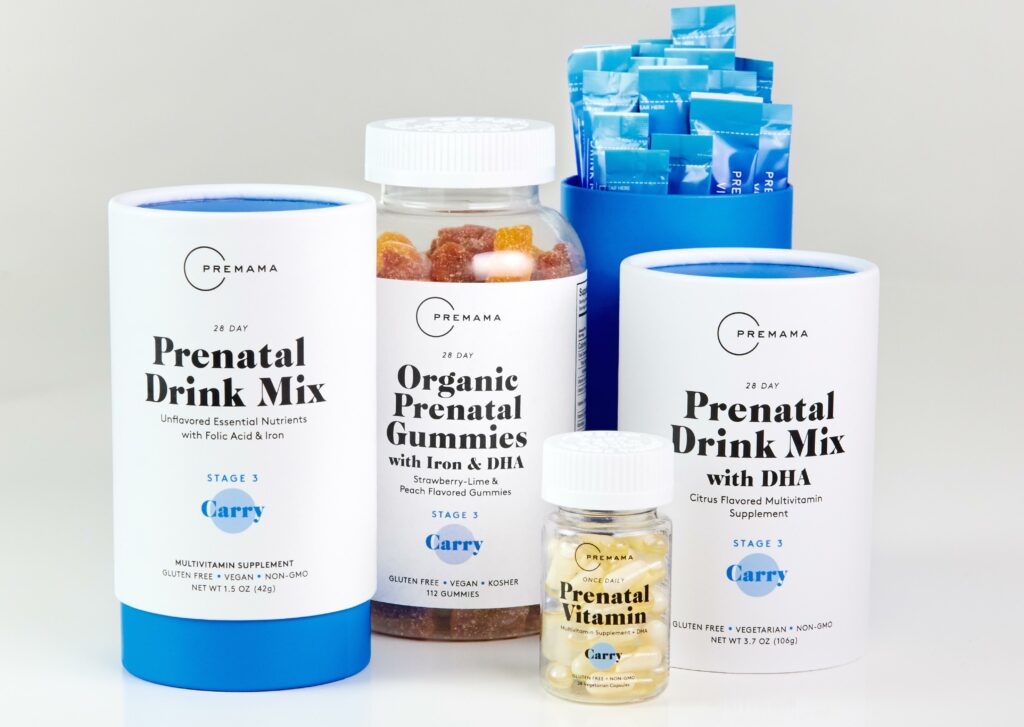
“Brick-and-mortar still controls 80% of consumer goods sales. As much as DTC is amazing, it is getting harder and harder as well,” says Dan Aziz, founder of Premama Wellness. “There is a crazy rise in advertising online. CPM [cost per thousand impressions] on Facebook and Google has gone up drastically. We are still focused on growing retail. People see your brand in Target, and you get recognition and people trust your brand.”
In 2020, Premama Wellness pulled out of 8,000 retail doors to focus on the bottom line. After tweaking the brand and hammering out details, it returned to retail at about 8% of Target’s doors. It’s also rolled out to Sprouts, Whole Foods and The Vitamin Shoppe. The brand recently hired a national sales manager to bolster its retail push.
Shea Radiance and Hue for Every Man are other examples of brands that left big-box retailers after they weren’t garnering sufficient returns from them. Hue for Every Man has shifted to selling via the professional barber route. Funlayo Alabi, co-founder and CEO of Shea Radiance, describes her brand’s initial foray into big-box retail as ending “rather disastrously.”
She says, “Expanding to the mass market is a great opportunity to make products accessible to existing customers and expose the brand a wider audience. It also comes along with a higher amount of risk and failure. A mass retail chain can shut down a small brand quickly.”
Shea Radiance wasn’t prepared for the costs required to sustain the Target distribution it nabbed in 2012. However, the knowledge gained from its Target experience was integral for later Whole Foods and Wegmans launches. Alabi says, “A brand’s access to capital will be a huge factor in evaluating an opportunity to enter the mass market. It makes a difference if one is in the bootstrapped or capitalized state. There are other costs like broker commissions, distributor margins, promotions commitments, free-fills, chargebacks, buyback guarantees and other non-negotiables.”
Going into a small cluster of stores can be beneficial for brands figuring out retail as they go, and retailers have been working with indie brands on limited rollouts. But that’s sometimes not what retailers want, brand founders explain. They may want to see if a brand can perform across the board, not just in certain markets.
Retailers are on the hunt for emerging brands, and most have accelerator programs to assist young brands. Walmart recently launched Walmart Start, an accelerator program designed to give up-and-coming beauty brands a grasp of what it takes to scale at mass. Target’s Takeoff program has a similar mission.
Even with handholding, though, there are complexities brand founders acknowledge they didn’t fully comprehend until they encountered them. “Brands get up to $2 or $3 million in sales and then don’t know how to expand,” says one brand founder.
Below are key areas buyers and brands mention that are important to be cognizant of prior to deciding to place a brand in a large retailer.
Shipping: Will items be wholesaled or drop-shipped? Does the brand or retailer pay for shipping? Is the brand shipping master packs with inner boxes and displays? Fill rate must be at least 98% complete and on time. Retailers generally have a damage allowance that is 1% to 2% off invoice. Freight costs can be a particularly tricky today as they’re soaring.
Slotting Allowance/Free Product/Trade Fuel/Coop Marketing: Most big-box retailers ask for a slotting allowance or pre-fill/free-fill, which is basically free products. They offset taking out old products or putting a new brand in. For cheaper items, pre-fill/free-fill of 12 free units per item per store is customary. For higher-ticket items, three free units per item per store is customary.
Slotting fees are a fixed cost based on number of stores and can be $15,000 to $20,000 per product. Seasoned brands suggest securing more than a year contract to avoid paying steep fees, only to be cut the next year.
Here, by retail class, are estimates of trade fuel or coop marketing, which includes an array of marketing propositions and can include fixtures. Coop marketing is marketing both the retailer and the brand pay for.
Mass: It can cost as much as $50,000 to become a vendor at a large mass-market retailer plus slotting allowances for each new stockkeeping unit.
Drug: The major drug chains clock in at about 30% to 40% of sales.
Specialty: The spend is higher for a retailer like Ulta, estimated at 40%, and there is about a six-month window to show performance.
Grocery: Food stores cost about 20% to 25% of sales.
Payment terms: If an invoice is paid in 60 days, a retailer is allowed to take a 2% discount on the invoice. Many retailers will take the 2% no matter what. Big-box retailers almost never agree to 30 days. Usually, they establish a minimum of 60 days and, at times, 90 days. Keep in mind payment can be put on hold for the first order.
Returns: What’s the return policy? If products are returned, retailers charge a fee, and it could be on product that’s not able to be resold.
Chargebacks: Brands should have stringent plans in place such as documenting shipments to avoid excessive chargebacks. Chargebacks are fees for late shipments and goods damaged in a variety of ways like inaccurate labeling. In practice, chargebacks can be levied for a wide range of issues. One brand shared a story of $11,000 out of a $15,000 shipment of goods being charged back to the brand due to expired merchandise. Another brand approximated that chargebacks ordinarily wind up at .4% of sales.
Brokers: Brokers can be essential to facilitate fledgling brands’ entrances into retailers. For startups, they can charge $10,000 to $15,000 per month.
Marketing: Being on the shelf doesn’t mean a product will sell. It’s up to brands to generate interest. “Retailers typically will not market your products for you. You must bring traffic to the store through your own marketing efforts,” says Alabi. “Launching into mass requires an ability to purchase the inventory for the opening order, which is typically quite large compared with the recurring orders and simultaneously creating brand awareness so that the product sells.”
Benchmarks: Retailers delineate benchmarks based on product categories and the size of a brand. Many chains look at sales per linear foot per store week. For a smaller brand, it could be $50 in sales per linear per store per week. For bigger brands, that goes up to $80 per linear foot. Industry experts say brands generally are aware within three months if they’re doing a decent business at a retailer in order to prolong their stay at it.
Here’s a real-world breakdown of the cost structure:
The product SRP (suggested retail price) is $10.
The retail margin is 50% to 60%. At a retail margin of 50%, the retailer is buying the product at $5.
The retailer deducts 50 cents for coop marketing.
The retailer gets a 2% net 30-day cash discount that equals 10 cents.
With the deduction of 60 cents for coop marketing and the payment term discount, the brand gets $4.40 for the product from the retailer.
Out of the $4.40, the brand has to cover cost of goods, which can be 30% of the wholesale price or $1.50.
Direct-to-consumer brands frequently run into trouble because they don’t figure in the retail margin and look at cost of goods from the retail price, which, in this case, is $10. Their cost of goods on a product retailing for $10 could be $3 or double the $1.50 a brand structured for retail would make it.
If the cost of goods is taken out of the $4.40 paid to the brand by the retailer, the brand has $2.90.
Out of that $2.90, the brand has to pay for freight to a distribution center or warehouse. At 3%, that’s 15 cents.
The brand will generally also pay for a third-party logistics company. That’s 2% or 10 cents.
Now, the brand has $2.65 of the original $10 retail price to pay for whatever else it has to pay for, including rent, social media, public relations, the cost of EDI (electronic data exchange) implementation, salaries and more.
“In today’s world, it is an ongoing war in retail with the big players and the new indie small players. Fight day-to-day little battles item by item. People buy hero items not necessarily brands,” says Shields. “And slowly build the brand SKU by SKU, door by door, using great analytics, intuition and listening to your consumer and the competition’s consumer. If independent beauty marketers want to succeed going from DTC to retail start small ask all of the ‘dumb’ questions.”
The difference between winning and losing at retail can be as simple as finding the perfect fit. “Remember that not every opportunity is right at a particular point in time,” says Alabi. “You may have to pass on retailers that are more rigid and find partners that are willing to negotiate with you for mutual success.”
The players
5 mentionedAS Beauty

The Center
The Vitamin Shoppe
Walmart
Walmart