Can Wellness Finally Win The Physical Retail Game?
“For the right retailers, it definitely is time, and consumers are ready,” declares Kelly McPhillamy, managing director at investment bank Harris Williams. She continues, “They’re making that connection between inner and outer health and how that affects appearance, [and] all these connections are being made in a much more visible way at retailers like Ulta. These different wellness need states are so closely connected to beauty and that’s where you’re seeing brands make inroads.”
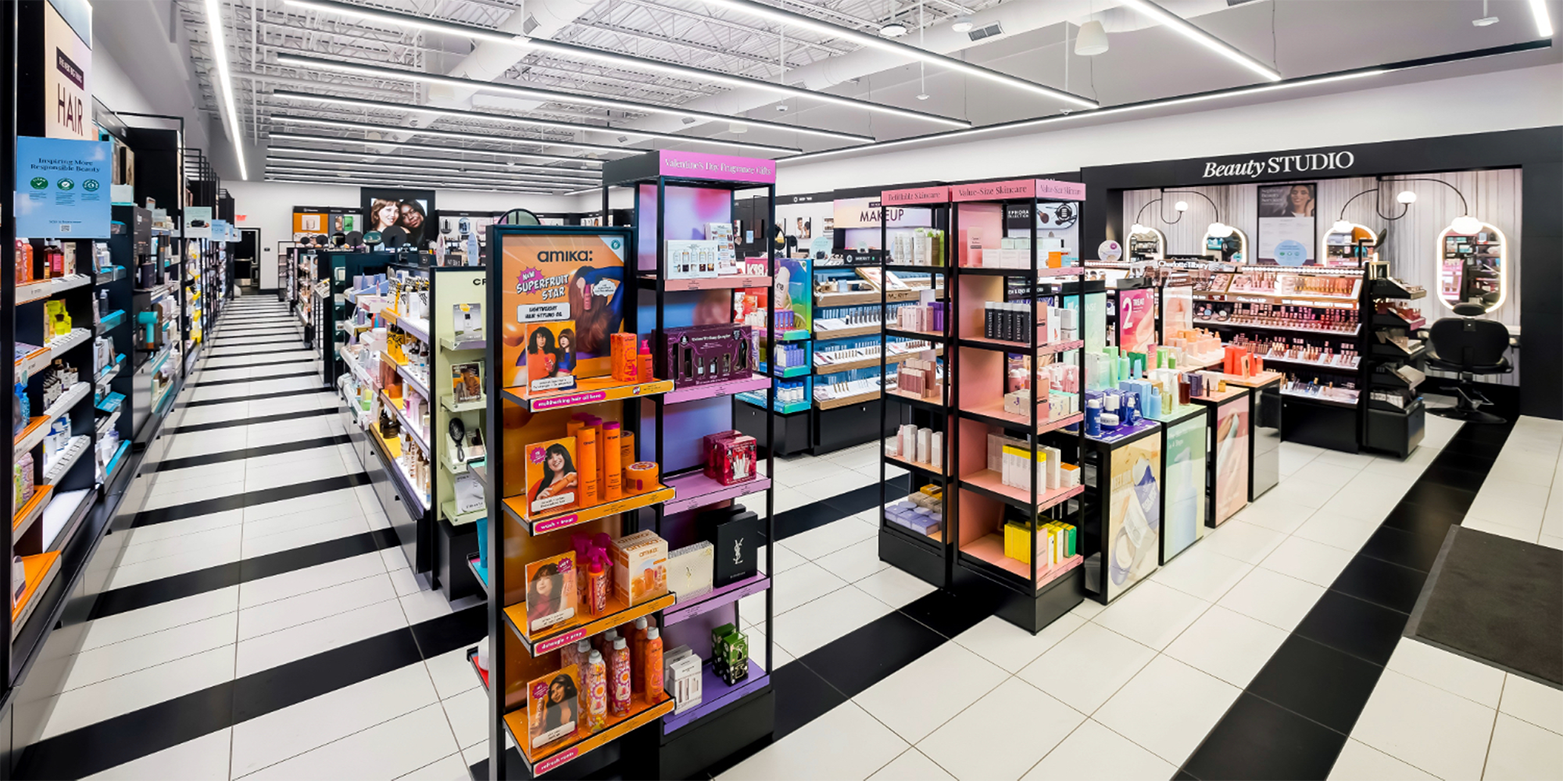
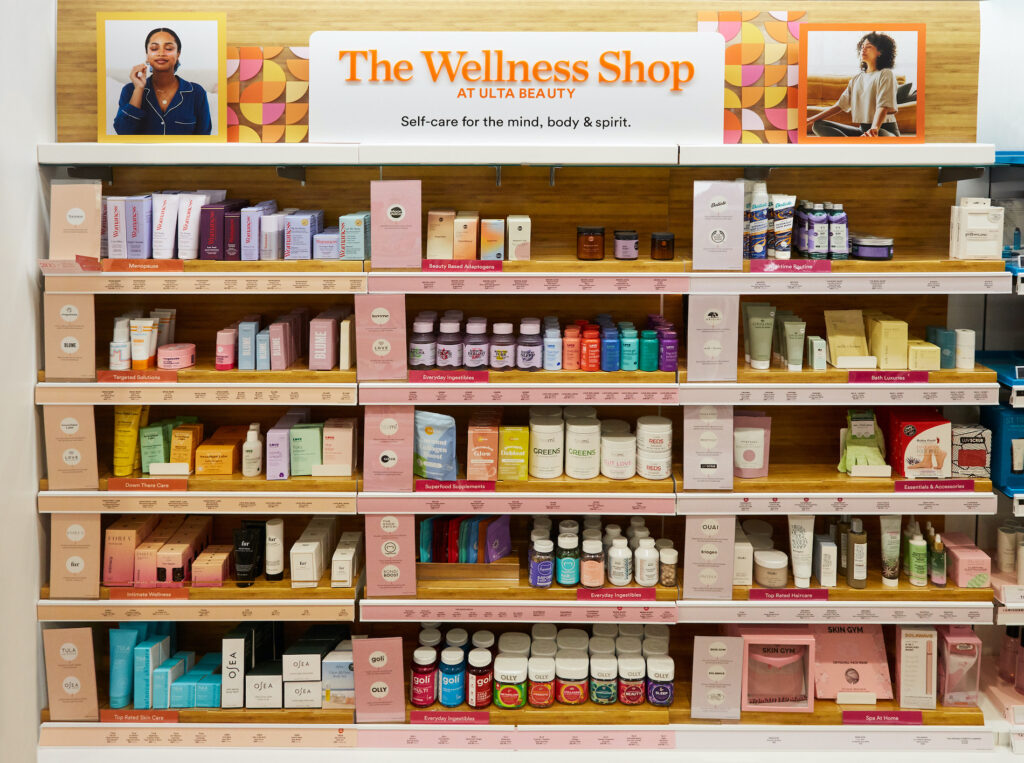
Leading the retailer vanguard is Ulta Beauty, which recently introduced nearly 20 new brands to its bustling The Wellness Shop concept. The new entrants, spanning ingestible wellness, feminine health support, aromatherapy, oral care and more, include Ritual, Hum Nutrition, Vital Proteins, Garden of Life, Bloom, Nature’s Bounty, Armra, Revive Collagen, Rookie Wellness, Hatch Mama, Bird&Be, Scarlet by Red Drop, Saje Wellness, Nakery, Nodpod and Therabody. TikTok viral brands Mary Ruth’s and GuruNanda were also part of the cohort. As previously reported in Beauty Independent, The Wellness Shop is in all of Ulta’s roughly 1,440 stores in the United States and currently encompasses nearly 1,000 products from dozens of brands.
Ulta is not the only beauty retailer beefing up its wellness offering. Clean beauty destinations The Detox Market and Credo have also added wellness products in recent months. The Detox Market brought on ingestible products from New Zealand health and wellness brand Manuka Health in June, and Credo added Sakara Life’s wellness range as well as mushroom-powered topical and supplement specialist Verdoie around the same time. Earlier this month, Credo added Naomi Watts’ menopause brand Stripes online and in-store. At the time of the Stripes launch, Credo’s VP of brands, Jessica Trieber, said the retailer is broadening its “commitment to wellness, inside and out.”
Notably, major beauty player Sephora doesn’t seem to be following suit by leaning further into the wellness category and instead has chosen to focus on beauty categories like clinical skincare and professional-led color brands.
The expansions make sense in light of consumers’ continued prioritization of wellness. In McKinsey’s latest Future Of Wellness survey, 84% of US consumers said wellness is a “top” or “important” priority. The category is gaining momentum especially with younger generations. Nearly 30% of gen Z and millennials in the US report prioritizing wellness “a lot more” compared to one year ago, versus about 23% of older generations. As such, these younger consumers are wielding outsized spending power. While gen Zers and millennials make up about 36% of the adult population in the US, they drive more than 41% of annual wellness spend.
While online channels, including Amazon and, increasingly, TikTok Shop, continue to be the go-to destinations for many wellness consumers, others also want to shop for wellness IRL. A recent study by online publication Pymnts found that health and beauty products were the strongest draw for in-store shoppers, with 37% of consumers who made in-store non-grocery retail purchases in the last month buying health and beauty products.
The food, drug and mass channel—FDM in industry parlance—has traditionally been a wellness shopping destination, but as new and established players in the category work to transform their consumers’ in-store experience, modern wellness brands are serving as a keystone of that strategy. Since it began revamping its collection of more than 7,500 wellness products last fall, natural grocer Sprouts Market has introduced stylish wellness finds, including functional beverage brands Erha and Kin Euphorics, adaptogenic chocolate maker Alice Mushrooms, and tincture specialist Apothékary.
Chic California grocery chain Erewhon has shot to the top of many emerging wellness brands’ list of dream retail partners. Alice Mushrooms, Erha and mouth tape maker Vio2 have all launched into the 10-door chain this year, and wellness companies like Cowboy Colostrum, Sun Chlorella and Agent Nateur have all partnered with Erewhon on versions of its viral (and pricey) smoothies featuring their products. Design-forward Manhattan shops like Pop-Up Grocer and Happier Grocery also offer a variety of wellness products from premium, better-for-you brands.
Target may have severed its relationship with Ulta Beauty, but it seems to be deepening its commitment to wellness consumers. The big box retailer will be hosting its first-ever Wellness Innovation Summit next month at its Minneapolis headquarters, where new-to-Target brands can pitch buyers for a chance to join the retailer’s curated wellness assortment. In January, Target added a whopping 2,000 new wellness items to its assortment, across categories like women’s health, fitness and personal care.
What it will take for wellness to win
Retailers have tried to make wellness work in physical stores for years, to mixed results. While societal tailwinds like consumer prioritization of the category will help the cause this time around, specialty and FDM retailers that carry both wellness and beauty products are seen as particularly poised for success, given the opportunity they provide wellness brands to help consumers easily bridge the inner-outer health gap.
“Consumers are elevating self-care routines to optimize products that work synergistically,” says Jane Merten, founder of retail consultancy AllOut Advisors and forme marketing director of intimate wellness brand pH-D Feminine Health. “They want glowing skin, balanced mood, better sleep, more confidence. That’s exactly where beauty and wellness converge.”
Getting specific about Ulta’s The Wellness Shop, Merten points to the retailer’s move from “brand-bloxked” displays to problem/solution merchandising as a smart move. She explains, “It appeals to a consumer who may have come in for makeup but leaves with a wellness add-on. Ulta isn’t expecting consumers to come in searching for supplements, but they’re using wellness to increase basket size and relevance.” She suggests that perhaps Ulta’s shop-in-shops at Target stores gave Ulta access to basket-level consumer data. “If they could see that an Ulta beauty shopper also picked up vitamins, self-care or feminine health, it would validate the strategy to double down on wellness in their own stores.”
Merten also sees wellness brands at Ulta missing opportunities to create more cross-promotional cues between the beauty and wellness categories in-store. “For example, the skin care set for aging skin isn’t directing consumers to The Wellness Shop for a personal lubricant for dryness or hot flash relief,” she says. Brands and retailers should look for ways to connect these need states across aisles for consumers. For all wellness brands looking to make an impact on shelf, Merten suggests investing in not only beautiful packaging, but also educational packaging and merchandising.
“Sharing clinical proof with the brand story will create deeper meaning and loyalty,” she says. “Use shelf strips for education, social proof and QR codes with product tutorials or founder content.” McPhillamy agrees, noting that making the investment into clinical testing and storytelling is important for brands at retail. She says, “Seeing more brands do clinicals on their products to demonstrate efficacy or highlighting the ingredients that people know have certain effects that you’re using—telling an ingredient story—would be the other way to go.”
But all the compelling storytelling in the world won’t compel consumers to purchase a product if they aren’t making it into the store in the first place. Merten advises omnichannel synchronization, employing every touch point possible to drive brand discovery that helps get consumers through the doors.
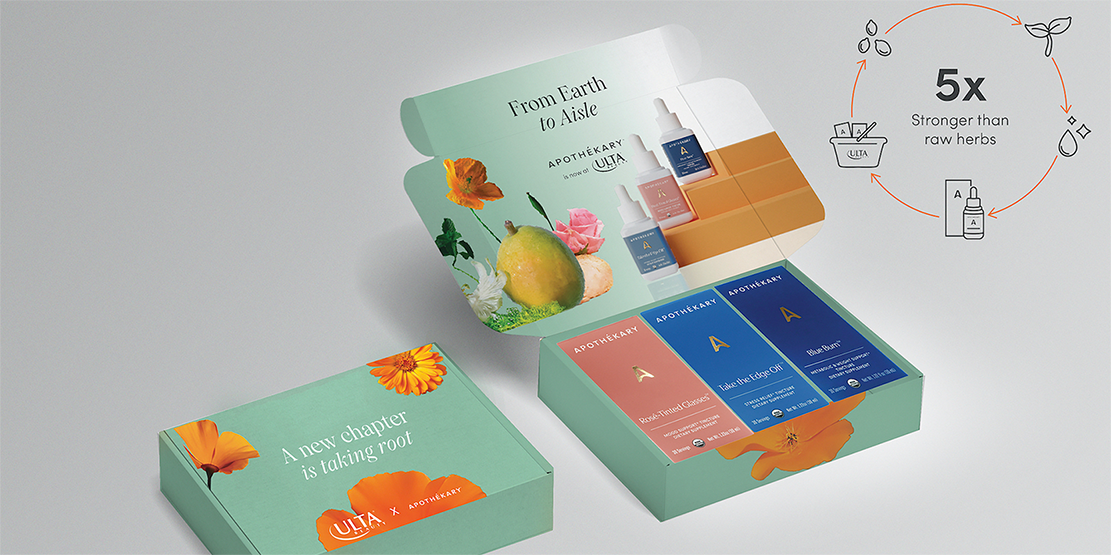
When Apothékary expanded from online-only to in-store at Ulta Beauty in June and to an additional 50 doors last week, the brand created a pop-up in Soho and gifted about 100 content creators a custom product mailer. Both were a huge success, garnering millions of views through user-generated content, or UGC, and influencer posts. Founder Shizu Okusa shares that about 2,000 people visited the one-day pop-up, where attendees got to immerse themselves in the Apothékary brand, drink matcha lattes and play games. They also received vouchers to shop Apothékary at Ulta Beauty. Okusa estimates the pop-up cost close to $100,000 to produce.
The founder says the brand’s go-to-market strategy for Ulta and its rollout at Sprouts last year were very different when it came to cost allocation. She details, “The earned media and influencer approach, less so paid, is much more relevant for Ulta. Field sales, in-store education, hitting the pavement and making sure product is always in stock is the name of the game in grocery,” she says. “It’s all expensive, don’t get me wrong. It’s just a very different approach.” The strategies for the two channels are so different that Okusa says she’s planning to hire one director of sales for beauty retail and one for grocery.
Nuanced approaches like Apothékary’s are key to wellness brands making physical retail work. Merten says opportunities to drive conversions in-store are still being missed. “Too many brands are leaving equity on the table by not optimizing both their physical footprint (QR codes, storytelling, exclusive packs) and their digital product detail pages (full thumbnail storytelling, video content, review syndication). Prestige or masstige, the brands that close that loop from shelf to screen to basket will win.”
The players
5 mentionediS Clinical

GuruNanda
Topicals
Therabody
The Detox Market