Off-Price Retail Treasure Hunts Fuel TikTok Beauty Content And Sales
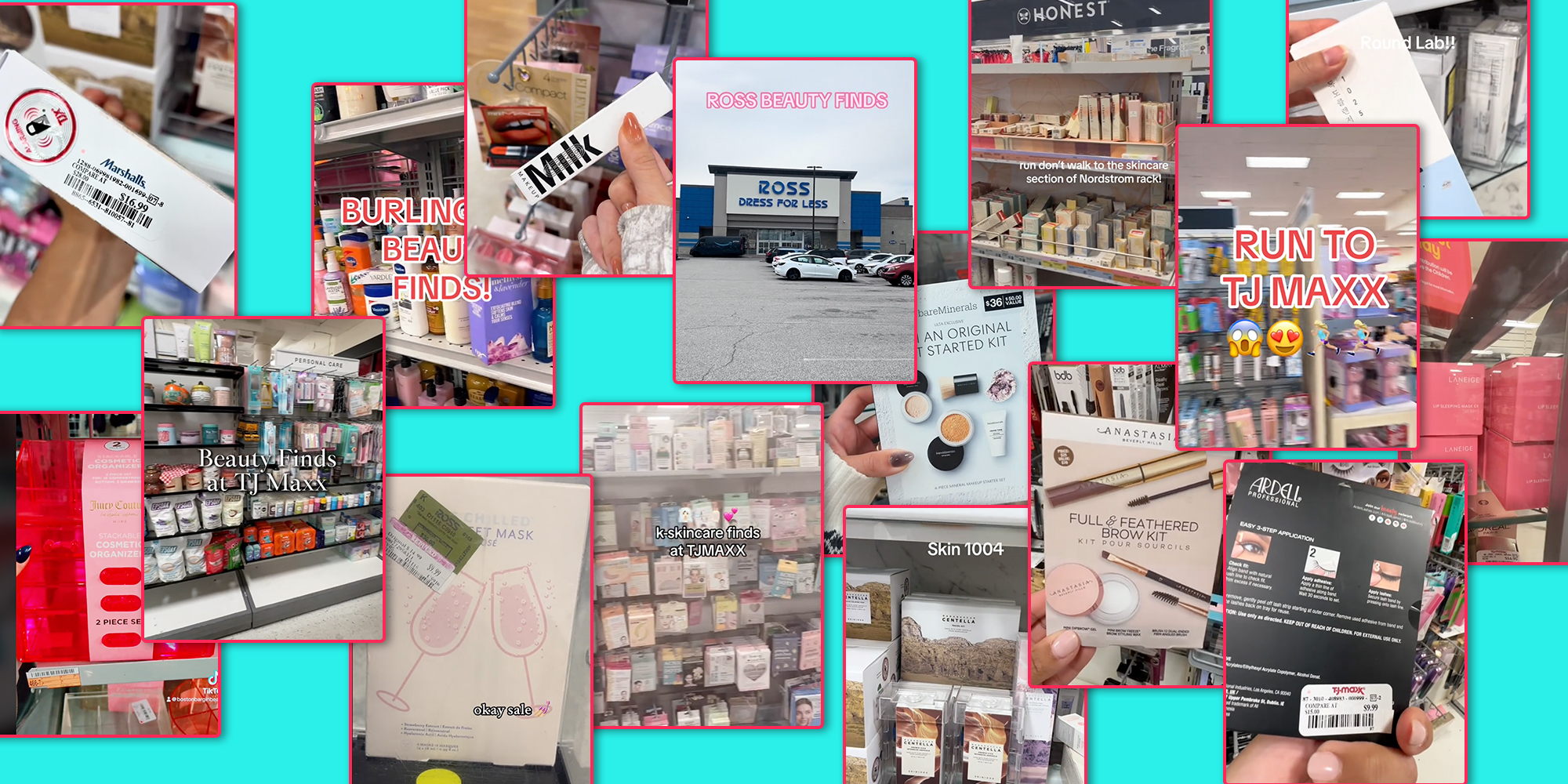
Off-price retail treasure hunts have become the grist of social media, where skilled bargain seekers pride themselves on sleuthing where viral beauty products land and paying less for them. Beauty brands are stoking the treasure hunt fun. For example, to support IGL Nails’ T.J. Maxx and Marshalls launches in May, the press-on brand entered people in a giveaway who locked eyes on its products at their local stores.
The combination of off-price’s here today, gone tomorrow model and social media provides retail as entertainment that’s especially tantalizing as consumers have had their wallets squeezed by high inflation and pulled back on spending, but beauty and retail industry insiders and analysts believe the entertainment and bank account value won’t diminish even if inflation continues to ease. As the publication Retail Dive pointed out, retail analysts predict the off-price sector will continue to eat into department stores’ business.
During off-price chain Burlington’s second quarter conference call in August, CEO Michael O’Sullivan made the case for off-price bullishness by touting the segment’s appeal to a variety of consumers. Bank of America has highlighted that millennial and gen Z shoppers adore Burlington, T.J. Maxx and Ross, and projects they could help drive shares of the off-price retailers up nearly 20%.
T.J. Maxx parent company The TJX Cos. Inc.’s net sales gained 6% and its comparable-store sales gained 4% in the second quarter. It opened its 5,000th store in the quarter, and there are thousands more off-price stores that dot the United States. Burlington’s net sales climbed 13% from the second quarter last year, which saw net sales jump 9%, and its comp-store sales advanced 5%.
O’Sullivan said, “Two years ago, our core low-income customer was under severe economic pressure from the higher cost of living. Since then, it feels as if two things have happened. As inflation has moderated, the situation for lower-income shoppers has somewhat improved. In parallel, economic pressure and uncertainty has spread and broadened well beyond lower-income shoppers. There is now greater focus on value across demographic groups and income bands. This greater focus on value is helping our business.”
Judah Abraham, founder and CEO of beauty brand incubator Slate Brands, is convinced off-price’s mojo won’t ebb, especially if off-price retailers exercise their merchandising prowess. “Customers are more educated and value-conscious than ever, looking for quality and trending products at lower prices while having accessibility,” he says. “Discount chains have had to innovate and adapt to stay relevant by expanding their beauty lineup and are some of the fastest growing retail footprints.”
David Klar, CEO of Klar & Co., supplier of the brands Azure and Skin 2.0 in the off-price channel, argues off-price retailers are becoming beauty heavyweights. They’re chasing covetable products and improving their merchandising. Nordstrom Rack in particular is merchandising similar to upper scale retailers with branded product displays.
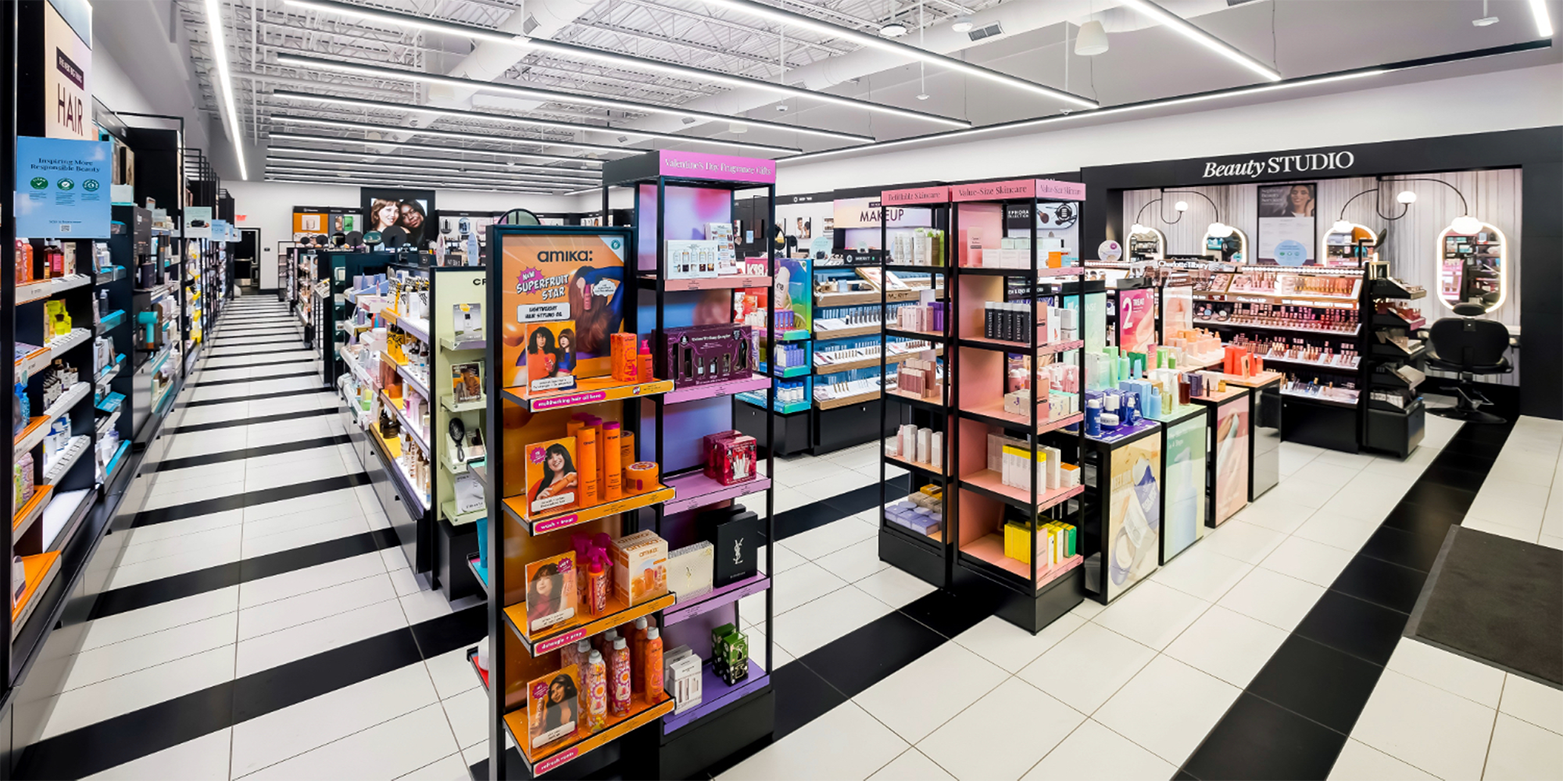
“There are strict standards today,” says Klar. “Boxes can’t be damaged, everything must look pristine, and there must be value. The ways the stores look is also a way they communicate that they are selling quality products and an experience.” He underscores that consumers “don’t feel like they are getting shortchanged in terms of product and the experience at a discount retailer.”
It doesn’t hurt that beauty trends have moved in off-price retailers’ favor, especially the rise of dupe culture in which comparatively cheap mimics of pricier products are prized. Sonia Summers, founder and CEO of beauty salesforce company Beauty Barrage, says, “Today’s discount retailers are incorporating affordable alternatives to high-end products such as dupes while emphasizing clean beauty more.”
She continues, “Discount chains prioritize price and value, which leads to a quicker buying cycle and less focus on personalized service or in-depth product knowledge. Speedy turnarounds allow them to move quickly on trends that gain momentum, capturing consumer attention faster than traditional retailers.”
Klar says his company manufactures Azure and Skin 2.0 specifically for off-price retail “because it is an amazing customer base who wants trends at an affordable price. A lot of them wouldn’t know something is a trend if they hadn’t already seen it on TikTok, but when you add in the value factor and the growing customer base, that’s where we want to be.”
For brands without large budgets to invest in marketing, advertising and sampling to propel traffic to big-box and beauty specialty stores, Summers says an off-price presence can be cost-effective. In fact, Klar compares an off-price presence to sampling and has noticed consumers checking out the full assortment of a brand after encountering a product from it in an off-price store. He says, “Once customers get a taste of the brand at a lower price point, they’re more likely to explore higher-end or full-priced items elsewhere.”
Viral and recognizable beauty brands not made for off-price retailers arrive at them for several reasons. Abraham mentions that overproduction and efforts to avoid waste cause excess inventory to be sold at reduced rates. Other factors include cash flow restraints, exclusive products, specialized product versions and diverted goods. Abraham shares that discount retailers source products through distributors, liquidation sales or manufacturers offloading surplus or discontinued items, leading to the treasure hunt phenomenon of products being impermanently at off-price.
“Market saturation has also forced brands to use additional channels to move their products, and discount retail chains offer a way to expand distribution network and reach new customers,” says Abraham. “Since viral beauty brands often rely on newness and innovation, fast product turnover discount retail offers a boost of awareness from high foot traffic.”
There are undoubtedly beauty brands with products that end up at off-price stores that don’t want to be there. “Diversion is a huge issue in our industry, and every brand faces it,” says Summers. “We’ve all had calls from buyers letting us know they’ve spotted our products at places like Costco when we didn’t intend for them to be there. Unfortunately, this is a risk with some unethical distributors.”
Klar cautions brands that it’s imperative brands are very familiar with companies they’re selling to and are upfront with them about distribution plans. He’s heard of instances where brands pull out of off-price retailers if they weren’t part of their plans and pricing contracts are in place. Klar says, “As long as a store is not selling fraudulent goods, they have the legal right to sell them, but, of course, they don’t want to make brands upset, especially if they don’t appreciate the volume of sales, so whatever relationship exists may be avoided in the future.”
Ultimately, is it damaging to a brand’s reputation to have prime real estate on beauty shelves in off-price stores? Beauty industry insiders say yes and no. If an expensive brand has products for cheap at an off-price retailer, it could undercut the perception that it’s unattainable and luxurious. Abraham says, “The disadvantage is the perception of devaluing a brand and diluting it to the point where consumers expect lower price points.”
Investors can be particularly wary of off-price exposure. Abraham says, “Investor concerns are valid with brand dilution and decreased profit margins, but much of the worry stems from how the discount retail strategy is executed since poorly managed brands can damage their prestige appeal, yet a strategically controlled entry can clear inventory and expand market reach, supporting longevity.”
Klar contends it’s rare that there’s lasting reputational erosion from being sold in off-price alone in part due to the in-and-out nature of the off-price model. He says, “While there may be one or two high-end beauty products sprinkled around 2,000 stores, rarely will you find it in every single store across the company. I think of it as if you got lucky once, and now you have to pay full price to continue to experience the joy of the product.”
Each brand has its unique distribution strategy, and Klar explains some start everywhere else and then want to trickle into a retailer like T.J. Maxx when they’re established. He says, “This way they can sell us more products at a nonrecognizable level, and everyone wins while we are democratizing it, too.”
The players
5 mentionedDavids

Glossier
August
Milk Makeup
Under Your Skin