NIQ Projects Indie Beauty Will Continue To Eat Into Conglomerate Market Share
For the 52 weeks ended Jan 25, the consumer intelligence firm estimates the growth rate of indie beauty brands was more than double the growth rate of beauty conglomerates, at 13.5% to 4.7%, reflecting market dynamics of younger generations gravitating to newer disruptive brands and digital distribution platforms gaining steam that aren’t expected to dissipate.
Overall, during the period, indie beauty brands accounted for $31.8 billion in sales or nearly 29% of the almost $110 billion beauty industry in the United States. A year ago, indie beauty brands accounted for $28 billion in sales or 27% of the then $102.5 billion U.S. beauty industry.
Going forward, Anna Mayo, VP of the beauty vertical at NIQ, says, “I do think the growth of indies is going to outpace conglomerates. This has been the trend that we’re seeing. It’s only being accelerated by TikTok Shop, which is such a huge player in the marketplace, introducing new brands to people and getting people comfortable with this idea of brands that they haven’t heard of before.”
Indie beauty brand penetration varies across beauty categories. At 35.6%, it’s highest in facial skincare and haircare. It stands at 31.2% in color cosmetics and 22.9% in fragrance. While fragrance has the lowest indie beauty penetration, indie growth within it is lapping indie beauty growth generally. Compared to the year-ago period, fragrance indie brands grew 33.8% versus 16.6% for fragrances from conglomerates.
NIQ defines indie beauty brands as brands under $200 million in sales that aren’t owned by a conglomerate. Brands with private equity or venture capital investment are classified as indie. All told, NIQ tracks 2,058 indie beauty brands, including 24 generating $100 million to $200 million in annual sales, another 24 generating $50 million to $100 million in annual sales and 2,010 generating $1 million to $50 million in annual sales. There are thousands of beauty brands that haven’t hit $1 million in annual sales, but NIQ doesn’t track them.
Indie beauty brands have benefitted from a lack of beauty consumer loyalty especially acute with younger consumers. NIQ figures beauty brand loyalty dropped 20% in the past two years as consumers are exposed to indie beauty brands they were previously unfamiliar with via Amazon and TikTok Shop. On Amazon, the No. 1 beauty retailer, it finds 90% of consumer packaged goods purchases are unbranded or, in other words, result from searches not attached to specific brands that could be related ingredients, benefits or functions.
In color cosmetics, gen Z and millennial consumers, respectively, overindex with the upstart beauty brands Danessa Myricks Beauty and Rare Beauty, and their older gen X and baby boomer counterparts overindex with L’Oréal-owned IT Cosmetics and Estée Lauder-owned Clinique. In haircare, gen Z and millennial consumers overindex with Amika and Raw Sugar, and gen X and baby boomers overindex with Wella-owned Sebastian Professional and Henkel-owned Kenra Professional.
Amazon and TikTok Shop’s model of feeding consumers brands that adhere to their interests, whether that’s because of a search or their algorithms, has prodded and profited from brand hopping. NIQ pegs TikTok Shop as the eighth largest beauty retailer, surpassing $1 billion in beauty sales. Amazon held a whopping 40.9% share of indie beauty sales in the 52 weeks ended Jan 25., up 18.6%, besting competitors in beauty specialty, mass and grocery. Good Molecules, Kitsch, Lattafa, Cosrx and Grace & Stella are brands identified by NIQ as surging on the giant e-tailer.
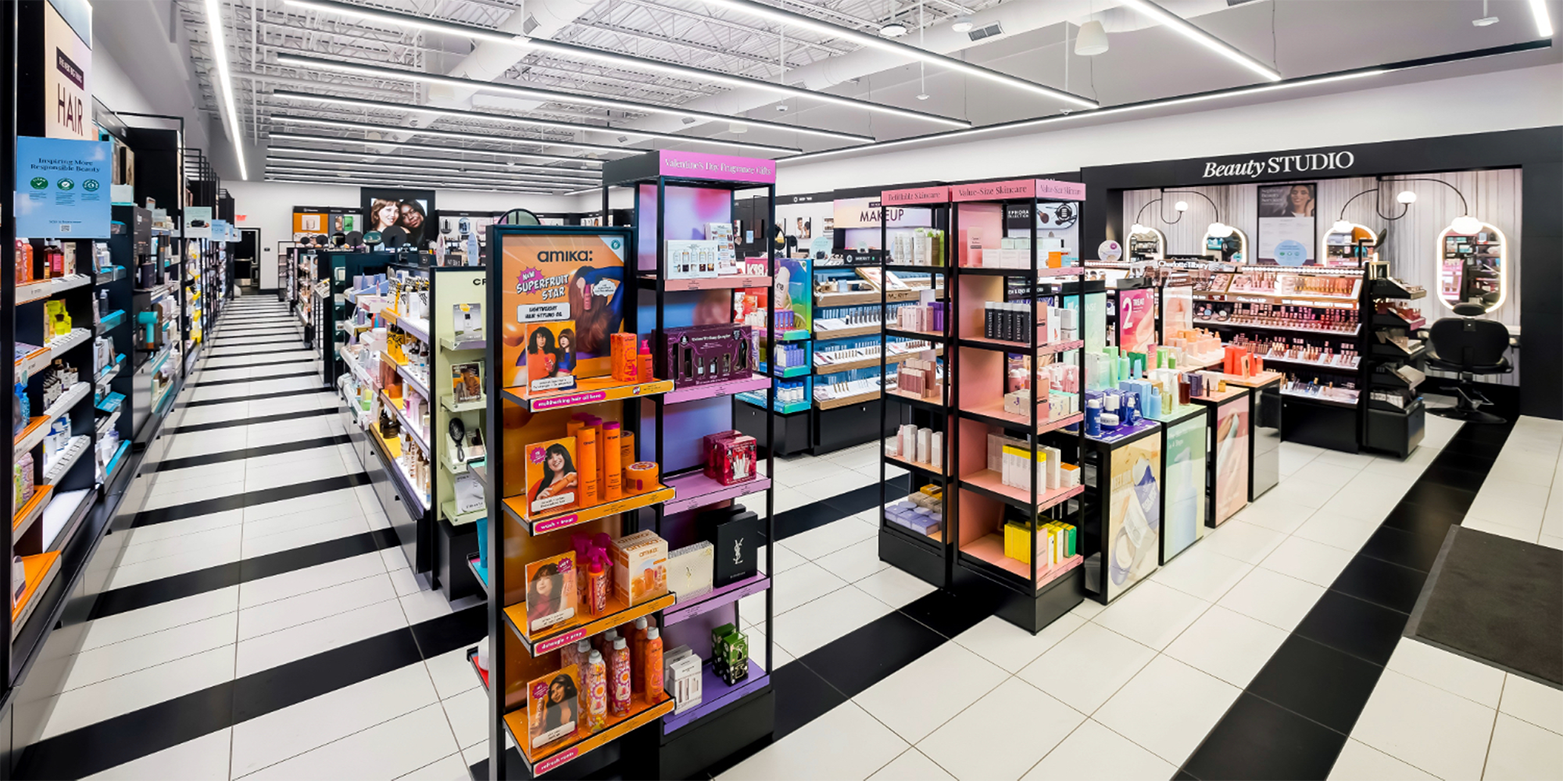
NIQ approximates that e-commerce accounts for roughly 41% of current beauty sales, and Mayo predicts that percentage will reach 50% in three to five years. She argues in-store beauty environments haven’t transformed as rapidly as digital environments to respond to beauty demand, mentioning that consumers are fleeing drugstores where beauty products are regularly behind lock and key, and beauty specialty chain’s reputation for unearthing the latest and greatest in beauty is being eroded.
“Sephora and Ulta used to be the curators of what’s new, bringing in the newest brands,” she says. “I keep thinking about the Rhode example. Rhode has been viral on TikTok Shop for three years, and now Sephora is bringing it in, but a couple of years ago, Sephora would’ve discovered that brand, and it’d be the first place you heard about it, but everyone knows about it now.”
With indie beauty’s ascendance, beauty conglomerates have used mergers and acquisitions instead of brand incubation, which they haven’t been proficient at, to tap into the momentum of rising brands. Despite private equity driving the most beauty deals in recent history as select conglomerates right their ships, Mayo foresees conglomerates continuing to pursue M&A to enter hot categories and chase younger consumers. She says they’re “surveying the landscape, seeing what’s working, figuring out the holes in their portfolio and acquiring to fill those.”
Despite indie beauty’s strength, indie beauty brands face a myriad of risks in a crowded beauty industry with weakening sales growth. Just as easily as they’ve reaped revenues from brand disloyalty they can lose from it. Also, the trade war instigated by President Donald Trump may hurt indie beauty brands with scant cash reserves relative to larger legacy players. Last month, an additional 10% tariff on goods from China took effect. NIQ projects tariffs will push up beauty prices 10% to 20%.
Discussing brand loyalty, Mayo says, “It’s easier now to get trial and to get people to try something, but it’s harder to get them to repeat.” On the topic of indie beauty brands confronting tariffs, she says, “By nature of them being smaller, they’re going to be less able to absorb any costs or navigate any loopholes around the supply chain.”
The players
5 mentionedRare Beauty

Amika
Wella
Henkel
Rhode