Inside Sephora And Ulta Beauty’s Battle For The Next Big Brands
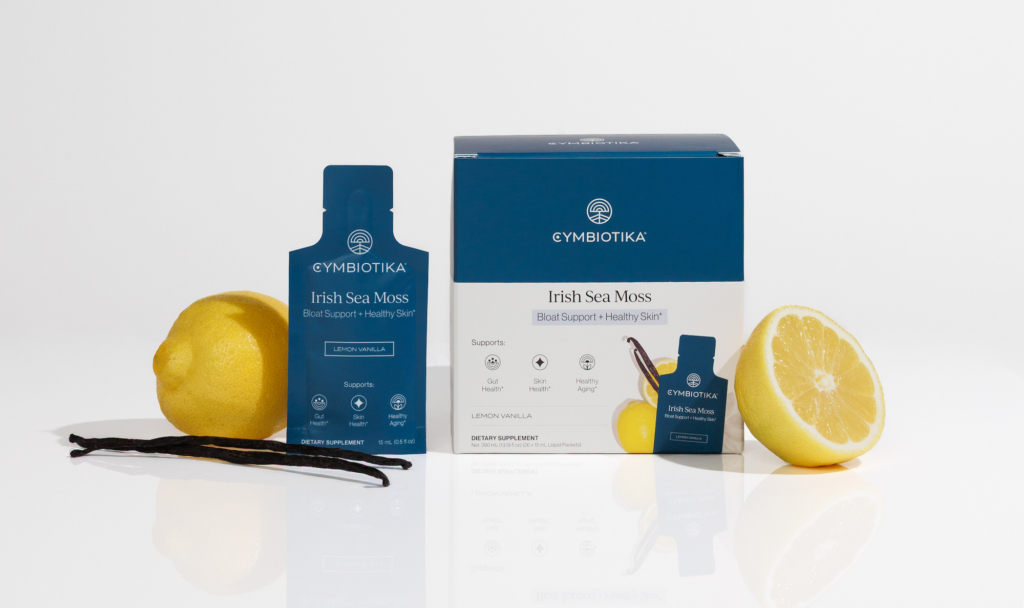
So far this year, Sephora is betting big on haircare, skincare and body care with the addition of over 20 new brands, including South Korean and Indian names like Unove, Inde Wild, Iope and Erborian. Ulta is introducing a swath of brands across a broader array of categories that include Rare Beauty and Olive & June in makeup and nails, Luna Daily, Voesh and Luna Bronze in body and personal care, Babe Original in false lashes and Arrae and Cymbiotika in wellness. Brands available on Ulta’s five-month-old online marketplace—200 of them, according to the retailer’s latest earnings—are currently not available in stores and subject to different curation standards than brands in the retailer’s main assortment.
Lane Barrocas, a beauty and retail strategy advisor, believes the recent brand launches show Sephora and Ulta are taking varying approaches. “Sephora is building authority. Ulta is building volume,” he says. “They’re building fundamentally different ecosystems, and the brands moving between them reveal the rules of engagement more clearly than any announcement ever could.”
The stakes have never been higher as specialty retailers face mounting pressure from digital giants Amazon and TikTok Shop, which are redefining how consumers discover and buy beauty. While Sephora and Ulta rely on curation and in-store experience to defend their turf, Amazon dominates on speed and scale, and TikTok Shop collapses discovery and purchase into a single scroll. To keep pace, Ulta premiered a branded storefront on TikTok Shop earlier this week featuring more than 15 Ulta-exclusive brands, including Snif, Half Magic, Isima and Live Tinted.
According to TD Cowen, TikTok Shop is projected to grow its share of the U.S. beauty market from roughly 1% to 3% by 2030, while Amazon is expected to reach about 15%, highlighting the shift toward digital channels. By contrast, specialty retailers like Sephora and Ulta are projected to remain relatively flat at around 7% and 9%, respectively.
SEPHORA
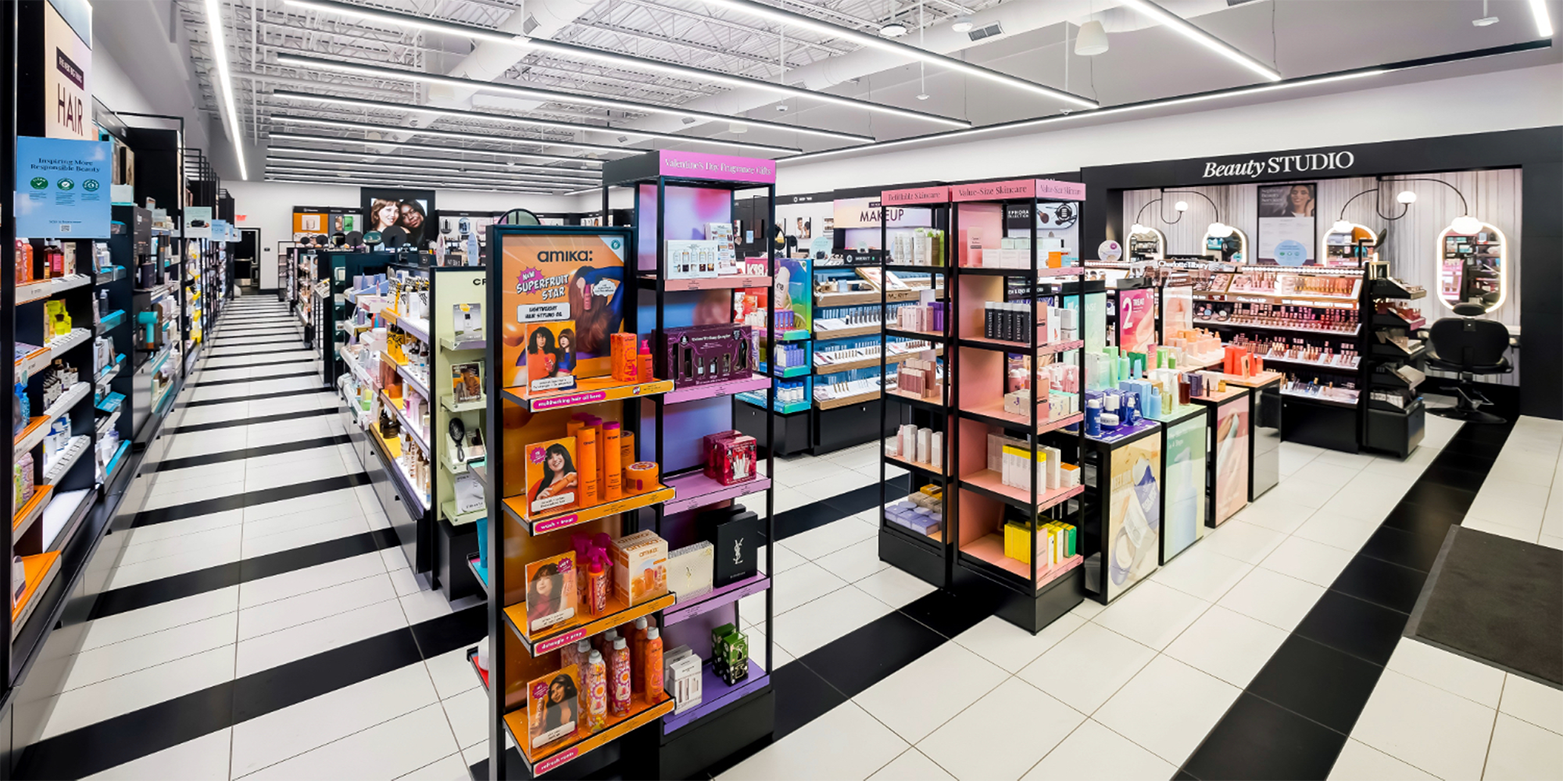
Brands launching at Sephora this year bolster its position as one of the industry’s most powerful discovery platforms that identifies emerging beauty trends before they go mainstream. Rising brands like Inde Wild, an Ayurvedic-inspired haircare brand, AKT London, a British prestige deodorant and body care brand, and Cyklar, an upscale body care brand founded by beauty influencer Claudia Sulewski, are evidence of that strategy.
“Whether it’s capitalizing on a global beauty movement or introducing the next cult brand, Sephora consistently finds the wave before it breaks,” says Taylor deDiego, founder of beauty consultant group Beauty Work Friends and former editorial content director at Sephora. “That’s cultural authority, and it’s a hard thing to replicate.”
Niche fragrance brands Fugazzi and Borntostandout and emerging haircare brands Ebb Ocean Club and Bounce Curl enable the retailer to dive deeper into some of beauty’s hottest categories while staying true to its prestige positioning through elevated storytelling and aesthetics. According to market research firm Circana, prestige fragrance grew by about 5% last year and haircare advanced by about 6%, making the latter the fastest growing prestige beauty category by dollar sales.
Haircare at Sephora, in particular, has evolved since the pandemic as the “skinification” of hair trend has captivated the category and shifted focus onto treatment, repair and scalp health products. Ebb Ocean Club markets itself as a hair barrier brand. Claiming to be the No.1 haircare brand in South Korea, Unove is primarily associated with products that nourish the hair and produce a coveted “glass hair” effect. Sephora’s pickup of the brand illustrates K-Beauty’s march from skincare to other categories like haircare.
Barrocas says, “Sephora’s shoppers are trading up and looking for transformation, which aligns with this new wave of prestige haircare.”
Unove, Erborian and Iope underscore the retailer’s deepening relationship with K-Beauty, a category that has seen a massive resurgence in the United States over the past few years. According to market research firm NielsenIQ, K-Beauty sales in the U.S. skyrocketed 37% to $2 billion last year. K-Beauty is projected to hit $9.9 billion in sales by 2032, according to distributor Landing International. In the fall, Sephora will debut a new assortment curated by South Korean beauty retailer Olive Young in 650 stores in North America and 48 locations in Thailand, Hong Kong, Malaysia and Singapore.
Selective Retailing, the division that Sephora sits in within LVMH Moët Hennessy Louis Vuitton’s portfolio, continued to underpin LVMH’s performance. Last year, it increased 4% in terms of organic growth to nearly 18.4 billion euros or roughly $21.9 billion at the current exchange rate and remained stable based on published figures. Sephora’s store growth accelerated, particularly in Europe, the Middle East, Latin America and North America.
ULTA
While Sephora relies on prestige authority and cultural relevance to fuel its business, Ulta is positioning itself as a one-stop beauty and wellness destination optimized for frequency. Nail, tool and haircare brands Olive & June, Onyx and Being Haircare speak to the retailer’s strength in everyday categories. Body care, hygiene and personal care brands Luna Daily, Voesh and Each & Every fit Ulta’s high-frequency shopping patterns.
Rare Beauty’s rollout across 1,500-plus Ulta stores in February illustrates how the retailer can leverage its size to convert demand into sizable scale. According to the publication Glossy, the Selena Gomez-led makeup brand was the largest debut in Ulta’s history, quickly ascending to the top of the retailer’s blush, highlighter, contour, bronzer, lip and brow categories.
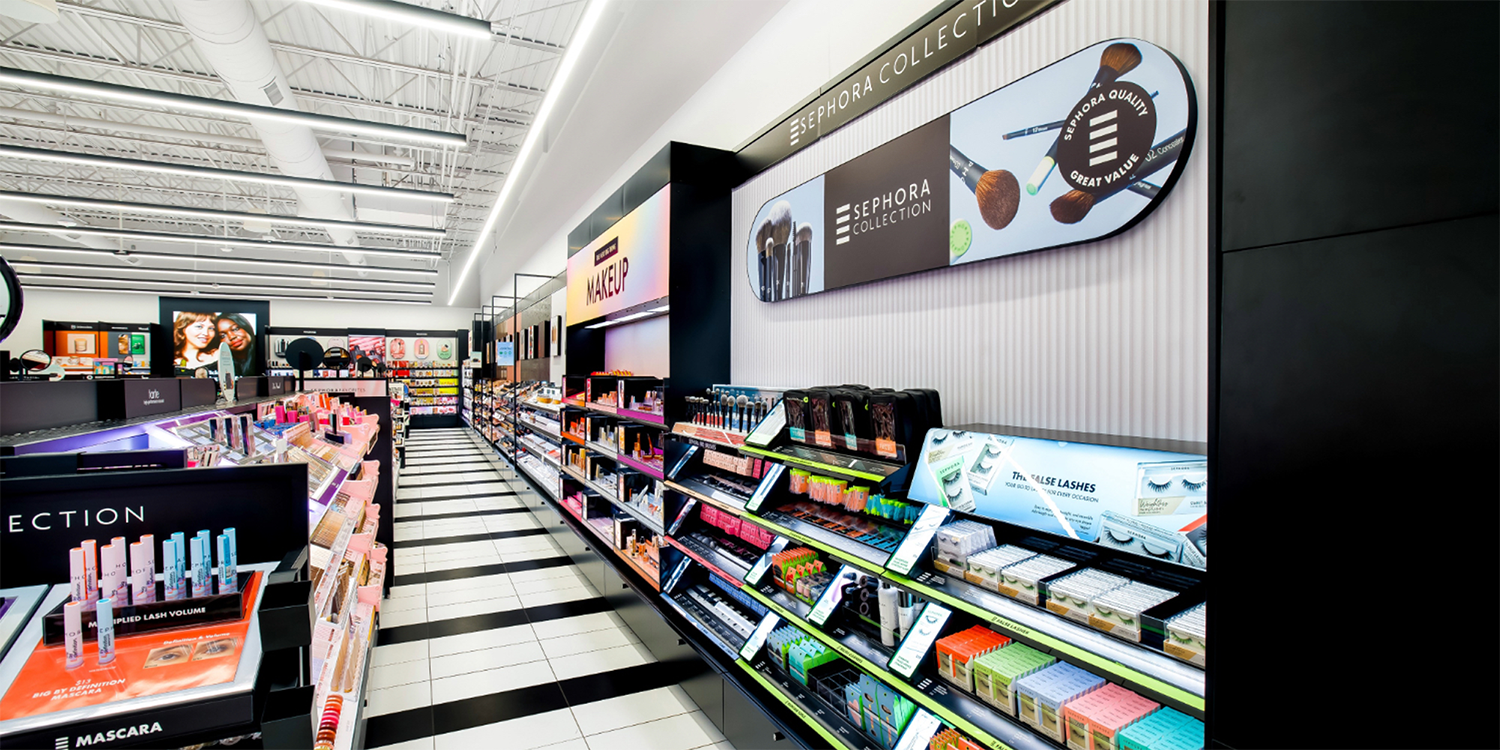
Rare Beauty’s Ulta debut represents the brand’s first retail expansion since launching exclusively in Sephora stores in 2020, and its migration is an indicator of each retailer’s roles in the beauty industry: Sephora as a trendsetter and Ulta as brand scaler. Sephora operates over 700 stores across North America and carries around 340 brands. Ulta carries about double that number, excluding the marketplace.
Sephora has retreated from wellness, leaving an opening for Ulta in the category, and it’s exploiting that opening. Arrae, Clöud Café and Cymbiotika are Ulta’s latest wellness additions, and the retailer is testing shop-in-shops called Wellness by Ulta Beauty in three of its stores. They contain about 58 brands, including Arrae, The Nue Co., Stripes and Playground. Last year, skincare and wellness grew to about 24% of the retailer’s sales. An assortment dubbed The Wellness Shop is chain-wide with thousands of products from dozens of brands, and it expanded from under 10 feet of space to 30 to 45 square feet in a third of its stores in 2025.
Ulta notched solid fourth-quarter performance, with net sales increasing 11.8% to $3.9 billion, primarily driven by strength in fragrance and haircare, and same-store sales up 5.8%. Full-year 2025 net sales increased 9.7% to $12.4 billion. However, profit took a hit as operating margins shrank from 14.5% to 12.2% year over year.
Citing the effects of global conflicts, the retailer forecast net sales growth of 6% to 7% for the year, below expectations, sending its stock down roughly 14% following the earnings report, its steepest single-day drop in over two years.
SEPHORA VS. ULTA
Ulta has been disadvantaged as a brand builder, but deDiego argues that the gap between Sephora and Ulta is narrowing in that role as the latter takes greater steps to become a discovery engine, partnering with indie and international brands like Bloomeffects, SickScience and d’Alba on its main assortment and aggressively adding emerging names to its marketplace. Last month, Business of Fashion reported Ulta CEO Kecia Steelman met with bankers and investors to discuss ways Ulta can improve its relationships with emerging brands.
“The plays are getting closer. The question is whether Ulta can bring the same level of discoverability to its clients that Sephora has mastered,” says deDiego. “The early signs are promising, but 2026 will be telling.”
Ulta is also taking a page from Sephora by turning brand launches into cultural moments. Last year, Ulta amplified Beyonce’s Cécred, its biggest prestige haircare launch to date, by becoming the official beauty retail partner of the pop icon’s Cowboy Carter tour. The partnership spanned exclusive product drops, a Cowboy Carter beauty assortment that rolled out to stores nationwide, creator-led content and in-store activations.
Ulta may be trying to narrow the gap in discovery and brand-building with Sephora, but the retailers continue to maintain distinct identities and merchandising strategies. “Sephora’s shopper is performance‑sensitive, prestige‑leaning, and motivated by artistry, global influence and elevated storytelling,” says Barrocas. “Ulta’s shopper is mission‑driven, value‑oriented and motivated by replenishment, wellness, body care and loyalty economics. These are fundamentally different consumer mindsets, and the brands that win are the ones that tailor their retail strategy, pricing architecture and storytelling to the ecosystem they’re in.”