Indie Beauty E-Tailers Pivot To B2B Models Amid Pressure From Amazon And Emerging Marketplaces
Aligning with more established partners in the hopes of achieving scale and credibility, the revenue diversification strategies respond to the challenges of operating small, multi-branded online retail businesses today, where customer acquisition costs are high and shoppers are spoiled for choice. For larger retailers, seeking out smaller e-tailer partners is a reaction to the demands of staying on top of buzzy trends and offering an array of merchandise as nearly half of purchases move online, according to market research firm NielsenIQ, with Amazon the biggest online beauty retailer in the country.
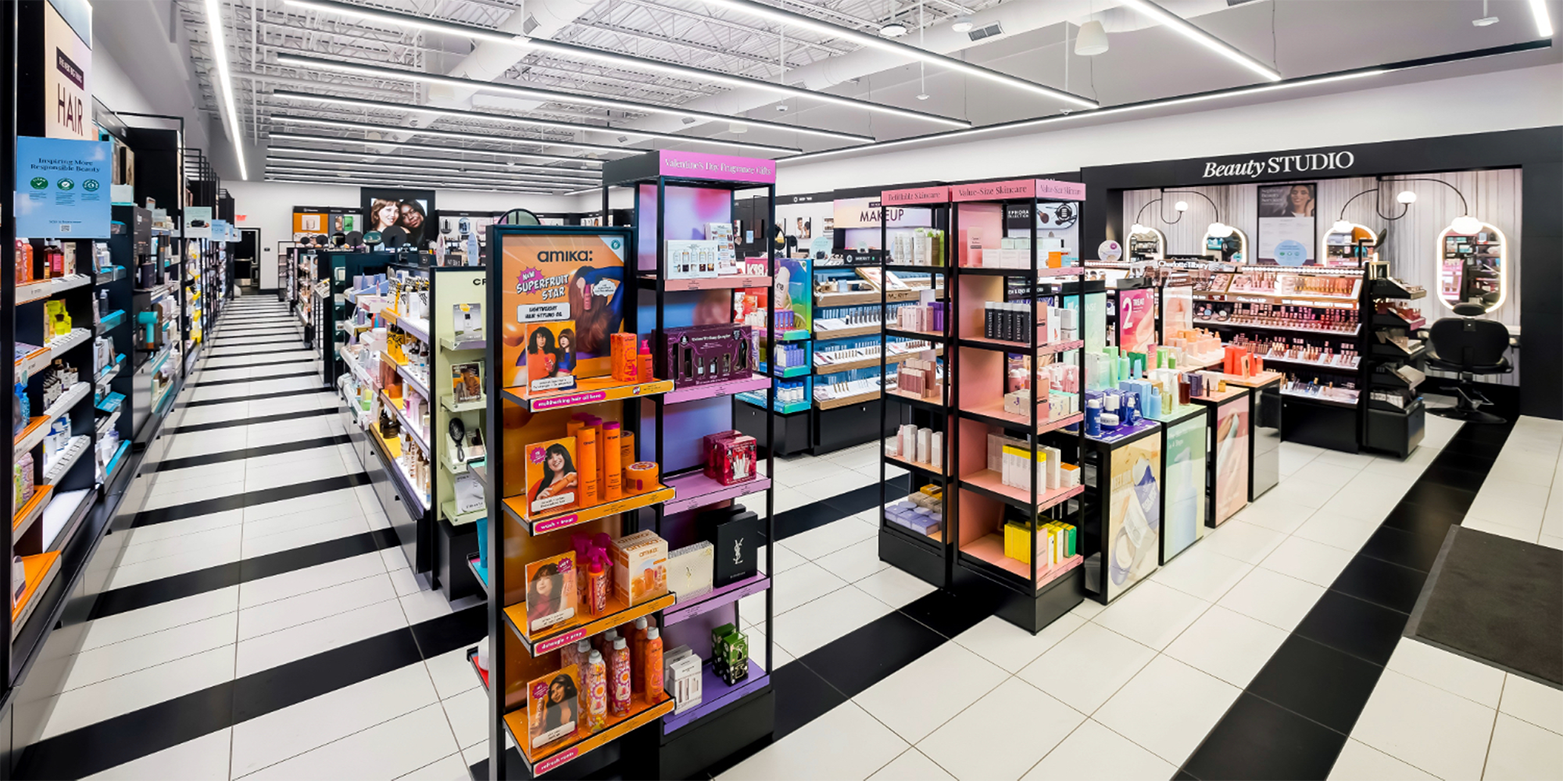
The growing number of retailer marketplaces is prompting and facilitating smaller e-tailers’ partnerships with larger retailers. Unlike Amazon and Walmart’s massive third-party marketplaces, Nordstrom, Target, Ulta Beauty and Bloomingdale’s operate curated versions where sellers must be invited to list. Sephora is expected to launch a marketplace soon. These marketplaces frequently vie for the same emerging brands that smaller e-tailers court, blurring the line between partner and competitor.
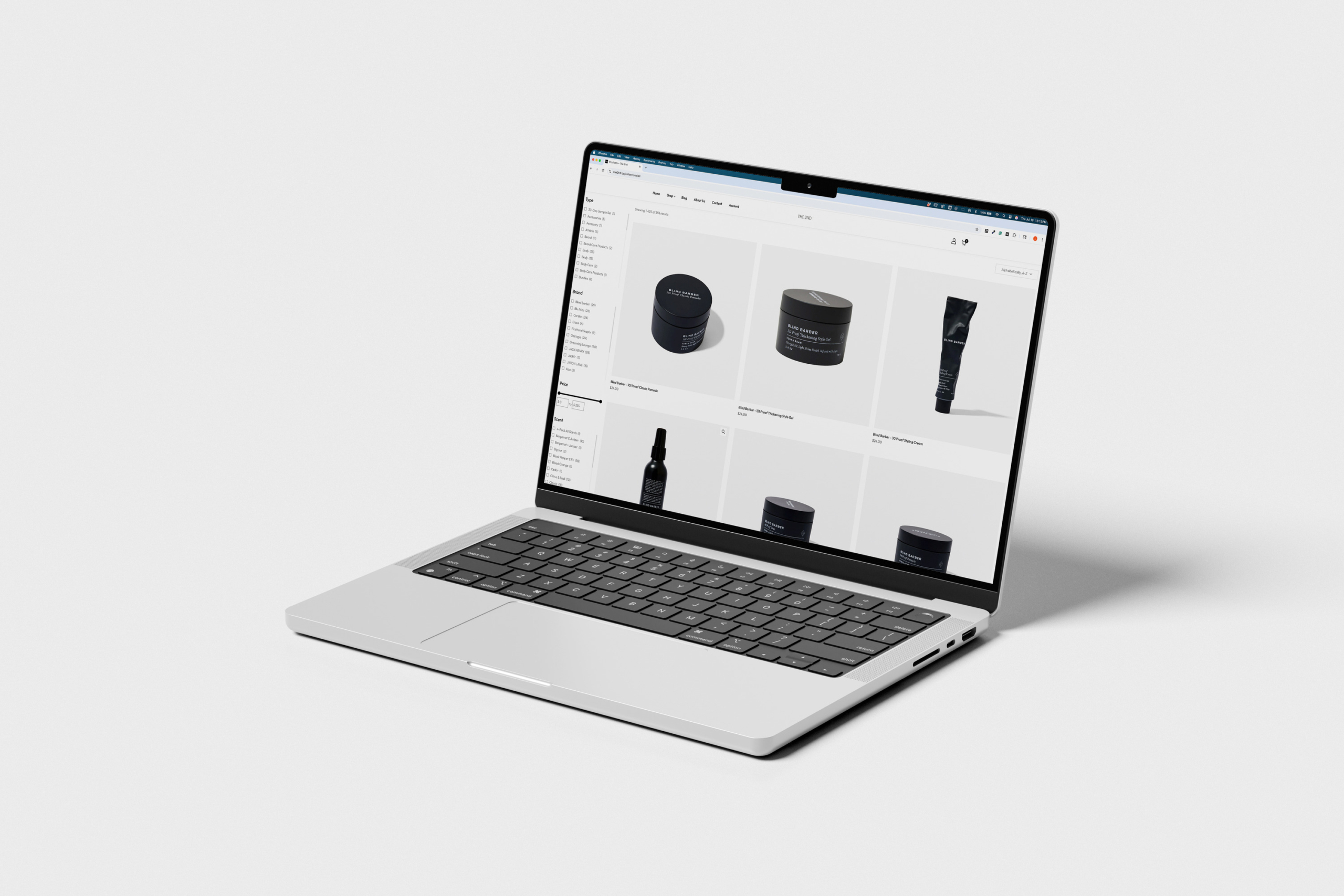
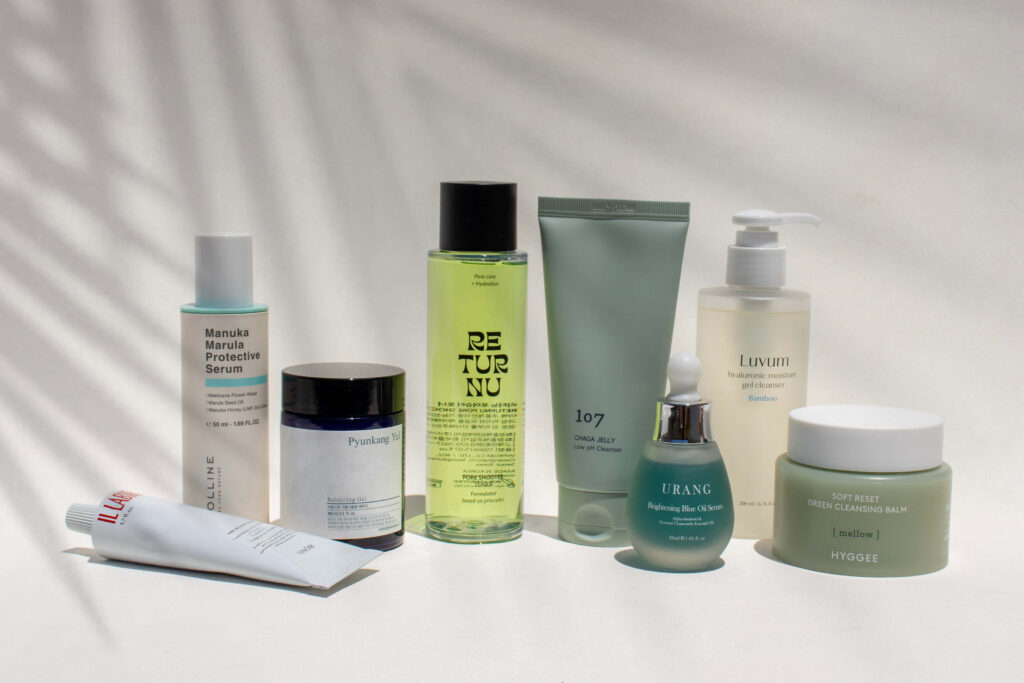
The 2nd, a men’s grooming website that launched in March, has launched five brands from its assortment—Mistr, Y Code, Cardon, Oak Bishop and Firsthand Supply—on Nordstrom’s marketplace. Ohlolly, a nearly 10-year-old K-Beauty online retailer, partnered with Nordstrom, Bloomingdale’s and Target this fall to bring 21 buzzy South Korean brands like Haruharu Wonder, Heimish, Luvum, Purito, Urang, Shaishaishai and Dr.Ceuracle to the retailers’ sites through its new distribution service Ohlolly Plus.
“We’re partnering together to help realize the next stage in men’s skincare,” says Llewellyn-Karski, mentioning The 2nd is pursuing similar tie-ups with other beauty retailers and has aspirations to launch a men’s grooming and personal care trade show in 2026 and a branded product line in 2027.
Coming into 2025 with flat to down sales growth, Ohlolly, which stocks over 50 K-Beauty brands on its site, was looking to pivot its business as it faced steep competition from Amazon and elsewhere in the retail landscape as K-Beauty mania 2.0 took hold in the United States. The implementation of the 25% reciprocal tariffs between the U.S. and South Korea earlier this year only served to exacerbate its woes as it was forced to raise prices on new product launches to offset costs. Ohlolly Plus encompasses Amazon growth services for emerging K-Beauty brands as well as distribution services.
“K-beauty has moved beyond its niche phase and is now widely available, which makes driving traffic to our little shop more challenging,” says Sue Greene, co-founder of Ohlolly. “Our goal has always been to introduce amazing new K-Beauty brands to U.S. customers, and partnering with larger retailers helps us do that more effectively.”

Kelly St. John, founder and CEO of beauty brand growth consultancy KSJ Collective, believes partnerships with small e-tailers enable larger retailers to be agile as they remain under pressure to stay culturally relevant. Smaller merchant teams with less time and resources to vet large swaths of brands factor into the attractiveness of working with small e-tailers, too.
“These partnerships signal that beauty retail is becoming more collaborative, more decentralized in its sources of trend authority and more open to hybrid distribution models. Ultimately, big players need cultural relevance, small players need distribution and consumers benefit from better curation in unexpected places,” she says. “These collaborations essentially compress the ‘time to trend’ for big retailers while giving niche players a scaled stage.”
Neil Saunders, managing director of retail, GlobalData, says, “Visibility is really critical in beauty right now. The market is so saturated with brands, retailers and channels, and everyone is vying for a share of eyeballs.”
B2B strategies aren’t entirely novel to smaller e-tailers and retailers. They’ve long played a behind-the-scenes role in ushering indie beauty brands onto Amazon, acting as operators before founders were ready to manage the channel themselves. Early partners ranged from curated e-tailers like Carbon Beauty to emerging Amazon operators such as Fortress Brand, which established an initial marketplace presence for indie brands. Bulletin, meanwhile, evolved from a physical retail concept into a wholesale marketplace that was acquired by Faire in 2022.
Online beauty e-tailers are shifting to distribution as the indie beauty retail field contracts and consumers gravitate toward Amazon and TikTok Shop. Their vast assortments, lower prices and sheer mindshare have siphoned away traffic.
In recent years, several specialty e-tailers have closed, including Melanin Grace, Indie Beauty Market, Standard Dose, Daily Polished and NakedPoppy, while Grooming Lounge exited third-party brands to focus on its own products and barbershop franchising. Larger players haven’t escaped the pressure either: Farfetch and Net-a-Porter both shuttered beauty divisions after profitability challenges mounted.
However, becoming B2B distribution platforms isn’t a panacea for small e-tailers’ woes. With referral fees clocking in anywhere between 15% and 20%, the financial upshot for e-tailers can be negligible after additional advertising fees are included.
“Since a small e-tailer bought at wholesale, they already are at a disadvantage to their contribution margin,” says Jimmy A. Liao, VP of marketplaces and Amazon at Manscaped. “There is still advertising, shipping and other potential fees. There is also the additional concern that if they succeed, the marketplace owner may directly approach the brand to carry their products…Unless they are confident they can move serious volume, afford to operate with thinner margins and can maintain exclusivity, I would recommend finding an alternate path.”
St. John agrees, saying, “The larger retailer typically captures the financial upside, while the smaller partner absorbs more brand risk, especially if the bigger platform doesn’t deliver on storytelling or if the product gets lost in the mix.”
In an increasingly difficult online market, Liao argues indie beauty e-tailers will need to either secure significant capital or brand exclusivity to survive in the long run. While they often excel at creativity and storytelling, two traits that are essential in breaking through the online noise, Saunders says, “This does not override the imperative of good unit economics to support online selling. This can still be a challenge for smaller brands and e-tailers.”
The players
5 mentionedToo Faced

Better Being
Carbon Beauty
AS Beauty
Walmart