HydroPeptide Founder April Zangl Peck Is Closing Her Second Brand, Save Me From. She’s Spilling On Her Missteps So You Can Avoid Them.
That goal proved allusive. While HydroPeptide was a smash success that remains a staple of spas worldwide, Peck is winding down Save Me From. “We’ve never been profitable. We’ve always been investing, investing and investing. I haven’t been paid since I left HydroPeptide,” she says. “On a personal note, I’m very competitive, and I feel a lot of value from my paycheck, maybe that’s messed up, but I kept pushing and investing my family’s money. Luckily, I don’t have the stress of investors, but I’m hard on myself.” Speaking openly about the challenges she faced building Save Me From to make the beauty business hopefully a tad easier for others, Peck shares seven key lessons for indie brands informed by her ups and downs.
Looking back at the inception of Save Me From, Peck is convinced she overspent. If she had a redo, she would execute a small run of minimum viable product at a manufacturing facility that charged her less before shelling out for a substantial production run at a pricier manufacturing facility. Instead, in the lead-up to Save Me From’s launch, she went through hundreds of formula revisions, commissioned clinical testing on each final formula and plunked down for a high minimum order. “I formulated a way too expensive product,” says Peck.
Thinking the expensive formulas justified premium price tags, Peck priced Save Me From’s treatments at $68 to $98 at the outset. The market couldn’t bear those prices. She reduced the prices to $58 across the board, but the cost structure wasn’t tenable. Save Me From’s cost of goods ascended to more than 20% of its retail price. Peck advises brands to keep cost of goods as much under 10% as they can, especially those going into brick-and-mortar locations.
“Retailers are requiring us to do more of the work, the heavy lifting. They are getting a margin and our marketing spend. The product has to cost us less so we can give them the margin and invest more in marketing,” she says, adding, “You have to make sure you are managing expenses and make sure upfront you have plenty of profitability because it’s always going to cost more and take longer. There’s always going to be a retailer that’s asking you for more. You better make sure the price is right, that’s the biggest thing.”
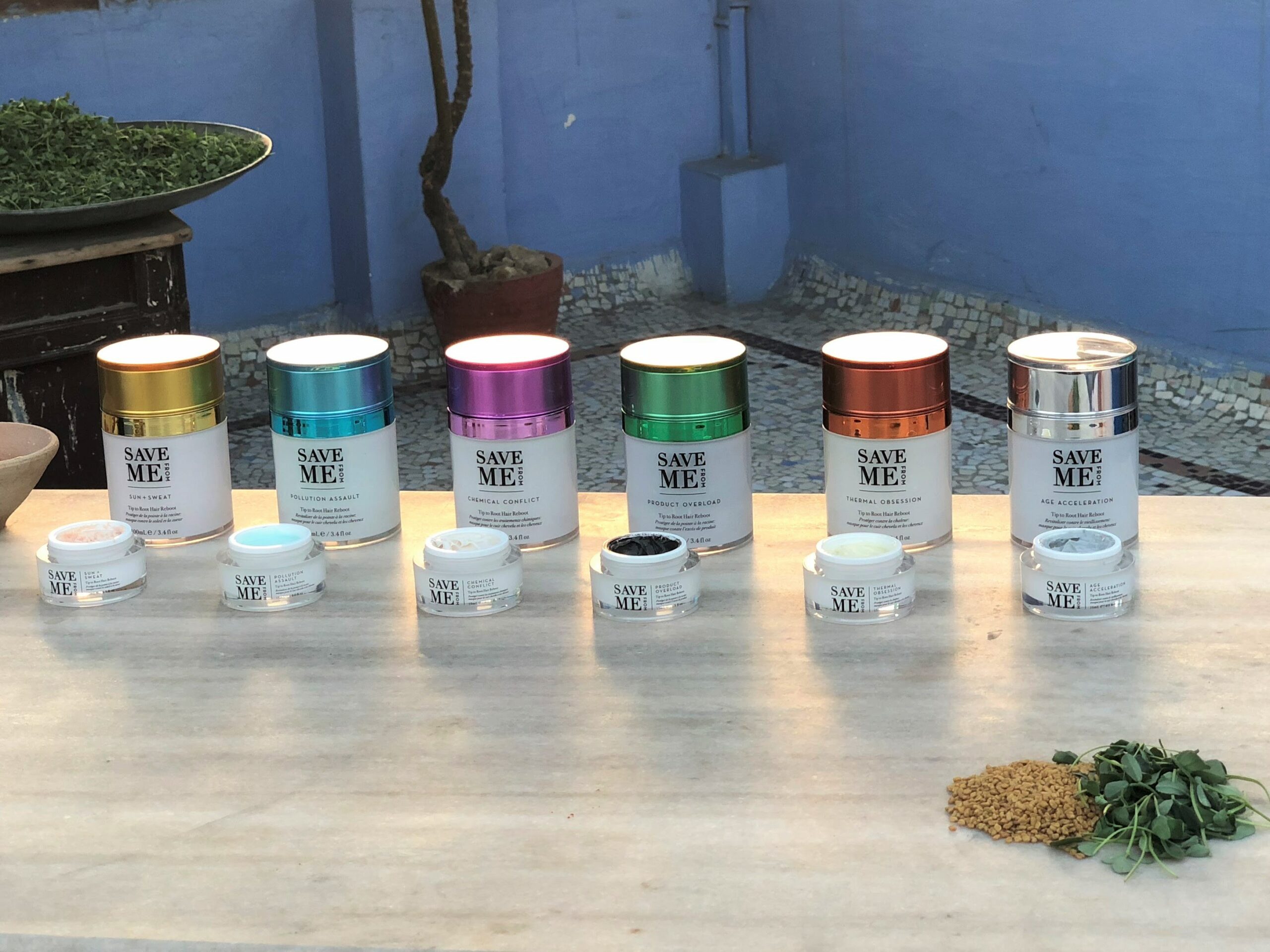
An important lessons Peck learned from HydroPeptide was a range of sizes is advantageous to drive both customer and retailer trial. Size variety helps facilitate kits, and samples for customers and stores. Peck says, “For anyone starting a new brand, make sure you think about what sizes you’re going to launch with, and whether the manufacturer will allow you to divide your quantities into those different sizes so you can create trial sizes for people who want your brand, and you can have lower sampling cost.”
From a marketing and manufacturing perspective, formulas with fewer ingredients make sense for today’s environment. Generally, they haven’t been Peck’s preference. “I’ve always been big on multifunctional. I’m a working mom, and I want to put on one product and not to layer a whole bunch,” she says. The main problem she sees with multifunctional products loaded with ingredients is that any adjustment to them can turn into a major overhaul. “If I go back and reformulate, small tweaks can change everything, and then you have to go to stability again, and the manufacturers are increasing all their pricing,” she says. “The product would probably work out better if it was more streamlined. The formulas always end up more than you want them to be.”
When Peck was at HydroPeptide, it distributed to spas in the United States without a distributor. Peck liked that model—it permitted HydroPeptide to control messaging to spas and train spa staff in the manner it desired—and tried to enact it with Save Me From for salons. She didn’t find salons as willing to buy from a brand that didn’t have a distributor. “We should have gone with a distributor specifically for hair because hairstylists don’t have time to listen to us like a spa director does,” reasons Peck. She figures the labor shortage played a role. Peck says, “We can’t talk to anyone. No one will get on the phone with us. No one will see us.”
Save Me From premiered on QVC in June 2020 and sold out on the shopping network. A huge fan of QVC, Peck was thrilled to land it for Save Me From, particularly as the pandemic was taking hold in the U.S. and retailers were canceling orders. The brand’s products weren’t a simple sell on QVC, though. At 3.4 ounces, they’re physically diminutive, and Peck says QVC customers are accustomed to bulk discounted items. They can clearly understand the value of the larger items.
Save Me From’s story was difficult to communicate to QVC’s audience, too. “We have a unique product. It’s not a shampoo. It’s not a conditioner,” says Peck. “It’s a treatment, but how do you use it? That was a little bit of a challenge to talk about and set the audience up for success with how to use it.”
Peck concludes Save Me From should have used silicones. “We tried to be uber clean and scientific at the same time. Even though we were science-first—we had clinical studies on each one of our final formulas—what we were being written about was on clean, but what the consumer wanted to hear was that it worked,” she explains. “It did, but it worked in a different way and, because it didn’t have silicones, maybe it didn’t give them the immediate result similar to other products they were using, and they didn’t understand they could still use other products in conjunction with ours to get great results. I think we had to educate too much, and the consumers’ attention span is only so long.”

Save Me From is connected to a very personal mission. About nine years ago, Peck’s sister Patty took her own life, and Peck is committed to the cause of suicide prevention. She dedicated 10% of Save Me From’s net income to organizations working to end suicide and hired a mental health professional on the brand’s team. If she could have done even more for the cause, she would have, but it wouldn’t have been a business calculation because she doesn’t believe the mission contributed to Save Me From’s business.
“I don’t think people purchase based upon mission, and I don’t think it leads to profitability. It actually pulls away from your profitability in the fact that you are donating, and you are spending time to talk about it. It’s almost a distraction at some level because people end up talking about that instead of, does it work?” says Peck. “Maybe starting out with it is not great. You can do it later.”
The players
5 mentionedToo Faced

Formulate
AS Beauty
iS Clinical
Better Being