How Amazon Is Conquering Beauty
Some six weeks later, it was live on Amazon after sending in about $300 worth of product. The speed and cost stand in stark contrast to physical retail at the likes of Sephora and Ulta Beauty, where the launch process can stretch beyond a year and require hundreds of thousands to millions of dollars in inventory, merchandising and marketing. Last year, Ulta advised Ham, a participant in the retailer’s MUSE accelerator, that it often takes $1 million to $2 million to fund a store rollout. Poom launched on Amazon months before landing on Ulta’s website this year via a brand-fulfilled online marketplace, a format traditional retailers are using to compete with Amazon.
“Looking back, I had my skepticism about Amazon, I was on the fence, but seeing the sales that we are making there and seeing how our customers can have this shopping experience, I don’t regret it,” says Ham. “I do feel like every brand should be on there for accessibility.”
Amazon is now the No. 1 beauty retailer in the country. Beauty sales on the platform grew 19% to $34.5 billion last year, according to e-commerce and marketing agency Front Row, making the giant e-tailer’s beauty business almost three times larger than Ulta Beauty, the largest beauty specialty retailer in the United States, and more than eight times larger than TikTok Shop. According to an analysis by investment bank TD Cowen last year, Amazon commands about 23% of U.S. beauty sales, ahead of Walmart’s 20%.
Historically, Amazon dominated beauty replenishment, particularly for staples from mass-market brands, while prestige retailers controlled discovery and brand-building. But TikTok, shifting consumer behavior, the fact that roughly half of U.S. beauty sales occur online, Amazon’s aggressive recruitment of emerging brands and prestige beauty’s broader capitulation to the platform are rapidly eroding that divide. The TikTok Shop flywheel has created a discovery conduit for Amazon, where consumers learn about products on their For You pages and purchase them on Amazon.
Leading up to its Amazon launch, branded searches for Poom were piling up on the platform, illustrating how TikTok-related awareness pushes consumers toward Amazon. According to Front Row, 36% of Amazon sales are influenced by off-platform advertising. Vanessa Kuykendall, chief engagement officer at beauty e-commerce agency Market Defense, says brands running TikTok campaigns directing shoppers to direct-to-consumer websites still see roughly 40% of conversions happen on Amazon. Front Row also notes that nearly 50% of product searches commence on Amazon, compared to 31% on Google.
As part of its aggressive recruitment of emerging brands, Amazon has tapped indie brand founders to market to their peers. In a TikTok advertisement for the company, KraveBeauty founder Liah Yoo touts the skincare brand achieving seven figures in sales “pretty organically and very easily” after launching on Amazon in late 2024 following rejections from traditional retailers. Yoo, who shares that KraveBeauty has neared 500,000 units sold on Amazon, describes the platform as “quietly rewriting the rulebook” for indie brands and highlights that more than 75,000 independent sellers surpassed $1 million in sales on Amazon last year.
It’s hard to envision how Amazon’s position could do anything except strengthen further as retailers experiment with artificial intelligence-powered “agentic commerce,” where shopping assistants recommend and automate purchases on consumers’ behalf. Amazon has expanded its AI shopping tools through “Alexa for Shopping,” which can compare products, track prices and make personalized recommendations.
Amazon’s role across the beauty shopping process, from discovery to consideration to transaction, is forcing the industry to confront an existential question: Will Amazon ultimately sharpen the ecosystem by forcing competitors to become more differentiated and experiential, or slowly hollow out the retail landscape the way it transformed bookstores, toy stores and other categories? The answer is unclear, but what’s clear is that rivals can’t rely on the old barriers that insulated them from Amazon pressure.
Years ago, Poom, with its prestige-priced foundation and beauty specialty ambitions, would be the sort of brand that stayed off Amazon to start, worried about brand equity degradation and other retailers’ prohibition of Amazon listings. But Amazon has broken down the resistance that had throttled both indie upstarts and premium corporate players, with conglomerate-owned brands such as Charlotte Tilbury, MAC Cosmetics, Aveda, Too Faced and Bobbi Brown Cosmetics hopping on the platform last year.
“More brands are going on Amazon because of its scale and reach,” says Justin Boettcher, founding partner and CEO of e-commerce agency Parallel and former global head of business development and launch activation for luxury and premium beauty at Amazon. “Four, five, six years ago, Amazon was ranked No. 4 to No. 6 in beauty. Now that it’s the No. 1 beauty destination in the U.S., it’s a no-brainer for brands.”
The difference isn’t solely size, though, it’s that the mechanics of brand equity on Amazon have transitioned away from the primacy of keyword-oriented hero ingredients and price alone. “You used to be able to just launch a product that was offering a value in the Amazon marketplace. Those days are gone unless you are offering a very unique product that no one else is offering,” says Boettcher, who advises brands to reach around $500,000 in sales in advance of launching on Amazon. “Today, you need to have a fleshed-out brand to be successful on Amazon, and that’s where TikTok is helping out.”
Joseph Zigelbaum, founder of Amazon-native beauty brands Brooklyn Botany and Tumeri, says, “A few years ago, Amazon wasn’t even on the roadmap for a lot of beauty founders. It was either DTC-first or retail-first, and Amazon was seen as too chaotic, too uncool or too off-brand, but the tide has turned. Today, we’re seeing brands, even those with prestige positioning, launch on Amazon much earlier. Some start there. Some skip DTC entirely.”
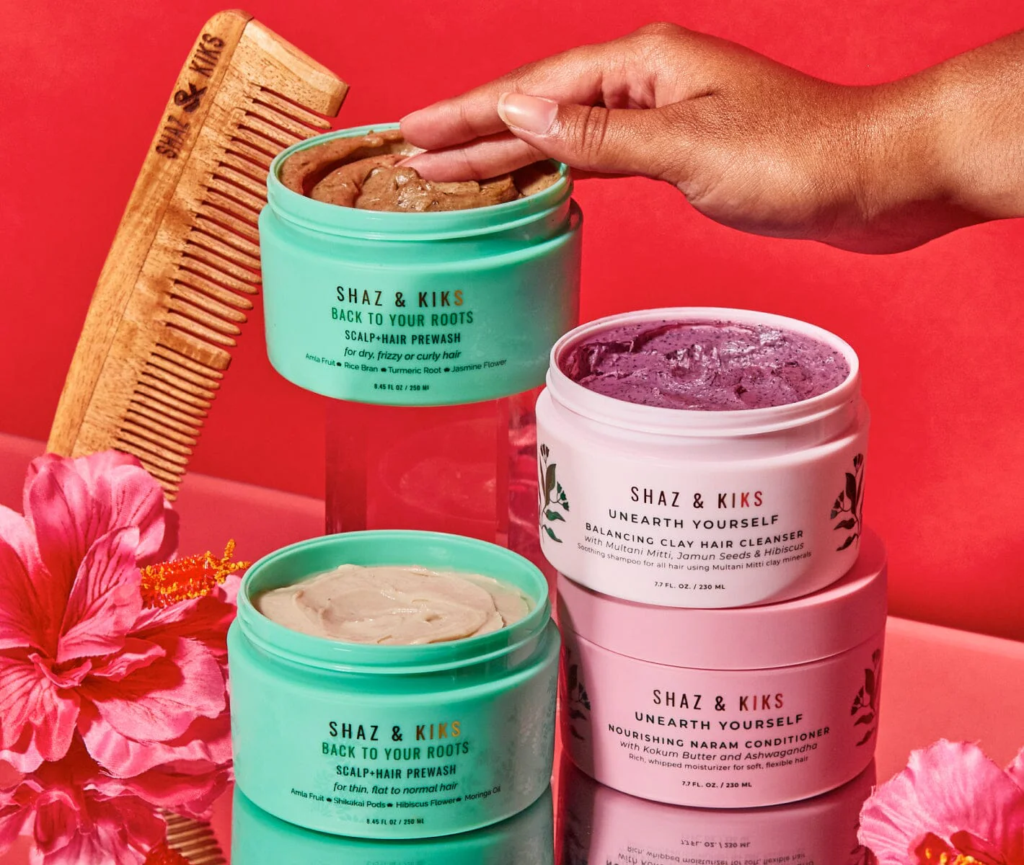
Shaz Rajashekar, co-founder of Shaz & Kiks, says the five-year-old haircare brand waited too long to launch on Amazon. Shaz & Kiks, which entered Sephora in 2022, launched on Amazon last year after recognizing that TikTok-driven discovery was increasingly converting on Amazon and generating stronger return on ad spend than traffic directed to its own site. She says, “The customer journey was already happening on Amazon whether we were there or not.”
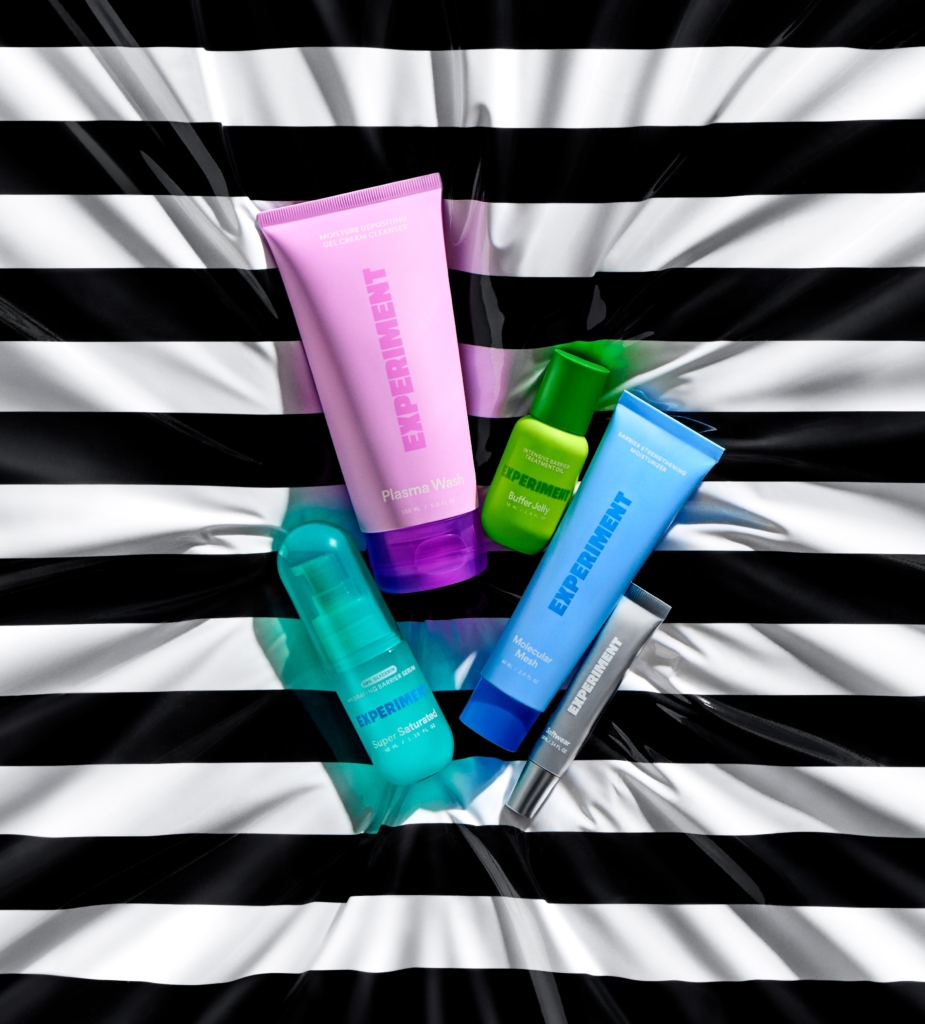
Amazon is no longer where in-demand beauty brands go after they’ve made it elsewhere. Skincare brand Experiment launched on Amazon in February last year, where it had detected search interest and expected the platform to generate up to 20% of sales within a year, and went on to launch at Sephora in August. The sequencing underscores how Amazon is challenging beauty specialty retail directly for emerging brands that once were expected to avoid the platform to preserve their chances of securing prestige retail deals. Experiment launched DTC in 2020 and has been on TikTok Shop since 2024.
“We realized it would be silly for us to hold off on Amazon just for a potential retail partnership because the goal is to be where our customers are,” says Experiment co-founder Lisa Guerrero. “They’re at specialty retailers, but they’re also on Amazon and TikTok. From a business standpoint, there was too much upside potential to ignore.”
Guerrero believes the traditional prestige playbook focused on exclusive Sephora and Ulta launches is losing relevance, especially for younger brands targeting gen z and mass audiences through TikTok-fueled discovery. DTC, Amazon and TikTok are at the heart of these younger brands’ distribution networks, with retail a follow-on to supercharge awareness and eventually cross into the black.
“There are brands that maybe a few years ago I thought would never go on Amazon that are on Amazon today,” says Guerrero. “It’s really important to do it, and that’s also why we wanted to do it earlier. We wanted to be on that platform because it’s a lot harder for a retailer to ask for us to remove ourselves than to stay off.”
The economics are difficult to ignore. Last year, the vast majority of pitches Divya Gugnani, founder of investment firm Concept to Co and fragrance brand 5 Sens, received from early-stage beauty brands featured Amazon as a key pillar in their distribution strategy, often alongside TikTok Shop and affiliate marketing. Kuykendall says around 80% of the new brands Market Defense encounters today are launching first on Amazon and DTC.
Lisa King, founder of Amazon agency Imagine Beauty and skincare brand Zen Dew, estimates $20,000 to $50,000 a month in first-year Amazon sales is realistic for emerging beauty brands, although she has worked with brands that scaled to as much as $100,000 a month on the platform within six months. With healthy cost of goods, she says brands can reach 15% net profit margins on Amazon even as they invest heavily in growth.
Based on the experiences of Brooklyn Botany and Tumeri, Zigelbaum figures brands can launch one to three stockkeeping units on Amazon for around $10,000 to $25,000 and begin generating sales within weeks if they rank on relevant keywords. By comparison, he approximates launching a DTC brand can require roughly $30,000 to more than $100,000 upfront across custom site development, creative assets, inventory, advertising spend and marketing infrastructure.
Unlike DTC, where brands usually spend months trying to generate traffic through Meta, Google and influencer campaigns before optimizing conversion, Amazon gives emerging brands access to built-in purchase intent. Zigelbaum estimates brands can break even on Amazon within two to six months if operations and advertising are optimized. DTC brands can take six to 12 months or longer to reach profitability.
“For a first-year brand with limited runway, Amazon often wins on volume and speed to revenue. DTC wins long term if you build your list and your repeat customer base,” says King. “The brands that win biggest treat them as complementary, not competing channels. As for traditional retail, most first-year brands can’t even get that conversation.”
The complementary treatment is crucial because there are limitations to Amazon distribution, a reason to hope for its competitors. Cindy Kim, founder of Amazon-native wrinkle patch brand Morrow and co-founder of facial bar chain Silver Mirror, argues Amazon is best for new brands with niche products in underpenetrated categories, where they don’t have to overspend to gain traction.
She spent about $40,000 to launch Morrow on Amazon in 2024 and made back that amount in three to four months. Kim didn’t discuss names of brands on Amazon, but Frownies is the leader in wrinkle patches, and Morrow approached the category with South Korean technology—the brand’s patches contain infused peptides—to draw share.
However, the downside of niches is they’re niche, and Kim has noticed a ceiling to the growth possibilities of sticking to Amazon exclusively. “Some brands do really well because they spend a lot of money marketing off of Amazon and that’s true for beauty,” she says. “They’re not going to be a big, big brand [on Amazon], but it is possible to use the momentum on Amazon to build a decent enough sized brand.”
At investment firm Aria Growth Partners, partner Jackie Dunklau doesn’t view Amazon-first distribution as inherently problematic for bootstrapped emerging brands. “I don’t think it’s a bad thing to launch on Amazon first in the early days of your business and brand if that’s where you are doing the majority of your sales and have invested the majority of your time because it can be an efficient channel for brands that want to bootstrap,” she says. “It’s just about, where do you go from there?”
Dunklau points to Hero Cosmetics as an example. Although Hero was an early Amazon-first beauty success story, by the time Church & Dwight acquired the company for $630 million in 2022, its Target business was bigger than its Amazon business. “What Hero did differently is they invested in building a brand,” says Dunklau. “They had a brand-first strategy, not an Amazon-first strategy.”
Dunklau seeks to invest in brands that prove they can extend beyond Amazon. “If it was purely Amazon, it would be hard for us to get comfortable with that because we would want to know that it translates in store,” she says. “I see why it’s attractive in the early days for brands that are bootstrapping, and when you go viral on TikTok, it translates to Amazon sales and because so many emerging brands are getting discovered on TikTok, it makes sense that Amazon is a good channel for them, but it’s hard because it’s not as sticky as a customer as you get at a retailer.”
Amazon hasn’t yet fully eliminated the fragmented nature of beauty discovery and shopping, a dynamic that leaves room for competitors, but only if they move quickly to leverage their remaining advantages. Kim says, “There’s an increasing number of routes you can take to establish a beauty brand. Ten years ago, there was a certain playbook you had to play and a specific order to it, but now there are so many ways to create a really good beauty brand and do sales.”