Hailey Bieber’s Rhode Combines Celebrity With Financial Rigor. Can Others Replicate It?
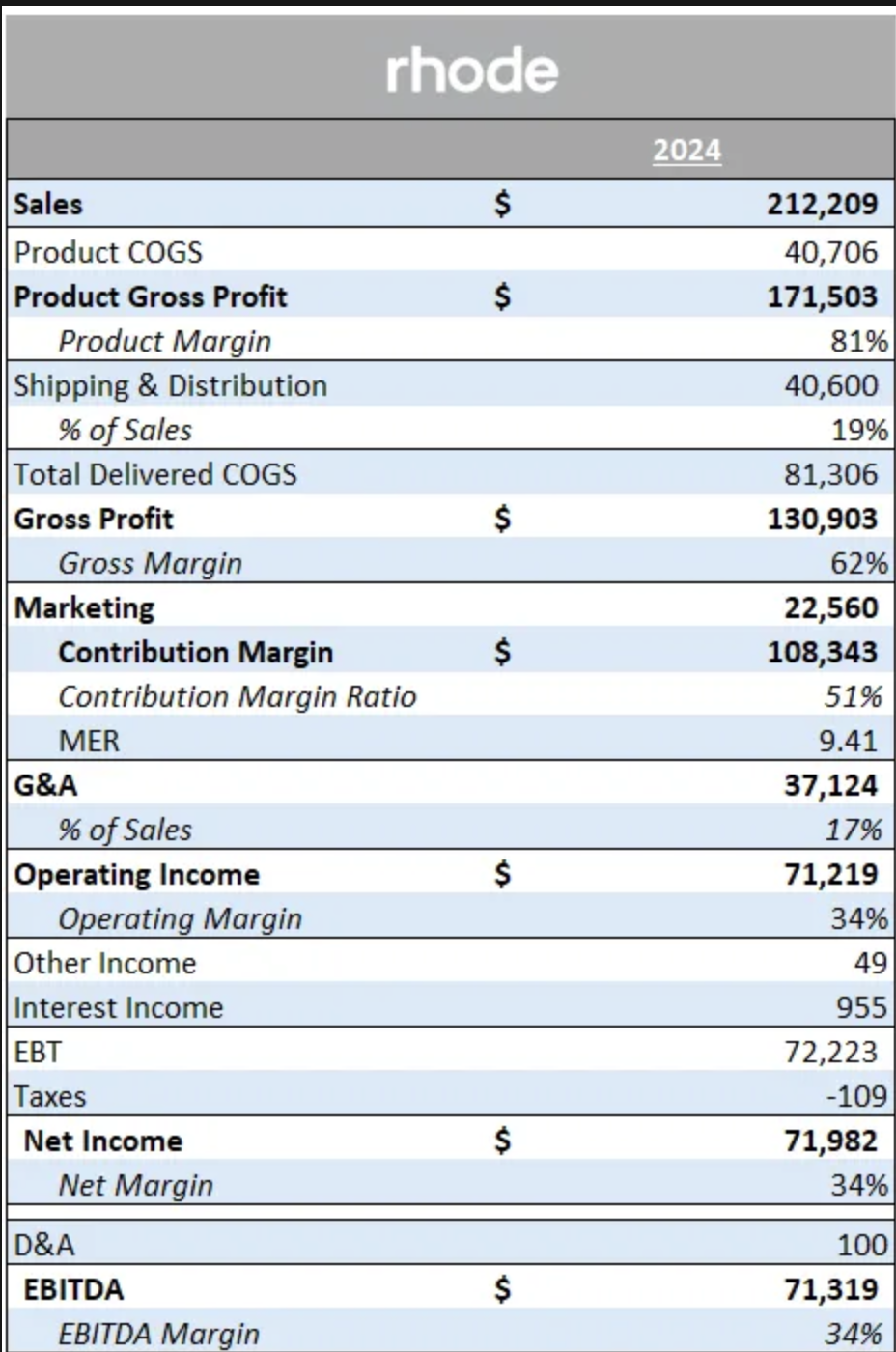
That’s the brand’s revenue in direct-to-consumer distribution alone for the year ended March 31 after subtracting marketing costs, according to a United States Securities and Exchange Commission filing by E.l.f. Beauty on Oct. 17, which gives a strikingly detailed financial picture of the asset it’s dedicated up to $1 billion to acquire. Leveraging Bieber’s fame, Rhode spent about 11% of sales on marketing, far below the 20% to 40% typical for the industry and roughly 25% for E.l.f. Beauty last year.
Diving deeper into the numbers reinforces Rhode’s unusually strong profitability. Rhode’s earnings before interest, taxes, deprecation and amortization (EBITDA) margin landed at 34%, well above the 15% to 30% considered strong for the industry, with its cost of goods sold (COGS) clocking in at 19%. The brand’s marketing efficiency ratio is over nine, and cost of delivery for the period was 15% while general and administrative costs (G&A) weighed in at 17% of sales.
“As an influencer led brand, we expected some pretty good marketing efficiency, but I don’t think I could have possibly guessed we would get 50%+ contribution margin ratios and MERs north of 9,” wrote Drew Fallon, co-founder and CEO of Iris Finance, in a Oct. 24 post on his Substack Making Cents. Referring to Rhode’s P&L as “exquisite,” he went on to note, “The question this raises, though, is – what happens if her relevance fades, and MERs contract? In that case, we don’t really have an A+ gross margin, and we would see EBITDA margins collapse aggressively.”
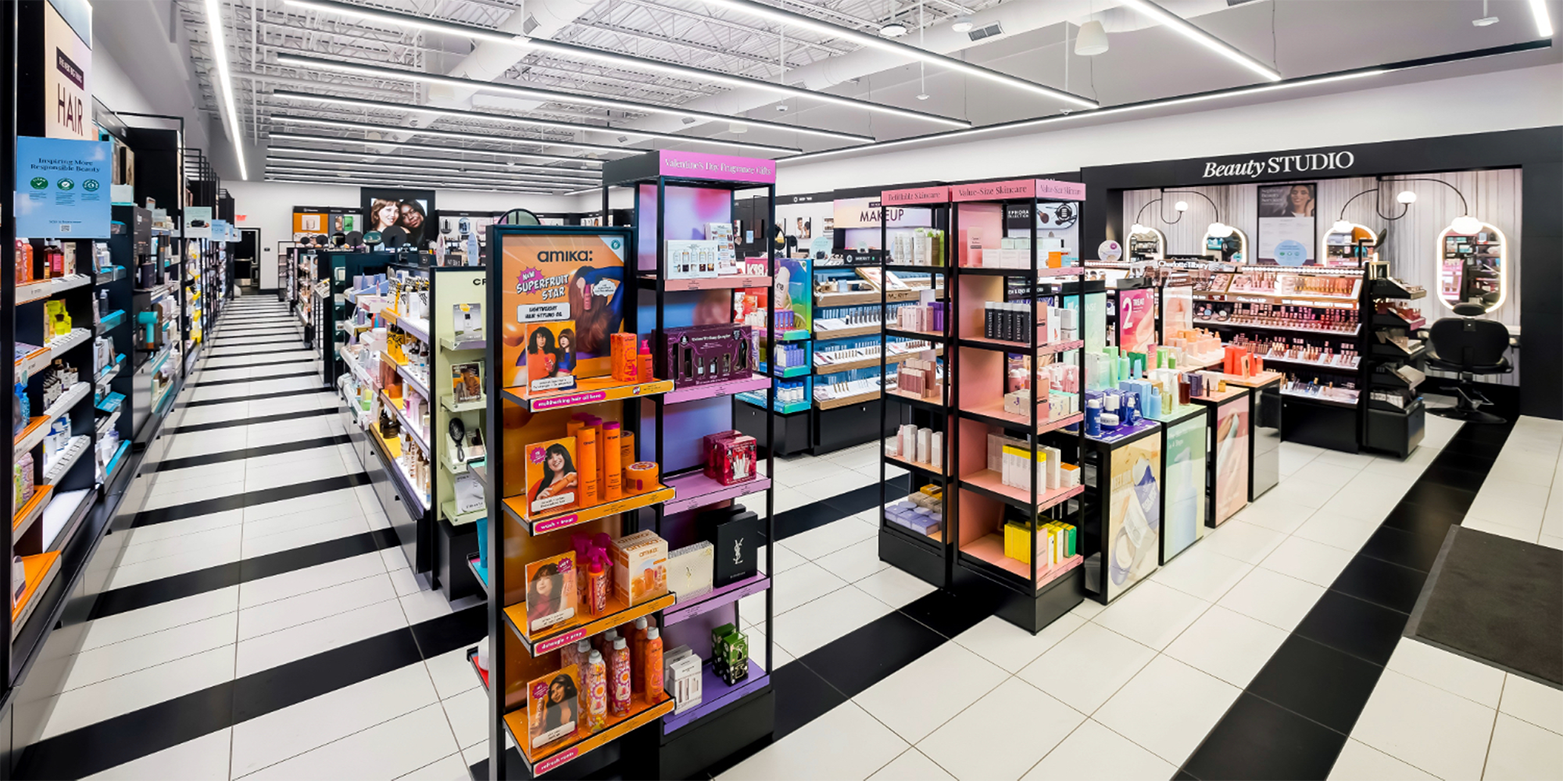
So far, Rhode’s 2025 performance has been a bit of a mixed bag. It had the largest North American debut ever in Sephora’s history in September, racking up $10 million in sales in two days, according to market research and analytics firm YipitData. However, its second quarter sales were around $40 million, down from $48 million last year.
Reporting by the publication Puck News suggests that a slowdown in investments and product releases leading up to the brand’s Sephora launch rather than consumer fatigue contributed to the sales growth deceleration. But Wall Street wasn’t convinced, and E.l.f’s stock dipped 7% on Oct. 20 on the information it divulged about Rhode’s performance. Still, Rhode could be poised for a star-worthy fourth quarter after a September in which Puck News pegged its sales at $40 million.
To shed light on what emerging beauty brand founders can learn from Rhode’s finances, for the latest edition of our ongoing series posing questions related to indie beauty, we asked 10 investors, consultants, founders and brand builders the following: What are the most noteworthy aspects of Rhode’s P&L? What should emerging beauty brands take away from Rhode’s P&L statement? Is it possible for emerging brands to achieve Rhode’s numbers without the influence of a celebrity like Bieber?
The players
5 mentionedDeeper

Iris Finance
Rhode
AS Beauty
E.l.f. Beauty