Why Gwyneth Paltrow’s Good.Clean.Goop Was A Wipeout
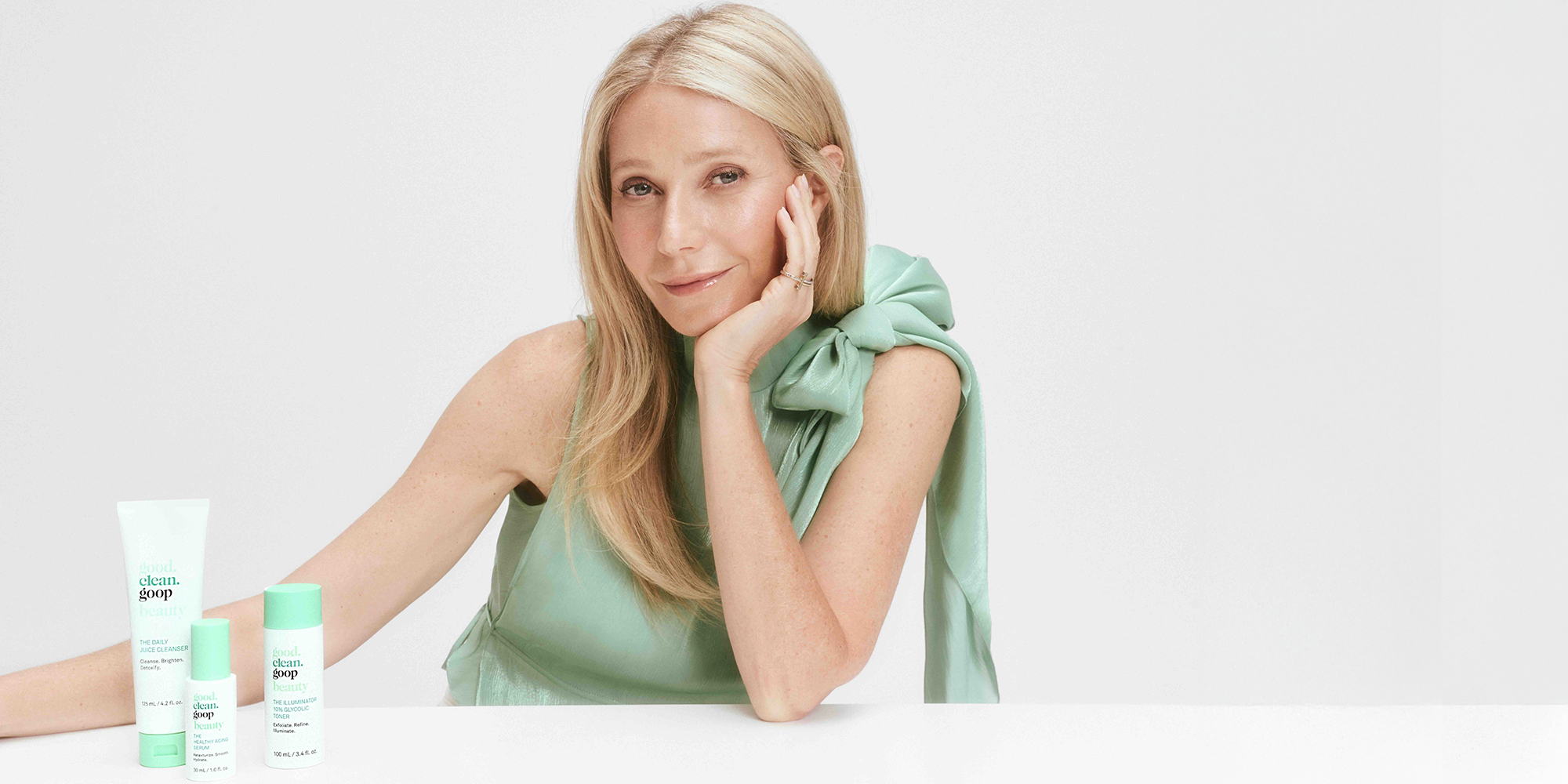
But the formula didn’t work, and now it’s quietly been killed by Goop and has departed Target, according to news confirmed by Business Insider. Good.Clean.Goop’s demise demonstrates the limits of star power, the difficulties of brands trading down to chase dollars and the dilution of the clean moniker. Learning its lesson, Goop is returning to its high-end aspirational strategy at a moment when the wealthiest Americans account for an ever greater share of consumer spending.
Good.Clean.Goop was partly a victim of Goop’s success. Some 17 years after actress-turned-lifestyle entrepreneur Paltrow sent her first Goop newsletter to 10,377 subscribers highlighting her clean lifestyle with recipes for turkey ragu and banana nut muffins, untold numbers of beauty brands have followed her lead into the clean segment, diminishing it as a selling point.
Even if clean beauty’s appeal never diminished, Good.Clean.Goop didn’t fit well into Goop’s oeuvre. Consumers couldn’t picture Paltrow, who famously said, “I can’t pretend to be somebody who makes $25,000 a year,” running to Target for toilet paper and body scrub. Upon Good.Clean.Goop’s launch, one Redditor remarked, “Amazon! Target! Who is forcing our Nepo Queen to pander to the poors?!?”
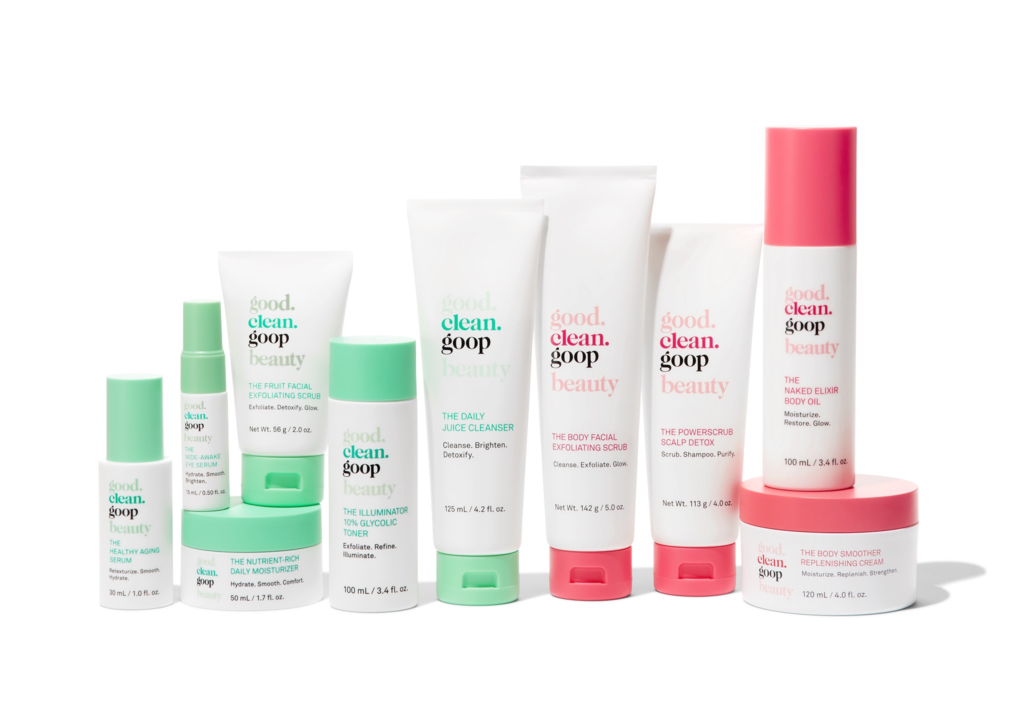
Rachel Kleinman Green, founding principal of Rachel Green Consulting, says, “Timing is everything.” Despite Paltrow’s documenting a Target shopping trip on social media and inviting fans to meet her at the store in Manhattan Beach, Calif., in May 2024, Green argues the launch “didn’t align with her overall celebrity peak for Goop.”
In the current era where savvy consumers pore over ingredient lists and clinical studies, demand transparency, analyze before-and-after photos, she adds proof is more important than promise. “You have to show what that product is going to do or else people are just going to buy CeraVe and then go spend the money [at their doctor’s office] on a clinical intervention,” says Kleinman Green. “And I think that’s something that the industry as a whole is really grappling with.”
Amy Berk, founder and principal of 317 Consulting, says, “When it comes to beauty companies, there are a lot of them out there. What’s winning is finding a white spot where there’s opportunity in the market to fulfill versus having these kind of generic brands that maybe don’t have as clear of a point of differentiation or a clear marketing perspective.”
Along with mistiming Paltrow’s fame, Good.Clean.Goop mistimed beauty industry trends. The brand hit on clean as clinical was ascending. And it entered skincare at a relatively tough phase for the category. Skincare sales in the mass-market grew an anemic 1% last year, according to market research firm Circana. In the first half of this year, they ticked up 4%, but category growth overall was slower than every beauty category except makeup.
Goop began developing Good.Clean.Goop in January 2023 and launched the following October with 14 beauty and wellness items. Priced between $19.99 and $39.99, the for-the-masses products weren’t designed as exact budget replicas of Goop’s bestsellers like the Microderm Instant Glow Exfoliator ($125 for a 1.7-oz. size) and Youth-Boost Peptide Serum ($150 for a 1-oz. size).
Good.Clean.Goop’s prices responded to skincare sales momentum among masstige brands at the top end of the mass price spectrum or bottom end of the prestige. Still, it appears it required mass market shoppers to extend their wallets too much for an unproven brand competing against solid options at half the price or less. And it certainly amplified supply chain and distribution complexity for Goop, already strained to realize profitability from its core business vehicles.
To be sure, selling to the masses isn’t easy. Target has struggled with an array of challenges, including a backlash to its rollback of DEI initiatives, management changes and widespread criticism that shopping in stores is a dull chore.
Net sales slid almost 2% to $49.1 billion in the six months ended Aug. 2, 2025, from $50 billion in the same period a year ago. In that period, beauty sales were basically flat at $6.5 billion, making up 13.5% of all merchandise sales.
Target’s full-year 2024 net sales decreased .8% to $106.6 billion from $107.4 billion in 2023. The big-box retailer’s sales have been declining over the past three years from the 2022 apex of $109.1 billion.
For Good.Clean.Goop, Anne Kurtz, an early-stage investor in consumer product goods in the beauty, wellness and food industries, says, “Having less foot traffic [at Target] in general didn’t help…Also, just within Target, there are other brands that are competing at that price point and may be delivering on higher efficacy.”
Goop was also sued by Good Clean Love, a personal hygiene and sexual wellness company founded in 2003, for trademark infringement, false advertising and unfair competition. The lawsuit was filed and settled within six months in 2024. However. Kurtz points out that the specter of a lawsuit can be distracting to brands.
“In the case of Goop, it could have been they were just looking at the numbers, and they want to do this larger push in the luxury space, where the margins are much healthier,” she says. “So having these additional lawsuits just didn’t justify continuing it.”

In 2023, its launch year, Puck reported Good.Clean.Goop’s sales were $1 million, and it was in the bottom 15 brands in its category inside Target. The brand was no shot in the arm for profitability, but Paltrow told Fortune in March that the company is “very close” to being in the black. In September of last year, the company laid off 18% of its staff or 40 jobs. Two months later, it cut 10 more employees, including the beauty director.
In a Vanity Fair interview in April, a Goop representative said the company’s annual revenue in 2024 was its best yet, up 10% over 2023. It registered year-over-year revenue growth in certain channels: 60% in Goop Kitchen, a licensed healthy takeout business, 42% in G. Label, the high-end fashion line that’s been rechristened as Gwyn, and 34% in Goop Beauty.
Paltrow told Vanity Fair, “My business is a good business and it’s a strong business and the brand is strong.”
Reflecting Goop’s focus on premium products, Good.Clean.Goop’s Instagram account was cleared of 286 posts on Sept. 10. On Sept. 21, it changed its handle and converted its 70,600 followers to follow the official account for Gwyn, which is selling $425 cashmere tanks and $1,395 lambskin leather skirts, among other pieces. As of Sept. 24, Good.Clean.Goop’s TikTok is still up with nearly 13,000 followers, although the last post, plugging its $29.99 Healthy Aging Serum with tranexamic acid, is from October 2024. The brand’s products remain available on Amazon.
Good.Clean.Goop’s discontinuation doesn’t mean Goop is totally abandoning beauty. Goop Beauty, available at Sephora since 2020, expanded to Ulta Beauty in August, offering around a dozen items such as All-in-One Nourishing Face Cream ($105 for a 1.7-oz. size), Himalayan Salt Scalp Scrub Shampoo ($55 for a 6.7-oz. size) and a $25 dry brush. Goop didn’t respond to a request for comments on Good.Clean.Goop and its plans for beauty.
The players
5 mentionedAugust

iS Clinical
Too Faced
CeraVe
AS Beauty