Comprehensive Branding Strategies That Break Through Beauty Industry Noise
It’s not enough to produce beautiful content. Gorgeous visuals have to be grounded in strategic and data-driven solutions. Organizations like Front Row specialize in grounding a brand’s vision in rigor.
Ahead, with guidance from Front Row, we dig into purposeful creative strategies, examine best practices and emerging trends, and explore the nuances of brand messaging, content creation and merchandising in the context of commercialization across online and offline channels.
Brand Creative
When it comes to conceptualizing creativity, founders must delve into the essence of their brand. What does the brand signify? Who’s its target audience? These questions, including age, occupation, lifestyle and social media habits, shape a brand’s direction. Identifying consumer needs informs choices like art direction, color palette and typography, which extend from online presence to packaging.
When collaborating with agencies, founders should furnish brand and product details, objectives, deliverables and success criteria. Strong branding should be distinct and recognizable even without a name or logo. The aesthetic must convey meaning, communicating the brand’s message clearly. Throughout the creative process, founders should ponder, what would people recall without the logo?
Front Row worked with emerging fragrance brand Future Society leading up to its September 2023 launch. The company guided the brand’s strategy, identity, messaging and look and feel across its website, social media and packaging. Founded by MIT-educated chemist Jasmina Aganovic, Future Society’s products leveraged proprietary biotechnology to sequence the DNA of extinct plants and capture their smells in modern-day fragrances. Drawing inspiration from the brand’s use of extinct plants and cutting-edge science, Future Society was established with a distinct Solar Punk-inspired visual identity.
For example, one extinct plant highlighted in Future Society’s Reclaimed Fame perfume was destroyed by wildfire, and it was imagined in a fiery setting. Another plant featured in the perfume Grassland Opera was trampled by buffalo, and its imagery has grassland influences. “Our approach to each fragrance image was to craft a world in which the history of the plant and the future of its scent created today blended into utopian settings,” explains Irmand Trujillo, associate creative director for Front Row.

Trujillo collaborated with CGI artist Rob Juárez to bring a new approach to illustrating biotechnology. The result is a Future Society world that evokes optimism and imagination, has momentum and longevity and crystallizes the founder and brand story. “We wanted to integrate the highbrow of science, but we weren’t going to show beakers and people behind labs,” says Trujillo. “The way that we wanted to do that was through this aesthetic biology.”
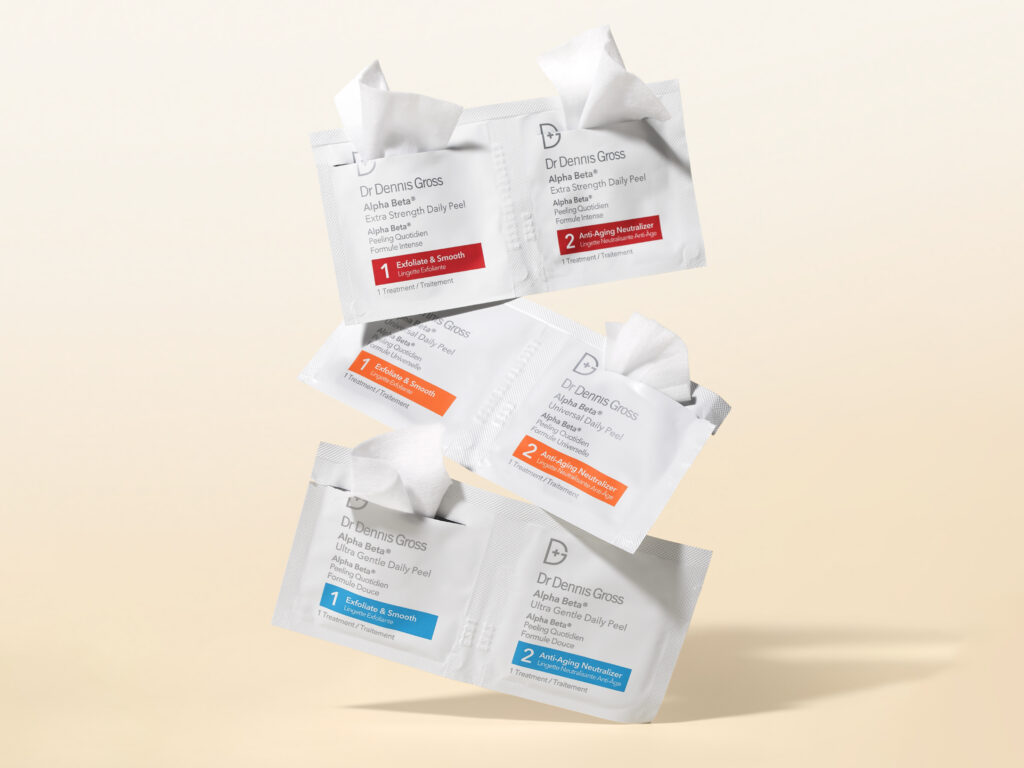
Front Row’s enduring partnership with Dr. Dennis Gross Skincare stands out. Unlike its newer collaboration Future Society, which began in 2015, Dr. Dennis Gross Skincare, a brand founded 24 years ago, has a long history, identity and iconic product. However, it lacked clear brand DNA, repeatable codes and coherent product architecture suitable for open sell-friendly packaging.
Front Row’s journey with Dr. Dennis Gross Skincare started by analyzing the brand’s successes and identifying its core essence. The process led to a robust positioning, which in turn drove a refreshed appearance and execution across various touchpoints both online and offline.
Brand creative is a living entity, adapting throughout a brand’s lifecycle. Startups need a strong foundation, while established brands (10 to 15 years old) may require revitalization. A dynamic market landscape, shifting consumer preferences and category evolution necessitate continuous brand and creative evolution.
At Front Row, this approach is termed “brand evolution.” It involves taking existing elements and refining them to cultivate a stronger presence in the market and enhance consumer recall.
Campaign And Content Creative
Campaign and content creative should be thought of as similar to brand building in that consumers should be considered along with positioning. Founders should refer back to the previous questions about the audience their brand is after and talking to. How is the brand positioning itself, and how is it bringing that to life through visuals and messaging? The campaign and content creative stage is taking everything developed from a brand creative lens and attaching it to a short-form story that is then pulsed out into the market.
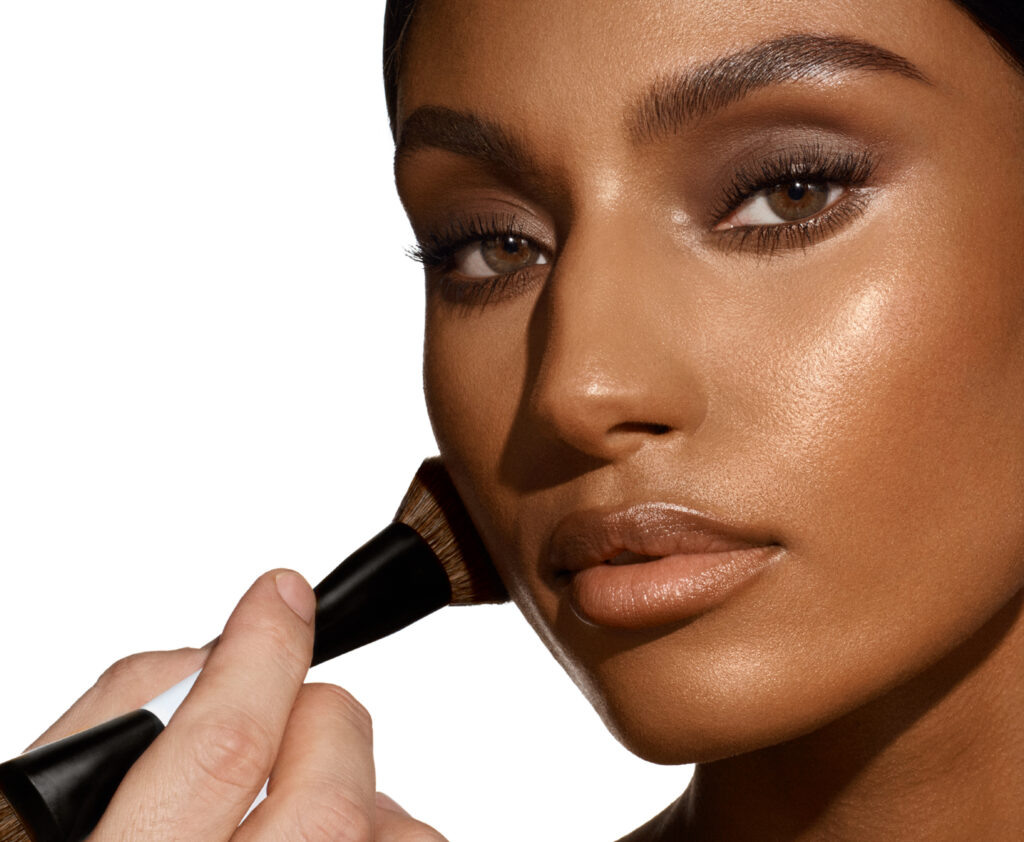
For its foundation product launch, cosmetic brand Makeup by Mario’s campaign channeled the brand’s DNA by celebrating the artistry of founder Mario Dedivanovic. The campaign title, “Masterpiece Revealed,” points to his experience within the industry, the model visuals focus on flawless skin with Dedivanovic’s hand adding the final touch, and the bright white lighting used for the product imagery adds drama and romance while showcasing the foundation range. Complementary stills and videos were produced in a similar minimal manner.
A good campaign has great storytelling, but content that’s to the point is critical. Gen Z consumers have an estimated attention span of 1.7 to eight seconds. Long-winded storytelling won’t be retained. “Ads that can tell a story in the shortest and simplest way while being true to the brand and unique for its space will always rise to the top,” says Nico Cortez, associate creative director for Front Row.
It’s important to strike the right balance between creating content that breaks through while keeping in mind industry standards and strategic insight. Most ads should follow a structure called the ABCDs: attract, brand, connect and direct. Attract refers to the opening shot. It should be eye-catching enough to capture the viewers attention. Brand is introducing the brand or product, which should happen in the first three seconds of the ad. Connect means connecting with the audience on an emotional level, and direct involves directing the viewer with calls to action.
Social Creative
Video is more eye-catching in social media feeds than still posts and is prioritized by most algorithms. Aim to keep video lengths to 15 seconds or less and be aware of sound. According to Front Row, 85% of videos on Facebook and 40% of videos on Instagram Stories are watched without sound while 88% of TikTokers say sound is essential. Brands should design for the sound being off and delight with the sound on.
Slow motion is an up-and-coming video feature brands are utilizing more along with three-dimensional product videos, which science-driven brands have particularly taken advantage of. Both create thumb-stopping moments on social media. Dynamic perspectives created with wide-angle distorted lenses that can contort products to feel larger than life are increasing as is iPhone footage combined with fast-paced editing.
Creative content isn’t a one-and-done situation. Brands should constantly be ideating. Conducting extensive AB testing to refine content performance and better connect with the target audience is essential for brands over time.
For legacy brand Jergens, Front Row performed comparison testing to see whether product-driven ads or model-driven ads performed better on social media for lotion and tanning products. It found that product-driven ads outperformed model-driven ads for lotions. Rooted in the data, Jergens launched a successful campaign featuring its lotion bottles in everyday settings, a concept that’s become a staple for it.
Key performance indicators included engagement rates, click-through rates, conversion unit sales, reviews, audience feedback and press coverage. AB testing is pivotal in informing ongoing strategies and optimizing campaign effectiveness for brands. Brands’ creative content budget depends on the project, but even modest budgets can yield impactful results with careful planning.
Marketplace Creative
As we touched on in Front Row’s last white paper, marketplaces like Amazon have a lower funnel positioning that influences brands’ marketing strategy to be more purchase-driven. While pillars like brand voice and product education thrive on social platforms, Amazon is focused on driving conversion. The platform has recently concentrated on acquiring customers who consume traditional media, out-of-home and linear television ads. Amazon provides brands with a variety of ad formats and content marketing tools.
A key example is “Premium A+ Content,” which allows brands to add rich visuals like videos, images, product comparisons and other interactive content formats directly to their product pages. It goes beyond basic advertising by letting brands tell their story in an engaging way and educate potential customers more effectively. Ultimately, the features help brands connect with consumers and optimize toward increased conversions.
Maude’s Amazon storefront seamlessly translates its core brand values – simplicity, inclusivity, and quality – for the platform. Front Row optimized the brand’s storefront layout while crafting brand messaging and language that resonates with its audience.
Brands should have a revolving door of new creative content to stay relevant and boost ROI, advises Lucas Marschark, associative creative director for Front Row. He says, “High-quality content is super important, but frequency is arguably more crucial for engagement.”
It’s not always necessary to create a new campaign tied to each launch, though. Brands can stretch out what they have. If a haircare brand has 10 lifestyle images of its bestselling shampoo, the images can be staggered over the course of 10 weeks. Or if a slow-motion video of a product is available, that can be turned into four different videos highlighting four unique benefits of the product. In both instances, AB testing should be utilized to see what performs best to hone the strategy and increase sales.
The spend within online marketplaces varies based on factors like a brand’s goals, its presence on the platform and category. For Amazon specifically, the total advertising costs of sales (TACOS) typically ranges from 8% to 12%. In other words, brands usually reinvest 8% to 12% of their total sales back into ad spend on the marketplace. Typically, retailers look for brands to invest anywhere from 10% to 20%.
Open-Sell Creative
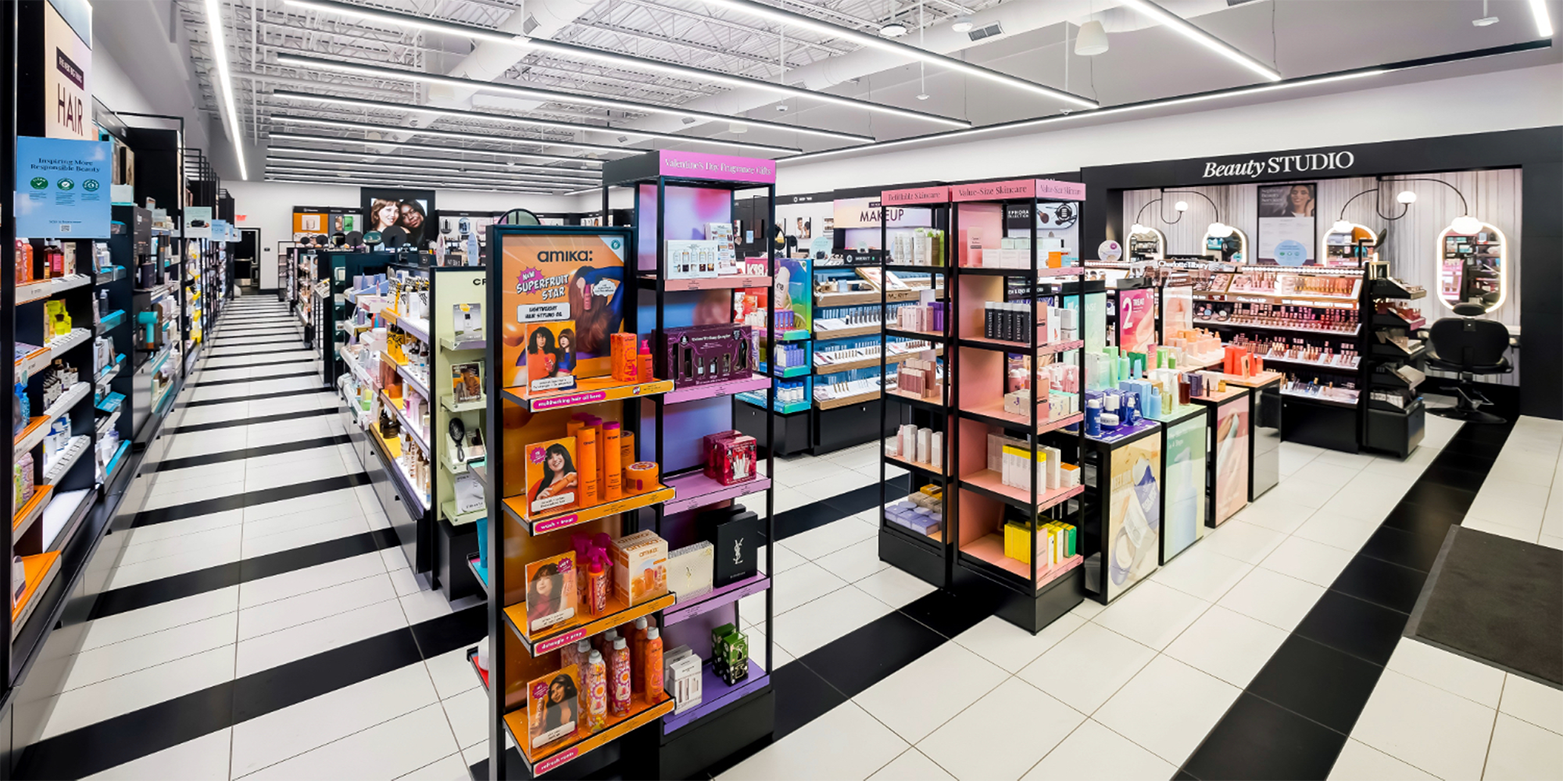
Many consumers prefer open-sell retail environments to avoid pestering by the sales staff. In an open-sell concept, however, it can be harder for brands to gain customers’ attention, making an eye-catching visual display all the more important.
While some customers will come into a store with a brand already in mind, many are browsing in search of newness and trends. In the case of the latter, it’s important for displays to utilize bright colors, large images, minimal text and arresting visuals.
Details like color choice, typography and art direction should mirror the brand’s core identity. The physical display should be a cohesive representation of the brand’s essence, and the look and feel should allow a consumer that’s familiar with it or isn’t understand what it does and is known for and why it’s unique, efficacious and needed.
Furthermore, the strategy should involve organizing elements such as planogramming, visual forms, graphics and copy into hierarchies that cater to different viewing distances. At 30 feet, the focus should be attracting the attention of consumers. At 10 feet, engagement should be a priority, which is done through highlighting hero products and calling out new arrivals.
At three feet, brands should be focused on conversion, including clear, simple language to help customers to navigate the product collections. “Each level should offer clear focal points to captivate without overwhelming the audience, striking a balance between intrigue and conversion,” says Christopher Skinner, chief brand officer of Front Row.
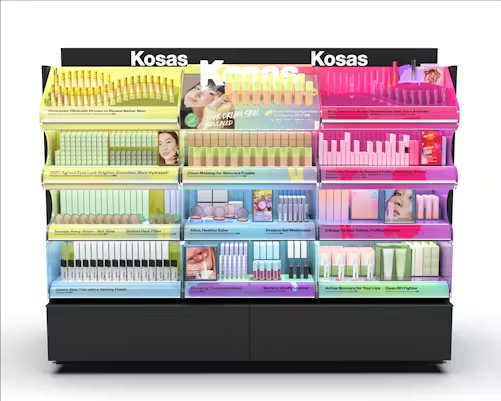
Front Row worked with Kosas on a fully realized three-dimensional landscape, free from the limitations of visual merchandising. The immersive world was crafted to honor the brand’s essence and inspire. From there, it was distilled into the inaugural custom two-bay gondola infused with the brand’s DNA. The design embraced the principles of visual merchandising and allowed for future innovations, facilitating pre-planned updates.
Offline Creative
Offline creative concepts have been taking off lately due to digital ad fatigue. Similar to its online counterparts, offline efforts should be tied back to consumer behavior and an understanding of the overarching goals of the brand. Incorporating data when possible in order to improve attribution tracking should be a priority. Traditional mailers like coupons or postcards have historically shown a high ROI because they’re a targeted, tangible, trackable way of capturing customers.
Local events and experiential marketing activations are big return drivers and deepen connections between consumers and brands. In 2019, luxury skincare brand La Mer partnered with Front Row to create a groundbreaking exhibition experience in Shanghai.
Named after the brand’s annual brand campaign, “Edge of the Sea,” the design transformed 10,000 square feet of space in Shanghai’s Power Station of Art into an immersive, brand storytelling exhibit. The creative team utilized architecture, digital design, projection and more to craft a multi-sensory experience that allowed 20,000 visitors to connect with the essence of La Mer, its rich history and products.
“Edge of the Sea” bridged guests’ online and offline experience by allowing them to “check in” to the exhibition through WeChat by scanning a QR code. In 10 days, the activation attracted 20,000 visitors and generated in excess of 1 billion social media impressions for La Mer.
Measuring the success of IRL activations typically comes down to digital engagement, so designing social media-friendly moments are a must. Incorporating QR codes or creating an augmented reality experience are ways to connect online and offline efforts. “Offline marketing strategies should be integrated with digital efforts for a comprehensive approach that maximizes overall ROI,” says Gabby Maksian, senior director of global marketing and communications for Front Row.
Certain offline creative can be more affordable for brands with smaller budgets. Out-of-home ads in the form of billboards, truck campaigns and wheat-pasting have grown in popularity among indie brands to diversify ad spend in the face of elevated digital advertising costs.
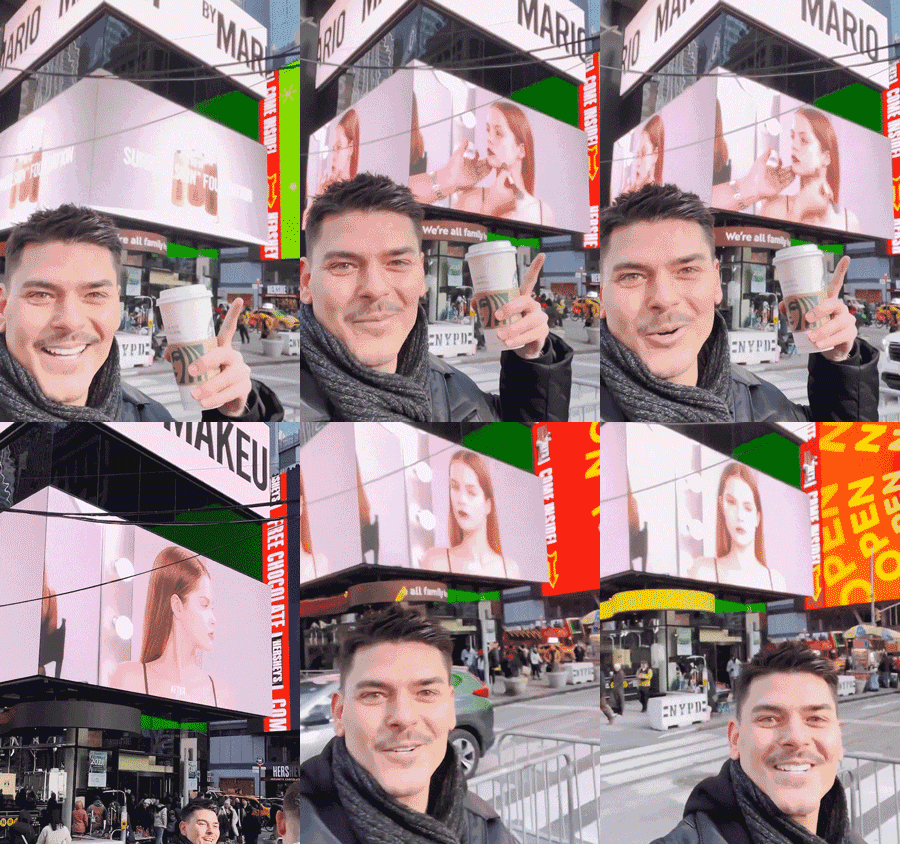
Front Row created a dynamic campaign for Makeup by Mario’s first foundation, and the brand rolled out digital billboards in New York City to announce the product’s arrival and grab the attention of distracted passersby along with wheat-pasting ads in key areas of the city. The creative was in line with the brand’s original minimal campaign. The ad directed viewers to Sephora, where the foundation was available for purchase.
The beauty industry thrives on constant evolution. Consumers are bombarded with messages, demanding brands rise above the noise with creative that’s not just aesthetically pleasing, but strategic and data-driven. This white paper has delved into the complexities of online and offline creative commercialization, emphasizing the importance of achieving a unified brand experience.
By embracing these principles and staying at the forefront of creative trends, brands can develop impactful campaigns that stand out, fuel sales and foster lasting customer connections. Remember, creative commercialization is a continuous process – a dance between brand storytelling and strategic execution. By embracing this approach, brands can navigate the ever-changing beauty landscape and achieve long-term success.
The players
5 mentionedEssence

Too Faced
Momentous
Under Your Skin
Better Being