The Uneven Evolution Of Beauty Accelerator Programs
She completed Credo for Change, reeled in a Glossier grant and participated in The Workshop at Macy’s, which is complementing mentorship with money by providing business grants to participants and introduced a $100,000 pitch competition. Beal won $15,000 as a The Workshop at Macy’s pitch finalist and received $5,000 to cover the cost of travel to New York for the in-person portion of its program.
Beal has now listened to retail specialists, beauty product professionals, financial wizzes and more to fill her brain with all sorts of information. She’s at the stage where she could use greater dollars rather than additional direction. “If you have capital, knowledge and a great idea, you’re going to have a successful business,” she says. “It would be nice though if there was as much capital as there is advice.”
Beal reflects the sentiment of many BIPOC indie beauty founders arguing that retail and brand accelerators should evolve from the model they instituted in the wake of George Floyd’s murder. A number of beauty brands that have been through them have started to make inroads in the beauty ecosystem—and they’re hoping to have staying power in it. Will the retailers or brands behind accelerators that counseled them continue to lift them up?
Accelerators have antecedents that go back much further than the racial reckoning of 2020. They were popularized in the technology and venture capital world by the likes of Y Combinator and Techstars running fixed-length programs that startups take part in to get counsel, tap networks and receive a modicum of funding in exchange for a small ownership stake (4% to 7%, for example).
The retail and brand accelerator programs that popped up in 2020—or that were a reshaping of existing programs—have a different function. They educate BIPOC brand founders in a beauty industry in which they’re underrepresented on shelves and in investor firm portfolios, and signal that the companies implementing them recognize and are doing something about disparities.
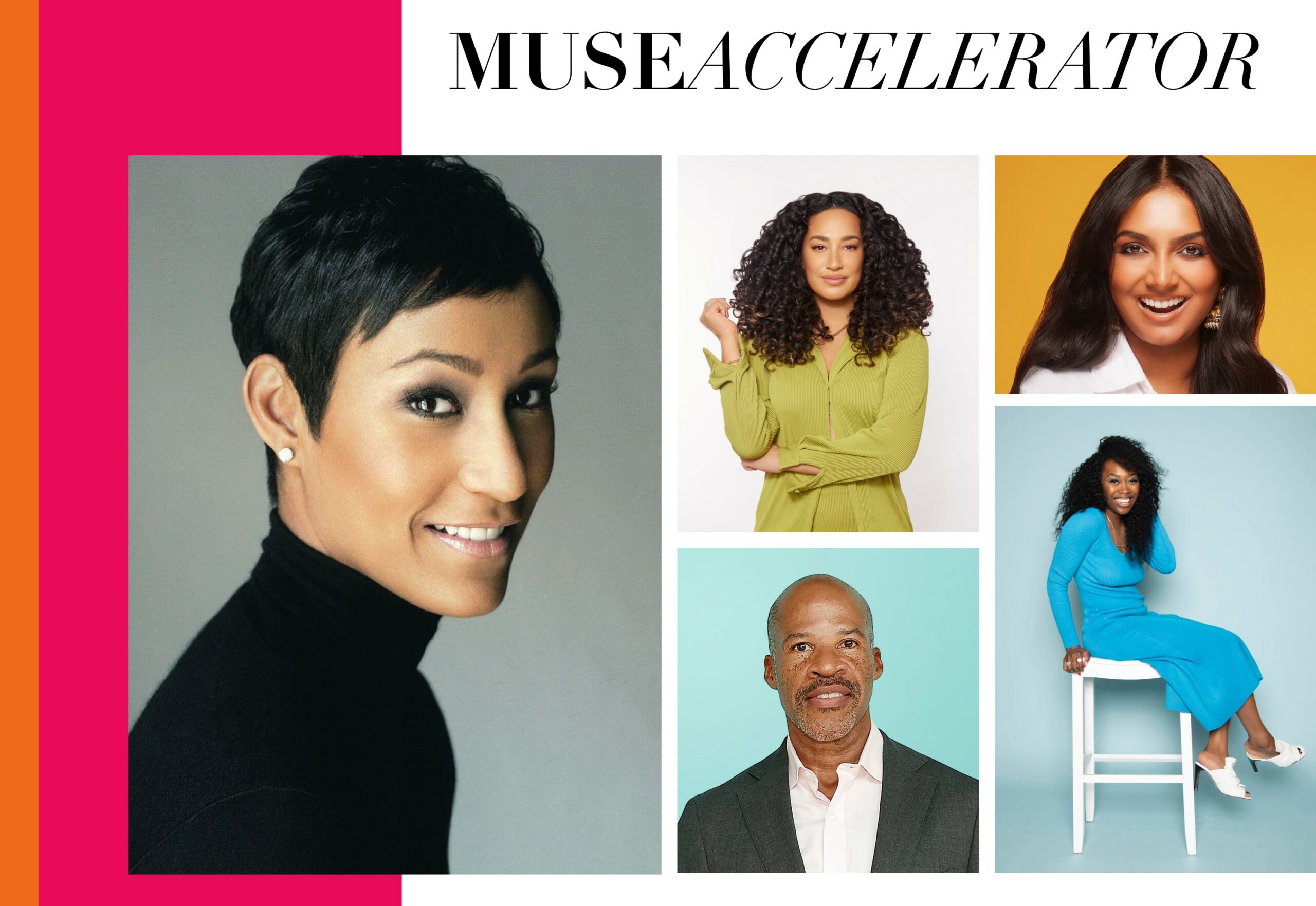
The programs often didn’t have a funding aspect to begin with, but that’s shifting. Ulta’s Muse Accelerator, launched this year, offers participants $50,000 in financial support, and Macy’s is investing $30 million over five years to foster entrepreneurs from underrepresented groups, a move that beefed up The Workshop at Macy’s’ financial role. Glossier’s program doled out $500,000 in 2020 and 2021 grants along with six months of consultation. Starting in 2020, the brand vowed to devote $10 million over five years to Black-owned beauty businesses.
Sephora, Ulta Beauty and Macy’s are signatories on the 15 Percent Pledge, the initiative spearheaded by designer Aurora James to push retailers to dedicate 15% of their shelf space to Black-owned brands, and their accelerators are important pipelines of Black-owned brands to assist their progress toward the pledge. In 2020, Sephora modified its accelerator program with a promise to carry the BIPOC-owned brands that participate in it. Hyper Skin, Eadem, 54 Thrones, Ries, Kulfi and Topicals are among the brands that have gone from the accelerator to Sephora’s assortment.
While Jamika Martin, founder of Rosen Skincare, thinks accelerator programs are generally helpful, she believes they can be overwhelming to founders and not always targeted to their particular challenges. She participated in Target’s accelerator concept Target Takeoff and has been a mentor for Target and Ulta accelerators. “Brands will come in wanting to figure out how to fix their cash flow and are now trying to figure out how to rebrand,” says Martin. “As these programs continue to roll out, my biggest thing is making sure it’s as organized and structured as they can make it to help brands almost triage what needs to get done now, what needs to get done in six months and what that process looks like.”
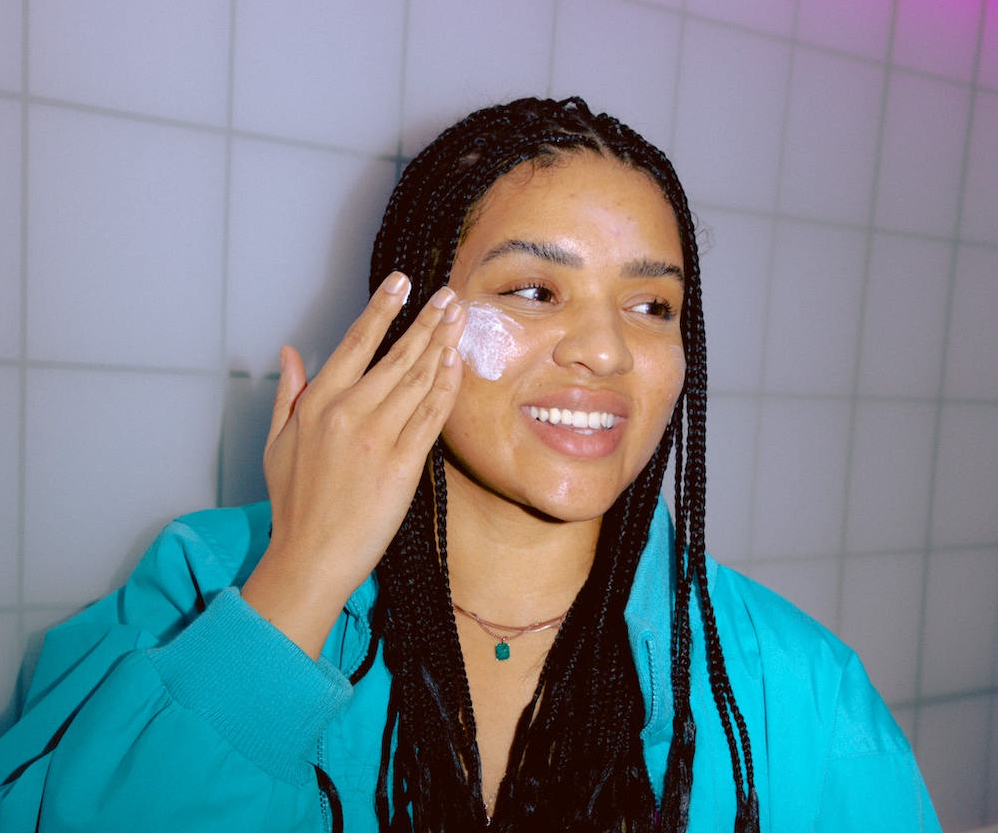
Sandra Velasquez, founder of bath and body brand Nopalera, concurs that focused programs are better. She’s participated in six accelerators such as Credo for Change, Bridge Mentorship and clean beauty brand Tower 28’s Clean Beauty School. Most recently, she graduated from Stanford University’s Latino Entrepreneurship, a program centered on scaling entrepreneurial businesses. She highlights Bridge Mentorship, a partnership between investment firm True Beauty Ventures and Beauty Independent that kicked off with cohorts this year, as a standout because it zeroes in on funding.
“It’s not teaching you about marketing strategies or advertising, it’s literally just about the operational backend, the margins, everything that you need to get ready to be able to be invested in,” she says. “I think they’re great when they’re more specific and are super valuable because there’s so much to learn about all the different components. You can have a whole accelerator just on marketing.”
Velasquez has discovered that programs with fewer participants tend to be the most advantageous. “Those are the moments where you get to really dive in,” she says. Credo took the opposite route this year. It opened Credo for Change up to any BIPOC-owned brand interested, growing its cohort from 13 to 14 participants to 200-plus. Annie Jackson, co-founder and COO of Credo, explains, “We are saying that we want to offer up a network and make the industry more equitable, and so it seems counterintuitive to limit that to people.”
The largest cohort made valuable one-on-one time between experts and founders tricky. KKT Consultants founder and clean beauty formulator Krupa Koestline, who led a Credo for Change session on formulations, felt rushed to jam everything into an hour presentation. The online setup of Credo for Change, not unusual for accelerator programs fashioned amid the pandemic, can exacerbate the issue of brand founders not obtaining quality time with the experts they’re there to learn from.
“I feel like I’m not able to give my all when it’s either a Zoom or Teams meeting,” says Koestline. “I think if these programs were a little bit more immersive—and now that we’re hopefully past COVID, we can look into more in-person program—it would serve the new brands better.”
Certain programs are looking to do just that. Glossier paused its grants this year, but will pick them up again next year. Kleo Mack, SVP of global marketing at the brand, says the grant program aimed at Black-owned businesses will return with “in-person programming and community building.” Ulta’s inaugural Muse concluded in November with in-person sessions in Chicago for select founders. “A lot of the content is virtual, but we’re bookending the program with in-person experiences,” says Jessica Philips, VP of merchandising at Ulta. “I think the community piece is particularly helpful and sometimes in virtual programs it’s hard to build that.”
No matter if they’re virtual or in person, accelerators can be a big commitment. Ulta’s Muse program occupies 10 weeks. Camille Bell, co-founder of makeup brand Pound Cake and a Muse participant, says Muse meetings were on Monday, Wednesday and Friday during the 10-week program. On top of those meetings, founders met with mentors from within the Ulta organization. She describes the program as “rigorous, but in a good way.”
Bell was also a participant in the organization Black Ambition’s accelerator program that met twice a day every day of the week for two hours, occasionally as late as 11 p.m. Bell says, “You’re putting in a lot of your time and efforts, and they ask a lot out of you, which takes away from your day-to-day business that you need to run.”
Glossier’s program isn’t as time-consuming. When Bell participated in it last year, meetings occurred twice a month. Glossier adjusted the program from its 2020 iteration due to most of the programming being scheduled to occur in Q4, a very busy time for grantees as it’s peak shopping season
Given the demands, Bell stresses accelerators should make it worthwhile with funding. “It’s great if there’s a check that comes at the end of the accelerator because you’re putting in so much of your time and your business will suffer unless you have a bunch of people to help maintain everything,” she says. “If you’re a solo entrepreneur or even if you have a co-founder, it’s going suffer.”
Beal lauds the Black Ambition pitch competition for supplying her feedback as to why she didn’t get to the final stage. “That proved to me that they’re invested in making all of the businesses better, not just the ones that win,” she says. She suggests others should do likewise, pointing out that the application process, not just the programs themselves, draws time and energy away from founders’ businesses. Beal has applied to at least three times as many programs as she’s been accepted at. She says, “If people are taking the time to apply, then the accelerate sponsor should recognize that there are opportunity costs and take the time to review.”
On top of funding, ongoing post-program support is a frequent request of BIPOC-owned beauty brands. When Velasquez commenced the Bridge Mentorship’s six-month program early this year, she wasn’t quite ready to fundraise, but, once she initiated the fundraising process in June, her mentors at True Beauty Ventures remained in contact with her via a Slack channel they established. Velasquez says, “It’s great that people can continue to provide access after the programs are over because you’re most likely going have even more questions after.”
Corey Huggins, founder of multicultural beauty resource Ready To Beauty, agrees with Velasquez. He says, “Accelerators have to evolve to a point where a brand is nurtured and developed for a longer length of time with mentors that serve as sustained sponsors throughout the early life cycle of the brand.” Huggins questions the end game of accelerators, characterizing their purpose as “vague at best,” and says there should be increased “real-world, practical results.” Those results could include advertising campaigns, social media programs and a pop-up store featuring graduates. He asserts, “Knowledge is great, but knowledge with a tangible application is life-cycle changing for a brand.”
Retail broker Germaine Bolds-Leftridge, founder of the skincare brand I KNOW, questions accelerator programs, too. “From a publicity standpoint, they’re making a lot of noise, but, when the door closes, it’s not as actionable as it should be,” she says. Speaking of retailer drives to diversify selections, she adds, “A lot of them are Johnny-come-latelies and doing it based on their bottom line.”
Important open questions involve the fate of accelerator program participants. Where will they be in five or 10 years? If their brands won spots on retail shelves, will they still be there? Will they be supported? Will the knowledge they acquired sustain them? Troy Alexander, founder of forthcoming men’s skincare brand Troy Skincare, isn’t optimistic the answers to those questions will be in the affirmative. He compares accelerator programs to the reality competition show “American Idol.” It’s rare to become a breakout star with longevity.
“There are so many people fighting for the same positions, and no one really gets a good outcome of that,” says Alexander. “I think there should be a future story on what happens to founders who’ve gone through accelerates, have they launched? Has anything happened to them?” He predicts, “Nothing happens, they just kind of fizzle.”
Martin isn’t confident the whole beauty accelerator enterprise will last. She imagines the rocky economy could spell the end of some programs. Martin says, “Unfortunately, I think a lot of these really cool initiatives are first on the chopping block because we aren’t the Neutrogenas or the Unilevers of the world that drive the same velocity.”
For the retail accelerator programs that stick around, Martin wonders, “What do these retailers have in place to ensure the sustainability of these efforts and really continue to support these brands and support these founders when it’s not as trendy? When it’s not in the headlines and when things get tighter? That’s something I continue to think about as I come into new programs that might be beneficial is making sure that this isn’t a fluke or a one-off.”
Margarita Arriagada, former chief merchant at Sephora and founder of luxury cosmetics brand Valdé, has hope that the accelerator programs will stay and improve. “I don’t think that they’ll take their feet off the gas,” she says. “If anything, they recognize the opportunity to press on the gas and realize that they need to do more for the brands and that the efforts that have taken place are only baby steps.”
The players
5 mentionedNeutrogena

The Center
Nopalera
Under Your Skin
Unilever