Everything Brands Should Know About Ulta Beauty
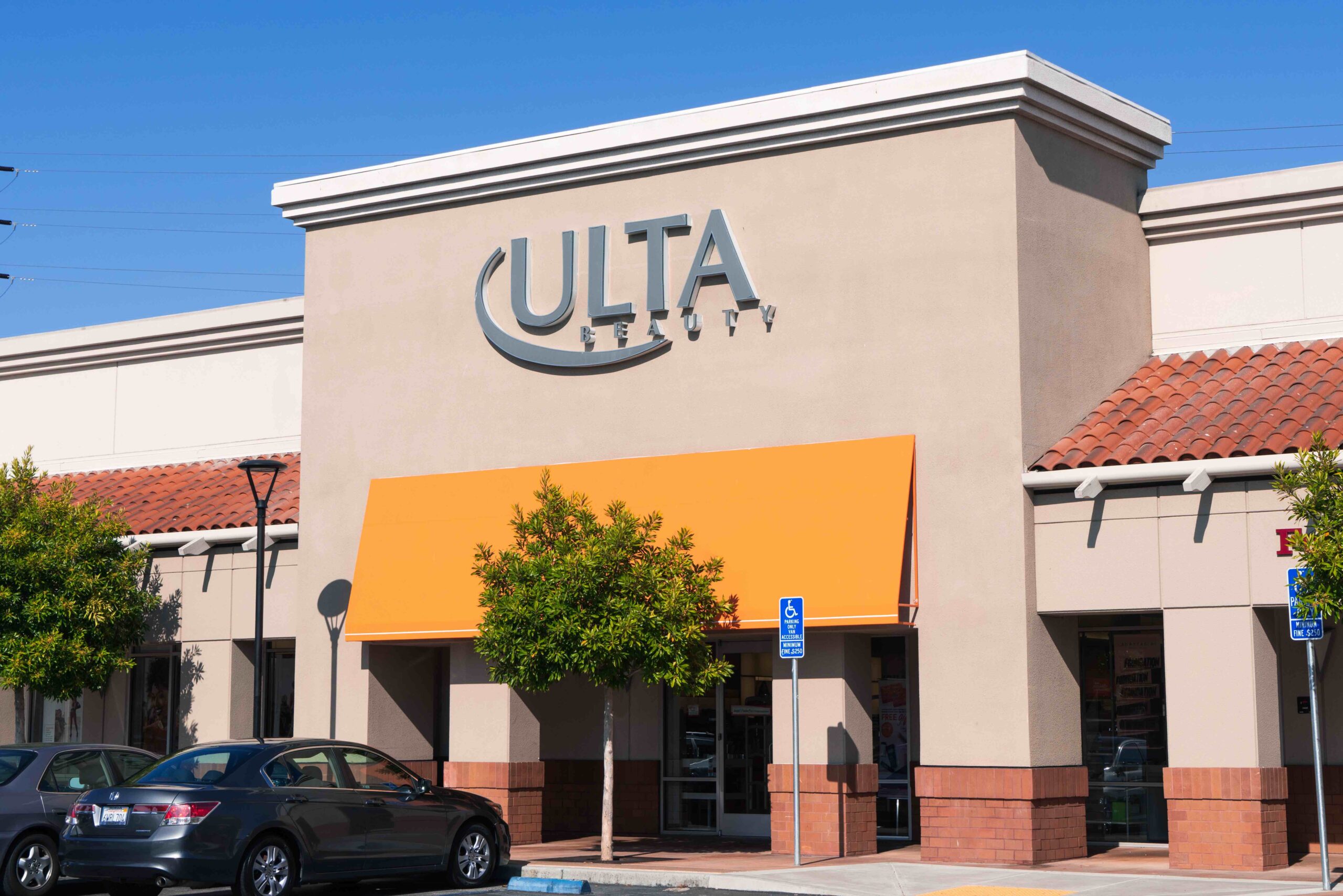
Ulta Beauty’s vast beauty assortment of 25,000 stockkeeping units from 600-plus brands combines top sellers from heritage brands with rising product stars from emerging indie brands in the categories of makeup, skincare, haircare, body care, fragrance, wellness and personal care. If there’s something new and noteworthy in the world of beauty, chances are it’s happening at Ulta Beauty in a big way. For many beauty brand founders, getting a product displayed on the shelves of Ulta Beauty is a sought-after prize, but there are numerous factors to consider when determining if a brand is right for the retailer and prepared for such an enormous partnership.
Below, we detail what brands need to know about landing a deal with Ulta Beauty, including what makes its market position unique, the manners in which it provides value to its brand partners, the categories its buyers are laser-focused on and how brands should assess whether they’re ready to take the plunge.
WHAT MAKES ULTA BEAUTY ULTA BEAUTY
Ulta Beauty has carved out its market leadership position through four key differentiators. First, it has a distinct high/low assortment model. Bringing together mass and prestige beauty made Ulta Beauty a disruptor in the industry from the beginning, long before the category lines started blurring.
Second, its accessible off-mall locations have been an advantage. Ulta Beauty’s brick-and-mortar stores are in high-traffic strip malls that generally attract a suburban, middle class clientele. The locations have several benefits. They’re closer to where customers live, and they provide Ulta Beauty with lower rental and operating costs compared to upscale malls. As mall traffic has deteriorated, the off-mall locations make sure Ulta Beauty doesn’t have stores languishing in dead malls.
Third, Ulta Beauty has salon and beauty services, giving it a draw besides its products. Service customers typically spend 3X their non-service counterparts at Ulta Beauty and make an average of five more trips to Ulta stores. Fourth, Ulta Beauty has one of the most well-structured and engaging loyalty programs in the business. Last year, Ultamate Rewards topped 35.9 million members.
Ulta Beauty’s attributes have placed it at the top of the beauty retailer segment and given it a winning mix appealing to customers and Wall Street. In 2007, the company’s IPO was a wild success, with its shares gaining more than 60% on the day of their NASDAQ debut. Ulta Beauty’s stock has since climbed over 1,500%, and earnings per share multiplied nearly 13X in ten years. In 2018, the retailer made its debut on the Fortune 500 list. Currently, it sits at No. 451.
Also in 2018, Ulta Beauty embarked on M&A. Looking to strengthen its digital and personalization capabilities, it acquired two technology startups in the fields of augmented reality (AR) and artificial intelligence (AI), GlamST and QM Scientific, respectively. Those acquisitions were followed by an investment in the AI-driven retail platform Adeptmind in 2021 in preparation for a forthcoming rebrand of Ulta’s digital shopping platform.
Despite a pandemic-caused slowdown that saw sales and store openings decline in 2020, Ulta came roaring back last year with projected total sales between $8.1 billion and $8.3 billion for the full year. Store openings increased over 300% in 2021.
HOW ULTA BEAUTY OFFERS VALUE TO BRANDS
In addition to its sheer size and reach, Ulta offers a range of robust opportunities to brands.
Expansive U.S. Market Coverage
Ulta Beauty is indisputably dominant in U.S. beauty specialty retail, bringing best-in-class merchandising and marketing services to beauty enthusiasts in-store and online in all 50 states. California and Texas are the states with the most locations, and have over 100 locations each. Florida is next with 90 locations.
International expansion is on hold for the foreseeable future, but Ulta Beauty plans to extend its physical footprint by another few hundred stores domestically to reach a total projected store count of between 1,500 and 1,700 stores. Although not every brand launches in every door and some brands are only online, Ulta’s broad store network afford brands gargantuan exposure and quickly puts their products in front of millions of beauty enthusiasts.
Access To Strategic Partnerships And New Markets
Ulta Beauty focuses much of its business development and marketing efforts on capturing new customers and making it easier for customers to shop its products. Its headline-making partnership with Target announced in 2020 is an important example of those objectives. A strategic response to the shifting shopping behaviors of consumers, Ulta Beauty at Target presents a different cohort of consumers to Ulta’s beauty brand curation.
Today, Ulta’s assortment at Target includes over 50 brands with a proven track record at Ulta Beauty, including Anastasia Beverly Hills, Bare Minerals, Pattern, The Ordinary and Tula. One hundred store-in-store installations were opened by the end of 2021, and 250 additional installations are slated for 2022. The partnership is expected to ultimately touch 800 locations.
Smaller format stores are reportedly on Ulta Beauty’s long-term roadmap as the retailer seeks further store expansion and lure new customers in smaller markets. The proposed 5,000-square-foot locations—Ulta’s standard store is twice that square footage—would select merchandise and services to fit smaller markets.
Omnichannel Strategies Are A Key Focus
On its path to become an omnichannel leader, Ulta Beauty is busy building out and reimagining its digital and mobile businesses, and how they connect to brick-and-mortar.
Buy Online, Pickup In Store (BOPIS) was introduced in 2019, and “Beauty To Go” is its latest iteration, allowing customers to pick up in store (or, in some cases, curbside) in two hours or less. Ulta Beauty launched a same-day delivery pilot program with food delivery platform DoorDash in late 2021 that currently serves Boston, Atlanta, Los Angeles, Houston, Chicago and Boise. More cities are scheduled to be added this year.
Ulta Beauty’s app received a refresh in 2019 and is now the most used beauty app in the country, fueling product discovery, conversion and in-store visits. App users generally spend twice as much online with Ulta and visit stores twice as often as non-mobile users do.
Pushing customer loyalty through personalization is another important goal as Ulta Beauty forwards its omnichannel efforts. Soon after the company’s 2018 technology acquisitions, immersive experiences such as GLAMlab virtual try-ons, foundation shade finders, skin analysis and AI-powered beauty advisors started rolling out. They invite customers to interact with Ulta’s digital and mobile platforms in various ways.
There are plans to build what Ulta Beauty calls “the digital store of the future,” where content and commerce will merge to help shoppers discover products more efficiently and interactively.
A Vast Pool Of Engaged Loyalty Members
The Ultamate Rewards loyalty program is a hub of Ulta Beauty’s customer strategy, and engine for its marketing and personalization initiatives. Between 2015 and 2018, the program’s membership grew 64.8%. After store closures caused the numbers to stagnate and dip in 2020, the program registered its steepest increase ever in the first quarter 2021, when it nabbed 1.7 million members. By the end of 2021, there were 35.9 million loyalty members. Ultamate members accounted for a staggering 95% of Ulta sales in 2018. In other words, the members make Ulta Beauty.
A hybrid loyalty system combining points and tiers to incentivize both spend and membership, Ultamate Rewards rewards members for every dollar spent in the store or online. The more dollars they spend, the more points rewards program members receive and the faster they climb tiers from Member to Platinum or Diamond for greater discounts and offers. Higher tiered offers are multiplied sporadically throughout the year such as birthdays or holidays to further incentivize shoppers to visit stores or go online to unlock discounts.
A defining feature of Ultamate Rewards is the autonomy it affords members in choosing their rewards. Unlike other loyalty programs on the market like Sephora’s Beauty Insider that offer gifts and trial-size products in exchange for points, Ultamate members get discount codes to use on any product they want.
With such a substantial portion of its customer base participating in its rewards program, Ulta can easily gain valuable insight on customers by tracking browsing and purchasing behavior. The data capabilities allow Ulta to target its promotional outreach and personalize it based on members’ preferences and habits.
A Commitment To Emerging Indie Brands
Young brands often struggle to secure attention, much less support, from major retail players. To give them attention and support, Ulta launched Sparked at Ulta Beauty in mid-2019. The program helps nurture younger, up-and-coming brands with marketing and merchandising assistance. Sparked at Ulta Beauty kicked of with four brands, but has ballooned to a 35-brand roster, including WLDKAT, Sunday II Sunday, LOLI Beauty, Elcie Cosmetics, We Are Paradoxx and Milk+Honey. Sparked brands are highlighted online and in merchandised endcaps in stores. Approximately four new brands are welcomed into the program three to four times a year.
“At Ulta Beauty, we love connecting guests with the brands and products they’re passionate about,” says Muffy Clince, director of emerging brands at Ulta. “To ensure we’re always delivering on our guests’ excitement for newness, while helping brands grow to their fullest potential, our dedicated merchandising team expertly identifies emerging brands across hair, skin and cosmetics categories through our Sparked at Ulta Beauty platform.”
Franca Zanovello, founder and CEO of brand management and business development firm Zanovello Consultants, praises Ulta’s buying and marketing teams for facilitating discovery of new indie brands. “If you go on ulta.com and search ‘serum,’ 1,029 items come up. If you search ‘moisturizer,’ 1,373 items come up,” she says. “So, if you are an indie brand that launches online how do you really stand out? You need marketing support, and you need customers to be educated on your brand to get recognized. The Ulta marketing team continuously comes up with proposals and activities to promote these indie brands. Sometimes they’re seasonal or they’re built around a theme, but they’re usually educational in nature. They’re an extremely supportive team, willing to take small brands by the hand with patience and guidance.”
WHAT MAKES ULTA BEAUTY BUYERS TICK
“Focus on your brand’s values, your unique point of difference and the innovation you bring to the table. If you have something that’s truly incredible, innovative and of the highest quality, then you have a chance to catch Ulta’s attention,” says Zanovello. “You can have all the budget, all the marketing and supply chain and operations capabilities in place, but, if you don’t have an incredible brand or product to start with, it won’t work.”
Here are top areas in which buyers are hunting for newness:
Cross-Category Assortments And Trending Product Categories
Since 2020, Ulta Beauty has established two cross-category assortments to address trending beauty movements. Over 200 brands are currently part of its Conscious Beauty assortment. The brands in the assortment meet at least one of its five pillar requirements: clean, cruelty free, vegan, sustainable packaging and positive impact. Ulta’s so-called The Wellness Shop at 500-plus doors has a broad selection of self-care products from an array of brands spanning supplements, intimate care and skincare tools like facial rollers and gua sha. Bath and body care, in particular, are opportunities within the wellness arena.
“Our strategic approach for actively identifying beauty’s brightest rising stars evaluates a myriad of factors, including guest demand, compelling founder stories, diverse brands including those that are BIPOC-owned or founded, unique and innovative product differentiators, growth potential, projected trends, and ones that fall into our cross-category pillars including Conscious Beauty at Ulta Beauty and The Wellness Shop,” says Clince. “We’re focused on helping standout, up-and-comers thrive and make their amazing products known in our passionate, evolving beauty community, and we know our guests are eager to ignite their curiosity by supporting them.”
The 2-year-old CBD-infused bath soak brand Homebody is one such up-and-comer. “We’re a very giftable brand,” says founder and CEO Rebecca Grammar-Ybarra. “I think it was the joy of self-care that made us stand out to the Ulta buyers and the joy that we bring to the space. I also think they saw that they could do a lot with Homebody on the shelves. We’re in like four different categories: the wellness category, the CBD/cannabis adjacent category, the beauty category, and the bath and body category.”
Ulta Beauty has been a major player in haircare for years, and it’s still a category that buyers are very active in. Catering to a gen Z customer base is a crucial enticement.
Black-Owned Brands
In 2021, Ulta Beauty became joined a handful of national retailers in agreeing to the Fifteen Percent Pledge with the aim of making BIPOC customers, associates and communities feel connected to Ulta’s mission and reflected on its shelves. Ulta has more than doubled the number of Black-owned brands in its selection, but that still only gives it about 30 Black-owned brands in a selection with over 600 brands. On a percentage basis, 30 brands represent 5% of brands overall. Among the Black-owned brands it carries are Mented Cosmetics, Melanin Haircare, Urban Hydration, Black Girl Sunscreen and Lamik Beauty.
In February, Ulta Beauty announced a $50 million investment—double 2021’s commitment—to ramp up onboarding of Black-owned brands, marketing and educational support, and the launch of a BIPOC-focused accelerator program for early-stage beauty brands, to name a few efforts.
Brands With Momentum
Given the sheer volume of products on Ulta’s physical and virtual shelves, a young, unknown brand can quickly get overshadowed by bigger players with greater market shares and deeper pockets. For a brand to command the attention of Ulta buyers, it needs to have established a level of awareness and sales momentum. Hundreds of thousands of social media followers are great, but not required. An engaged community, a strong founder story and visual identity, and consistent and quality press can go far in demonstrating a brand’s credibility and social proof to buyers.
“Focus on spreading the word about your brand before you approach retailers, including Ulta. Reach out to your consumer base and cultivate connection,” advises Zanovello. “Not to be too obvious, but your Instagram is important. It shows not only your following, but how engaged your customers are and how well your brand is known. That’s a very important piece.”
Grammar-Ybarra concurs because Instagram played an integral role in Homebody nabbing Ulta. “Ulta found us via our Instagram, and they sent over an email,” she says. “So, as a brand, make sure your social media presence is activated and that you’re building a community you can serve, not that you can sell to.”
HOW TO KNOW IF A BRAND IS READY FOR ULTA BEAUTY
While Ulta Beauty may seem like the pinnacle for any brand, not every brand makes sense for its shelves. It’s worthwhile to consider a host of factors to conclude if a brand and Ulta will have a successful partnership.
Channel Mix
The bulk of Ulta’s revenue comes from its brick-and-mortar business, with a small portion coming from online sales. While the pandemic shifted the ratios, customers have been going back to stores and the proportion of online versus brick-and-mortar sales appears to be returning to pre-COVID levels. To take full advantage of Ulta’s potential, a brand should have resources to support sales within a substantial brick-and-mortar business.
Homebody launched online and in 500 Ulta Beauty stores with seven SKUs in May 2021, but, within six short months, scaled to 1,200 stores. “We’re almost at full saturation in Ulta. I’m definitely learning as I go, but the team there has been very supportive. They really want us to win. They love what we’re doing and can see where we’re headed,” says Grammar-Ybarra. “We had lots of meetings with their team about what we could do and what we could support as a small brand, but you have to be honest with yourself as a founder and with your team. You have to have the funds without doubt.”
While Grammar-Ybarra didn’t disclose the exact amount self-funded Homebody outlaid to support its Ulta Beauty partnership, she revealed Homebody has put “hundreds of thousands of dollars” into its Ulta relationship so far, from launch to store expansion.
Purchasing Model
Ulta Beauty utilizes a wholesale purchasing model. The retailer buys products directly from a brand at wholesale prices, stocks the inventory and resells it to its customers at full retail price.
Electronic Data Interchange (EDI) Capabilities
Ordering, reordering, tracking, receiving and paying for tens of thousands of products from hundreds of suppliers requires precise planning and sophisticated systems. That’s why, in order to work with Ulta and function within its complex supply chain, a brand has to be EDI compliant. Ulta may take a few initial orders without EDI, longevity at the retailer requires EDI compatibility.
EDI or Electronic Data Interchange is a system that allows the exchange of electronic business documents like purchase orders and invoices between two parties without the use of paper. Ensuring that a brand receives orders, sends invoices and gets paid accurately, seamlessly and efficiently will allow it to focus on other aspects of growing its business.
Supply Chain And Inventory Management
Although landing on Ulta Beauty’s shelves has the potential to accelerate a brand’s sales, it can swiftly become overwhelming for an ill-prepared brand. Before considering a partnership with Ulta Beauty, brands have to understand the inventory demands a store launch will entail. Ulta has 1,300 doors, but few brands launch across the store network at the outset. However, even a partial store launch is hundreds of doors.
Multiply the number of doors by a few units per SKU and that equals thousands of products that have to be supplied to Ulta Beauty. Plus, if a brand sells through quickly, reorders can come fast, and the process starts all over again. The cycle shows why a brand has to ensure it can pin down and pay for enough inventory to satisfy Ulta.
“Brands must have supply chain leverage, which I know is very difficult right now, but it’s still true. They must have team resources,” says Zanovello. “Being a brand at Ulta means intensive team work, especially related to marketing, forecasting, ordering and shipping logistics. They need to understand the cost of doing business with such a large retailer. By the time you invest, produce, manufacture, launch, ship and then start selling, it’s already been months. They have to be ready to be invested in the partnership for the longer term. They have to understand all the steps, what it takes and how long it takes to succeed.”
Marketing Budget
A brand must have a market budget to bolster its launch, but for the entirety of its partnership as well. If Ulta Beauty takes on a young brand that’s not well-established, there’s risk involved. Partners have to share in that risk, if not shoulder most of it. To minimize it, brands have to set aside funds for marketing and solidify a marketing plan to boost brand awareness in and out of Ulta Beauty. This requires deep pockets, and many small brands simply break even at Ulta Beauty, especially during the early growth phase. Be prepared to pay for the cost of testers, promotions, display visuals, shipping, educational material and in-store support, as well as gifts-with-purchase, free product for training, and any damaged product.
Don’t be fooled into thinking that Ulta is the expert that will do it all. It certainly has the tools and capabilities, but a brand has to do the heavy lifting to move the needle within a crowded environment.
The players
5 mentionedAS Beauty

Anastasia Beverly Hills
Under Your Skin
Cost Of Doing Business
The Ordinary