How Department Stores Lost Relevancy—And What They're Doing To Regain It
Strained by slumping sales, debt, mismanagement and shifting consumer sentiment, several legacy department stores were pushed into bankruptcy when the onset of the pandemic shuttered stores, while others disappeared entirely. Although customers returned to stores as pandemic conditions in the United States eased, department stores haven’t climbed out of their hole. Neil Saunders, managing director of data and analysis firm GlobalData, points out that Dillard’s is the only American department store that grew its market share between 2019 and 2022.
Sanford Stein, founder of the LinkedIn retail forum Retail Speak, says, “The department store, as we’ve known it, doesn’t seem to have a lifeline because it can’t really figure out what it is or find its way back to what it was to be relevant today.”
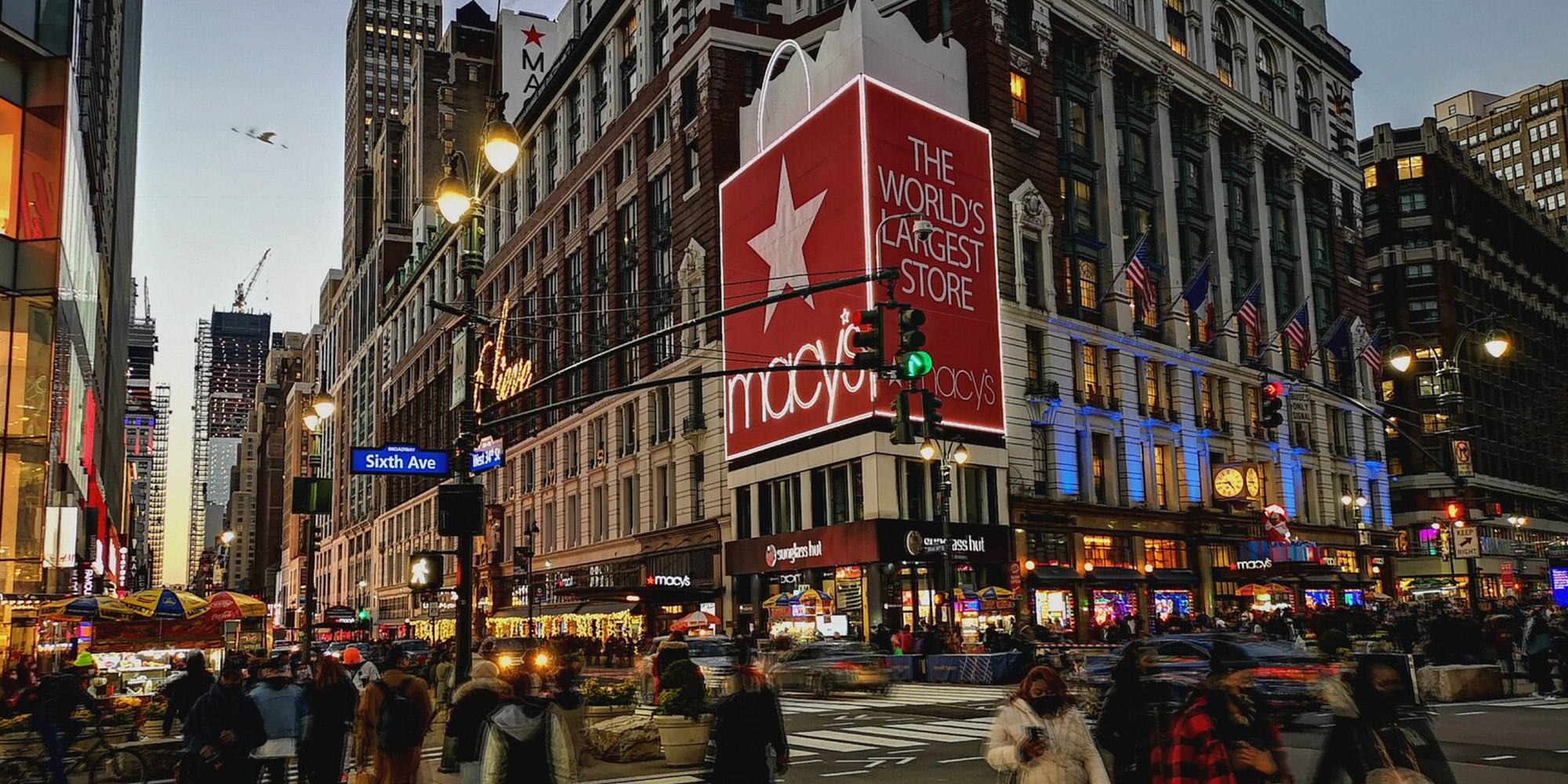
Today, department store headlines are dominated by executive board shakeups, turnaround plans, store closures and rumors of consolidation. In 2020, Macy’s unveiled a 3-year turnaround plan referred to as “Polaris” that calls for the 165-year-old department store chain to close 125 locations—about one-fifth of its store fleet—and reduce headcount by 2,000 employees in an effort to “stabilize profitability and position the company for growth,” according to the company.
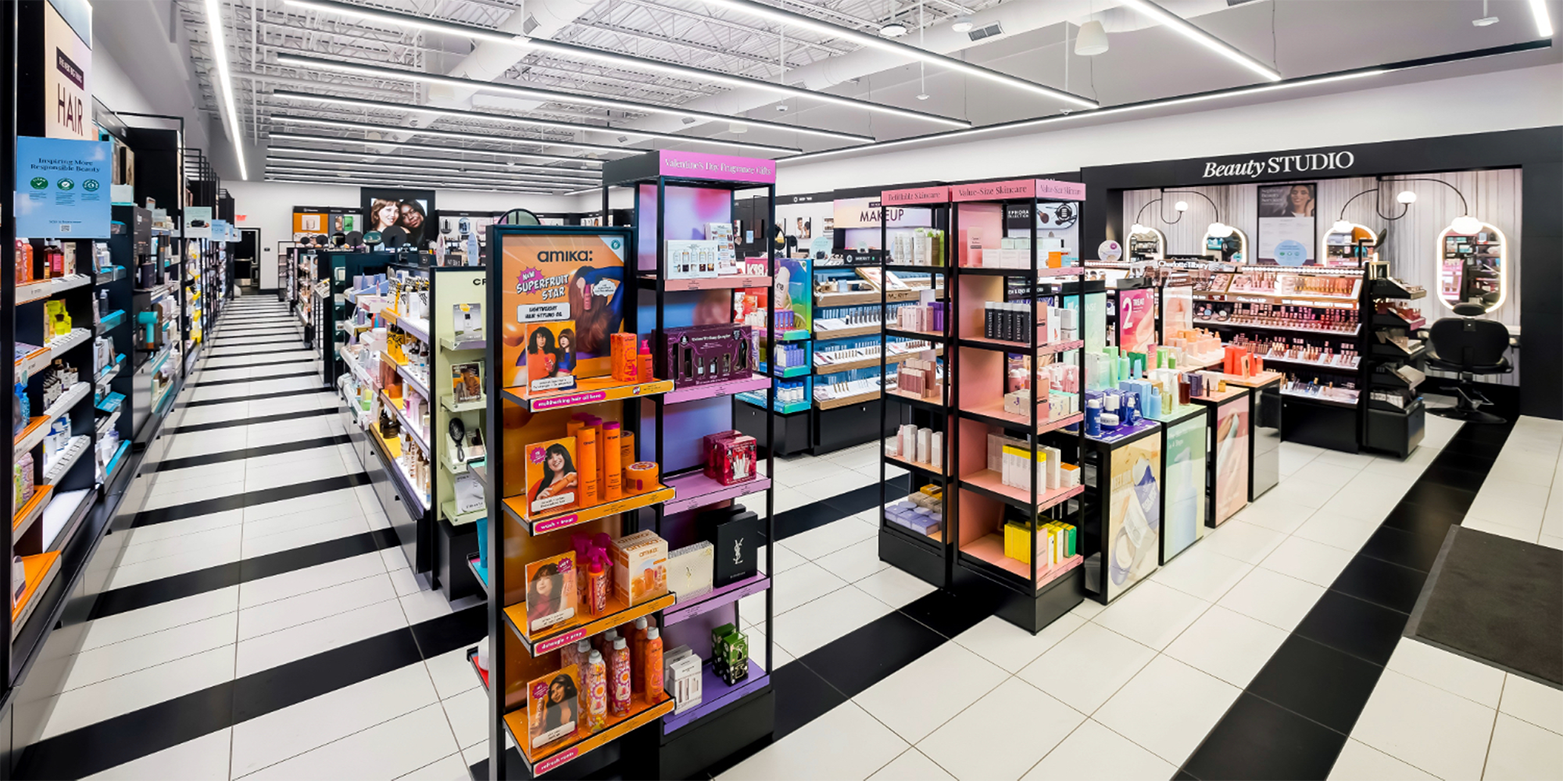
J.C. Penney shuttered about a quarter of its 850-location store fleet after emerging from bankruptcy three years ago. The retailer had racked up $5 billion in debt by 2020. Kohl’s is trying to reverse years of declining sales through new leadership and an expanded shop-in-shop partnership with Sephora. The initiative follows an over year-long battle with activist investors urging management to sell the company.
Luxury chains are also grappling with subpar performance. After experiencing something of a windfall after its stores initially reopened in 2021, Nordstrom’s sales declined 10% during the first half of 2023 as it sunsets its Canadian business and contends with consumers pulling back on discretionary spending.
Faced with softening demand, Neiman Marcus is reportedly in discussions with Canadian retail company Hudson’s Bay Company for a possible merger with Saks Fifth Avenue. Neiman Marcus was acquired out of bankruptcy in 2020 by investment firms Davidson Kempner Capital Management, Sixth Street Partners and Pacific Investment Management. It was previously sold in 2005 and 2013. In 2022, it received a $200 million investment from British e-commerce marketplace Farfetch.
More closures are forecast to shake up the department store sector in the future. According to data from commercial real estate firm Green Street cited by The Washington Post in a 2021 story on department stores’ decline, roughly 200 department stores were shuttered that year, and another 800, about half the remaining mall locations in the United States in 2021, are slated to be gone by the end of 2025. Approximately 40% of American department stores have closed since 2016.
With origins dating back to the 19th century, American department stores have generations of operational experience and success under their belts. For that reason, Stein argues management has been boxed in by the belief that what worked before will work again. He says, “Overlap that with far more progressive attitudes among discounters.”
Department stores attempting to redirect their businesses are often hobbled by debt and lack of investment. Stein says, “Most of the corporate structure within department stores—and to this degree certainly with Macy’s—lives in an almost untenable environment where they have to keep their stock up, which means pushing quarterly, but they can’t afford to make the kind of planning and the kind of changes that would really put them in a place of differentiated offering.”
Lack of capital played a crucial role in Lord & Taylor’s bankruptcy and subsequent closure 2021. Acquired in 2019 by the fashion rental startup Le Tote for $100 million from Hudson’s Bay Company, the company, once the oldest department store chain in America, was slated to become a technology-driven retailer fitted with rental boutiques. Ultimately, Le Tote’s new vision for Lord & Taylor didn’t match the department store retailer’s historic proposition and resources ran out.
Taylor Barry, founding partner of the beauty brand agency Brand Uncover and former senior managing of training and events at Lord & Taylor, says, “The systems weren’t in place to support the trajectory that we had been working on for years as a group. What we really needed was capital, and that’s what a lot of department stores are missing.”
Specific to beauty, Barry highlights staffing and structure as two key components that have long stymied department stores. Shopping brands by counter, in particular, hasn’t aged well. “The customer is not loyal to just one brand anymore. So, to have staff that is separated by a barrier that keeps them brand-assigned, it’s very challenging,” says Barry. “That to me is the biggest headwind, and it has been the biggest headwind for the past five years and then some.”
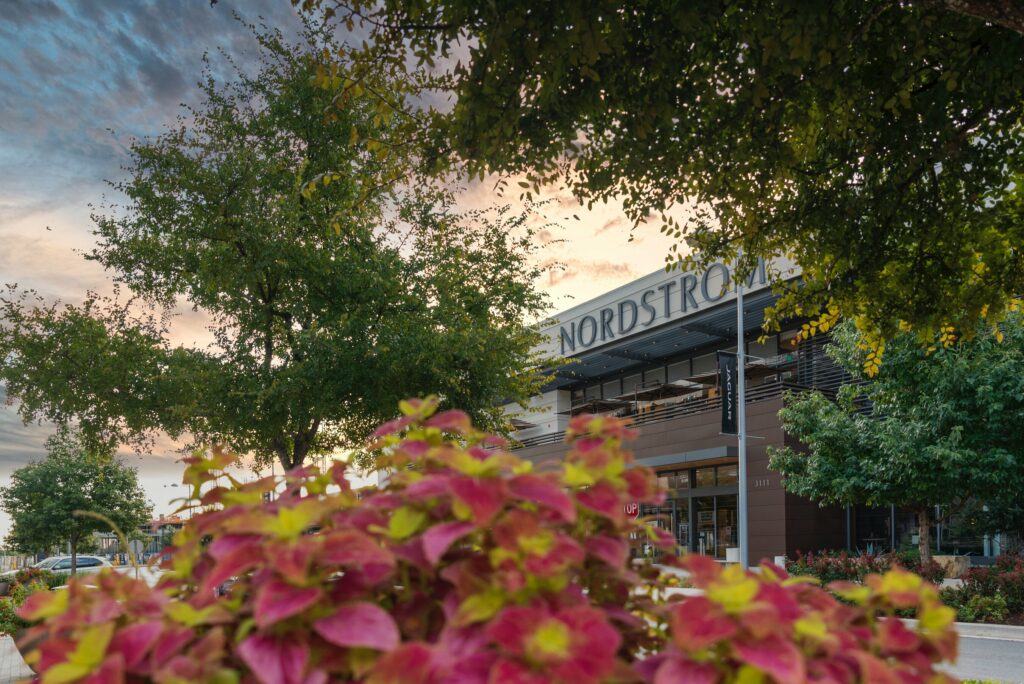
Barry points to Nordstrom as having the most comprehensive mix of brand-assigned and brand-agnostic staff guiding customers across the assortment. She says, “They have gondolas, and they have beauty stylists that help guide you A to Z, but other retailers don’t have those systems in place in such a seamless way.”
Murphy Bishop II, co-founder and CEO of skincare brand The Better Skin Co, agrees that department store “counter” culture doesn’t successfully align with the habits of modern consumers. “Department stores tried to course-correct with smaller areas dedicated to ‘on trend’ brands,” he says. “However, the execution was flawed and the commitment to those areas was limited as the legacy brands still rule space and location.”
Going into 2020, The Better Skin Co was carried online and in all Bloomingdale’s stores. Although Bishop characterizes the partnership as successful for the brand, yielding both exposure and sales, The Better Skin Co was pulled from the assortment after the department store chain overhauled its emerging brand strategy post-pandemic.
“Department stores are no longer brand builders, same for Ulta,” says Bishop. “They bring you in to capitalize on your popularity, and then move you out when the next wave comes. They treat it like a hot-item business similar to what Urban Outfitters does. However, Urban Outfitters is upfront about their strategy.”
While department stores tread water, specialty retailers, mass-market giants and online players continue to chip away at their market share. In the period ending August 2023, American department stores accounted for 21% of prestige beauty sales, per market research firm Circana. The sector lost two share points versus the same period a year ago.
According to management consultancy McKinsey & Co., department stores held a 11% share of global beauty sales in 2019, a percentage forecast to slip to 7% by 2027. Meanwhile, e-commerce is forecast to climb from 8% to 26%. Specialty retail is forecast to dip from 23% to 20%.
In the publication Women’s Wear Daily’s tally of beauty brands’ retail expansions this year, three brands landed at department stores versus 10 at Sephora and 9 at both Ulta Beauty and Target. The tally is imprecise, but demonstrates, at the very least, that brands are more interested in publicizing their wins at Sephora, Ulta and Target than at department stores.
Speaking of department stores, Stein says, “Everything that is cool and that is new in beauty is not there. Target is the new department store, and today Ulta has a greater market cap than Macy’s, Kohl’s, Nordstrom and Dillard’s combined.”
American department stores reached a crucial inflection point at the turn of the last century, well before the pandemic forced several overboard. Prior to 2000, the department store sector racked up about $230 billion in annual revenues. Market research firm IBISWorld estimates department store revenues at $142.1 billion for 2022.
Department store market share has been cut in half in the last 20 years as e-commerce, mass-market and discount players rose. To compete, department stores slashed prices, headcount and private-label brands, and customer service suffered. Stein says, “It was a race to the bottom and nobody wins.”
The decline of malls contributed to department stores’ market share diminishment. Once important anchors for the American shopping institutions, department stores saw their sales drop as malls sputtered. The retail consultancy SiteWorks provided publication Insider an estimate that there are 700 malls today, down from 2,500 in the 1980s. SiteWorks projects there will be 150 malls in a decade.
Malls that survive the cull will have to transform. Many are morphing into experiential destinations with entertainment and dining. Stein says, “If the customer can buy and get whatever they want, whenever they want it, however they want it, unless the mall is becoming something entirely different— and many of them are—they’re not relevant and neither are the anchors or department stores.”
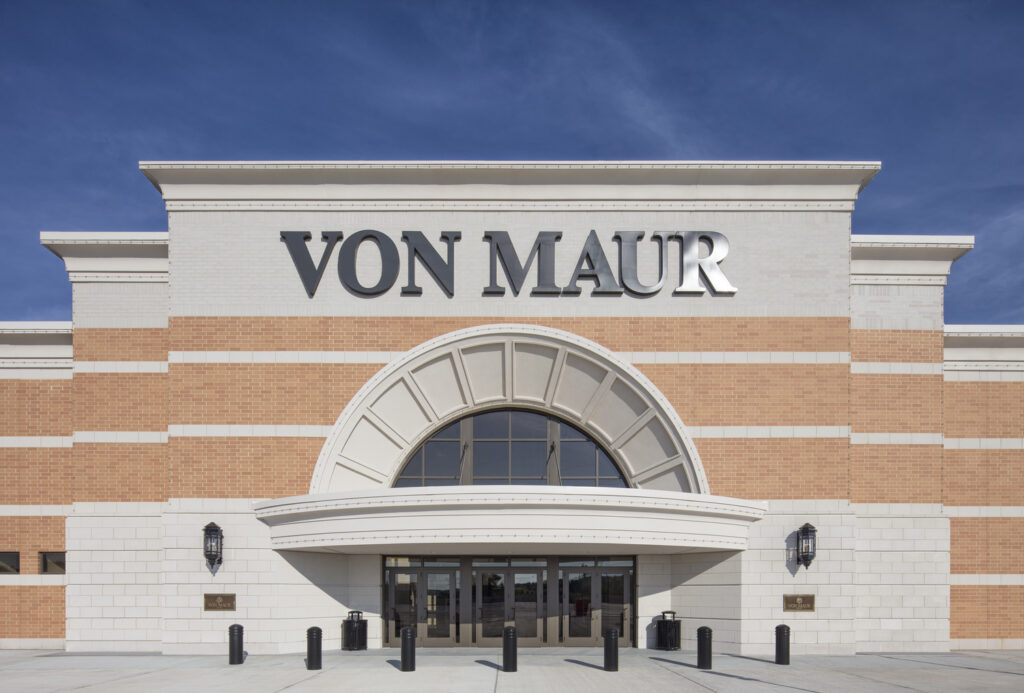
Amid the doom and gloom, there are pockets of department store success. Barry singles out Saks Fifth Avenue as a department store retailer with a beauty offering that feels fresh, and she lauds family-run department store chain Von Maur for focusing on staff training and provide elevated experiences through personalization, brand partnerships and assortment strategies.
“Von Maur’s really mindful of where they’re positioned,” says Barry. “That’s why they’re probably the only department store that’s truly opening doors right now as opposed to paring down their current footprint, and I think they do it exceptionally well.”
One of the last few privately held department stores in America, Von Maur operates 37 locations across the South and Midwest that are, on average, about half the size of a typical Macy’s location. Two locations are typically opened yearly. Last year, the 150-year-old company notched $1 billion in revenues.
Discussing Von Maur’s resilience, Jen Eilers, DMM of cosmetics at the retailer, told Beauty Independent earlier this year, “Being private, we don’t have to make other people happy. The Von Maur family gets to make decisions that are smart and that’s how we’ve continued our slow and steady growth.”
Saunders pegs Dillard’s’ consistent shopkeeping standards and investment in staff training as crucial to its winning formula. The chain operating over 250 U.S. stores has increased its market share with young consumers through the introduction of contemporary brands.
In a LinkedIn post, Saunders writes, “The performance of Dillard’s is a reminder that rewards come to those that make the effort…and that there is no such thing as a doomed retail format, only doomed management decisions.”
Despite underperformance, Stein highlights Nordstrom as a standout department store concept. “They’re still empowering their salespeople. They’re still engaged in selling what’s in the store. They have the mentality, and they’re teaching culture at a very high level. They’re also paying and training people more,” he says. “Somebody that works at Nordstrom doesn’t necessarily feel that this is a stopping off place for something next.”

Barry advises luxury department stores to amplify bespoke services. Saks Fifth Avenue’s new invite-only VIP loyalty program, Saks Limitless, is an example of a bespoke service. It provides exclusive invites to industry events, try-before-you-buy services and pre-order access to designer merchandise.
“It’s a formalized way of acknowledging personalized service,” says Barry. “Now it has a title and now it has press, and now people are talking about it, and it’s garnering some support and some traction, whereas in the past, these types of VIP specialty services have been very hush-hush.”
With massive stores that range between 80,000 and 250,000 square feet, Bishop recommends department stores evolve their formats from counters and clothing racks to slimmed-down multi-use spaces with dining and fitness studios. “Become a lifestyle center with more curated assortments. Racks and racks of mediocrity do not make for a good assortment or shopping experience. Fleets will have to be right-sized as it would be very expensive to course-correct,” he says. “I’m not certain that we have a surviving chain that is willing to do this, though. It will likely take an innovator to bring a new concept to life.”
Some department stores are thinking small. As part of its Polaris strategy, Macy’s is making a big bet on off-mall locations by expanding smaller format Market By Macy’s and Bloomie’s stores, which have 11 and two stores now, respectively. Macy’s plans to open 30 more small-format locations by the fall of 2025. At 25,000 to 50,000 square feet, the stores are outperforming their larger counterparts on conversion and customer acquisition rates.
Stein is bearish on whether Macy’s small-format strategy will throw the company a solid lifeline, and he’s bearish on the department store sector generally. “Consolidation is happening in just about every segment of business right now, and that’s because everything has gotten harder, more expensive and less profitable,” he says. “You can’t point to a decent reason for something like a department store to exist in the United States. It’s not necessary, it isn’t relevant.”
The players
5 mentionedAugust

Too Faced
Better Being
The Better Skin Co.
Counter