ChatGPT Comes For Amazon: Inside The AI Shopping Revolution Reshaping Beauty
ChatGPT operator OpenAI has introduced Instant Checkout, allowing customers to purchase products directly within AI chat. With 80% of consumers currently using AI for at least 40% of their searches and organic website traffic down 15% to 25%, according to research by Bain & Co., the shift from Google to generative AI platforms is no longer theoretical. It’s reshaping how beauty brands are discovered, recommended and sold online.
To remain visible in this new landscape, beauty brands are mastering generative engine optimization (GEO) alongside traditional search engine optimization (SEO) tactics as Google’s search dominance faces its first real threat in over 20 years. The gateway to commerce’s reinvention is AI-hosted online search, where customers increasingly rely on large language models (LLMs) like ChatGPT, Claude, Perplexity and Search Generative Experience by Google for product discovery and recommendations.
The effects on online traffic are already ramping up. Bain finds that 60% of AI searches result in zero click-throughs to websites, suggesting that users are satisfied by AI’s answers to their queries. OpenAI reports that 700 million people use ChatGPT every week.
According to data from search and social media insights firm Spate quoted by the publication Women’s Wear Daily, ChatGPT accounts for about 7% of total search share and around 4.3% of beauty-related searches. Makeup, skincare and haircare are the most searched categories in descending order. Showing the contrast between Google and ChatGPT, the latter clocked about 344,000 searches for the term “foundation” to Google’s 1.6 million in August.
ChatGPT is closing the loop on shopping. Last month, OpenAI began facilitating purchases within ChatGPT of items from Etsy sellers in the United States via Instant Checkout. This Tuesday, Walmart announced a partnership with OpenAI to enable shoppers to purchase single products from the retailer through Instant Checkout. Over 1 million Shopify merchants will soon be integrated into Instant Checkout, including Glossier, Skims, Spanx and Vuori. Multi-item purchases are on deck, too. OpenAI is sharing the technology powering Instant Checkout—Agentic Commerce Protocol—to increase the number of brands integrated into it.
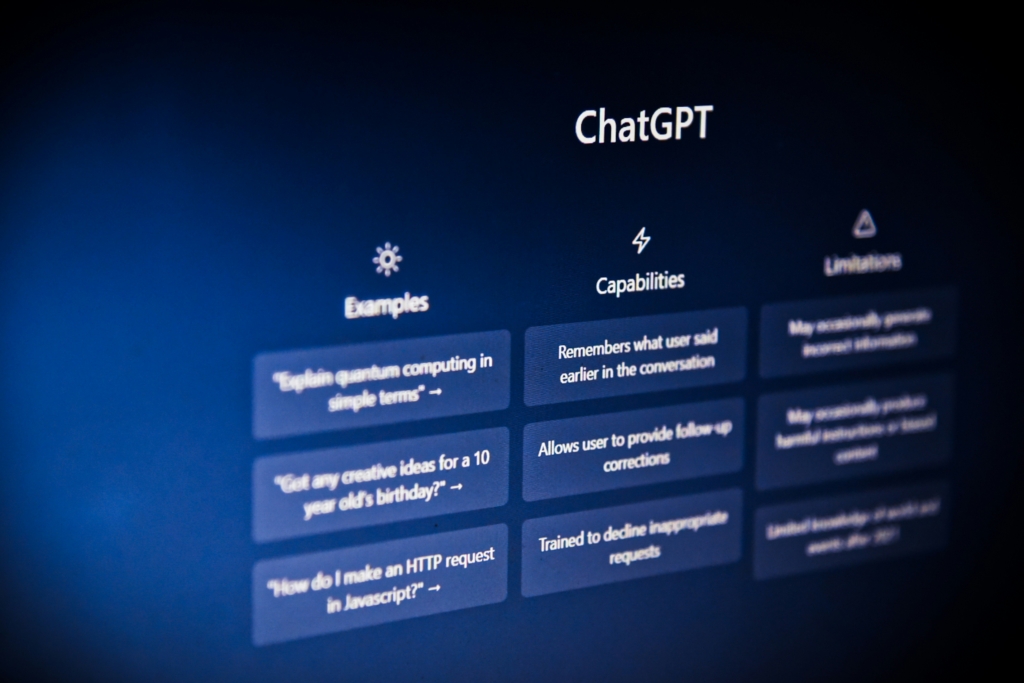
OpenAI has announced that brands will pay a “small fee” on completed purchases made through Instant Checkout. Prices won’t change for customers. OpenAI claims that brands available via Instant Checkout won’t be given preferred ranking in AI searches based on Instant Checkout participation alone. Its algorithm values availability, price, quality and whether a brand is the primary seller when ranking multiple brands that sell the same product.
Some industry experts argue that Amazon, the world’s largest beauty retailer, could get squeezed by the growing prevalence of ChatGPT and other AI platforms. “Everyone loves shopping on Amazon because information is centralized and checkout is streamlined, but that now feels almost irrelevant with this new way of shopping,” says Justin Boettcher, CEO and e-commerce strategist at Synsthsa Consulting and former senior manager of business development for Amazon Premium Beauty. “Even Google seems archaic by comparison. You start over with every search, whereas ChatGPT holds the conversation and evolves with you.”
Boettcher argues that, if Instant Checkout succeeds, it will “remove the silos that have existed on the internet since its inception and open customers up to purchasing from brands or websites they might never have shopped otherwise.”
Kimberly Carney, founder and CEO of The Wires, the technology company behind beauty discovery app GlossWire, agrees that Instant Checkout is a major game changer for beauty customers. She foresees problems ahead for small beauty brands looking to reach customers in a generative AI-forward shopping landscape. Carney says, “Unless users are specifically on the hunt for smaller beauty brands, LLMs tend to surface more established names or those currently trending in the media and on social platforms.”
Customer acquisition costs could bifurcate as ChatGPT becomes familiar with shoppers’ preferences and collapses the traditional marketing funnel. Benjamin Lord, founder of Antidote, a marketing agency that specializes in GEO services, says that beauty brands that rank on platforms such as ChatGPT will likely pay under $20 for each new customer they acquire and see conversion rates land between 60% to 70%.
“AI is pre-qualifying intent better than any funnel we’ve built,” he says. “Brands that don’t will see their paid media costs spike 40% to 50% as they fight over the shrinking pool of traditional search traffic.”
However, beauty brands won’t be able to pay their way into ChatGPT’s generated responses like they do with sponsored placements on Meta, Google or Amazon. “The model either knows your brand or it doesn’t,” says Lord. “We’re moving from pay-to-play discovery to earn-your-way-in discovery.”
To help beauty brands be surfaced by LLMs, Antidote is shifting focus from the traditional SEO playbook of keywords, backlinks and meta tags to a playbook prioritizing authority, accuracy and distinctive content. The agency leverages three strategies to do this that extend across content, reviews and products. It’s redirecting between 20% to 30% of search engine marketing costs to high-quality long-form content on YouTube, community engagement on forums like Reddit and editorial press coverage. It’s also running post-purchase review campaigns and influencer seeding programs to generate as many fresh reviews as possible since AI platforms prefer newer reviews over older ones.
Lastly, Antidote is helping beauty brands identify which products from their assortments answer the most common search queries for their brand on LLMs. “Then, we’re building all content, reviews and positioning around that single item,” explains Lord, noting that most beauty brands have little to no understanding of whether they’re searchable by LLMs. “I’m telling clients to run prompt testing now with 50 to 100 product queries across ChatGPT, Perplexity and Google AI Overviews. If you’re not appearing in the top three recommendations for your core use cases, you have 12 to 18 months to fix it before this becomes your primary discovery channel.”
E-commerce and marketing agency Front Row is leveraging data on what shoppers ask AI search engines to create campaigns for beauty brands for paid media, email marketing and organic social. To offset LLMs crawling inaccurate content or information, Katelyn Winker, VP of digital growth at Front Row, advises beauty brands to keep their digital footprints as clean and updated as possible across direct-to-consumer, social media and retail channels.
“The next wave of beauty marketing will prioritize trust, transparency and training AI to sell your brand for you,” she says. “Positioning content, claims and experiences not just for people, but for algorithms interpreting what beauty means to each shopper.”
With beauty customers moving to LLMs to search and complete purchases, Lord warns that the window to train these platforms on your brand is shrinking. “Brands waiting for clear ROI signals from AI checkout will wake up in 18 months wondering why their CACs tripled and their consideration collapsed,” he says. “The window to earn your way into LLM training data is closing fast.”
The players
5 mentionedAS Beauty

Too Faced
Glossier
August
The Wires