Celebrity Beauty Brands Are Bigger Than Ever—But Their Growth Is Slowing
In a bumper year for star-powered debuts, fourteen celebrity beauty brands launched in 2024, including Beyonce’s haircare brand Cécred, Dwayne “The Rock” Johnson’s men’s grooming and skincare brand Papatui, and Blake Lively’s haircare brand Blake Brown. A year earlier, celebrities launched six brands in a market flooded with famous founders at the helm of blockbuster (see: Rihanna’s Fenty Beauty and Selena Gomez’s Rare Beauty) and not-so-blockbuster (see: Jada Pinkett Smith’s Hey Humans and Brad Pitt’s Beau Domaine) brands.
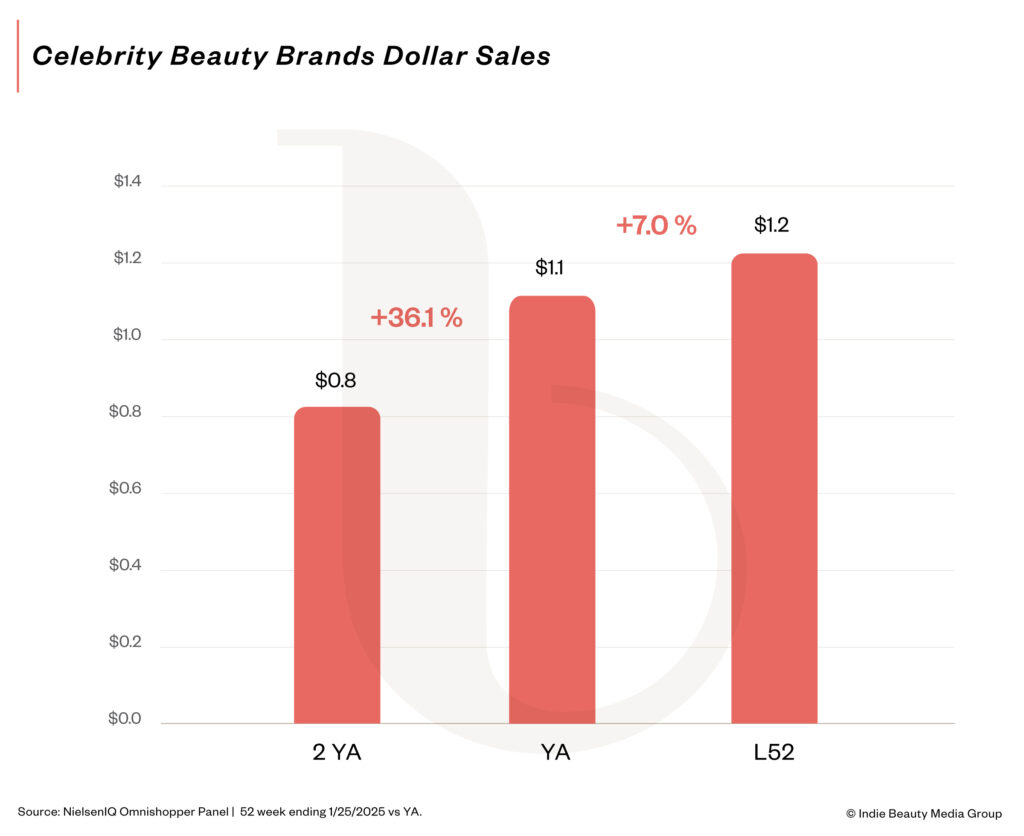
Amidst competition and consumer caution, however, the business of celebrity beauty brands is decelerating. Sales in the category advanced 7% in 2024, down from a 36% jump the prior year. NIQ tracks sales data for 40 to 50 celebrity beauty brands. Anna Mayo, VP of beauty at NIQ, says the pullback is tied to a slowdown in the category’s top-performing brands that account for an outsized portion of its collective sales.
She explains the fortunes of celebrity beauty brands are “resting on less than 10 brands that are making this grow. So, if one of those has a hard year, which a few of them have, it impacts the whole category…We just don’t see a lot of longevity with these brands. You’ll see a brand…grow to $20 or $30 million, and the next year it might start declining.”
Fenty Beauty and Rare Beauty have far exceeded the $20 million to $30 million mark as they leverage their founders’ star power with viral product launches and large-scale retail partnerships. Birthed by LVMH Louis Vuitton-Moët-Hennessy-owned incubator Kendo in 2017, Fenty Beauty is in Sephora and Ulta Beauty. Carried by Sephora and launched in 2020, Rare Beauty was valued at $1.1 billion in 2024 and its sales crossed $400 million in the 12 months ending in February, according to an estimate in publication The Business of Fashion, although its momentum appears to have cooled lately. So far, 8-year-old Fenty Beauty is the only other celebrity beauty brand to surpass Rare’s achievement.
Fenty Beauty, Rare Beauty and their ilk are confronting cooling demand bedeviling beauty industry on the whole. Circana estimates prestige makeup was up 5% in 2024 versus 15% in 2023, and prestige skincare was up 2% in 2024 versus 14% in 2023. At $67 annually, gen Z consumers outspend consumers from older generations on celebrity beauty brands. Millennial consumers spend $55 annually, and gen X consumers spend $51 annually. Interestingly, though, gen Z spending on celebrity beauty brands declined year-over-year, while gen X spending on them climbed 5%.
Mayo reasons gen Z’s pullback on star-powered beauty brands isn’t due to celebrity fatigue, but instead is due to diverting spending on makeup, the category with the highest concentration of celebrity beauty brands, to other categories, notably facial skincare and fragrance, with lower celebrity brand penetration. She says, “Gen Z consumers tend to be very exploratory…so with a slowdown in new celebrity brand launches in the back half of 2024 and 2025, they may have moved on to other things.”
Star power translates to big bucks for brands harnessing it skillfully. Hailey Bieber’s skincare-cum-makeup brand Rhode generated $90 million the last two months of 2024, per data from YipitData provided to the publication Puck, although NIQ registers a lower figure for the brand’s sales in the same period. Cécred and Papatui were strong performers in their first year on the market, according to Mayo, while Being Frenshe, the wellness brand affiliated with Ashley Tisdale that launched in 2022, is gaining traction.
Oshiya Savur, chief brand officer at Maesa, the beauty incubator behind Being Frenshe, Taraji P. Henson’s haircare brand TPH By Taraji and Drew Barrymore’s makeup brand Flower Beauty, attributes the draw of celebrity brands to three factors: a credible celebrity mouthpiece fitting the brand’s ethos, a proposition fulfilling an unmet need and an effective commercial strategy bringing the brand to life. She says, “You throw in the right packaging, the right product, the right price points with a marketing strategy that generates demand with social media and suddenly you’ve got a brand that’s very resonant.”
In a sea of products, customers often gravitate toward celebrities as trusted sources for recommendations, notes Rudi Berry, content marketing manager at beauty incubator Beaubble, and their fame makes them highly attractive to content creators looking to piggyback on their fame to amplify their notice. The content creator armies they can command turns the volume up on their already large megaphone. According to the creator marketing company CreatorIQ, Fenty Beauty’s haircare vertical Fenty Hair quickly shot up to the 19th highest-ranking global haircare brand in earned media value (EMV), a metric used to quantify the value of social media content, when it launched last year.
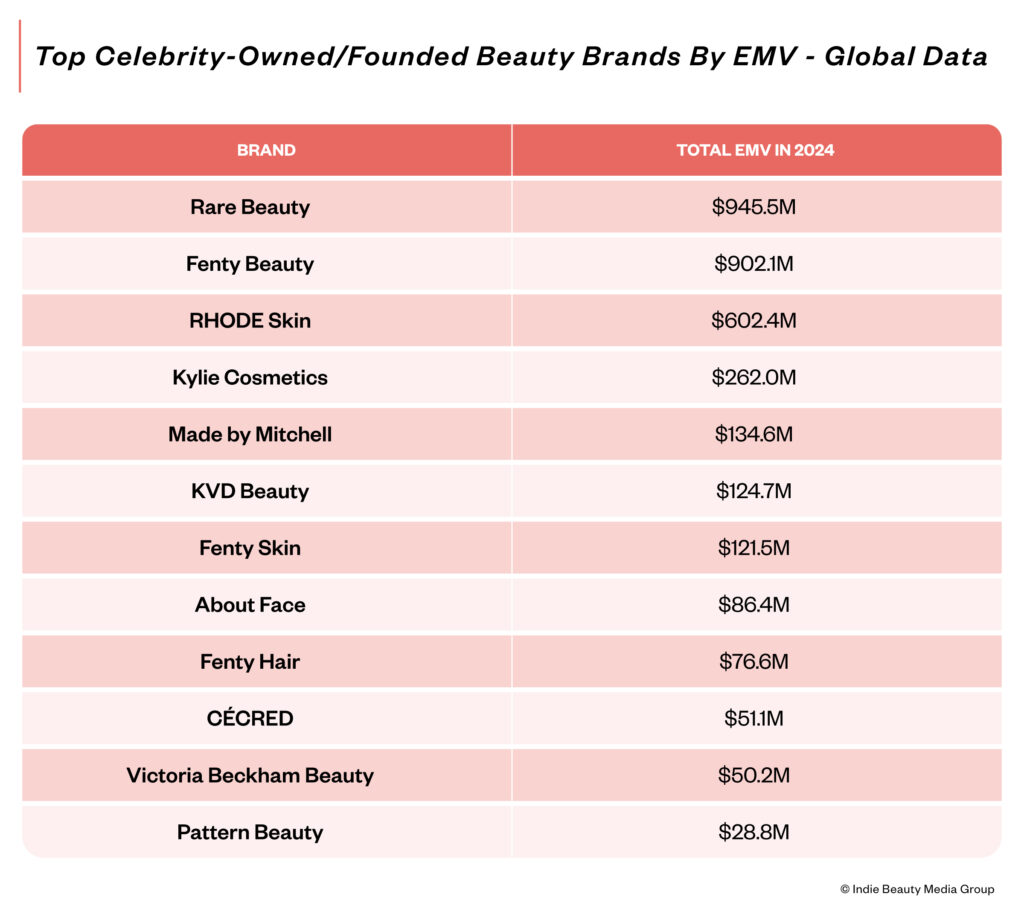
In seven months, Fenty Hair generated $76.6 million in EMV, 1.1 billion impressions and 89.8 million engagements on social media. CreatorIQ figures Fenty Beauty is on track to surpass Rare Beauty as the top-ranking celebrity beauty brand in terms of EMV this year. Nearly 3-year-old Rhode increased EMV 248% last year as it grew its creator network 136%. CreatorIQ estimates that gen Z consumers posted about the brand an eye-watering 54,100 times in 2024 largely organically.
Retailers locked in battles for consumers stingy with their dollars are hungry for high-wattage celebrity beauty brands that can drive foot traffic and eyeballs. Ulta Beauty revealed last month that Cécred will have the largest haircare launch in its history on April 6, with custom fixtures and merchandising, including life-size, shoppable displays and salon takeovers. Puck has reported that Sephora bagged Rhode for its assortment this year. Target sells Sommer Ray’s Imaraïs Beauty, Blake Brown, Being Frenshe and Papatui. Walmart has LeBron James’ The Shop and Jake Paul’s W.
But celebrity doesn’t guarantee success at stores. JLo Beauty’s ill-fated relationship with Sephora, and Hey Humans, which was divested by Maesa last year and has disappeared from chains such as Walgreens and Target, are examples of celebrity beauty brands struggling with retail. At Sephora, Margarita Arriagada, founder and CEO of Valde Beauty and former chief merchant at Sephora, points out customers quickly determine if a celebrity brand isn’t worth the hype. She says, “They really, really can see through things.”
Celebrity beauty brands must navigate the choppy waters of their famous founders’ personal and professional existences, which can have devastating impacts on their business. Puck reported Blake Brown’s sales plunged over 87% at Target when public sentiment about Lively shifted after Justin Baldoni, her co-star and director on the movie “It Ends With Us,” allegedly launched an online smear campaign against her last summer. Sales haven’t recovered much since Lively filed a lawsuit against Baldoni and his production company Wayfarer for sexual harassment in December.
“The economic impact to a brand can be grave and tough to recover,” underscores Julie Garza, founder and owner of beauty consultancy Belleza Brands.
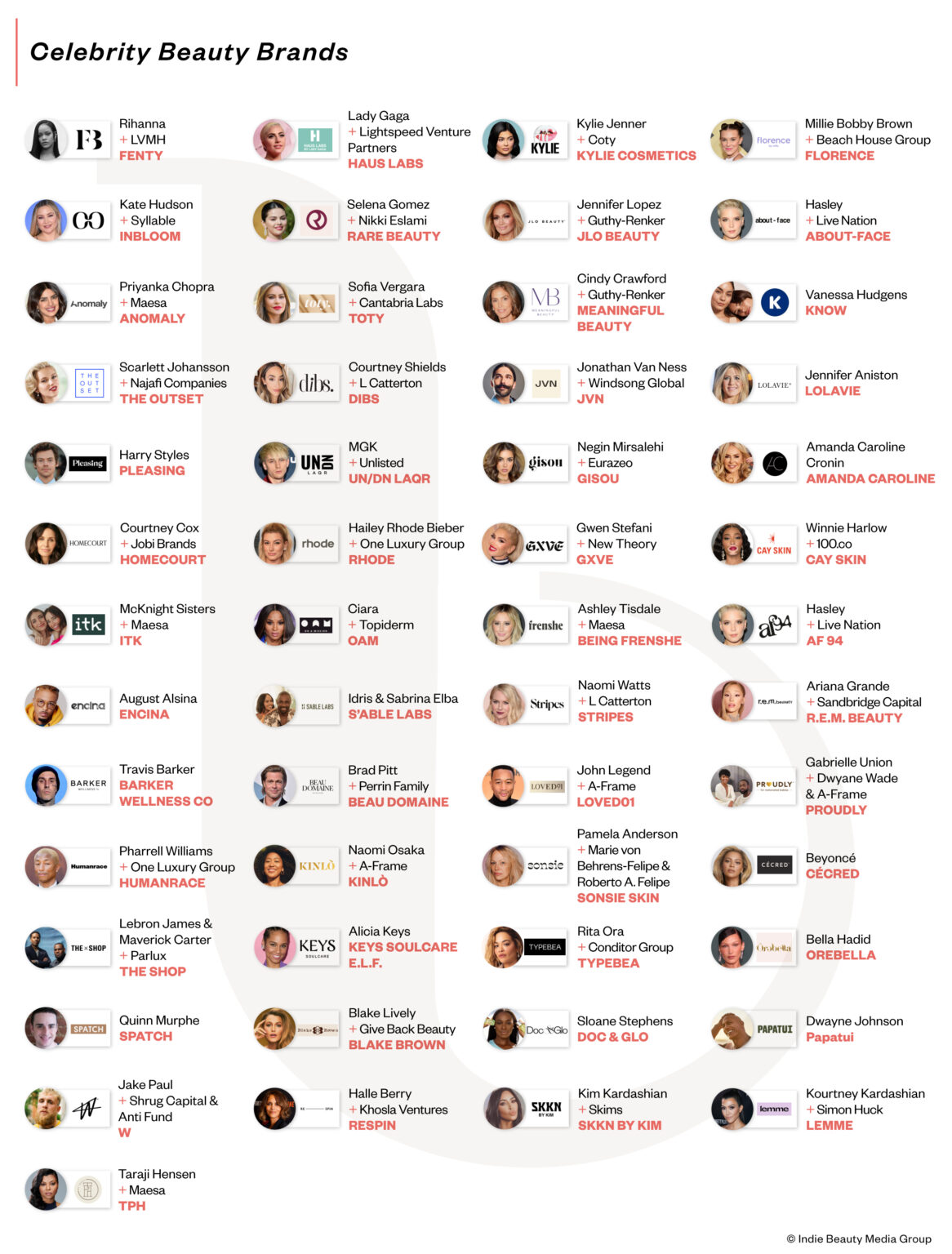
Moths to the flickering spotlight in the beauty industry, celebrities have rushed into the hot fragrance category lately (think Ariana Grande, Billie Eilish, Kylie Jenner, Beyoncé, Sabrina Carpenter and Bella Hadid), and the rush is only expected to build. A slew of big names, including Carpenter, Dua Lipa, Taylor Swift, Olivia Rodrigo, Zendaya and Florence Pugh, could also deepen their involvement in beauty. Zendaya has been the face of Covergirl and Lancôme; Rodrigo has been signed by Lancôme and Glossier; Lipa has been a YSL Beauty ambassador; and Swift was once attached to Covergirl.
Berry singles out Emma Chamberlain, the influencer who previously stumbled in skincare with a brand called Bad Habit in partnership with Forma Brands, singer Charli XCX and actress Sydney Sweeney as additional celebrities with brighter beauty futures. Charli XCX has had partnerships with Valentino Beauty, K18 and Laneige. Sweeney is a Laneige spokeswoman, too.
Mayo theorizes that consumer attention is shifting from celebrity beauty brand founders to makeup artist and hairstylist brand founders. Sensing the shift, Sephora, home to makeup artist-founded brands Patrick Ta Cosmetics and Makeup by Mario, recently picked up makeup artist- and hairstylist-led brands Isamaya Beauty, Violette_FR and Roz.
“It’s hard to say that celebrity beauty is a key part of the industry that’s really driving it forward and driving a lot of excitement,” says Mayo. “Sephora is investing a lot more in makeup artist brands these days…and the quality is better.”
The players
5 mentionedUnder Your Skin

Patrick Ta
Too Faced
Better Being
TPH by Taraji