How The Business Of Matching Brands And Retailers Is Adjusting To Post-Pandemic Realities
Wholesale marketplaces like Faire and Bulletin that saw their businesses supercharged after the pandemic hit and interactions between brands and retailers moved online are diversifying their revenues streams for a post-pandemic environment in which digital interactions the pandemic made a necessity are being unwound and stores are pulling back on bringing in new brands. They’re experimenting with advertising, striking strategic partnerships, changing fee structures and aligning with live event operators.
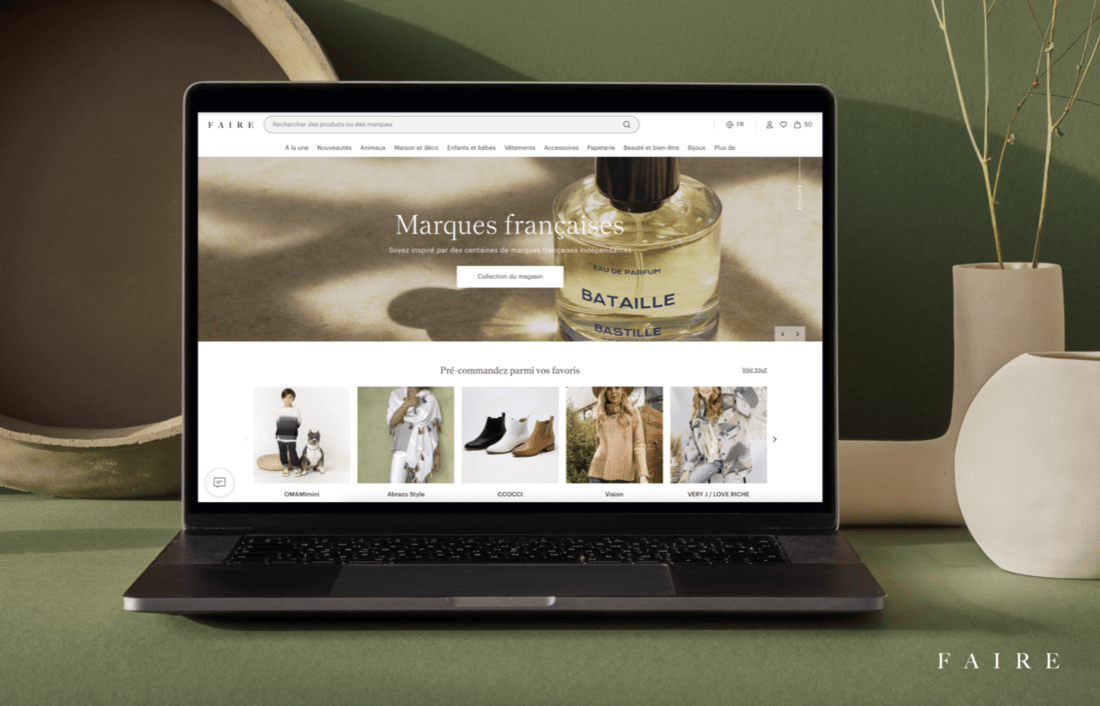
In November last year, Faire, the country’s biggest wholesale marketplace, introduced a beta ad program to a select group of brands, advising them to budget roughly $2,000 a month for it. The ad program is a marked change for a company that’s been dependent on commissions from retail orders. On its website, Faire promotes that it reaches over 700,000 retailers and 100,000 brands across the home decor, food and drink, apparel, beauty and wellness, jewelry, baby, stationary and pets categories in the United States, Canada, Britain, Australia and various European countries.
Started in 2017, Faire is at a crucial inflection in its evolution, according to Moni Kupczak Ainslie, founder of Koopslie Consulting, an agency that advises brands on building wholesale orders through the marketplace. “Faire is going to become more sophisticated. Right now, it’s in its baby phase, but I think it’s at a point where it needs to start making more money,” she says. “They’re running ads. They’re starting to look for bigger brands. They used to give away $100 free credit to everyone to get them on the platform. They brought so many people on that they need to start making money now.”
Faire is further scaling its vast network of retailers and brands and trying to amplify its visibility in the market. In September, it partnered with Shopify to make it easier for retailers on the e-commerce platform to discover Faire and for brands to streamline their wholesale businesses. Shopify secured a stake in Faire as part of the partnership following an earlier effort to gain a foothold in wholesale commerce that faltered. Shopify acquired wholesale startup Handshake for $100 million in 2019, but abandoned the service by 2021.
Faire’s new initiatives come at a moment when rival wholesale marketplaces are shutting down or selling. Quickbooks-owned marketplace Trada closed last year as did Tundra, which filed a lawsuit against Faire in May accusing the company of illegal competitive practices. Abound, a marketplace that pivoted last year to a drop-shipping platform after raising in excess of $59 million in funding, has been snapped up by the Shopify-owned Carro, an app enabling cross-selling of direct-to-consumer brands. In 2022, wholesale marketplace Bulletin was scooped up by business event company Emerald Holding, producer of the trade show NY NOW, for $9.9 million.

Neil Saunders, managing director of data analytics firm Global Data, theorizes that softening demand for wholesale marketplaces is causing smaller platforms to shutter and larger platforms such as Faire to enlarge their market share. “This has coincided with a bit of a consumer crunch, which has put pressure on spending and made it more challenging for some wholesale marketplaces,” he says. “Firms that buy from wholesale marketplaces have cut back. Some wholesale marketplaces have also been spending more on marketing to drive trade, which has been costly.” He adds, “Faire has benefitted from a significant amount of investment, and it also has the advantage of depth and scale in terms of its offering.”
Launched by four former colleagues at Square, Faire has racked up over $1.4 billion in venture capital funding to date from firms such as Sequoia Capital, Founders Fund, Y Combinator, Lightspeed Venture Partners and Khosla Ventures. By 2021, the company had achieved more than $1 billion in annual volume. Faire was valued at $12.6 billion during its most recent raise, a $416 million Series G extension in May 2022. Reflecting shaky market conditions and growing pains, Faire underwent two rounds of job cuts from 2022 to 2023, totaling over 1,400 employees.
“This is a market-takes-all situation. This is really not a space that could have 10 different players do this successfully,” says Anastasia Bezrukova, founder and CEO of makeup brand Minori Beauty. “It’s the same as 90% of advertising dollars online being spent through Meta. Faire has put in the most investment, they fundraised a ton, and they’ve really built themselves out like a tech company. They’re constantly pushing their brands to grow, and they’re telling you how to optimize.”
As the wholesale marketplace segment morphs, there’s little doubt that players in it serve a purpose. Online wholesale marketplaces respond to retail buyers’ appetite to identify fresh niche brands and products, and brands desire to be noticed by them. “They are particularly appealing because many of the brands offer lower MOQs [minimum order quantities], enabling me to test and learn without making a significant upfront investment,” says Marti Moore, founder and CEO of beauty e-commerce shop Melanin Grace. “They also offer a quick and inexpensive option versus the expenses incurred when going to trade shows.”
Emma Zwissler, founder of clean beauty store The Sunday Standard, doesn’t solely rely on wholesale platforms like Faire or Bulletin for brand and product discovery. She supplements them with social media, client word of mouth, market analysis, industry news and connections with third-party wholesale distributors and individual companies.
“On one hand, they make placing POs so fast and easy. On the other hand, I think they’re leading to a homogenization of assortments at independent retailers across the country,” says Zwissler. “It’s so common now to see stores stocking all the same brands and products as their neighboring boutiques. Some of the authenticity and unique point of view has become lost, which leads to a less special shopping experience for customers.”
Faire’s competitive edge in a shifting online wholesale market stems from its menu of perks. Retailers are offered net 60 payment terms and free returns on initial orders, free shipping on select brands and early access to virtual trade shows and brand arrivals through the company’s monthly Insider membership. Brands point to Faire’s 0% commission on retail accounts that they bring to the platform and the recent Shopify integration as its main benefits.
Revamped in July last year, Faire’s commission on opening orders made on its platform dropped from 25% to 15% plus a $10 flat fee. Fifteen percent is charged on reorders. Payment processing fees are applied to transactions and can vary depending on how fast brands want to receive payouts. Next-day payment costs an additional 3.5%, while a 30-day payment is an additional 2.4% and a 60-day payment is an additional 1.9%.
By comparison, Bulletin’s site discloses that it charges 15% commission for opening orders and 10% on reorders. Similar to Faire, it forfeits its commission on any orders made by retailers that the brand referred to the platform. Its network is considerably smaller than Faire’s. Bulletin says it extends to 26,000 retailers and 3,000 indie brands.
Bezrukova says that Faire is worth the investment because it saves on costs associated with retail account management. “I’m not sending out as much free product to a bunch of stores across the country hoping that they look at my line sheet and place an order for me,” she says. “The majority of my new business comes from getting discovered on Faire. That saves me $50 on pitching to a new store that may or may not order for me. If you think about all these other business development things that brands spend a lot of money on, Faire is helping to minimize that.”
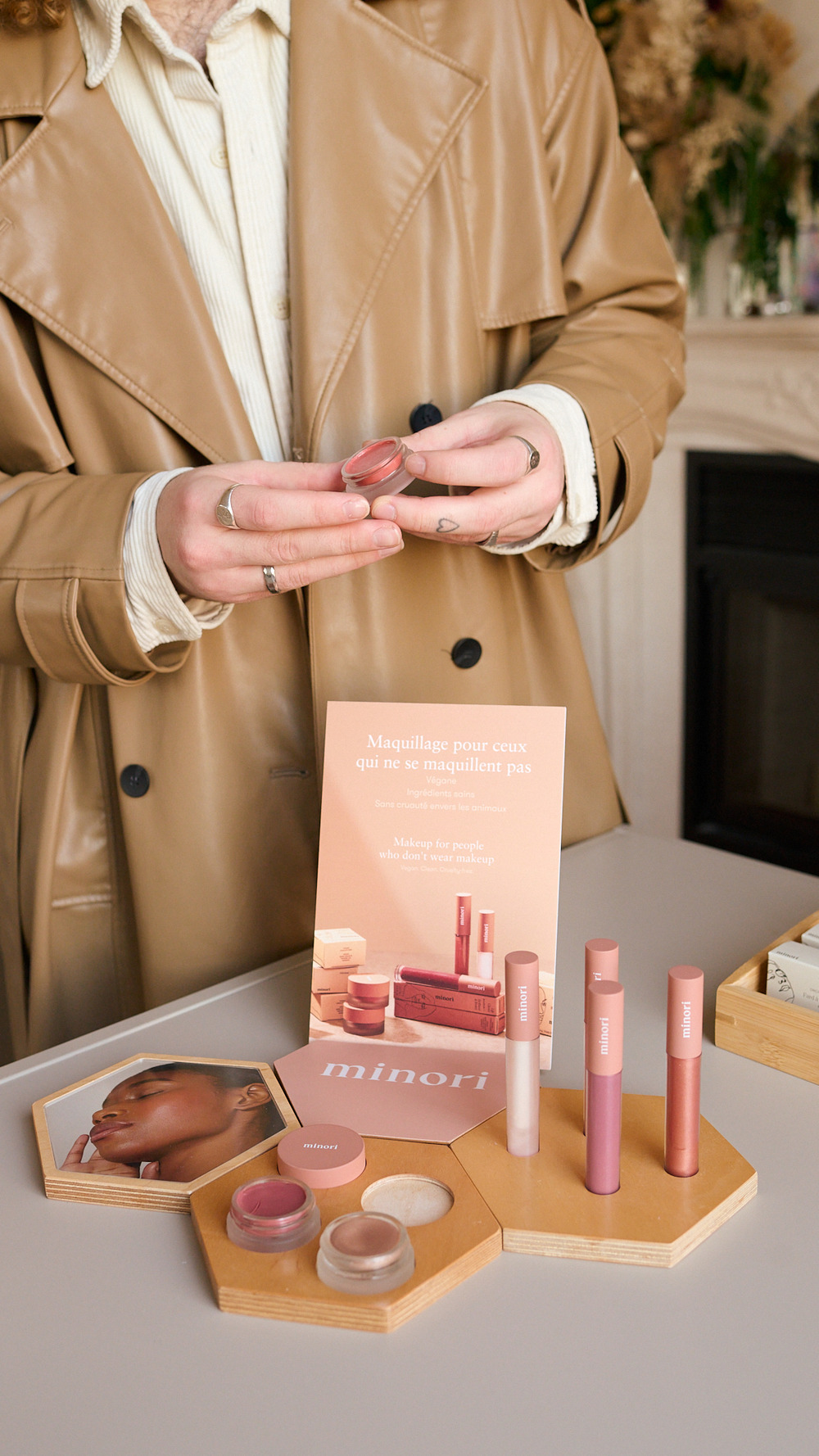
Launched on Faire two years ago, Minori has quickly increased its business on the marketplace by referring retail accounts to it. Bezrukova says, “It’s an algorithm-based system. So, the more you start adding new accounts to their system, the more the algorithm sees that you’re an active brand.”
Thirty percent of Minori’s wholesale business is done via Faire. Its conversion rate is triple that of the marketplace’s average, and it achieved 400% year-on-year growth on Faire in 2023. Spas, hotels, clothing stores, hair salons, gift shops and florists make up the brand’s 100-plus retail accounts ordering through Faire. Minori is also carried at The Detox Market, Saks Fifth Avenue, Thirteen Lune, Safe & Chic, Flip, The Sunday Standard and Veer & Wander.
Minori leverages Faire as a convenient payment management tool rather than a single destination for erecting wholesale relationships from scratch. “I don’t want to chase an invoice from some independent store that bought $400 worth of product and remind them five times that they have to pay me,” says Bezrukova. “With Faire, it all goes through them. I really want to have all my bookkeeping in one place.”
Minori premiered on Bulletin around the same time it launched on Faire. Bezrukova isn’t as enthusiastic about Bulletin as she is about Faire. She mentions Bulletin is more basic than Faire and syncing payments on it can be hard. Reinforcing the troubles smaller wholesale marketplaces are facing, Bezrukova says, “There’s no incentive for me to be on multiple platforms now.”
Emmotiv, a clean fragrance brand that joined Faire less than a year ago, turns to it to manage its expanding network of indie boutique and spa accounts. Founder Cristina Bagozzi explains that Faire doesn’t currently offer tools to support new business development for small, emerging indie brands. For example, brands cannot search retailers on the platform or initiate outreach to them.
“The only way I could theoretically connect with a new retail partner on Faire is for them to discover me,” says the previous VP and head of the owned brand business at former clean beauty retailer Follain. “This is unlikely because Faire’s email marketing prioritizes more established brands, and low awareness means a retailer is unlikely to know of my brand and search for it. The chances of Emmotiv fragrances appearing at the top of a non-branded search among hundreds of other products is low, too.”

Ainslie contends that most brands don’t understand what it takes to be successful on Faire versus their own e-commerce sites. She underscores that lack of understanding will be particularly damaging to them as more brands with bigger budgets join the marketplace.
“It will become more difficult to compete and make sales,” says Ainslie. “That’s why I believe it’s important to have a fully optimized Faire store versus what most brands do, which is copying their Shopify store over to Faire and leaving it like that. You have to show the retailer what’s in it for them. You have to speak their language and your messaging needs to be focused on them. That’s how brands can stand out.”
Bezrukova recommends brands make their Faire shops as visual as possible with striking photography and video demos that create an “instant experience” for retailers that don’t know the brand. Product descriptions should be tailored to search engine optimization, and she recommends that brands with sizable assortments list their products in small monthly drops as the Faire algorithm favors newness. Lastly, brands should refer as many retail accounts to Faire as possible.
“At a high level, there is demand out there for this type of wholesale platform, and I think Faire has done a good job creating and evolving a solution,” says Bagozzi. “However, it’s a tricky business model for them to optimize. Who, ultimately, is their main customer and value proposition? All that being said, I would still recommend new brands that plan to sell wholesale to join Faire, if at least for the convenience it offers as an alternate order management platform.”
The players
5 mentionedMomentous

AS Beauty
The Detox Market
Too Faced
Thirteen Lune