Brands Disrupt The Dandruff Category As OTC Products Continue To Proliferate
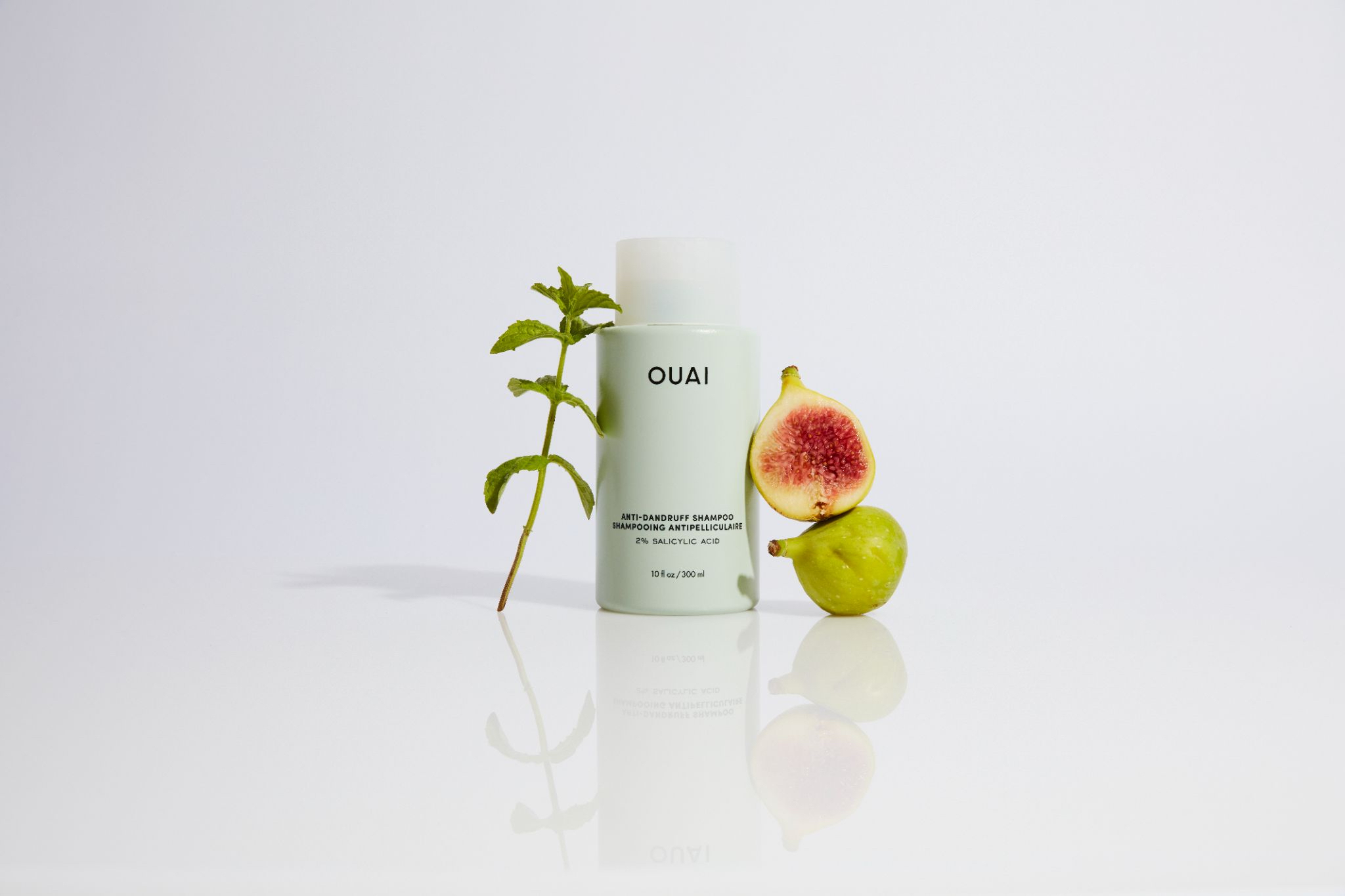
“Ouai loves to be able to take products that aren’t luxe to the next level. For example, Ouai took apple cider vinegar, commonly used in clarifying shampoos, and added Ouai’s fragrance to ‘Detox’ to elevate it,” says Ouai director of education Diana Prataziewicz Barnao. “Now, Ouai is doing the same with Anti-Dandruff Shampoo.”
As the brand moves consumers up the ladder, it could send another P&G-owned brand, Head & Shoulders, down a few rungs. Head & Shoulders has the No. 1 dandruff shampoo in the United States. The shampoo’s sales rose at a 4% clip to $477.3 million in U.S. sales for the 52 weeks ended Oct. 30 at mass retailers, according to market research firm IRI, capturing about 67% of the entire $663.5 million dandruff shampoo segment. Selsun Blue and Nizoral hold the No. 2 and No. 3 spots for dandruff shampoo, respectively.
Ouai isn’t alone in releasing dandruff offerings beyond the drugstore. Jupiter, Straand, Hairmax, Brickell and Bea’s Bayou Skincare are among the emerging brands betting on itchy scalps to scratch up sales. GM and co-founder Meagan Pate says Straand has “premium sensibilities that are more sensorial rather than problem-solution. We love making it part of your self-care experience.” She emphasizes, “I see ourselves as more gen Z in a category that is typically associated with boomer brands.”
Brands’ entrances into the dandruff domain are driven by a confluence of several trends, including product premiumization, consumer interest in ingredients and the microbiome, a makeover of over-the-counter merchandise, destigmization of difficulties long thought of as shameful, “skinification” of seemingly every beauty category and the evolution of scalp care. Available at Sephora, Ouai’s Anti-Dandruff Shampoo is priced at $36, $6 above its Detox Shampoo and roughly 3X to 7X prices for Head & Shoulders shampoos sold online.
“Dandruff products are thought of as drugstore, mass-market commodities,” says Valerie George, a cosmetic chemist and president of formulation house Simply Formulas. “Prestige and salon brands have tried before to play in this space, but the market timing hasn’t been right. I’m confident there is now opportunity to modernize formula aesthetics and user experience while producing compliant product.”
The dandruff category is complex, as George’s mention of “compliant product” hints at. Dandruff is flaking scalp skin, but there are multiple causes of it, from malassezia or fungi that feed on skin lipids to, opposingly, dry scalp and oily scalp. As they enlarge their dandruff product ranges, brands are likely to tackle the various causes with products tailored to them.
Estimates of the prevalence of dandruff vary. Ouai calculates 20% of people have it, but studies have shown up to 50% of the global population have dandruff. Jupiter figures 75% of people worldwide experience dandruff at some point, rendering the prevalence of dandruff greater than the prevalence of acne, and Straand approximates 80% of consumers have scalp issues. Data Bridge Market Research forecasts the global dandruff segment will advance at a compound annual growth rate of 6.3% to generate nearly $13.25 billion in 2029 sales, up from nearly $8.13 billion in 2021 sales.
During the pandemic, Robyn Watkins, founder of product development consultancy Holistic Beauty Group, says there’s been a rise in scalp sensitivity and conditions like dandruff as stress mounted. That sent people searching for remedies, and scalp care became a prominent force in haircare, with brands multiplying scalp care products. George chronicles that hair growth and exfoliating products led the way, positing the jump to dandruff products is a natural extension of the scalp care phenomenon as brands recognize further areas for potential sales.
Ouai demonstrates the progression. Earlier this year, it launched Scalp Serum, a product formulated to prevent shedding and foster thicker hair. The product responded to one of the top two haircare concerns—thinning/loss—Ouai has identified. The second is dandruff, hence the launch of Anti-Dandruff Shampoo to follow Scalp Serum. With 2% salicylic acid, the shampoo is an OTC treatment for dandruff.
Under the U.S. Food and Drug Administration monograph, which sets regulatory standards for non-prescription drugs, an OTC dandruff treatment must have salicylic acid, zinc pyrithione, coal tar, selenium sulfide, sulfur or ketoconazole as an active ingredient. Watkins predicts beauty brands will increasingly improve formulations with OTC dandruff ingredients by incorporating, for instance, probiotic, fermented, synthetic and biotechnology-derived ingredients to counter their harshness, but not diminish their power.
“The consumer is ready for things that are a bit more heavy hitting. They aren’t afraid of synthetics,” says Watkins. “I do see the opportunity in terms of scalp care really addressing the OTC gap within modern brands.”
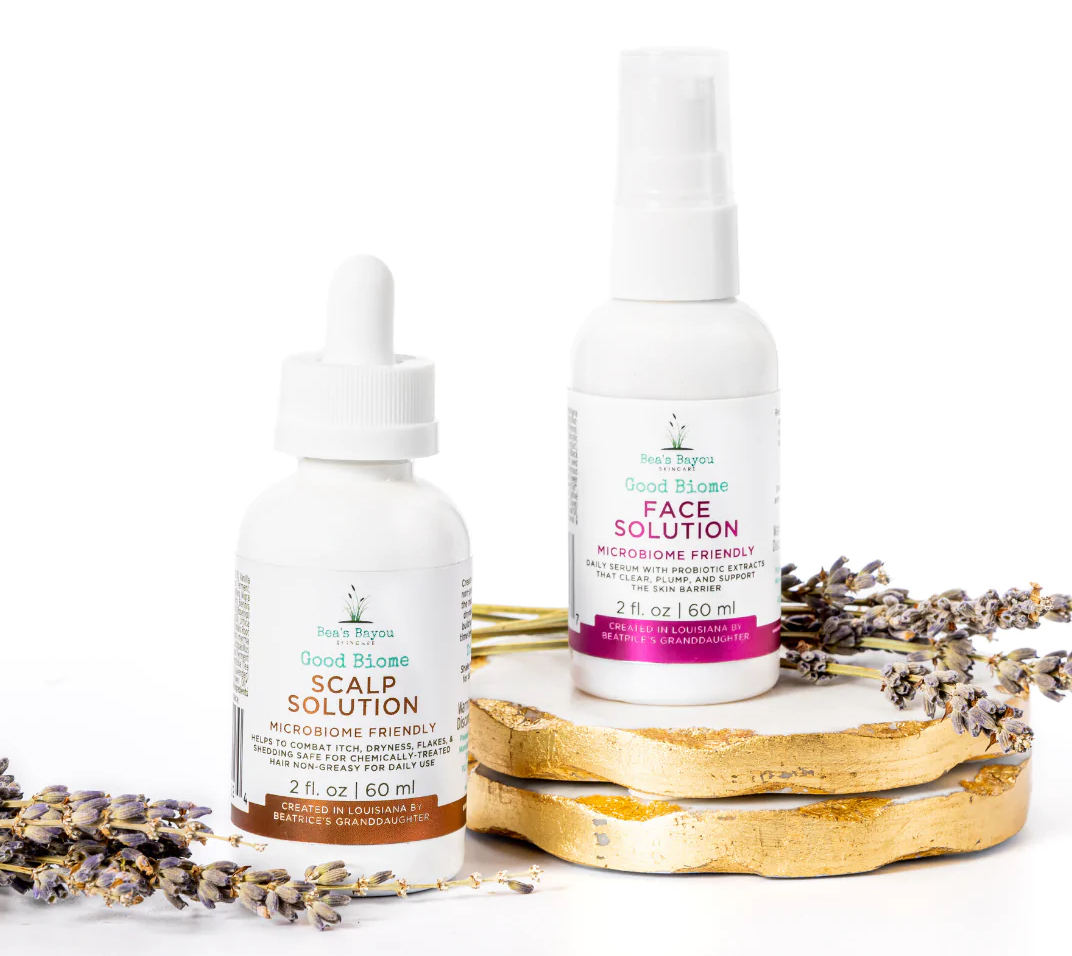
The OTC beauty and personal care product field has been proliferating as brands attempt to steal share from staid incumbents and create products that can’t be as easily replicated as cosmetic staples. Not all brands marketing products for dandruff have monograph ingredients allowing their products to be OTC dandruff treatments in the U.S. The result is broad descriptors, particularly “scalp care” and “scalp health,” are widespread to convey dandruff products that can’t claim to treat dandruff. The word “flakes” instead of dandruff is commonplace in product nomenclature as well.
“Most brands will walk a fine line and launch cosmetic products claiming to improve scalp dandruff,” says George. “Not only will the efficacy be unproven if not using monographed ingredients, it would be in violation of FDA regulations to claim to treat dandruff if not using them. I would heed caution and urge brands to invest in producing compliant products.”
Coming from Australia, where rules involving marketing dandruff products aren’t as strict, Straand, a brand that debuted in July and is breaking into the U.S. in February, communicates that its haircare products are “skincare for the scalp.” The products feature what it dubs Defenscalp with prebiotic rosebay extract. “It actually feeds the good bacteria and works naturally with your microbiome to balance the scalp,” says Pate.
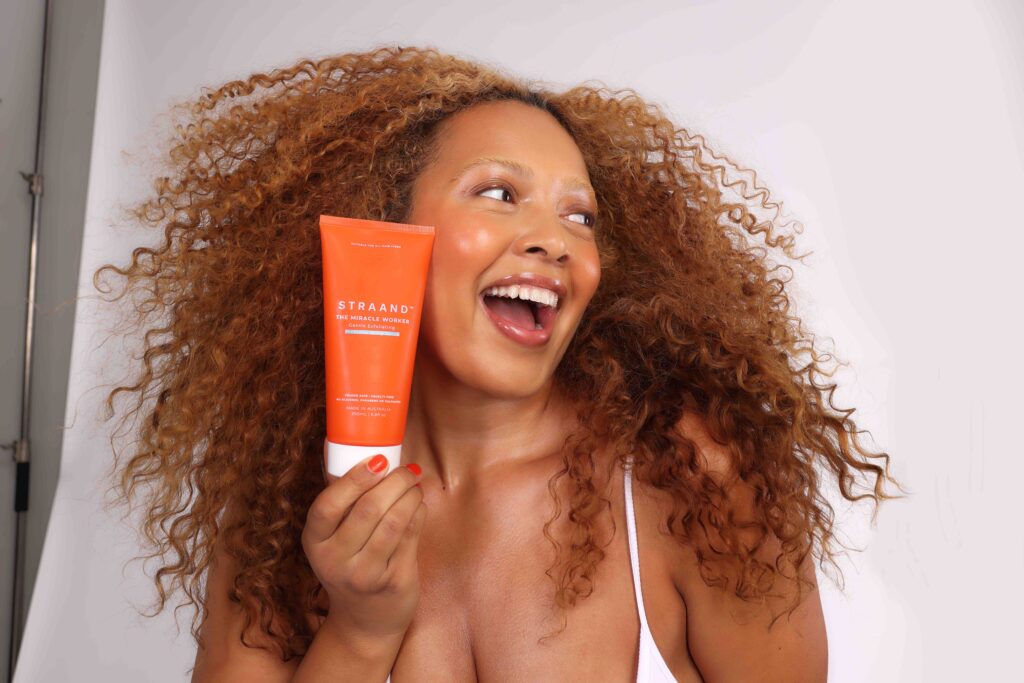
Consumers have learned about the skin microbiome, a collection of organisms blanketed the skin, from skincare brands—and scalp care brands aren’t just borrowing from them in referencing the microbiome. Skincare brands have ritualized skincare product application, and scalp care brands are aiming to ritualize application of their products. Straand is out to do that with its haircare products in traditional formats—shampoo The Crown Cleanse, conditioner The Head Doctor, scrub The Miracle Worker Scrub and scalp serum The Crown Fix—along with products expanding outside of them such as a microfiber towel, scalp brush and detangler comb.
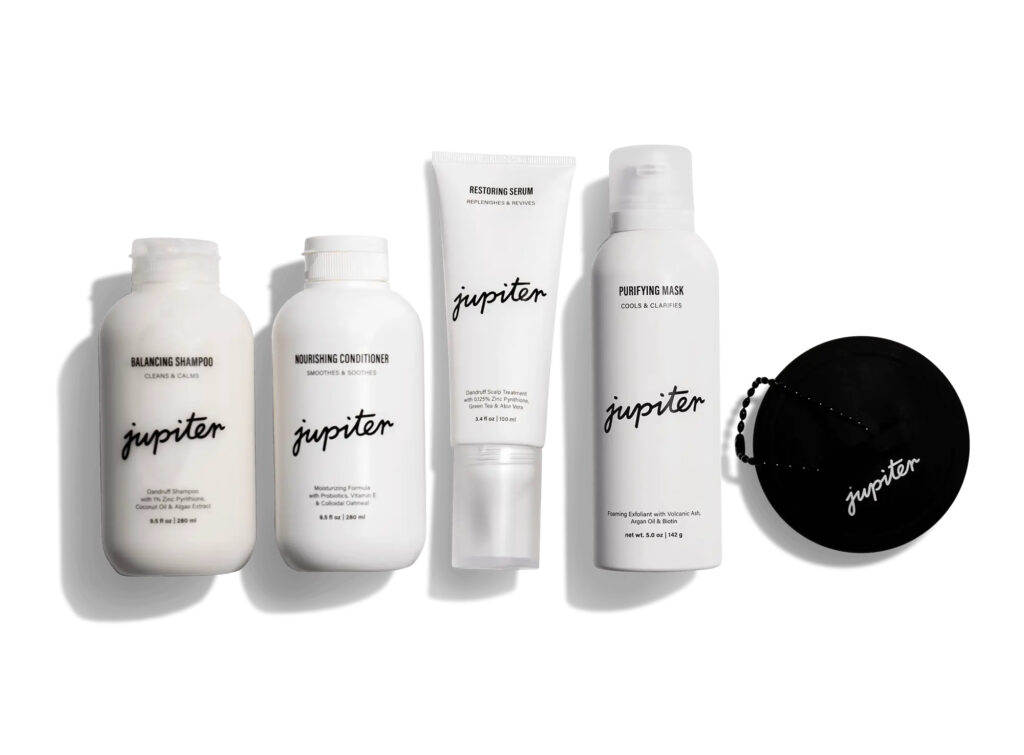
Jupiter strives to routinize its products, too, to not isolate scalp care to flareups of dandruff or other concerns. The brand’s lineup has four topical products—Nourishing Conditioner, Restoring Serum, Purifying Mask and Balancing Shampoo, its bestseller containing zinc pyrithione—and a scalp brush and supplement. Co-founder Robbie Salter says, “If you want to avoid or address an issue, establishing a routine using proven, highly researched and dermatologist-recommended ingredients versus purely cosmetic ingredients can make a meaningful difference.”
Straand and Jupiter appeal to women familiar with beauty rituals who are often not the primary target of leading dandruff players Head & Shoulders and Selsun Blue. At Jupiter, 75% of the customers are women, and 60% color their hair. Hair coloring can irritate the scalp. “Women are willing to pay for premium ingredients,” says Salter. “Women obviously have more complex routines and have additional barriers to consider when thinking about their hair routine. Most guys don’t color or chemically treat their hair.”
Ouai believes Anti-Dandruff Shampoo can build its male audience. The campaign for the product marks the first time the brand has showcased a man. Hannah Beals, VP of brand marketing at Ouai, says, “We understand the concern amongst the male community and want to offer a solution that’s different from what’s currently available today.”
What’s also different about the new dandruff products today is the mission of the brands behind them to eradicate negative feelings associated with dandruff. Brands with products across the beauty and personal care spectrum, from antiperspirant to zits, have been on similar confidence-boosting missions as they seek to insert themselves into people’s daily lives and have them spread the word about products.
“In this category, there’s been no pride. It’s been focused on eliminating and treating, and being embarrassment-prone. We wanted to flip that on its head,” says Pate. “It’s about educating on what dandruff actually is. At the end of the day, it’s dry skin. If you have dry skin on your face, you generally talk about it with friends. You ask, ‘What are you using?’ With dandruff, for some reason, it’s taboo. So, it’s really about normalizing that conversation.”
TikTok, where the hashtag #dandruff has 1.7 billion views, is a platform for normalizing dandruff conversations. Ouai’s Anti-Dandruff Shampoo campaign will harness TikTok, Instagram, direct mail, connected television (CTV) and out-of-home in New York and Texas, per information provided to the publication Glossy. It will run for 90 days.
Prataziewicz Barnao says, “I see the stigma attached to dandruff being reduced. We’ve already come a long way since those old-fashioned ads portraying a woman losing her man because she has dandruff. Today, we are becoming more open to talk about our hair concerns and more determined in finding solutions that work. I think our holistic investment in healthy hair, scalp and body will only continue to grow.”
The players
5 mentionedCommodity

Good Bacteria
Counter
Formulate
Too Faced