Why Black-Owned Beauty Brands' Retail Progress Is Slipping
The initiatives helped bring down barriers to retail entry that had been insurmountable for countless Black-owned beauty brands, but they didn’t bring down barriers they crash into once in stores, where they must fight for notice and sales with larger and wealthier brands. The tough in-store barriers have become increasingly obvious to beauty industry observers and consumers as they watch Black-owned beauty brands lose shelf presence and sometimes lose store placement altogether.
“Many, many Black brands are being dropped at Sephora, Ulta, Target, Walmart,” says Morgan DeBaun, founder of media platform Blavity in a TikTok video posted last month that kicked off a wider discussion of the challenges Black-owned beauty brands face at retail. In a TikTok post responding to DeBaun’s video, Kimberly Dillon, former CMO of cannabis brand Papa & Barkley and founder of now-closed wellness brand Frigg, points out, “Getting on shelf is really only part of the problem, you also have to stay on shelf.”
To stay on shelf, she continues, “It really often comes down to your capital…We have this expectation that people who bootstrap are supposed to be these shiny business examples, and we love this story of rags to riches and they overcome all this stuff, and in reality it is a very expensive game to be in business, especially in beauty.”
Retail progress and capital conditions have worsened for emerging brands on the whole as stores streamline assortments in pursuit of profitability and the higher interest rate environment has made funding harder to come by. Black-owned brands are encountering even harsher conditions as a backlash to diversity, equity and inclusion programs with the mission of addressing funding disadvantages is causing them to unravel, and investor attention on Black startups is decreasing. A lawsuit against a Fearless Fund grant program for women of color-led businesses has led to the program being halted and other investment firms pulling back from similar programs.
Financial information resource Crunchbase estimates venture funding for Black-founded startups in the United States fell to $705 million last year, marking the first time it hasn’t reached $1 billion since 2016. A perennial feature of the American landscape, the racial wealth gap has widened of late. A piece on it from the think tank Brookings notes, “In 2022, for every $100 in wealth held by white households, Black households held only $15.”
In another TikTok response to DeBaun’s video, KJ Miller, founder of Mented Cosmetics and president of Beauty Bakerie, underscores the difficulties brands with capital deficits have prospering in retail settings. She says, “If you are under capitalized, and most Black-owned brands are, oftentimes you don’t have the capital you need to test your way into a strategy that works, and just as you’re starting to figure it out, you run out of money and you get exited.”
Katonya Breaux, founder of 8-year-old bootstrapped sun care brand Unsun, recommends brands raise money prior to heading to retail to pay for brand awareness campaigns to propel customers into stores to buy their products. Unsun rolled out to 6,100 CVS doors in 2022. It’s also currently in 500 Target stores and 1,000 Walgreens stores.
Breaux says, “You set yourself up for failure if you go into these stores without having funding.”
Unsun isn’t self-funded by choice. Assuming that large retail distribution would appeal to investors, Breaux sought to raise money for the brand in 2022 and 2023 after it landed at CVS. However, she reports the bar for funding kept moving up for Unsun.
Breaux recounts, “Before the CVS launch, we spoke to a lot of investors, and I kept hearing the same thing: Well, it’s early for us. You have to generate $1 million revenue, and when we reached that and started reaching out to many of the same ones, they said, Oh, it’s early for us, we only invest in series A.'”
She’s put fundraising on the back burner at the moment and is reevaluating Unsun’s next steps. Referring to the brand’s retail presence, Breaux says, “It’s a very, very challenging position to be in for a company that’s bootstrapped. I wouldn’t encourage it, I wouldn’t recommend it. If I had to do it all over again, I would not do it.”
Hair tools brand Kazmaleje has funded its retail gains in part with grants from organizations like Black Ambition, Black Girl Ventures, New Voices and BrainTrust Founders Studio and retail programs like Target Reach and Walmart Start. It has drawn a total of over $400,000 in grants. The Home Shopping Network was Kazmaleje’s first wholesale partner. In brick-and-mortar retail, the brand is stocked at around 400 Target stores and 600 Walmart stores. It’s hitting Claire’s this month.
For ongoing maintenance of its retail partnerships, Kazmaleje relies on funding options such as FundThrough and Lunr Capital, which handle inventory financing. These options can be expensive, and brand founder LaToya Stirrup doesn’t want to depend on them forever. She’s gearing up to fundraise soon.
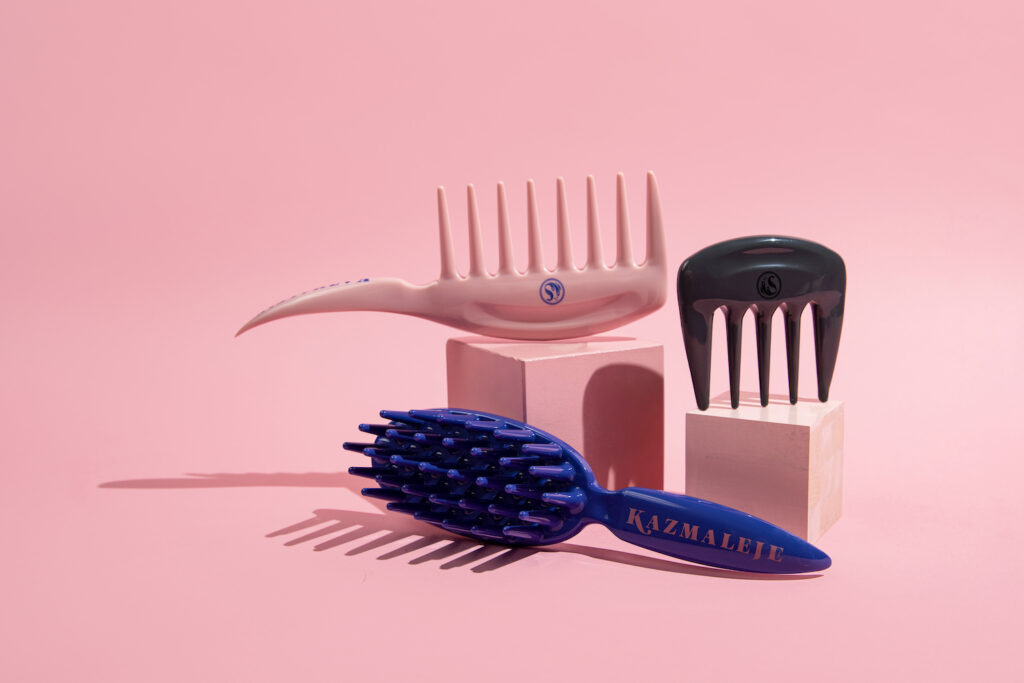
“Capital is required to thrive on shelf,” she says. “I think you could be scrappy in terms of getting there, but you’ll realize that, when you’re scrappy, you really can’t take advantage of the marketing campaigns that need to happen and driving traffic to the store.”
Gina Woods doesn’t think external funding is required to succeed at retail and hopes Donna’s Recipe, the self-funded haircare brand she runs with actress, author and influencer Tabitha Brown, can be an inspiration for bootstrapped brands. Launched in 2020 with two products, it took “less than six figures” to get Donna’s Recipe to market, according to Woods. She says the brand was immediately profitable, and it sold out in its initial week of e-commerce.
Two years and seven products later, Donna’s Recipe is carried across Ulta’s 1,400-plus store fleet and 1,000 Target stores. Woods emphasizes a key reason for Donna’s Recipe’s retail achievements is that it’s been selective about its retail partnerships. She says, “We wanted to make sure to partner with a retailer that understood the dynamics of where we currently were at the time of being self-funded and lean.”
Donna’s Recipe’s community and association with a popular personality—Brown has 4.4 million followers on Instagram and 5.1 million followers on TikTok—has been a boon to it, but Woods notes celebrity alone doesn’t guarantee victory at retail. She says, “Many celebrity brands go in and right back out the door, and so it goes deeper than that. This isn’t just a slap on the label and money grab. This is very intentional.”
Donna’s Recipe is intentional about being self-funded as long as possible, although Woods isn’t opposed to outside investment. She says, “As we continue to grow and scale, we’re really observing where our needs are, but currently we feel like we have really good traction, and we really like the pace and the flow that we’re operating in.”
LYS Beauty is open to fundraising in the future as well. The clean makeup brand launched at Sephora in 2021 a week after premiering in direct-to-consumer distribution. Today, it’s in around 600 Sephora stores in the United States, Canada, Australia and New Zealand. LYS Beauty is a top-performing brand in Sephora’s “Next Big Thing” selection focused on emerging brands, and its cream bronzers are bestselling bronzers at the retailer.
Tisha Thompson, former VP of marketing and innovation at Astral Brands-owned Pur, says she committed money she received following her dad’s death to develop LYS Beauty, and the brand has secured angel investment from people she met during her tenure at Astral Brands. Bob Cohen, chair and CEO of Astral Brands, is one of LYS Beauty’s angel investors. Thompson told Glossy in 2021 that she owns more than 51% of LYS Beauty and tells Beauty Independent that LYS Beauty is self-funded.
Thompson says LYS Beauty’s angel investment covered its early purchase orders from Sephora. The purchase orders involved four months’ worth of inventory, an amount that ended up selling out in 10 days. Along with her experience and connections, Thompson highlights the education on finances she got in college as advantageous to her grasp of operating a profitable business.
“Usually people hire somebody who does that, but I think taking the time to truly understand your business makes a difference,” says Thompson. “Know your P&L, what it takes to be profitable, understand your margins, your product costs.”
To enable them to stick to bootstrapping, Woods suggests brands attempt to negotiate better terms with their suppliers. Stirrup counsels strong relationships with fellow founders are beneficial, too. She says, “We can do collaborations together, we can support each other, we can help each other to navigate through terms.”
Breaux, Thompson and Woods stress thoroughly examining retail contract terms is critical. If founders aren’t familiar with retail contracts, Breaux advises them to hire someone who is. “It’s so important that you understand what you’re signing because you could drown in all these different fees. It adds up,” she says. “Do not just sign a contract because you’re excited for the opportunity.”
Don’t be afraid to negotiate either. In a Beauty Independent story published last week, Sarah Broyd, partner at Clarkston Consulting, instructed brand founders to consider asking retailers for 30-day to 45-day payment windows to safeguard against cash-flow disruptions. Breaux says feeling comfortable negotiating can be a process, but it’s essential. “At first, I was afraid,” she admits. “I was like, oh my god, if I push back, maybe they won’t want to work with me anymore. If they want you, they want you.”
The players
5 mentionedDeeper

LYS Beauty
AS Beauty
Papa & Barkley
Better Being