Black Friday/Cyber Monday Mixed Bag: In-Store Prestige Beauty Sales Show Strength While Beauty Brands' Website Orders Dip
In a LinkedIn post, Larissa Jensen, SVP and global beauty industry advisor at market research firm Circana, revealed that prestige beauty sales advanced by a high single-digit percentage and prestige beauty units advanced by a mid-double-digit percentage for the week ending Nov. 30. “Makeup grew the fastest (!) followed by fragrances and hair (growth was tied) and skincare,” she wrote. “I always say unit performance is a true indicator of consumer demand and my in-store Black Friday retail observations held true: the crowds were there and the spend was strong.”
Mass beauty’s Black Friday sales performance was weaker than prestige beauty’s Black Friday sales performance, not an unexpected development. Jensen explained, “Holiday is very much a prestige beauty occasion, not so much mass beauty. This also held true as mass beauty sales for the same week posted declines across all categories.”
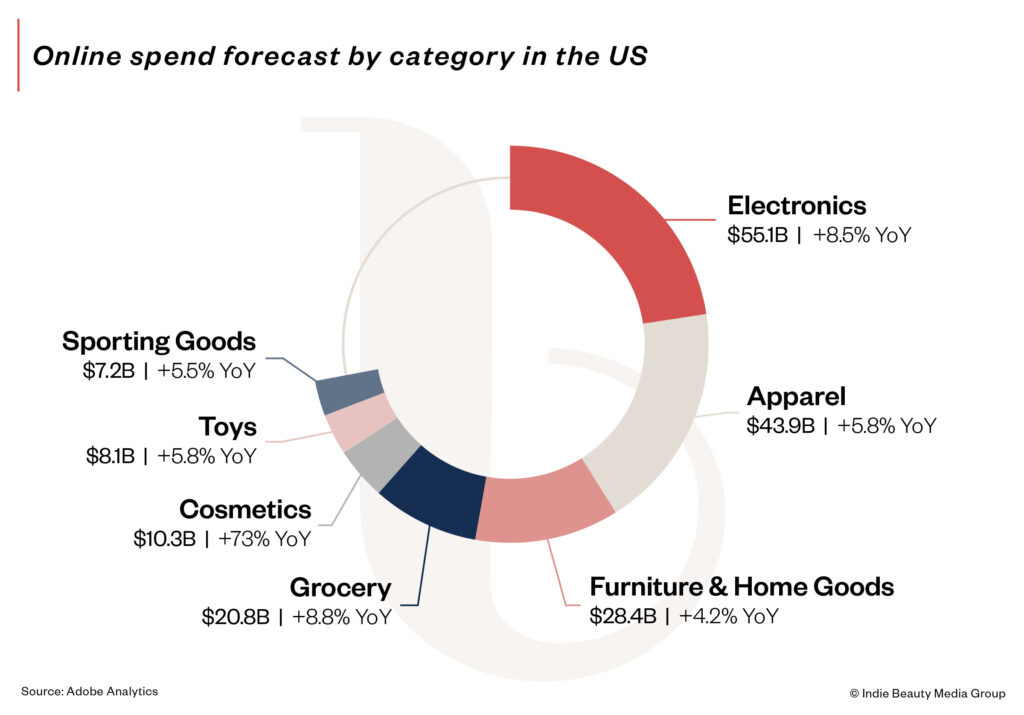
Turning to the entire commerce universe, online won big during the critical holiday shopping stretch. Digital sales in the United States broke previous records by surging over 10% on Black Friday to $10.8 billion, according to software analytics company Adobe Analytics. Consumers enthusiastically clicked on Cyber Monday deals, and sales rose 7.3% from the year prior to $13.3 billion. For the period covering Nov. 1 and Dec. 31, Adobe forecasts online sales of cosmetics will increase 73% to exceed $10 billion.
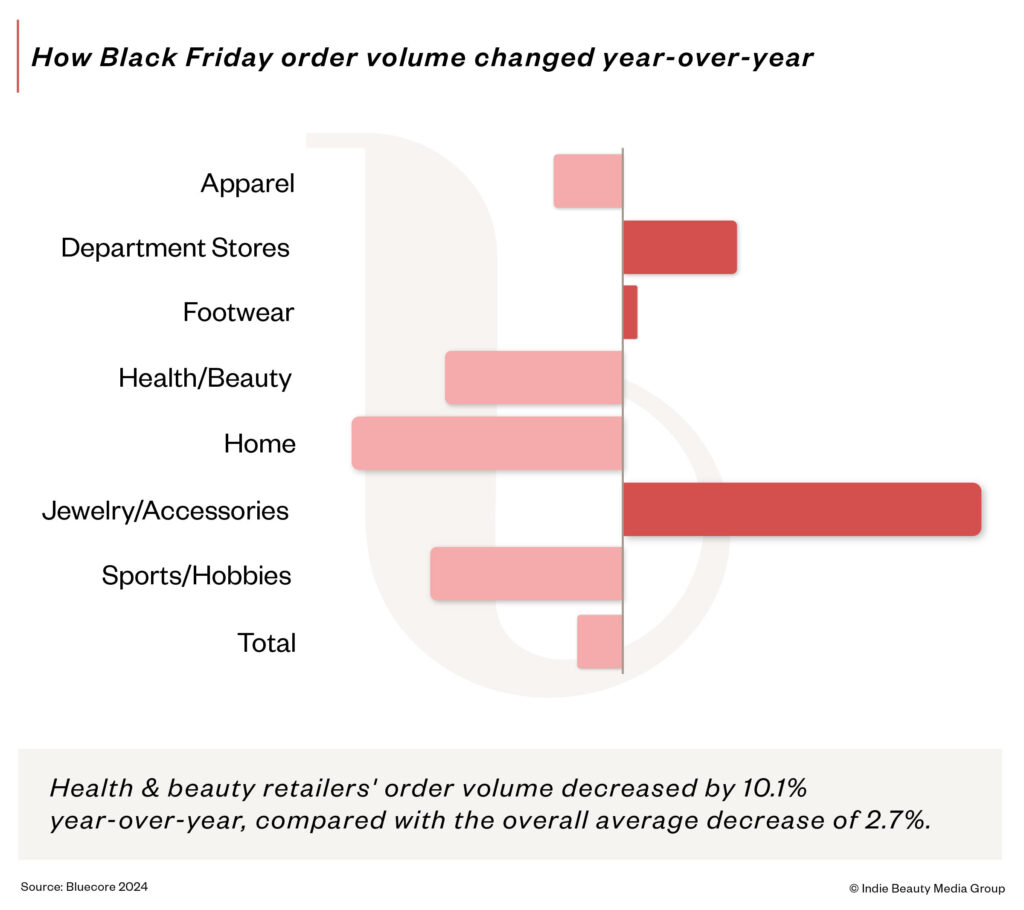
The exuberance didn’t extend to health and beauty brands’ websites. They registered a 2.2% traffic dip on Black Friday, according to data from retail technology company Bluecore. Last year, health and beauty brand site traffic decreased 1.5%. Reversing last year’s order volume gain of 22.4%, health and beauty brands registered a 10.1% decline in order volume on Black Friday, trailing accessories, department stores, luxury, footwear, home, and sports and hobbies. Still, health and beauty brands saw the highest average order value gains among categories, registering a 9.7% increase over the prior year.
With five fewer shopping days this year between Thanksgiving and Christmas, consumers jumped on early deals. According to a survey of 3,000-plus consumers conducted by the National Retail Federation (NRF) and Prosper Insights, 38% of shoppers took advantage of sales in the week preceding Thanksgiving. Further underscoring the effects of the shortened shopping season, NRF estimates that 197 million people shopped over the five-day holiday shopping period this year, down from 200.4 million last year.
Brick-and-mortar traffic didn’t fare well on Black Friday. Traffic analytics provider RetailNext approximated that store traffic across the U.S. declined 3.2% from last year as the midwestern region of the country battled storms and freezing temperatures. Swiss retail technology firm Sensormatic Solutions tracked a more sizable falloff in U.S. store foot traffic during the week of Black Friday of a 3% drop between Nov. 24 and 29 and a 8.2% decrease on Black Friday.
Beauty and self-care retailers, specifically, registered a 4.7% decrease in Black Friday foot traffic, per traffic analytics firm Placer.ai. However, Ulta Beauty saw a 5.7% increase in foot traffic on Black Friday from last year and a 70% bump from 2019.
Three Ships ran a month-long promotion in November that included up to 30% off products site-wide and a tiered gift-with-purchase that kicked in after $95 and $175 was spent. In a first for the skincare brand, the elongated promotion boosted online sales to $1 million for the month, and sales for the Black Friday/Cyber Monday period climbed 91% from the previous year. Customers typically picked up over five products, 50% above what’s typical for the brand, and Dew Drops Hyaluronic Serum, Skin Hero Retinol Serum and Dream Bio-Retinol Cream were the most purchased items. The three products are normally priced at $37.
Laura Thompson, co-founder of Three Ships, says, “Consumers are using the extra long sale periods that are happening to come up with their shopping plans, but are ultimately still waiting for Black Friday to pull the trigger in case better deals are released that weekend.”
Kari Gran saw a 6% bump in site sales during the holiday shopping period. It ran a five-day tiered promotion that featured 20% off products site-wide and an additional 25% off any $150 purchase, 30% off any $200 purchase, plus two free gifts on $70. The promotion boosted AOV 28% and drew new customers to the skincare and makeup brand, says Lisa Strain, co-founder and CEO of Kari Gran. In addition, the brand tripled its sales on Amazon over Black Friday/Cyber Monday.
“The general mood of our shopper was upbeat, optimistic and boy did she spend,” says Strain, noting, “We’re too small to hire salespeople, so we rely on our customers to introduce the brand to their friends. Short-term, juicy discounting and free gift-wrapping during the weekend encouraged gifting.”
Black Friday helped new customers find Dr. Diamond’s Metacine, too. The skincare brand typically refrains from discounting its luxury products the rest of the year. Mark Ferdman, president of Dr. Diamond’s Metacine, revealed the brand notched a 5X increase in new customers due to a discount of 20% off of full-size products, and influencers caused the brand’s orders to soar 425%. The brand’s two products, Instafacial Plasma Growth Serum and Instafacial Emulsion Night Cream, generally are priced at $200 and $350, respectively.
Ferdman said, “If there were legitimate concerns about shoppers pulling back this season due to worries about the economy, either the results of the election changed sentiment, the lipstick index is in full effect and/or both.”
Similar to Dr. Diamond’s Metacine, Salt & Stone conducted a one-time annual sale on Black Friday/Cyber Monday. The personal care brand offered 20% off products site-wide from Nov. 25 to Dec. 2, with tiered gifts-with-purchase that included a complimentary hand cream on orders over $75 on Black Friday and a complimentary facial cleanser on orders over the same amount on Cyber Monday. The promotion drove the brand’s AOV up 36% and overall sales up 220% on Black Friday. Existing customers gravitated to its $20 Santal Deodorant and $45 Santal Body Mist, and new customers went for its $40 Mini Deodorant Discovery Set.
Black Friday marked 2-year-old brand Plated Skin Science’s first Black Friday sale, and it saw a 1,000% sales spike for its $379 Hair Serum as the result of a $75 discount. Sales of $244 Intense Serum Refill, which was sold at a $60 discount on Cyber Monday, exceeded sales of Hair Serum.
Alex Haskell, VP of marketing at Plated Skin Science, says, “We wanted to strike a balance between maintaining the premium nature of our brand and making our innovative products accessible to a wider audience. It’s a strategic decision that aligns with our long-term goals while staying true to our values.”
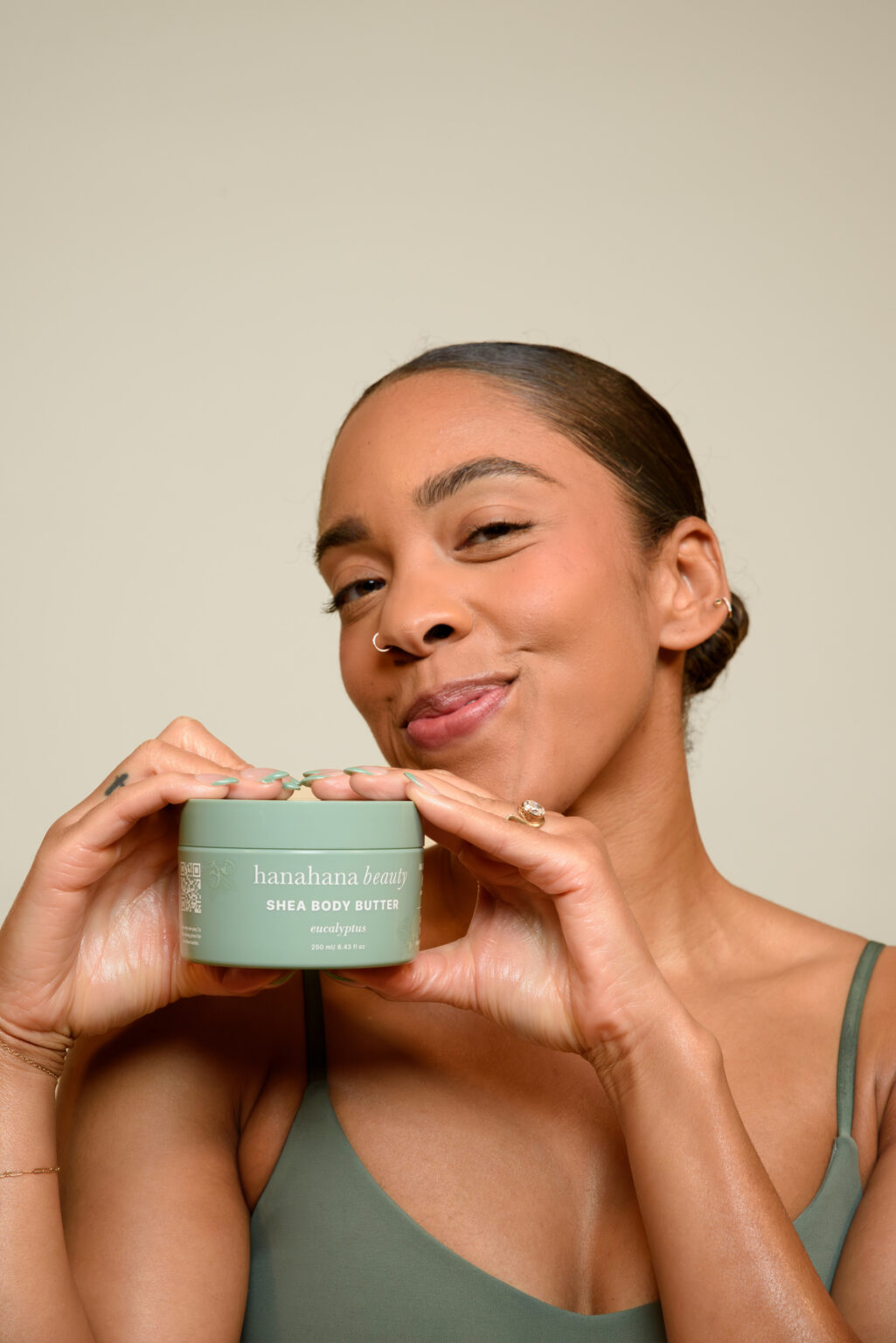
Hanahana Beauty abstained from traditional Black Friday promotions this year, opting instead to reward loyalty program members with a 24-hour friends and family sale on Nov. 18. The sale gave the members the option to purchase products from the body care brand’s body butter line for $20, $25 and $30. Hanahana’s body butters are regularly priced at $32. The sale outperformed the brand’s two days of Black Friday promotions last year, when it offered 25% off its products site-wide, by over 200%.
Along with the friends and family sale, Hanahana provided customers the opportunity to build their own bundles on Nov. 27 and purchase products at 30% off on its site on Cyber Monday. Abena Boamah, founder and CEO of Hanahana, mentions it was important for the brand to pull in customers before the holiday rush started.
“We are thinking outside the box of just deep promotions,” she says. “The end-of-the-month sales are usually lower because people are spending money on rent and other priorities. We wanted to be strategic and think about how we bring people in earlier and not be a part of the rush.”
Boamah believes beauty shoppers are considering several factors when deciding what to purchase this holiday shopping season. They’re hunting for the best deals, to be sure, but they’re also interested in supporting brands they adore.
“People are feeling the weight of all these different things that are going on,” says Boamah. “They’re also motivated by seeing some of their favorite brands close down. Majority of those brands are either women-run or Black-owned or minority-owned brands. They want to be a part of keeping their brand alive.”
Kristy Moore-Jeffress, co-founder and EVP at skincare brand Marie Veronique, has noticed that informed skincare shoppers are becoming choosier about the brands and products they purchase regardless of promotions. She says, “They carefully review ingredient lists and choose products tailored to their specific concerns.”
She highlights simplicity as the ruling beauty and wellness trend of the moment. “This trend is especially notable among gen Z, whose limited alcohol use reflects a broader shift toward wellness-focused lifestyles,” says Moore-Jeffress. “Skincare routines, exercise and diets are becoming more streamlined, prioritizing results without unnecessary steps or side effects.”
The players
5 mentionedSalt & Stone

Momentous
AS Beauty
Better Being
Plated Skin Science