Beauty's Branded Store Revival Is In Full Swing
Elorea, Ceremonia, D.S. & Durga, Jones Road and Submission Beauty have recently opened stores or will soon open locations in New York or Los Angeles. Sisley Paris’s first standalone spa and boutique in the United States has bowed in New York’s Meatpacking District, and Jeffree Star Cosmetics is slated to unveil its first flagship store next month in Casper, Wyo.
“As digital customer acquisition has gotten more and more expensive, we have seen a shift from a lot of digitally native brands expanding into brick-and-mortar distribution,” says Manola Soler, senior director at the global management firm Alvarez & Marsal. “Mono-retail, while a bigger investment than pursuing a wholesale strategy, enables brands to create a real-world brand experience that tells their story in a holistic and controlled way. If you are using stores as an acquisition vehicle, having control over the brand expression is critical.”
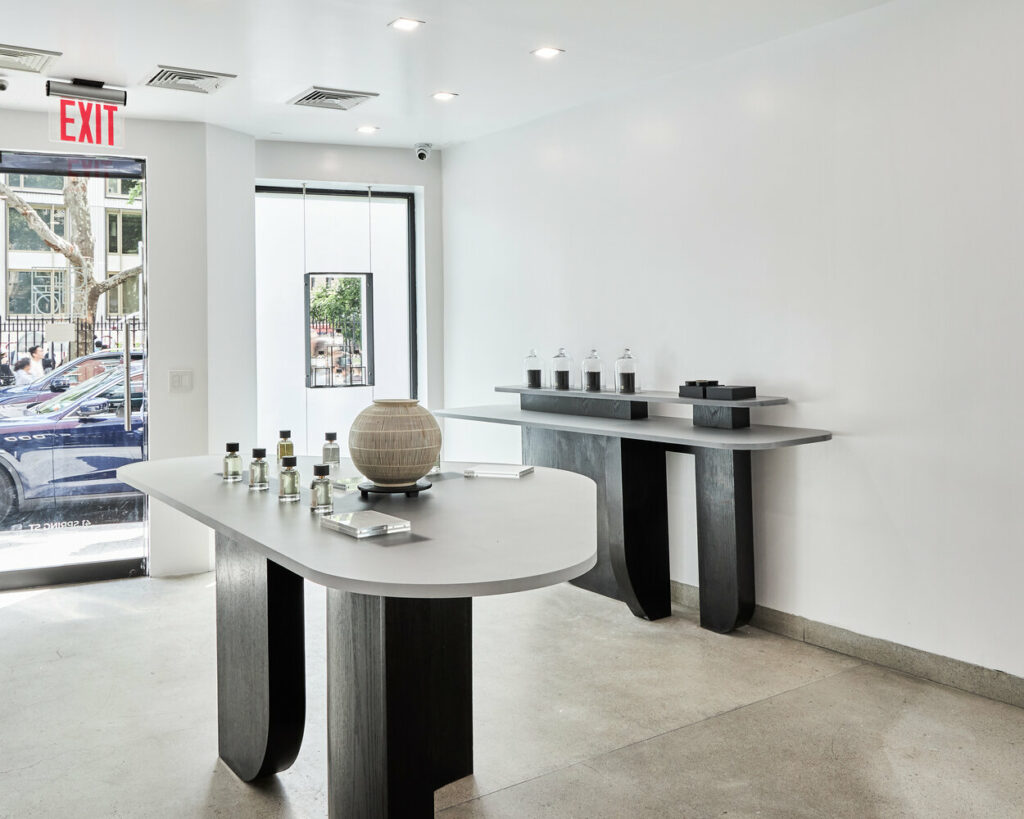
Control over brand expression has been integral to skincare, haircare and fragrance brand Aesop’s push into branded stores—and the strength of its brand equity. That strength convinced L’Oréal to reveal in April that it’s snapping up Aesop, which has roughly 250 stores globally, for $2.5 billion. Similar to Aesop’s stores, 2-year-old DTC fragrance brand Elorea’s New York City flagship strives to immerse customers in its universe. Opened in late May, the store is steeped in Korean heritage.
CEO and co-founder Wonny Lee says, “We really wanted to create an environment, not necessarily to acquire new customers and increase foot traffic, but so our existing customers and fans can experience something new.”
Situated on Spring Street in the busy SoHo neighborhood, the 800-square-foot space is designed with traditional Korean architecture elements and displays the works of Korean artists on its walls. In addition to stocking Elorea’s complete fragrance, candle and hand care repertoire, it includes an in-store cafe in partnership with chocolate shop Vesta featuring menu items like corn and black sesame lattes from coffee brand Gute Leute. A special chocolate and scent pairing developed with Vesta is available to customers upon request.
“We feel that retail is evolving. A lot of people prefer to shop online, so when they go to a retail store, they’re looking for a destination,” says Su min Park, chief creative officer and co-founder of Elorea. “They want an activity, and they want new experiences. So, it was very important to have this physical space because it really allows us to cater to our customers in a way that’s controlled.”
Elorea’s network of third-party retailers is currently limited—and that’s intentional. The brand, sold at the retailers Saks Fifth Avenue and ByGeorge, is restricting wholesale and concentrating on its own retail. After securing a $2 million seed round in 2022, Elorea is on track to become profitable later this year, and its store is a catalyst for top-line revenue.
“We have set some high sales per square foot goals for the store,” says Lee. “Having the store definitely changed our revenue trajectory by over 100%.”
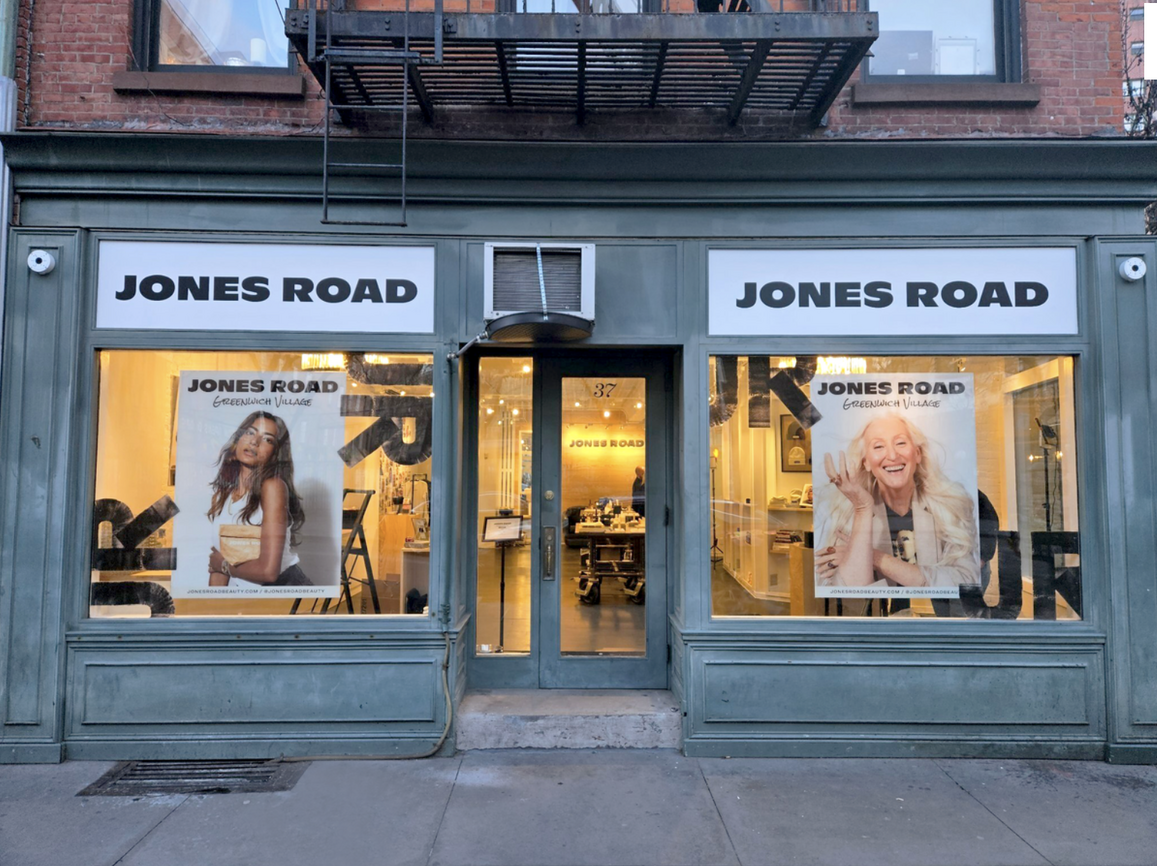
Jones Road, the makeup and skincare brand founded by Bobbi Brown, is largely shunning third-party retail distribution in favor of branded stores. After premiering its flagship store in late 2021 in Montclair, N.J., the nearly 3-year-old brand opened two New York locations this year in Greenwich Village and East Hampton. In highly trafficked areas, the stores have been profitable almost from the get-go, says Jones Road CMO Cody Plofker.
He elaborates, “We operate them efficiently and as lean as possible. Having our own stores allows us to have more control. We can be a little bit more strategic and nimble since we’re still a startup. It also allows us to be more profitable.”
Outside of its own stores, Jones Road is sold at London department store Liberty. It’s pulled out of Credo, the American clean beauty retailer it entered last year, to turn its attention to U.S. branded store expansion in tandem with DTC. Referring to third-party retail, Plofker says, “We have absolutely no plans of growing that channel at all.”
Jones Road expects to open one more store this year and three next year. When the additional locations are in place, branded stores are projected to constitute about 10% of the brand’s sales. Its DTC channel continues to be the main driver of top- and bottom-line revenues. The brand generated $60 million in 2022 sales and is on track to double sales this year.
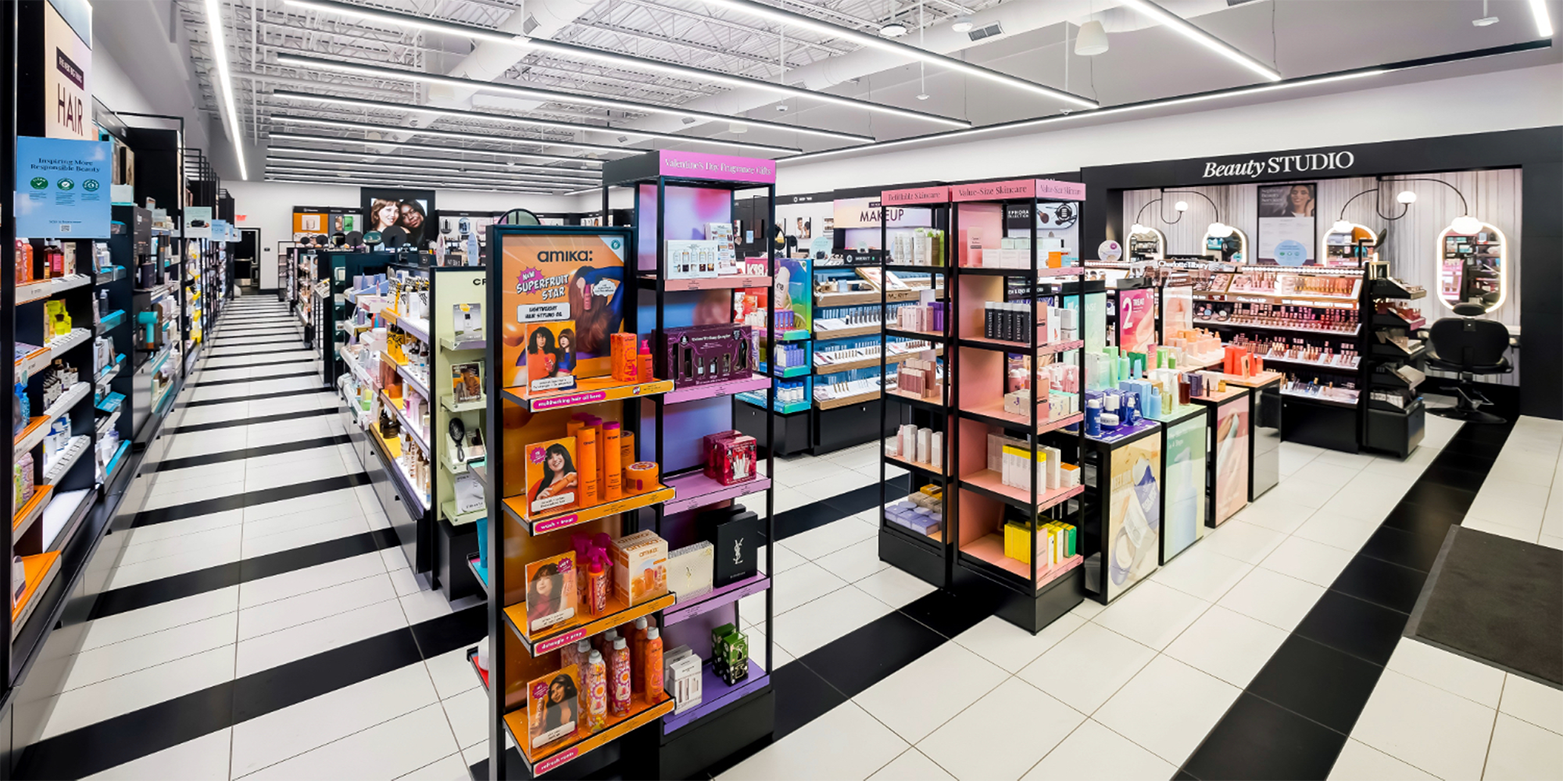
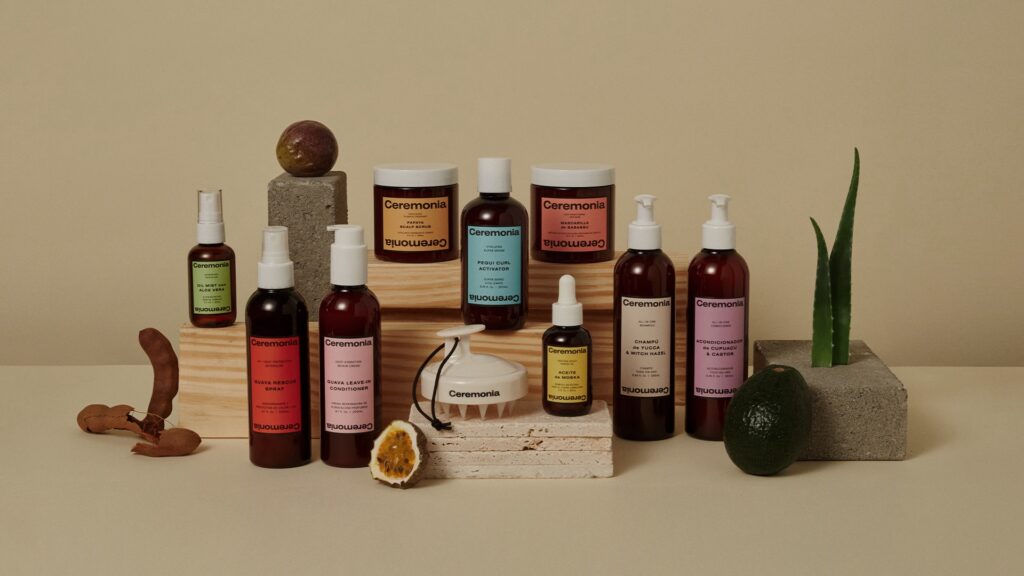
Brands are investing in standalone stores as part of a broader omnichannel strategy. The haircare brand Ceremonia is set to open its first brick-and-mortar flagship store this week on Broome Street in downtown New York City. The 750-square-foot space will function primarily as marketing support for its partnership with Sephora. Ceremonia expanded from 83 doors in 2022 at the beauty specialty retailer to chain-wide this year. Sephora has about 430 stores in the U.S. Along with Sephora, the brand is carried at Credo, Net-a-Porter, Thirteen Lune, Shopbop and Space NK.
“When we think about the bottom line of the business at large, it’s really about winning at Sephora. The store is a building block in that effort because it’s a billboard in the middle of SoHo,” says Ceremonia founder Babba Rivera. “It will enhance brand awareness and brand storytelling in a way that is unconstrained and uncompromised. We can really do it on our terms and continue to blur the lines between commerce and community.”
Ceremonia’s store comes on the heels of its $10 million series A round led by Sandbridge Capital. It previously raised $3 million over two rounds from Silas Capital, Beliade, SoGal Ventures, XFactor Ventures and Female Founders Fund. Rivera says that the majority of the raise was allocated to the Sephora expansion rather than the flagship.
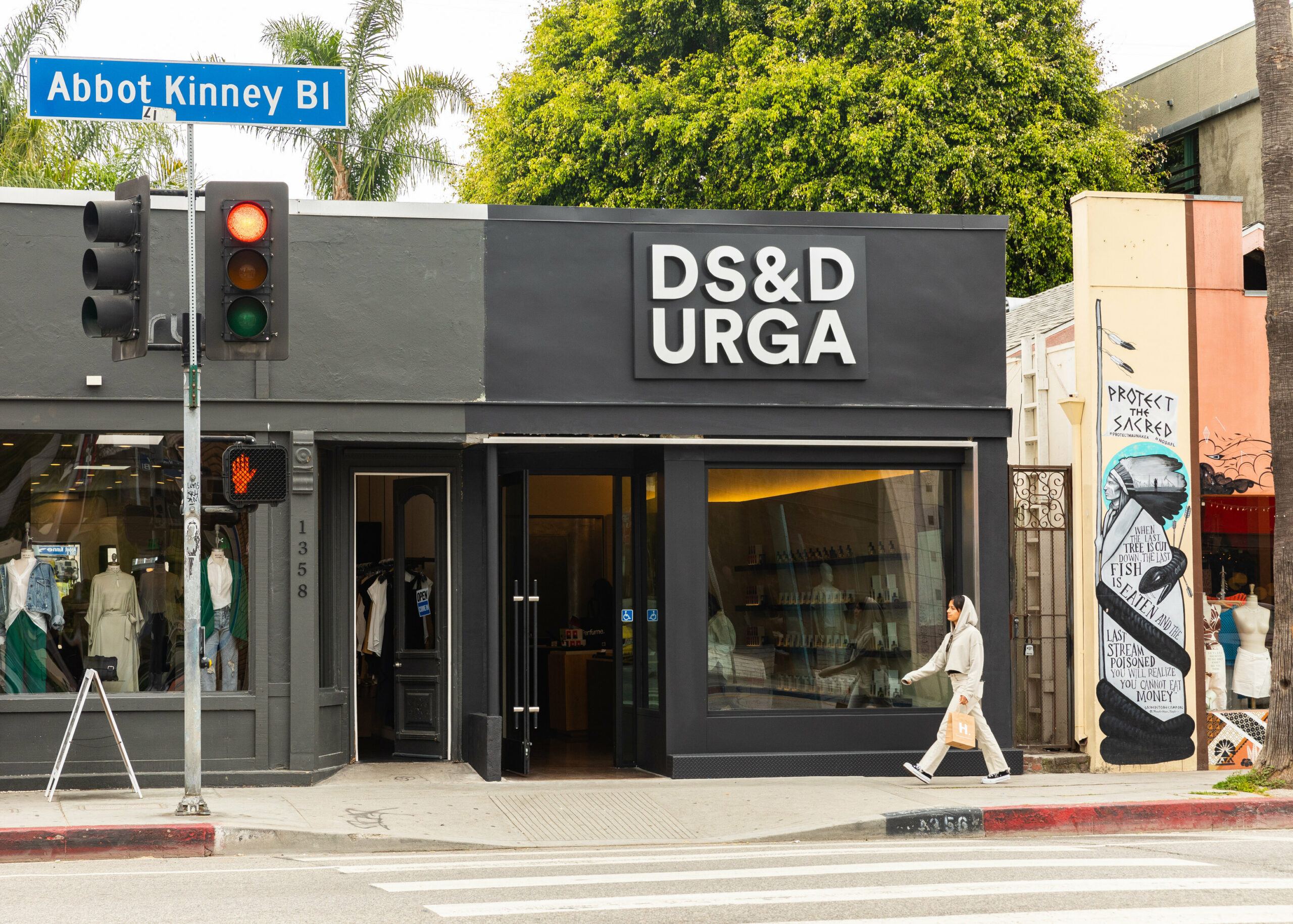
D.S. & Durga opened a 1,200-square-foot flagship store earlier this month on Los Angeles’s Abbot Kinney Boulevard, its third location to open since 2018 and the first not in its native New York. The 15-year-old luxury fragrance brand is carried at Bergdorf Goodman, Violet Grey, Saks Fifth Avenue, Neiman Marcus, Cult Beauty, Liberty and Mecca, among other places.
Wholesale accounts for 50% of the brand’s revenue, and the remaining 50% is split evenly between DTC and branded stores. D.S. & Durga is on track to net between $10 and $20 million in revenue this year.
D.S. & Durga co-founder and perfumer David Seth Moltz says, “All channels work together for brand awareness. We are super loyal to our retail partners and are just as happy for them to service our customers as we are to sell directly, but a store shows the world what you are more than any other activation.”
D.S. & Durga’s New York stores both achieved profitability within the first year, says Donna DiDonato, the brand’s president. The company is hoping to scale to 10 to 15 branded stores over the next five years. Moltz describes the brand as conservative in its approach to expansion. He underscores, “I will say, even if your store breaks even, it’s the best marketing tool around.”
Opening a branded store may offer next-level marketing capabilities, but the expense involved can be prohibitive for many emerging brands. Shopify pegs the average cost of opening a retail store at $80 to $500 per square foot. The cost can vary by region, the level of interior buildout, fixtures and real estate format (for instance, a strip mall versus an indoor mall or a freestanding street location).
If brands can absorb the expense, it usually takes around eight to 12 months for most physical stores to break even, depending on location, product margins, sales volumes, rent and more, says Neil Saunders, managing director at data and analysis firm Global Data. Sustaining branded store fleets have proved challenging for luxury and mass beauty brands. Over the years, Hourglass, NYX, E.l.f. Cosmetics and Cover Girl have halted branded stores to cut down on costs.
Profitability should be top of mind for any brand opening its own store, but there are a multiplicity of metrics that should to be tracked to get a fuller picture of the impact of a brick-and-mortar store on a company’s business, says Soler. Metrics zeroing in on customer acquisition and awareness as well as customer lifetime value are instructive.
“Are your customers transacting in your brick-and-mortar store differently than those in your digital channels? Are you reaching an incremental audience? Is your brand awareness increasing due to your brick-and-mortar presence?” she says. “Regardless of how much consumers are transacting in store, are your store shoppers becoming omnichannel shoppers? Are those shoppers more valuable or more loyal? Omni-shoppers tend to be more valuable regardless of how they first came into a brand.”
How a brand’s brick-and-mortar store plays into its customers’ share of wallet is another area to watch, points out Soler. “Are customers shopping into different categories in-store versus online? Are you able to offer additional categories and services that either improve profitability, drive repeat visits or both? Brick-and-mortar versus online may have different shopping occasions,” she says. “I may buy my favorite shade of lipstick online, but, if I want to find a new one, I will likely visit a store so I can swatch product in real life. Here, brick-and-mortar may play more of a recruitment role whereas digital tends to be more replenishment-focused.”
The players
5 mentionedD.S. & Durga

Space NK
AS Beauty
Thirteen Lune
Hourglass