Can Beauty Specialty Chains Command More Luxury Market Share?
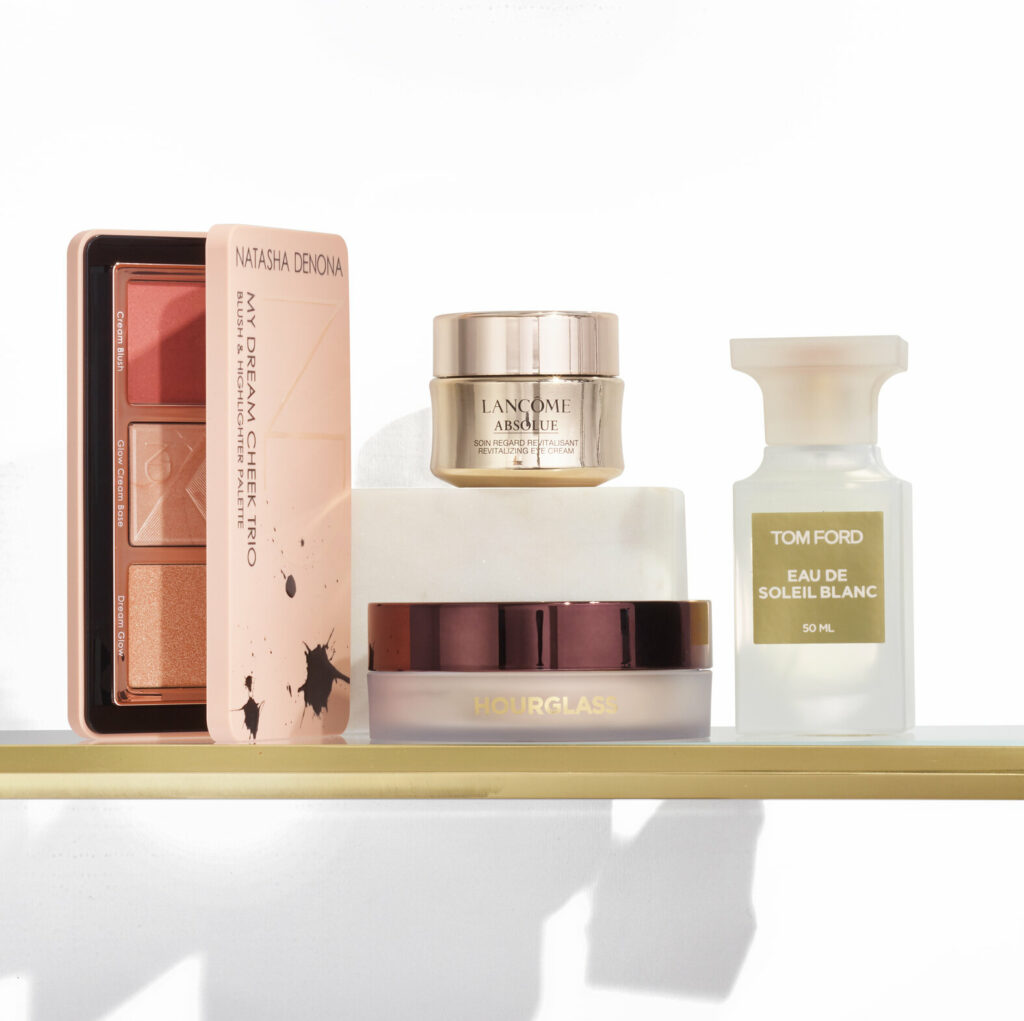
Following last year’s exclusive launch of No. 1 De Chanel, Chanel’s clean and eco-conscious beauty line, Ulta Beauty revealed it’s pushing further into the luxury segment by adding makeup and skincare products from brands such as Natasha Denona, Hourglass, Dior and Lancôme as well as boosting its offering of Chanel products and designer fragrances from Gucci, Viktor & Rolf, Tiffany & Co. and Tom Ford. Ulta unveiled a partnership with Dior in late January.
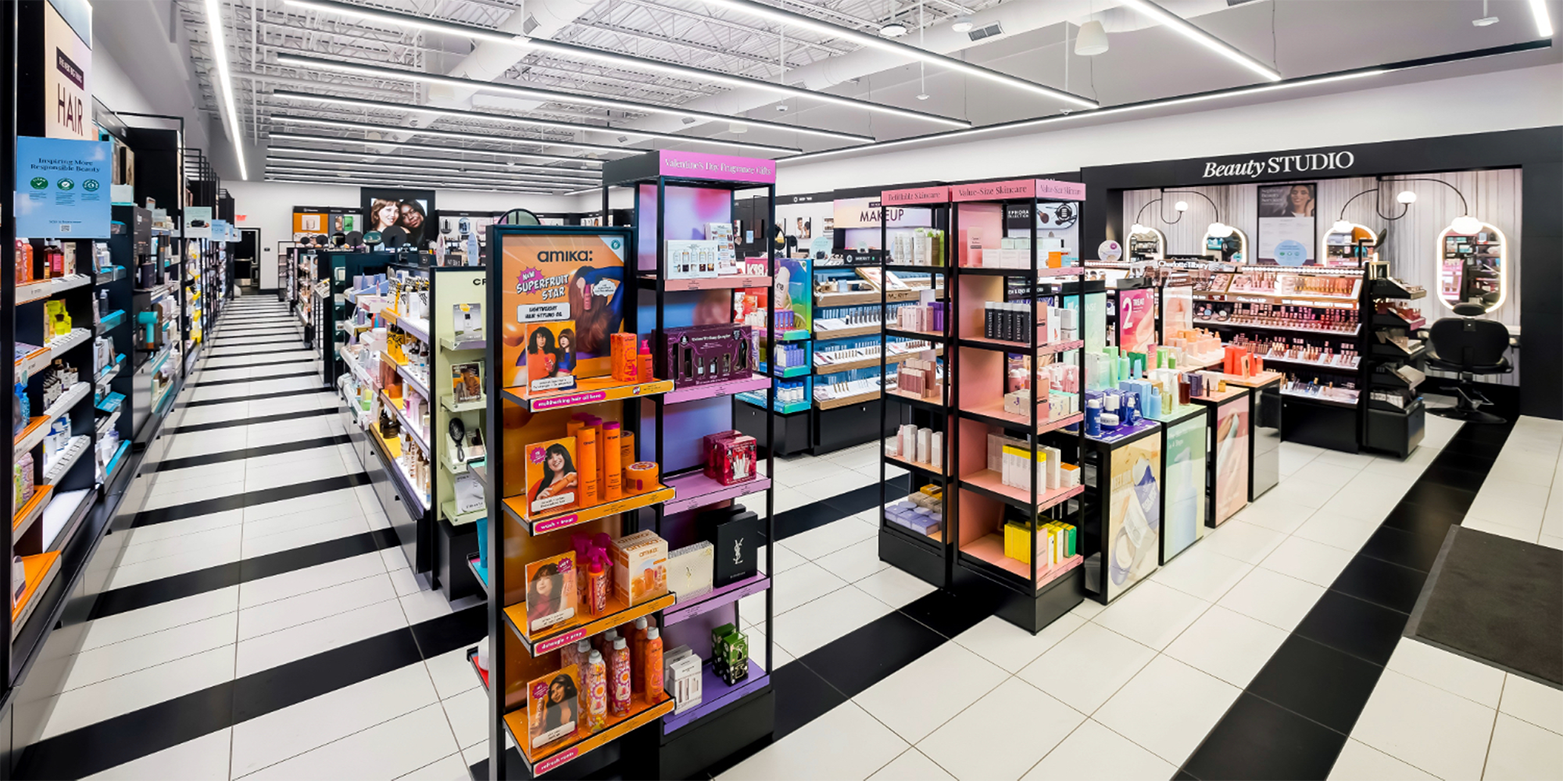
An element that distinguishes its selection from the merchandise it sells inside Target, Ulta’s luxury beauty assortment is now on its website and will roll out to 200 of its 1,300-plus doors in key American markets, including New York, New Jersey, Illinois, Texas, Florida and California. It’s being situated at the front of Ulta stores next to the prestige makeup section “to fuel greater discovery,” says Maria Salcedo, SVP of merchandising at Ulta, but isn’t currently being tested in the retailer’s new price-agnostic store layout.
The assortment demonstrates just how far Ulta, the biggest beauty specialty retailer in the United States, has come since its early days in the 1990s when recognizable high-end beauty brands snubbed its format mixing mass and class in favor of premium department stores. Looking globally, an analysis by consultancy McKinsey & Co. approximates the beauty industry market share held by beauty specialty retailers from 2022 to 2024 to be 12% versus 4% to 5% held by department store retailers.
In its fourth quarter earnings call, Ulta CEO Dave Kimbell pinpointed luxury as “an emerging opportunity in fiscal 2023” as it becomes a larger portion of gen Z’s spend. Ulta is gen Z’s favorite beauty retailer, per investment bank Piper Sandler’s semiannual gen Z survey. According to consultancy Bain & Co., gen Z accounted for 8% of the global luxury business in 2019, a percentage that rose to 18% last year and is anticipated to rise to 25% to 30% by 2030. Bain projects gen Z and gen alpha consumers will increase luxury spending three times faster than earlier generations.
Prestige beauty, a category that encompasses luxury, is a small, but typically resilient portion of the overall U.S. beauty industry. Market research firm Circana estimates that prestige beauty sales totaled $27.1 billion last year, up 15% from 2021. By comparison, market research firm NielsenIQ estimates that mass-market health and beauty sales totaled nearly $111.3 billion last year, up 5.3% from 2021.
Kelly St. John, founder and CEO of beauty brand consultancy KSJ Collective, believes luxury brands’ moves into online and offline retail destinations generally associated with accessible prices such as Ulta and Amazon align with modern luxury consumers that value convenience. Amazon’s Premium Beauty program contains brands like Olaplex, Clarins, T3, Amika and Lancôme. “It’s just the way the world has shifted,” she says. “Customers want to be able to pick things up fast and have that quick, frictionless access.”
As Ulta extends its lens to higher income shoppers, its visual merchandising strategy for premium products will likely start to mirror those of old-school department stores, predicts Stephen Letourneau, chief brand officer at Better For You Wellness, parent company of beauty and wellness brands The Jordre Well, Cannuka, Mango Moi and Better Suds. He highlights the retailer’s success with Chanel’s launch as evidence of the shift.
“That was a major buildout by [retail design and display firm] RPG and the display and all the merchandising were on point,” says Letourneau. “You’re seeing Ulta just eliminate shelves to create these beautiful gondola displays. I will not be surprised if, within the next five to six years, those gondolas become even more prolific, and we’ll start to see premium buildouts like the Tom Ford display that’s in Nordstrom. That will be the level of what’s happening there.”
Letourneau forecasts that Sephora, a long-time player in luxury beauty, will shake up its stores in a similar fashion. Sephora declined to speak to Beauty Independent for this story. Both Ulta and Sephora will be challenged by space constraints, leaving room for only a few bestselling luxury brands. Letourneau says, “If a luxury brand can’t do this level of buildout or fund an in-store beauty ambassador to service its cart, gondola or display, it’s just going to die on the shelf.”
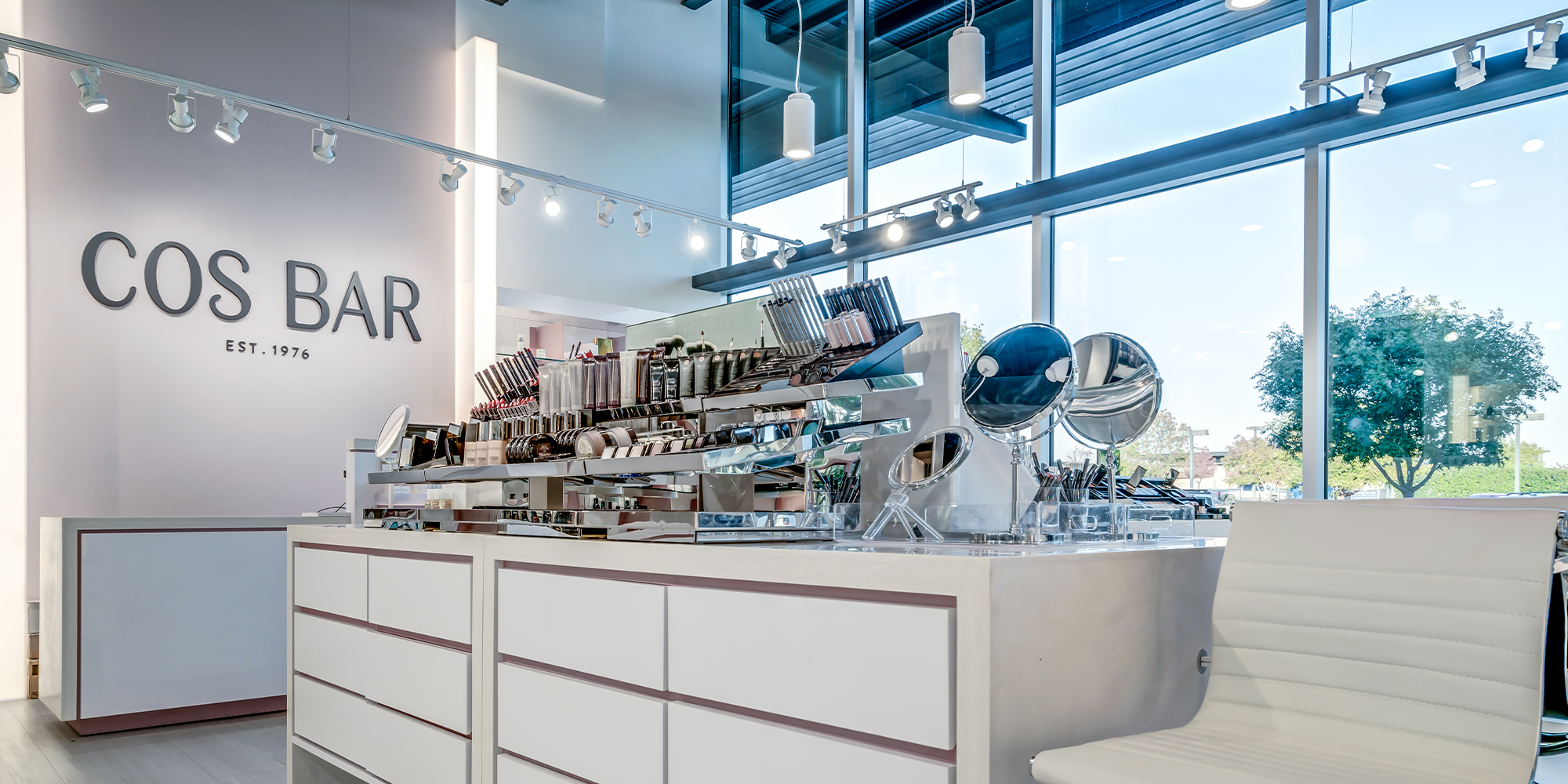
Selling high-ticket beauty items has historically been linked to high-touch customer service from knowledgeable store staff. Without that component, Oliver Garfield, CEO of 20-unit luxury beauty retailer Cos Bar, thinks Ulta’s discovery-driven, open-sell venues could struggle to support luxury brands. Augustinus Bader, Chantecaille, Creed, Cle De Peau Beaute and Sisley Paris are among the brands stocked by Cos Bar.
“There is a massive element of service and product knowledge involved in luxury,” says Garfield. “To develop people to the point where they can sell and have that level of expertise, it just feels like a radical departure from where Ulta is today.”
Letourneau figures Sephora’s in-store service and staff education process are conducive to selling luxury beauty products. He pegs Ulta as a step behind for luxury selling in terms of its service model and approach to staff education. “The education that brands have to provide to Sephora staff is significantly more,” he says. “It is the same level as what Barneys used to be or Neimans with this almost aesthetician-level education.”
To aid luxury product sell-through rates, Salcedo says Ulta is placing a beauty advisor connected to the dedicated luxury beauty assortment at each of the 200 locations with it to answer questions and supply product guidance. Along with heightened customer service, the retailer is betting on the outsized role that social media plays in animating gen Z consumers to shop luxury. According to a 2022 report from Klarna, 84% of gen Z consumers buy a luxury product after seeing it on social media. The report stated that 81% of millennial shoppers do the same.
“The luxury beauty space is winning with all demographics, but specifically with gen Z due to social platforms and communities on TikTok,” says Salcedo. “As the preferred beauty destination for this generation, we are excited to offer them a physical touchpoint to fuel discovery and play.” She cites Dior’s Lip Oil and Rosy Glow Blush, and Hourglass’s Phantom Volumizing Glossy Balm and Airbrush Vanish Concealer as luxury products that achieved virality on TikTok. The products are carried by Ulta.
Letourneau speculates that luxury brands will push into major beauty subscription boxes (Ipsy, for example) to raise awareness outside of social media. “That will be this huge sort of validation for what Ulta is doing because they share the same customer,” he says. “When Cannuka was at Ulta, nine times out of 10 the customer already knew about the brand from Ipsy.”
Retailers are bolstering luxury in part to forge strong ties with wealthier consumers whose spending is generally insulated from economic ups and downs. However, there are signs shoppers are pulling back product spending to prioritize travel and in-person activities. In department store retailer Saks Fifth Avenue’s Luxury Pulse survey of 2,832 American shoppers aged 18 and over, 62% reported that they’re prepared to spend more or the same amount on luxury than they did in the past three months. That’s an almost 9% drop from the department store retailer’s survey in September last year.
Even though department store retailers’ sales growth and market share is slipping, St. John, formerly VP and DMM for beauty at Neiman Marcus, argues luxury brands shouldn’t under-appreciate their role in upholding brand equity. She says, “For a brand that is squarely positioned as luxury, with state-of-the-art packaging, beautiful textures and efficacious formulations, I still today think of places like Neiman Marcus and Bergdorf Goodman, but also Cos Bar and online destinations like Moda Operandi.”
Beauty brands’ own stores afford them greater control to reinforce brand equity, but they’re traditionally a top-of-funnel marketing tactic rather than bottom-line padding. Garfield says, “My assumption is that the four-wall economics just don’t work because brands get constrained on the top-line. Also, customers don’t shop beauty in a way that can sustain that model, which is why multibrand retailers are the dominant players in beauty.”
For branded locations, Garfield suggests spas have the best chance of at least breaking even. There’s a mounting number of skincare brands testing that theory. Dr. Barbara Sturm has eight spa locations worldwide, SkinCeuticals has 10 SkinLab locations, and Augustinus Bader just opened a second spa location at luxury retailer The Webster in New York.
Letourneau stresses that luxury brands have to shore up direct-to-consumer distribution to achieve profits and understand retail partnerships aren’t cash cows. He says, “We need to dispel that myth. The education and insight that you’re going to get in retail and the way it will help you evolve and change your brand is going to be huge.”
In their stores and outside of them, luxury brands have to dream up unique experiences to make them special to contemporary consumers. Some luxury brands are attempting to buttress their DTC businesses and strengthening brand engagement by pushing the digital envelope. YSL Beauty has released a second collection of NFTs or non-fungible tokens to propel shoppers to its website. In 2021, Nars released a 2021 NFT collection with an Orgasm theme redeemable for full-size products. Orgasm is Nars’ iconic blush.
Andrew Ross, senior advisor and venture partner at XRC Labs, a venture capital firm and accelerator backing brands such as SolaWave, Barb, Swivel and Stryx, says, “Luxury brands not investing in unique and dynamic mono-branded or brand-curated experiences, not necessarily in retail or even physical, to renew their luxury equity will lose their status.”
The players
5 mentionedAmika

Cos Bar
Mirror
Hourglass
Better Being