In Beauty’s Retail Arms Race, Target And Walmart Push Premiumization
Target has onboarded over 60 beauty and wellness brands so far this year, honing in on K-Beauty, clinical skincare and viral bestsellers across skincare, haircare, makeup and body care. South Korean beauty brands like Hanhoo, Heyhae, Kundal and Elizavecca have joined the mass retailer’s assortment, along with science-backed skincare brand Minimalist, oral care brand and TikTok darling Nobs, premium men’s body care line Onside and masstige home fragrance brand Laundry Sauce.
Walmart is toggling beauty brands with built-in followings like Lattafa, a Middle Eastern fragrance brand that racked in over $100 million on Amazon over the past year, and Cosnova Beauty-owned Essence Cosmetics, which claims to be no.1 makeup brand by units sold, with emerging names from its Walmart Start accelerator program like skincare brand Maison 276 and haircare brand Kativa.
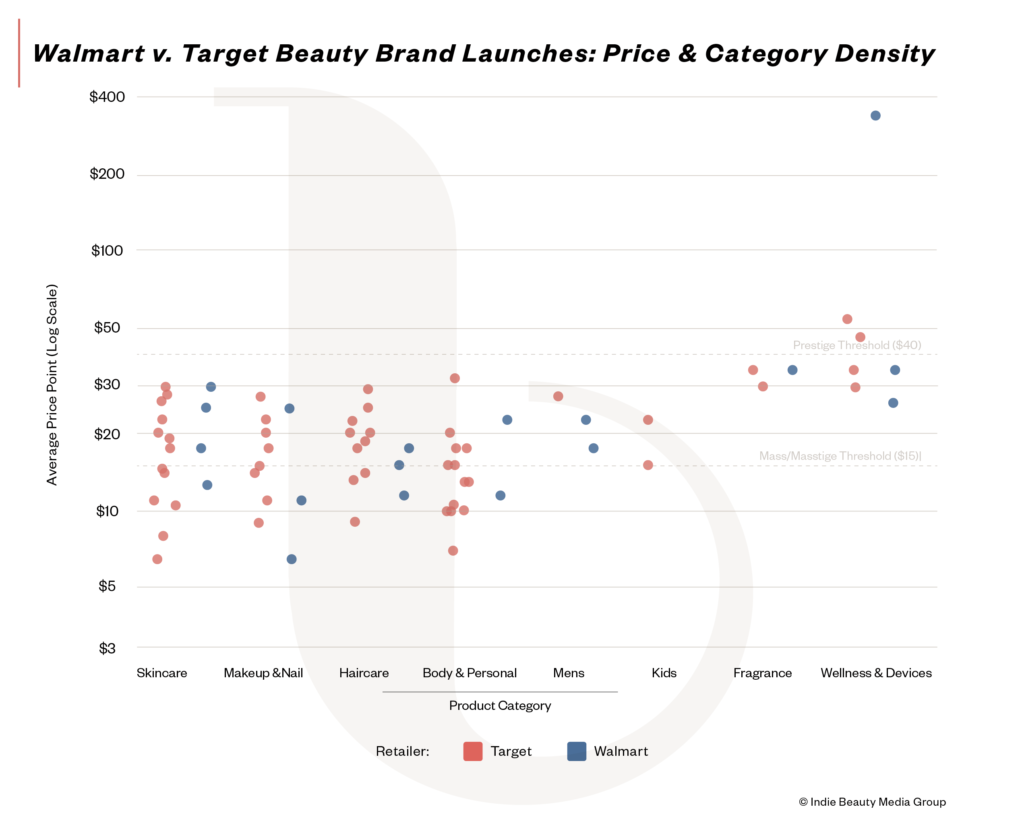
Brand launches at Target and Walmart converge at the masstige level, with pricing largely falling between $10 to $30 and positioning designed to bridge the gap between mass accessibility and prestige-level efficacy and experience. Despite the similarities, Matt Goldbloom, founder and CEO of retail growth agency Common Shelf, argues that the biggest mass market retailers in the United States are leaning on different beauty playbooks to arrive at a similar destination.
“Target is… positioning itself as a discovery destination. Walmart is…less about chasing the trend cycle and more about identifying brands that can perform at scale from day one while still feeling elevated,” he emphasizes. “The underlying message is the same: prestige beauty doesn’t have to be unattainable, and we’re the place that proves it.”
Target and Walmart are elevating their beauty assortments as higher-income shoppers gravitate to their stores. Last year, Target experienced a 5.5% increase in higher-income shoppers making in excess of $125,000 a year. Meanwhile, data from consumer intelligence firm NielsenIQ shows that Walmart saw a 13.6% bump in shoppers earning more than $150,000 a year. Target will open its 2,000th store this month. Walmart operates 4,600-plus stores around the country.
Target and Walmart constitute about a quarter of the U.S. beauty retail market combined today, but they can’t afford to rest on their laurels, especially as online channels grab share. According to TD Cowen, Amazon is expected to reach about 15% of the U.S. beauty market by 2030, and TikTok Shop is projected to grow its share from roughly 1% to 3%. By contrast, share at Target and Walmart is expected to be flat to down in the same time period, at 6% and 19%, respectively.
TARGET
Coming off a challenging four years plagued by falling sales and foot traffic, Target is aggressively expanding beauty and wellness, doubling down on trends and curation to give beauty shoppers a reason to browse and discover what’s new, not just replenish what they already have. In January, the retailer announced its largest spring beauty edit ever, with nearly 3,000 new products from more than 60 new brands, and unveiled a 30% jump in its wellness assortment, the third year in a row it’s done so.
Target plans to revamp beauty aisles with updated signage, clearer call-outs for new and trending brands and a revamped haircare aisle that makes it easier for shoppers to browse by routine. The retailer is building its own prestige ecosystem from scratch with Target Beauty Studio, a new concept due to roll out to 600 Target doors in the fall that will replace its Ulta shop-in-shop partnership. The in-store beauty destination, featuring special signage and merchandising displays, will house 80 yet-to-be-named prestige brands, including 60 new-to-Target skincare, haircare, fragrance and color cosmetics brands.
Last month, gen Z makeup brand I’m Meme, popular in South Korea, Japan and Taiwan with limited American distribution, made its U.S. mass retail debut in more than 600 Target stores. New-to-Target body care lines GoPure and Cremerie and haircare brand NatureLab Tokyo tap into trends like body firming, gourmand fragrances and scalp health.
“Target is…more about staying on trend, which is important to their customers,” says Neil Saunders, managing director of retail at data analytics firm GlobalData. “Its efforts are about making itself a real beauty destination that can compete better with the specialists like Ulta or Sephora. This is especially important now that the Ulta partnership is ending.”
Target isn’t chasing virality alone, though. David Klar, CEO of Klar & Co., a company that’s developed South Korean beauty products for U.S. retailers, notes that many of the brands entering Target’s assortment are selected for their ability to deliver long-term performance, not just short-term buzz. He says, “Bringing in good brands with a solid track record of performance, above just brands that have a celebrity following and great marketing, provides consistency and quality over things that can be here today and gone tomorrow.”
As beauty premiumizes at Target, the retailer isn’t ignoring customers’ budget concerns and is moving some merchandise in the opposite direction. The retailer is lowering prices on more than 3,000 products across apparel, home goods, baby essentials and food and beverage as it looks to win back shoppers and stabilize its business.
The pressure Target is under is evident in its earnings. In the fourth quarter, the company’s net sales fell 1.5% year over year to $30.5 billion, with comparable sales down 2.5% and store sales declining 3.9%. For the full year, net sales slipped 1.7% to $104.8 billion. Target is projecting net sales growth of around 2% for 2026.
WALMART
Walmart is pairing accessibility with more elevated, demand-driven brand curation at scale. The addition of brands like Pacifica Beauty, Bali Body, Odele and Essence Cosmetics to its shelves, which all have established retail footprints, speaks to this strategy. At the same time, Walmart is more deliberately filling category white space, particularly in areas like textured hair, international fragrance and men’s grooming, where shoppers typically have to choose between generic and expensive options.
“These are underserved segments where the ‘affordable luxury’ positioning really resonates,” says Goldbloom, adding, “That democratization of beauty is a huge competitive advantage, and it builds real loyalty.”
According to Saunders, these efforts are helping shift perceptions of Walmart as beauty retail competition intensifies. He says, “This is about gently moving Walmart away from being a place that is all about basics and saving money, to a place where you can do that, but where you can also indulge as well.”
Known for its “everyday low prices,” Walmart has been steadily moving upscale as it broadens its assortment of premium and prestige beauty brands, particularly through its third-party marketplace. Last year, it offered over 2,500 premium beauty products from 80-plus brands on the platform, including L’ange, Victoria’s Secret and T3. At the end of last year, the popular health-tracking smart ring brand Oura landed on Walmart’s website with plans to roll out into stores in the coming months. The rings retail for between $350 and $500 each.
So far, shoppers have been responding positively to Walmart’s premium strategy. NIQ finds that premium beauty at Walmart is driving double-digit growth, with 12% buyer growth and 13% trip growth year-over-year.
Moving forward, Walmart plans to double down on beauty by moving it to the front of its stores over the next few years. Its Beauty Bar activation, which will expand to 450 locations this spring from about 100 last fall, has so far been a success. Featuring brands like La Roche-Posay, Bubble, Olaplex, Dyson and Color Wow along with staffed employees, the concept doubled beauty sales in the Walmart stores that featured it.
For the quarter, Walmart reported revenue of $190.7 billion, up 5.6% year over year, with U.S. comparable sales increasing 4.6% and global e-commerce sales climbing 24%. The company has surpassed a $1 trillion market cap.
THE FUTURE
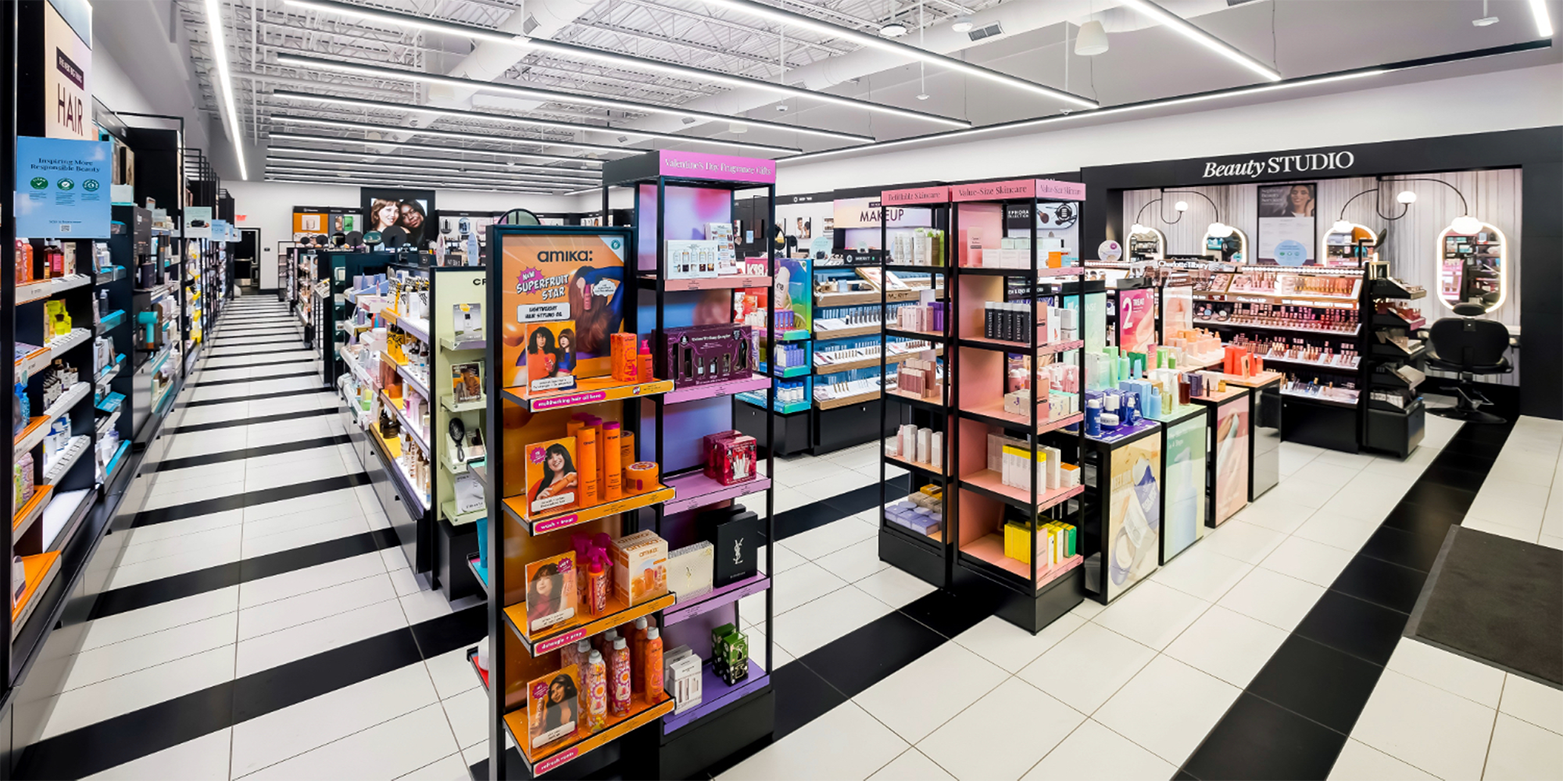
At their core, Target and Walmart’s beauty strategies are less focused on price competition than on defining what premium looks like for the mass consumer. This distinction becomes more critical as they continue to compete with major players like Amazon, Sephora, Ulta Beauty and TikTok Shop, all of which are sharpening their strategies to capture more premium and prestige customers.
“Where it gets really interesting is that both retailers are competing not just with each other, but with the idea that ‘good beauty’ has to be expensive,” says Goldbloom. “The brands on both of these lists prove that’s not true, and whichever retailer tells that story most effectively to consumers will win the most share.”