Beauty And Wellness Brands Are Waking Up The Sleepy OTC Category
Now, a number of enterprising brands are determined to elevate the staid sector while harnessing the power of United States Food and Drug Administration-approved active ingredients—technically drugs—enabling OTC products to provide real relief for a myriad of conditions, from acne to chronic muscle aches. This year alone, Stryke Club launched Knockout Adapalene Gel, which it touts as the only prescription-strength retinoid acne treatment available without a prescription; Briogeo launched Scalp Revival Shampoo, a dandruff wash formulated with 3% salicylic acid; and The Honey Pot Co, Sagely Naturals and Josie Maran entered the OTC space, too.
They’re aiming to fill white spaces in a large category—the global OTC skincare segment is expected to advance at a compound annual growth rate of almost 5% to hit $21.31 billion by 2028, according to The Insight Partners—dominated by conglomerates for decades. Brands that have matured in a crowded beauty industry view OTC as a compelling revenue stream to reach untapped consumers, different aisles in existing retailers and new retailers. However, the development of OTC products can be resource intensive, making it risky for independent brands without Procter & Gamble bucks behind them.
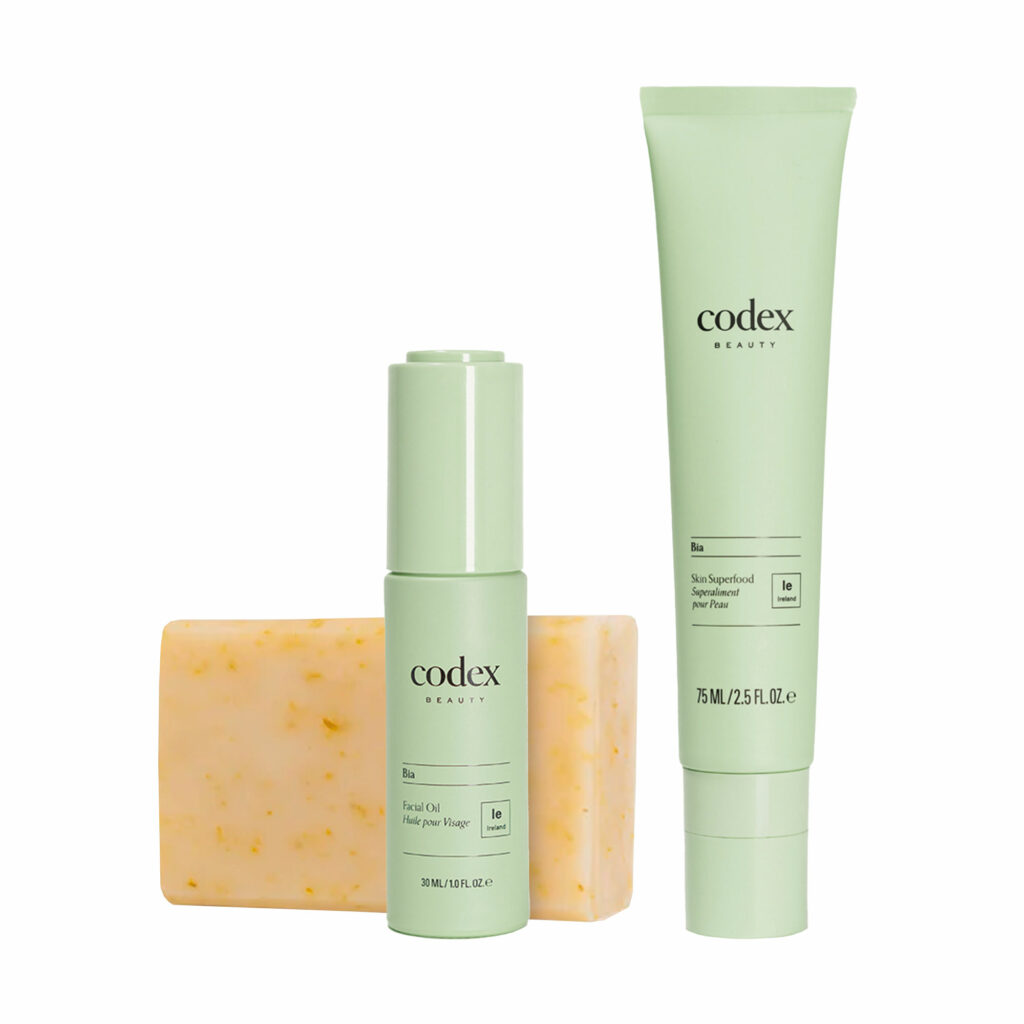
There are two regulatory paths to bringing OTC drugs to market in the U.S. Entailing a company creating a completely new OTC drug or endeavoring to transform a prescription into an OTC drug, the New Drug Application process is the rarer, more expensive and time-consuming of the two paths. Barbara Paldus, CEO of biotech skincare company Codex Labs, says patent procedures involved in it typically run $30,000 to $50,000, a sum that omits research done on an ingredient. She estimates the research can cost $50,000 to $100,000. “You can start seeing how quickly it adds up,” says Paldus, noting the process takes about a decade.
Codex is currently in development on an OTC ingredient in the sun-care category. If it’s awarded the patent on the ingredient, it says it will be the first new OTC sun-protection drug since 1976. Protected for 20 years for drugs, patents are potentially very lucrative pieces of intellectual property. They have to be to justify the upfront costs required to achieve them.
The vast majority of brands introducing OTC drugs go through the OTC monograph process. The monograph covers about 800 active ingredients approved by the FDA to be used for specific benefits at specific concentrations. For example, a product containing 2% salicylic acid can be marketed and sold as an OTC acne product. While the monograph process is nowhere near as laborious or expensive as the NDA process, it can be costly.
Paldus figures OTC product development in this manner is double or triple the cost of conventional cosmetic development due to clinical trials. She says, “Then, the extra analytical work, the lab work to show the stability and the concentration of the active is about $10,000.” Brands creating OTC products should plan on extended production timelines. Formulators and factories that specialize in OTC products must undergo FDA audits. The potential pool of manufacturing partners is much smaller for over-the-counter products than for cosmetics.
Laura Tedesco, CMO of The Honey Pot Company, says the OTC development process is strict in terms of ingredient combinations and claims. The vaginal wellness brand launched two anti-itch OTC products in March with 1% pramoxine and 1% hydrocortisone. “There was lots of testing, lots of formulation. We had a number of different iterations before we ended up where we did end up because we were striving for perfection,” says Tedesco. “Then, of course, the standard pieces of launching an OTC: the stability testing, the micro testing, pilot runs.”
Tedesco has detected a merging of cosmetic and OTC active ingredient benefits across personal care. “For us, OTC represents an incredible opportunity to bring together the very best of an active ingredient that delivers that efficacious experience that [a consumer] is looking for in that moment with beautiful herbal ingredients that do an incredible job of complementing and soothing and delivering on that experience piece,” she says. “I think a lot of the existing options in the OTC space can be very unpleasant to use just based on the harshness of the active ingredient and, unfortunately, you need the active to help create relief around the challenge that you’re solving for.”
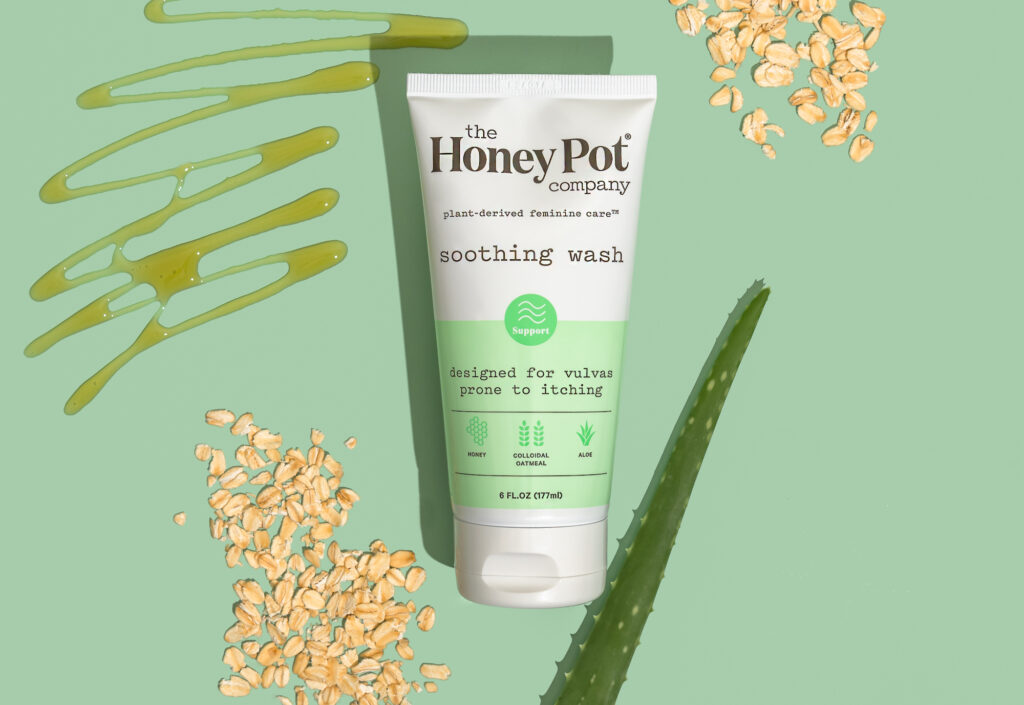
Brands are able to price OTC products at a premium. The Honey Pot Company’s OTC Anti-Itch Soothing Wipes retail for $13.99. In contrast, its non-OTC Sensitive Wipes retail for $9.99. Its OTC Anti-Itch Vulva Cream retails for $15.99 while its non-OTC Soothing Lavender Vulva Cream is $10.99. The Anti-Itch products are available chain-wide at Target and Walmart.
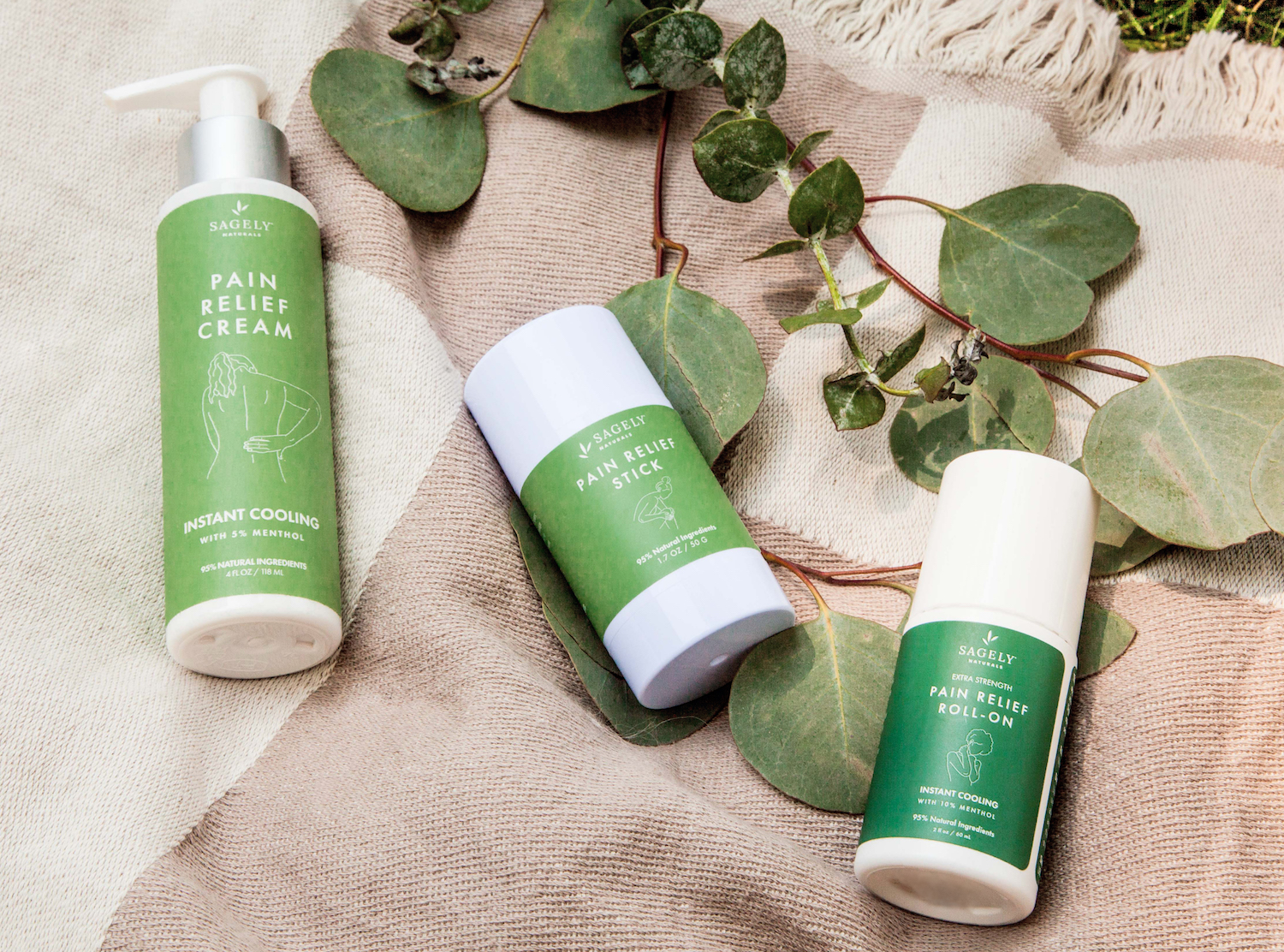
Like The Honey Pot Company, Sagely Naturals is out to create products with the efficacy of OTC formulas in user-friendly, modern formats. Kerrigan Behrens and Kaley Nichol launched Sagely Naturals in 2015 with CBD topical and ingestible products. Last year, the brand was acquired by HempFusion. Sagely Natural’s move into OTC is proving to be a huge boon for it. Last month, it debuted four non-CBD topical OTC pain relief products priced from $13.99 to $19.99 featuring 10% menthol. Sagely Naturals landed full distribution for the products at Target, which has a six-month exclusive on them.
“If you walk down the pain aisle of a drugstore, the most exciting thing that has happened in this category is that Biofreeze got more distribution,” says Behrens. “Otherwise it’s still Bengay, it’s still Icy Hot, it’s Aspercreme. None of these are sexy brands. None of them are speaking to women. I got really excited about this idea of creating pleasure in pain. Why do these products have to be unattractive? Why do they have to not smell great? Why is the user experience not considered more?”
The brand is scheduled to announce another major retail partnership for its OTC pain line later this month. It’s earmarked 70% of its marketing budget toward the OTC range. “This has opened up new doors to us that we’re not open to us because of CBD. There are retailers that we’re now working with that do not sell our CBD products that do sell our OTC products,” says Behrens. She harbors no illusions that Sagely Naturals’ OTC push will be carefree. “We are competing against brands that have budgets that are probably 50, 100 times ours,” says Behrens. “There’s no way we’re going to come close to the same kind of spend, but the products need to be accessed, and they will be from a retail standpoint.”
Consumers are accessing OTC products outside of brick-and-mortar retailers online. After the onset of the pandemic, dermatology telehealth usage skyrocketed by 188%, according to healthcare company Thirty Madison’s new dermatology service Facet. Facet is treating conditions like eczema, psoriasis, acne, rosacea, dandruff and melasma virtually by recommending and selling OTC and non-OTC products.
“The skincare landscape is overwhelming and incredibly difficult to navigate from a consumer perspective,” says Rajani Rao, GM for Facet. “It’s so hard to find good information and the information that does exist often isn’t specific to individual people or their concerns. There are too many products that aren’t actually proven solutions, which is confusing for consumers to know what works and what doesn’t.”
Though telehealth is an online business, Rao doesn’t rule out the possibility of physical retailers taking OTC more seriously by carving out in-store space for select brands. There’s precedent for this: After launching as a digitally-native brand in 2017, Hims & Hers, which offers prescription, OTC and traditional products including facial serums, lubricant and hair gummies, entered Target stores nationwide in 2020 and about 5,000 Walmart doors earlier this year. Rao cites fellow Thirty Madison company Keep’s expansion to its own physical retail as how OTC can exist in IRL retail.
She explains, “Much like Keeps Hair Restoration, we look to our patients to drive new experiences and offerings that will improve their care. KHR is a perfect example of a full-service offering we launched from insights from our patients: from beginning with a digital experience to treat a condition, listening to patients’ needs and concerns, to building an in-person experience to meet patients where they are. With Facet, it would be a similar approach. If we find that patients are interested or in need of an in-person experience that will improve their care, then that’s definitely something we could consider.”
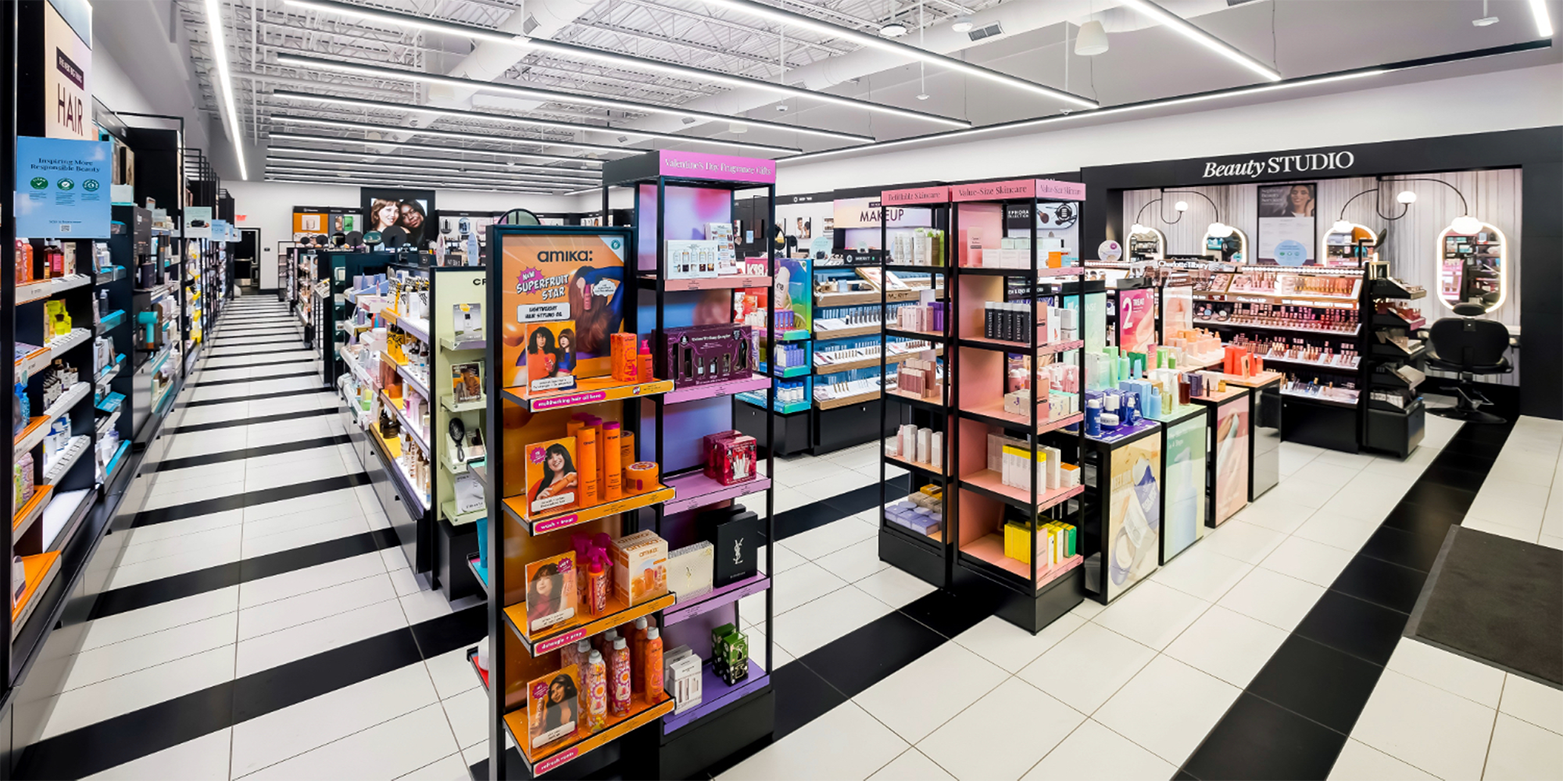
With two longtime Sephora partners, Briogeo and Josie Maran, launching OTC ranges within a few weeks of each other, one wonders if they’re privy to the specialty retailer’s future plans for the category.
Paldus asserts that lack of access to dermatologists is among the factors fueling traditional beauty brands’ OTC forays. There are about 3.4 dermatologists per 100,000 people in the U.S., and the cost of visiting a dermatologist is prohibitive for many people. “The average person, not only do they usually not even know how to find a dermatologist, there may not even be a dermatologist within 200 miles, and they may not have health insurance. Those people rely on what they can find on the web about eczema, psoriasis, acne,” says Paldus, emphasizing, “If there’s one message I can get through, this is not about beauty. This is healthcare. This is about health. These are skin diseases. This is not about feeling good or looking good. This is about a cure.”
The players
5 mentionedAS Beauty

Briogeo
The Honey Pot Company
The Honey Pot Co.
iS Clinical