Decoding Amazon Success: A Guide For Beauty Brands In 2024
Traditionally, a number of beauty brands have approached the idea of selling on Amazon with caution, fearing potential challenges such as channel cannibalization, loss of brand control and spreading their focus too thin. However, a closer look reveals the e-commerce giant offers an array of growth opportunities that can complement and amplify a brand’s overall strategy.
With guidance from e-commerce and marketing agency Front Row, we’re delving into why direct-to-consumer beauty brands should consider embracing Amazon and how it and other third-party marketplaces can be a vital piece of their channel diversification puzzle.
How do I know if Amazon is right for my brand?
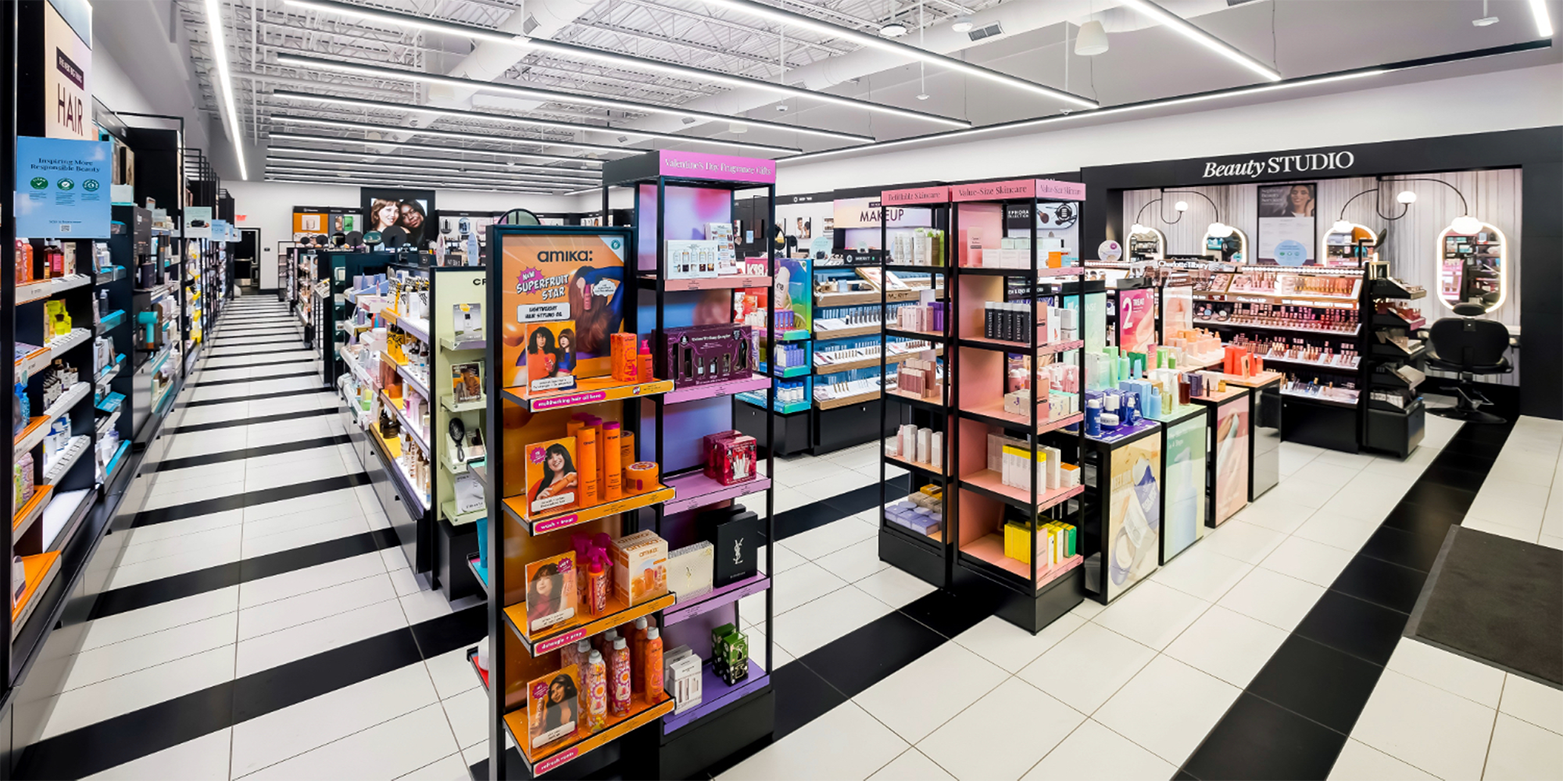
Most brands are capable of launching on Amazon, but that doesn’t necessarily mean they’ll be successful on it. Front Row recommends that beauty brands have a well-established DTC business and a minimum of one to two major brick-and-mortar partners (be it Ulta Beauty, Sephora or Target) before launching on the platform. Despite the fear of channel cannibalization, channel diversification can actually grow sales across all channels. Having a brick-and-mortar presence provides more exposure for a brand, creating a halo effect of brand awareness that can grow sales on all channels. As the saying goes, a rising tide lifts all boats.
Even still, established brands don’t always come out on top on the platform. It’s necessary to understand how competitive a. brand’s product category is and where the brand falls within it prior to launching on Amazon. Brands can win on Amazon with a single product if it’s at the right price point and in the right space, but it’s advisable to offer the entire catalog to increase chances of success.
You never know which product may be a hit, and the diverse nature of the Amazon consumer and the e-tailer’s nearly infinite digital shelf space means there’s little reason to not sell a full product assortment. While a brand may adopt a hero product strategy for social media, it can advertise all of its products on Amazon equally. The wide purview allows brands to gain momentum on products they might not be pushing heavily elsewhere and those that fall outside of their hero category.
According to e-commerce platform Shopify, the average conversion rate on e-commerce websites is 2.5% to 3%. The conversion rate on Amazon is 5X to 10X that rate (15% for makeup, 20% for skincare). By the time a customer gets to Amazon, they have a high intent to purchase. The storytelling brands execute on social media as a way to lure consumers isn’t as important in the case of Amazon. While brands should maintain a consistent voice, focusing on the product features and benefits that resonate with the Amazon consumer will convert better.
The Amazon customer is never going to be the same as a brand’s DTC or Sephora customer. Internal estimates from Front Row point to a less than 2% overlap between DTC and Amazon customers. Amazon customers have their own unique search and buying behavior. Understanding that behavior is key.
Since Amazon is a search engine, the great new technology a brand’s product features may not immediately resonate with the Amazon customer. It may take months of influencer-led marketing for people to start seeking out the new technology on Amazon. While product discovery does happen on the platform, more often than not consumers are coming with their own opinion on the technologies or ingredients that work for them. Being a lower funnel platform, technology-centered storytelling won’t work as well as matching the customer search with the simplest offer possible.
Mark Wieczorek, chief insights officer at Front Row, says, “We’ve seen innovative products go from slow sellers to bestsellers as more and more people become aware of a new niche. How long really depends on how good a brand is at getting the message out and whether or not they’re ahead of a larger shift in consumer behavior.”
What Customers Expect From An Amazon Page
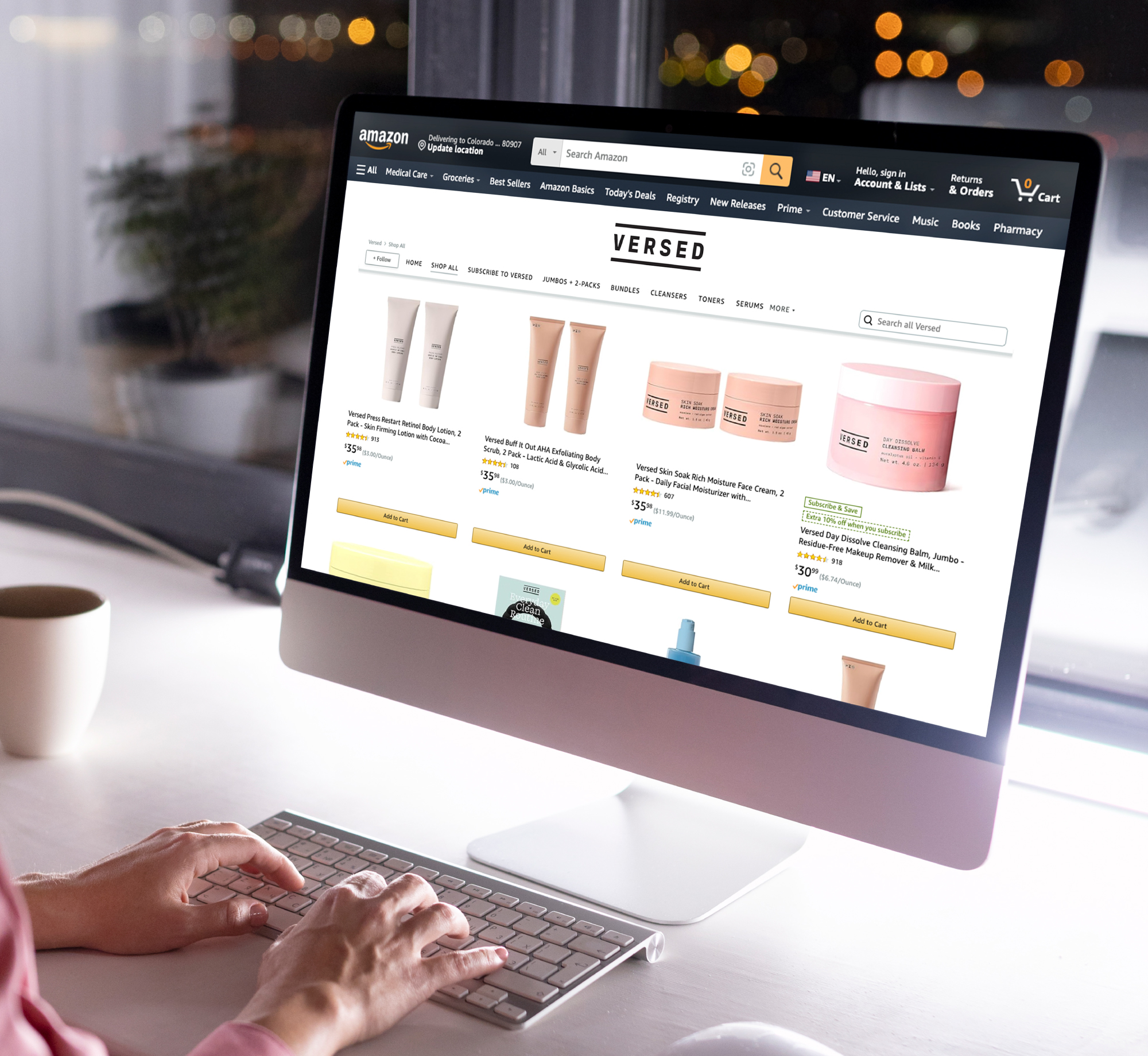
Showcase five to seven clear images with white backgrounds and lifestyle visuals as well as shots that effectively highlight product features.
Craft a search engine optimization (SEO)-friendly title utilizing the character limit strategically for enhanced discoverability.
Opt for five concise yet impactful product description bullets optimized for SEO to provide key information.
Provide a detailed section on brand attributes to offer visitors a deeper understanding of the brand, its values and product uniqueness.
Use A-plus content to offer in-depth explanations of product features and benefits.
Showcase various product categories and collections with a brand slider for improved navigation and a snapshot of the brand’s diverse offerings.
Getting ready for Amazon
Having inventory and logistics buttoned up is vital for Amazon success. The e-commerce company offers a 3P and 1P model for brands. The former is executed through Amazon’s third-party Seller Central marketplace and makes up 60% of sales on Amazon, according to e-commerce intelligence firm Marketplace Pulse.
The latter is a bit more exclusive. 1P or Vendor Central is typically invitation-only, and brands need to be big enough to be on Amazon’s radar in order to participate. These brands have the opportunity to work closely with Amazon team members, are walked through the Amazon process and may have product pages optimized by the e-tailer’s merchandising team. Amazon also sets the selling price, which may be below a brand’s SRP, potentially damaging its relationship with other retail partners.
1P can be seen as the easier route, but the buying model can get muddy. With it, Amazon buys inventory from a brand as a traditional retail partner would, and founders need to be able to negotiate in the same way they would a brick-and-mortar retailer. Amazon buys for what it thinks demand will be. However, since it doesn’t grasp a brand’s promotional calendar, it may not order enough to supply peak demand. Founders often have little say in how their brand is presented to customers. All content updates must be done by Amazon’s team, leaving brands at the mercy of that team.
The 3P model affords brands more control. Within the 3P relationship, brands have two order fulfillment options: Sold and shipped by merchant (FBM) or sold by merchant and shipped by Amazon (FBA) using storage in an Amazon fulfillment center (FC). Inventory planning falls on the shoulders of the brand, providing both more control and more responsibility. Stockouts can negatively harm organic search rankings and overages can cost in terms of storage fees and lost opportunity on other channels. The upside is that founders can plan for promotional periods.
Another benefit of the 3P model is greater control over merchandising and how the brand is presented. Founders have the flexibility to control the pricing, which can help protect relationships with other retail partners. Brands can be up and running within a few weeks with the 3P model and have room to experiment with different offers like Amazon-exclusive virtual bundles. Brands aren’t at the mercy of waiting for someone from Amazon to do the set-up work, but that also means brands have to handle that work.
One question brand founders should ask themselves before launching with Amazon is, do you have the time to dedicate to the platform? It can be a beast to manage and instead of stumbling around trying to figure things out, likely losing time and money in the process, it’s important to have a team in place. Or, more realistically for indie brands with tight budgets, they should evaluate hiring an outside agency that specializes in Amazon, from inventory planning to advertising.
Front Row stands at the forefront of e-commerce acceleration. The group emerged from the integration of five distinguished agencies—Fortress Brand, School House, Taylor & Pond, Finc3 and Bizmut—each renowned for their prowess in diverse commerce domains.
Dedicated to innovative solutions that drive the digital growth of beauty, wellness and consumer brands, Front Row’s comprehensive suite of integrated capabilities span strategic expertise, content creation, adept marketplace acceleration, e-commerce management, consumer and B2B digital marketing and the analytical rigor of business intelligence.
Working with an agency like Front Row gives brands a head start. It’s Front Row’s job to have their finger on the pulse of the latest developments so founders don’t have to. It also offers a community. Front Row has worked with brands like Bubble Skincare, Glow Recipe, Versed, Youth To The People and countless others. Having that experience makes it easier to troubleshoot problems that may come up.
Optimizing Amazon performance
Some brands, particularly beauty brands, wonder whether Amazon is helping or hurting their online sales. Amazon provides tools to help discover the answers to many of their questions.
The tools include Brand Analytics, which has data-driven customer behavior insights; Amazon Attribution, which measures off-platform ads’ influence on sales; Enhanced Brand Content and Amazon Stores for captivating product listings; Amazon Transparency to ensure product authenticity; Sponsored Brands and Sponsored Products for enhanced visibility; and Amazon Brand Registry for IP protection. Amazon Marketing Cloud is a data “clean room” that allows brands to directly compare their customer list to those who shop on Amazon to look for overlap without actually sharing customer data with Amazon.
These tools empower brands to optimize strategies, enhance discoverability and build trust while monitoring customer feedback and reviews. The result is an informed, growth-focused approach to leveraging Amazon’s platform.
The tools also allow founders to differentiate what people are searching for, how they’re buying and what they’re saying about their products. As mentioned earlier, the Amazon customer is different from a brand’s DTC or Sephora consumer. A brand’s Sephora customers, for example, may use a particular serum for anti-aging, but reviewers on Amazon might use it to fight blemishes. There’s opportunity to fill content gaps and reach customers from different angles.
The number of tools can be overwhelming for a new founder. Obtaining a report on top search terms is different from understanding what to do with it. It can be dense and difficult to analyze. It takes time to sit down and crunch numbers to come up with a strategy, which is where an agency like Front Row can be beneficial.
The company has developed its own e-commerce analytics tool, Catapult, focused on empowering brands through customized evaluation and reporting. With advanced data analysis and user-friendly visuals, Catapult facilitates informed decision-making and optimization of Amazon businesses. The platform supplies essential metrics for comprehending and enhancing Amazon performance, covering sales, revenue, profit margins and inventory levels. It also monitors product performance over time and spots trends to gain actionable insights for elevating sales strategies.
The Catapult platform offers a distinct advantage as a supplement to Amazon tools due to its comprehensive and granular insights tailored specifically for sellers. While Amazon’s tools provide valuable data, Catapult takes them a step further with detailed keyword rankings, search performance and competitor analysis. The more extensive dataset enables sellers to make knowledgable decisions about their product listings, pricing strategies and overall performance.
Creating an Amazon marketing strategy
Amazon’s ads platform generated $43.8 billion in revenue between Q4 2022 and Q3 2022. As they tap Amazon ads, brands need to consider how to fit Amazon into their broader marketing mix and what Amazon-specific tactics to employ.
There’s no one-size-fits-all marketing strategy for Amazon. It’s specific to an individual’s brand, vertical and products. Amazon offers options such as display campaigns, audience targeting and Prime TV. Figuring out which route is best is a strategic conversation brands should have based on goals, margins and expected returns. If Amazon is a spillover for a brand’s DTC, then zeroing in on brand searches and ensuring the brand is at the top should be a priority. If the platform is being used for expansion, leaning more heavily into non-branded searches can be a good idea.
Brands should be hitting all cylinders in the beginning to see what sticks and then figure out the right blend from a budgeting perspective. There’s no set amount of money to spend to get specific results. Some brands look at top-line advertising sales and spend 5% of that number, and others spend upwards of 40%.
Instead of throwing out a dollar amount, it can be helpful to consider how much a brand is able to invest from sales and determine the return it’s aiming for. It should invest as much as possible while staying within that range. The range will depend on a brand’s profitability and how aggressively it wants to grow.
On Amazon, brands can start out with small budgets and take baby steps. It doesn’t require a brand to spend $10,000 on a print ad and hope it works. Instead, brands can invest a couple of dollars a day on advertising by buying a handful of clicks to test if it’s working or not. Brands can analyze, experiment, learn and scale from there.
In order to iterate, brands should take advantage of Amazon’s advertising tools to measure success. Amazon’s ad platform is an easy way to test different ad ideas with a small investment. If a founder has two ideas for ad copy, run them against each other to see which one comes out on top. Make sure to have a constant cycle of content updates so shoppers are consistently exposed to fresh messaging. Brands should be constantly analyzing, iterating and improving.
Partnering with influencers or content creators to optimize brand awareness around Amazon is crucial. Creator-led content is a quickly growing channel. According to data from Influencer Marketing Hub, influencer marketing accounted for $16.4 billion of global advertising dollars in 2022. There are Amazon-specific beauty influencers, and the platform has its own content creator program to pull from. The creators build their own storefronts, and brands can create coupons or affiliate links for them to disperse.
The more traffic founders can drive to Amazon, whether via Google search, social media or influencers, it gets the flywheel going. Amazon’s search algorithm rewards higher sales. The more sales a brand can pull in from off-channel, the more sales it can make on-channel.
Will Matalene, VP of digital marketing for Versed Skincare, believes having a comprehensive marketing strategy is increasingly become essential for brands. “We anticipate a pivotal shift as brands seamlessly incorporate platforms such as Amazon into their comprehensive marketing calendars, ensuring that marketplace moments seamlessly intertwine with their overarching marketing strategy,” he says. “2024 is poised to be a transformative period where brands must adeptly grasp and leverage the unique strengths of each sales channel, not only to optimize efficiency, but also to craft a unified sales ecosystem that enhances the customer experience.”
Brands should go where the customer is and often that includes marketplaces other than Amazon. Doing so improves the chances of the brand being discovered and, in turn, purchased. While it may not be able to dictate the buying channel that customers gravitate toward, it can decide if it wants to be there or not.
The players
5 mentionedAS Beauty

Momentous
The Center
Better Being
Bubble