Amazon Beauty’s Winner-Take-More Dynamics
According to a report from beauty e-commerce agency Navigo, the number of bestselling beauty brands on Amazon decreased from 148 to 123 during the first quarter of the year, and the number of different bestselling products fell from 300 to 253. APR Corp.-owned South Korean beauty powerhouse Medicube continues to dominate beauty sales on the platform, accounting for about 14.1% of sales across the entire beauty and personal care category, with a double-digit yearly gain of 10.1 points. Its Zero Pore Toner Pads and Wrapping Collagen Overnight Peel Off Facial Mask rank second and sixth in the top eight selling products.
At the same time, other brands in the top 10 were down year-over-year by share, including Nutrafol, CeraVe, La Roche-Posay and Clean Skin Club. Sales for Amazon stalwarts Mighty Patch maker Hero Cosmetics, Paula’s Choice and Neutrogena declined during the period, too. Last year, beauty sales on Amazon increased 19% to reach $34.5 billion, according to marketplace agency Front Row.
“When one brand is gaining meaningful share in a category where most of the top players are slightly down, it typically means someone is being more aggressive structurally. More search coverage. More consistent funding. Cleaner hero SKU focus. Probably stronger off-platform demand feeding into Amazon as well,” writes Jacob St. John, founder and CEO of Navigo, in a LinkedIn post. “And this is the part I think a lot of beauty brands underestimate. Amazon doesn’t really let you sit still. If you’re not actively building share, especially in that 3% to 8% range, you’re usually giving it up slowly to someone who is pushing harder.”
Keyword saturation has been an important factor in Medicube’s Amazon leadership. During the first quarter, the brand ran 6,287 organic keywords and 9,264 sponsored keywords simultaneously. CeraVe ran 4,221 organic and 1,924 sponsored keywords, only to lose 2.7% in share. Monthly branded searches for Medicube are 2 million on Amazon, second only to “magnetic eyelashes” in search volume.
Another factor is Medicube’s sales growth across multiple products rather than single hero products. In addition to Zero Pore Toner Pads and Wrapping Collagen Overnight Peel Off Facial Mask, Medicube’s PDRN Pink Peptide Serum and Deep Vita C Capsule Cream are gaining share on Amazon.
“When a brand has that many products compounding simultaneously, their BSR (bestseller ranking) improvements feed each other, their reviews cross-pollinate, and their brand keyword searches accelerate,” reads the report. “The brands on the losing side—Clean Skin Club, Mighty Patch—are largely one-SKU stories. That single point of failure is increasingly exposed when consumer attention shifts.”
Within skincare specifically, Medicube owned 15.8% share in the first quarter, followed by CeraVe, La Roche Posay, EltaMD and The Ordinary. Taken together, the five brands accounted for 41% of skincare category sales on Amazon.
Consolidation is also a defining feature in haircare. Nutrafol’s sales account for a whopping 23.9% of haircare share, with its $325 Women’s Balance Hair Growth Supplements for Ages 45 and Up driving 15.6% of sales on its own. Navigo attributes the gain to an underserved 45-plus haircare consumer on Amazon looking for solutions, but finding few.
Perhaps surprising given Nutrafol’s commanding position, the brand pulled back on paid media in the first quarter, with sponsorship dropping 2.6 points. Nizoral and Color Wow trail Nutrafol, holding 6% and 5% of share in the haircare category, respectively. Makeup and fragrance sales are currently more fragmented on Amazon, with L’Oreal and Lattafa taking the top positions in their respective categories, at 10.5% and 11.6%, respectively.
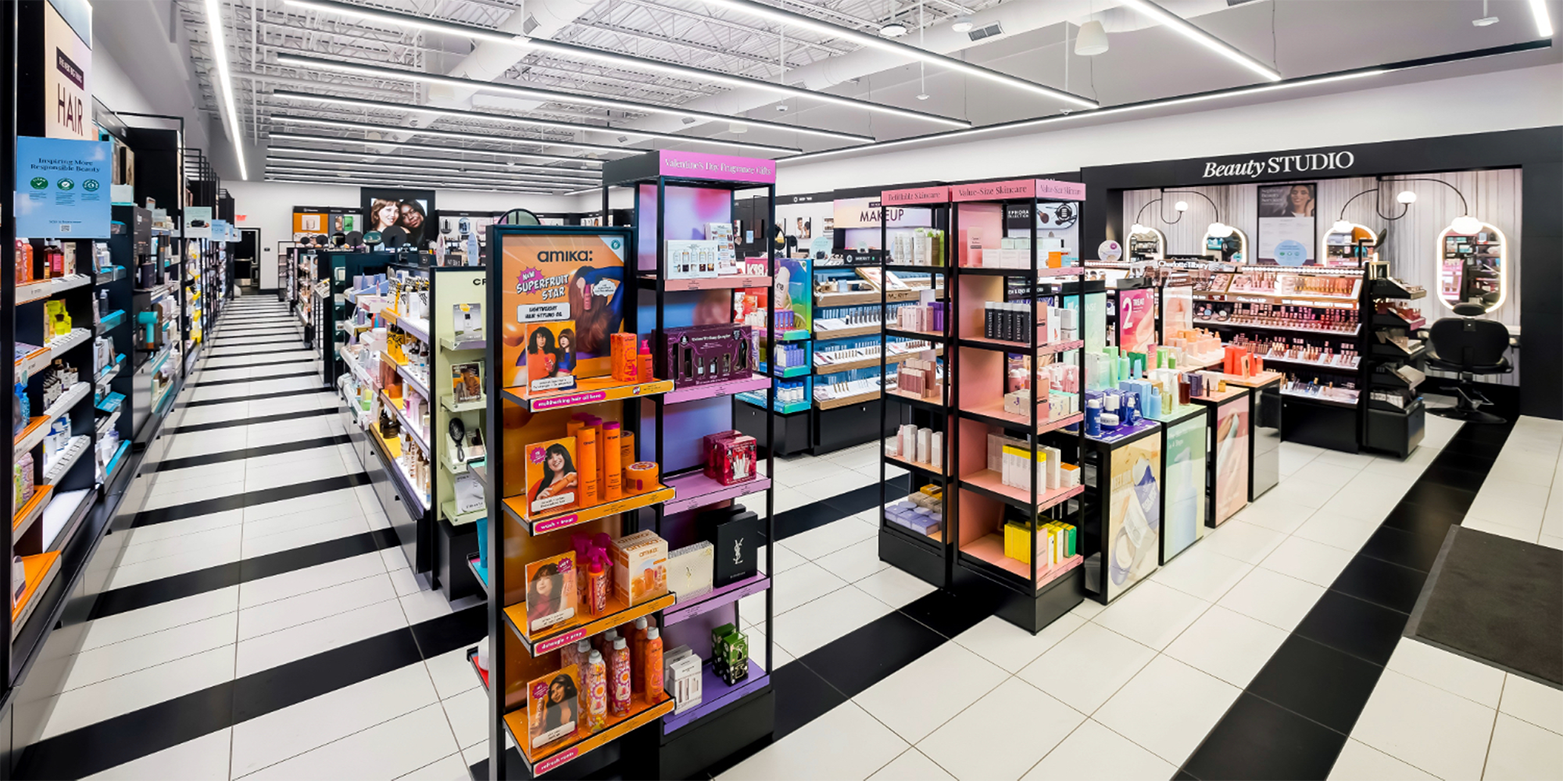
Elsewhere, beauty sales aren’t nearly as consolidated by brand as they are on Amazon. The Ordinary was the top-performing skincare brand in the first quarter on Sephora’s website, according to Navigo, accounting for about 7.2% share of sales with all other brands constituting 64% of sales. While Sol De Janeiro was the top-selling brand on Sephora’s site, at 10% share of sales, its share was down by 2.6 points. On Ulta’s site, La Roche Posay led skincare at around 9.7% share.
“Compare that to Amazon, where Medicube alone is sitting at 14.1% and the category contracted by 17% in brand count. That’s a meaningfully different story,” says Meredith Matthes, account director at Navigo. “Amazon’s search and algorithm dynamics accelerate that winner-take-most effect faster than curated retail environments do.”
To win on Amazon today, brands have to win off-platform. For example, Medicube was the No. 1 beauty brand on TikTok Shop last year, according to e-commerce intelligence platform Charm.io, generating $98.9 million in gross merchandise value. During the first quarter of the year, it racked up $44.3 million in sales alone.
Matthes says, “The pattern we see consistently is: viral social moment, Amazon search spike, reviews compound, organic authority builds, paid spend efficiency improves, and the flywheel locks in.”